
Why the sky turns orange at sunrise and sunset
Key takeaways
- Rayleigh scattering redirects short blue wavelengths far more than long red ones, at a rate proportional to 1 over wavelength to the fourth power.
- At sunrise and sunset, sunlight crosses a much longer path of atmosphere, so most blue light is scattered away before reaching you.
- What remains in the direct beam is rich in red and orange wavelengths, which colors both the Sun and the sky.
- Dust, pollution, and volcanic particles can deepen sunset colors dramatically.
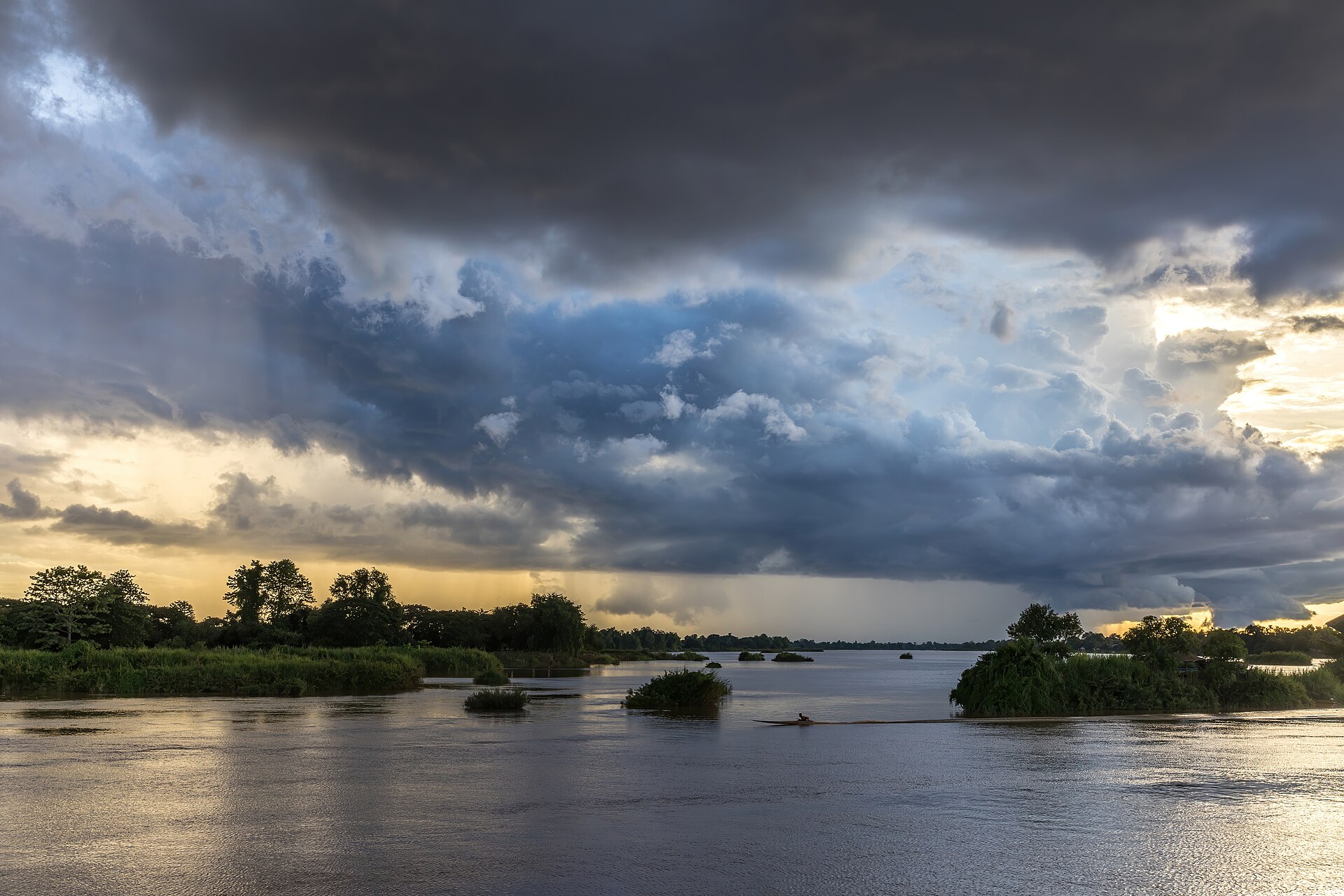
What colors the sky
Sunlight looks white because it contains every visible wavelength mixed together. The colors you see in the sky are not created by the atmosphere changing color. They are created by the way sunlight interacts with molecules and particles in Earth's atmosphere, as the Berkey water lab's sky guide explains.
When sunlight hits air molecules, the light does not pass straight through unchanged. Some of it is redirected, scattered in all directions.
The key detail is that this scattering depends strongly on wavelength. Shorter wavelengths scatter much more than longer ones.
This article explains what Rayleigh scattering is, why the daytime sky looks blue, why sunrise and sunset look orange and red, what makes some sunsets more vivid than others, and what this tells us beyond pretty skies.
What Rayleigh scattering is
Rayleigh scattering happens when light meets particles much smaller than the light's wavelength, such as the nitrogen and oxygen molecules that make up most of Earth's atmosphere. The light is not absorbed. It is redirected, scattered in all directions.
This phenomenon was first explained by the British scientist Lord Rayleigh, born John William Strutt (1842 to 1919), in the late 19th century, according to Our Planet. His explanation showed that the amount of scattering depends on wavelength, with shorter wavelengths scattering far more than longer ones.
Physics students usually meet this as a steep mathematical rule. The scattering intensity goes roughly like 1 over wavelength to the fourth power, according to Fiveable's college physics guide.
That steep relationship is why a small change in wavelength makes a big difference. Blue light is scattered far more strongly than red light, simply because its wavelength is shorter.
A common misconception is that the sky is blue because the atmosphere itself is blue. It is really the scattered sunlight that is blue. If Earth had no atmosphere, the sky would look black even in daytime because there would be no air molecules to scatter the sunlight.
Why the daytime sky looks blue
During the middle of the day, the Sun is high overhead and its light travels through a relatively short path of atmosphere. The blue and violet wavelengths are scattered in all directions by air molecules, and that scattered blue light reaches your eyes from every direction.
That is why the daytime sky looks blue. You are not looking at blue light coming directly from the Sun alone. You are seeing sunlight that has been scattered by air molecules across the atmosphere, so the sky itself becomes a source of scattered blue light, as Fiveable explains.
The Sun itself looks white or slightly yellow at noon because most of its wavelengths still reach your eye directly, with only some of the blue removed along the short path.
Why sunrise and sunset turn orange
At sunrise and sunset, the Sun sits near the horizon, so its light has to travel through a much longer path of atmosphere before it reaches your eyes. Along this extended path, much more scattering happens.
The shorter blue and green wavelengths are scattered out of the direct beam long before they arrive. What remains in the straight path is richer in the longer red and orange wavelengths. That filtered light is what you see when you look toward the Sun, and it tints the surrounding sky as well.
Our Planet describes it plainly: the shorter, bluer wavelengths are scattered even more along the long path, leaving the longer, redder wavelengths to dominate. This is why the Sun appears reddish or orange during these times, and why the sky takes on a reddish or orange hue too.
The lower the Sun's angle, the more pronounced the effect. The exact shades depend on how much scattering occurs and how many shorter wavelengths are removed.
When the atmosphere is relatively clear, the Sun may look yellow or soft orange. Stronger scattering along a very long path can produce intense red or crimson sunsets that fill large portions of the sky, according to Science Times.

What makes some sunsets more vivid
The same physics gets help, or interference, from particles in the air. Dust and pollution can intensify sunset colors by adding more particles that scatter light. Fine aerosols from industry, traffic, or wildfire smoke increase the removal of shorter wavelengths and make the remaining light appear more strongly red or orange, according to Science Times.
Volcanic eruptions offer an extreme example. They inject huge amounts of fine particles into the upper atmosphere, and those particles can create spectacular red sunsets over wide areas for months.
Even everyday urban smog can deepen sunset colors while reducing overall clarity. That is why regions with more haze or smoke often see particularly vivid red and orange sunsets, and why clear days in remote or high-altitude regions can show darker, more vivid blue skies near the horizon instead.
Clouds play a different role. Clouds look white or gray because their water droplets are much larger than air molecules, so they scatter all wavelengths roughly equally.
This is Mie scattering rather than Rayleigh scattering. At sunset, those same white clouds catch the filtered red-orange light and reflect it, which is why clouds can glow pink and orange at dusk.

Why this matters beyond pretty skies
Light scattering is not just a curiosity. Understanding it helps explain hazy skies, the appearance of clouds, and some of the ways scientists observe Earth's atmosphere from space, as the Berkey guide notes. The same principles are at work in instruments that measure air quality from orbit.
Sunset colors can even serve as a rough indicator of atmospheric conditions. Variations in color intensity and hue can reflect changes in aerosol concentrations or atmospheric clarity, making sunset-watching a simple, if informal, way to notice what is in the air.
The physics connects to other familiar sights too. It is the same scattering family that explains why stars twinkle but planets do not, since starlight also passes through turbulent layers of air. And the interplay of light and atmosphere runs through how we see everything from the moon in daylight to the speed gap between light and sound.
Frequently asked questions
Why is the sky blue but sunsets red if the cause is the same?
It is the same scattering process seen through different path lengths. Overhead at noon, the short path leaves plenty of blue to scatter toward you, so the sky looks blue. At sunset, the long path scatters almost all the blue away, leaving red and orange in the beam that reaches you.
Does pollution make sunsets prettier?
It can deepen the colors. Aerosols add more scattering, which removes more short wavelengths and intensifies the red and orange. But smog also reduces clarity, so the tradeoff is a more vivid sky through dirtier air.
Why do clouds turn pink at sunset?
Cloud droplets scatter all wavelengths equally, so clouds look white by day. At sunset they are lit by the already-filtered red-orange sunlight, and they reflect that color back to you.
Can sunsets predict the weather?
Not reliably, though there is a grain of truth in the old saying. A red sunset can indicate dusty or moist air to the west, which sometimes precedes weather changes. But it is far from a forecast.
Who discovered Rayleigh scattering?
Lord Rayleigh, the British physicist John William Strutt, who lived from 1842 to 1919, explained it in the late 19th century. The scattering law still carries his name.
The bottom line
The sky turns orange at sunrise and sunset because of geometry plus physics. The low Sun forces light through a much longer stretch of air, and Rayleigh scattering strips the short blue wavelengths out of the beam at a rate proportional to 1 over wavelength to the fourth power.
What is left is red and orange. Dust, smoke, and volcanic ash can make the show more dramatic, but the mechanism is the same on a clear day: the atmosphere acting as a filter between you and the Sun.
Related stories

Why diamond is hard and graphite is soft when both are carbon
Diamond and graphite are both pure carbon, yet diamond is 10 on the Mohs scale and graphite is 1 to 2. The difference is not the atoms;

Why Hot Water Can Freeze Faster Than Cold: The Mpemba Effect Explained
Hot water can freeze faster than cold under specific conditions. The Mpemba effect, named for a 1963 schoolboy experiment, still divides

How Magnets Work at the Atomic Level: Spins, Domains, and Iron
Magnetism comes from electrons: their spin and orbits make each atom a tiny magnet. In iron, quantum forces align these atomic magnets into