
Why is the Moon sometimes visible during the day?
Key takeaways
- The Moon is above the horizon during daylight for roughly half of every month, so daytime sightings are normal.
- Its orbit shifts the Moon's rising time about 50 minutes later each day, sweeping it across morning, afternoon, and night skies.
- Quarter and gibbous phases show best in daylight; the new Moon is hidden by the Sun's glare and the full Moon rises at sunset.
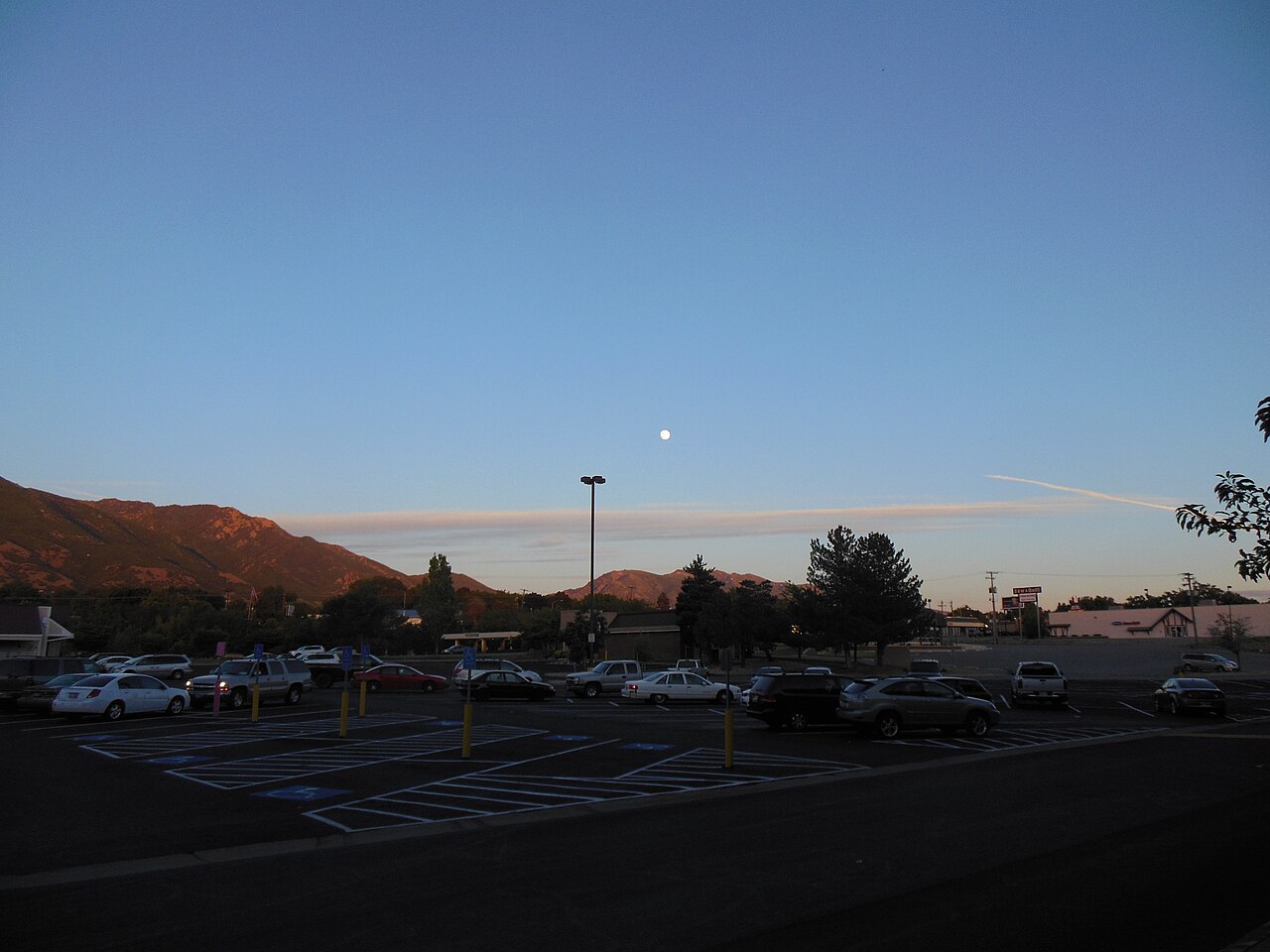
The Moon is sometimes visible during the day because it spends nearly as much time above the horizon in daylight as it does at night. The Moon orbits Earth continuously, so its twelve hours above the horizon slide across the clock, overlapping with the Sun's hours for part of every month.
This article explains why the Moon is sometimes visible during the day, including how its orbit overlaps with daylight, which phases are easiest to spot, and why the Moon looks so different against a blue sky.
The Moon is a daytime object too
The surprise people feel at a daytime Moon comes from a wrong assumption: that the Moon belongs to the night. It does not. Everything in the sky rises and sets because Earth rotates, and both the Sun and the Moon spend roughly twelve hours above the horizon each day. The difference is that the Moon also orbits Earth, so its twelve hours are not locked to the Sun's twelve hours.
Stephen Reynolds, an astrophysicist at NC State, explained it this way: because the Moon travels around Earth, its hours above the horizon are not always the same as the Sun's. Sometimes the Moon is up only at night, sometimes only during the day, and sometimes a little of both. Add up all the hours the Moon spends above the horizon in a month, and roughly half fall during daylight.
The daytime Moon is not an exception to the rules. It is the rules.
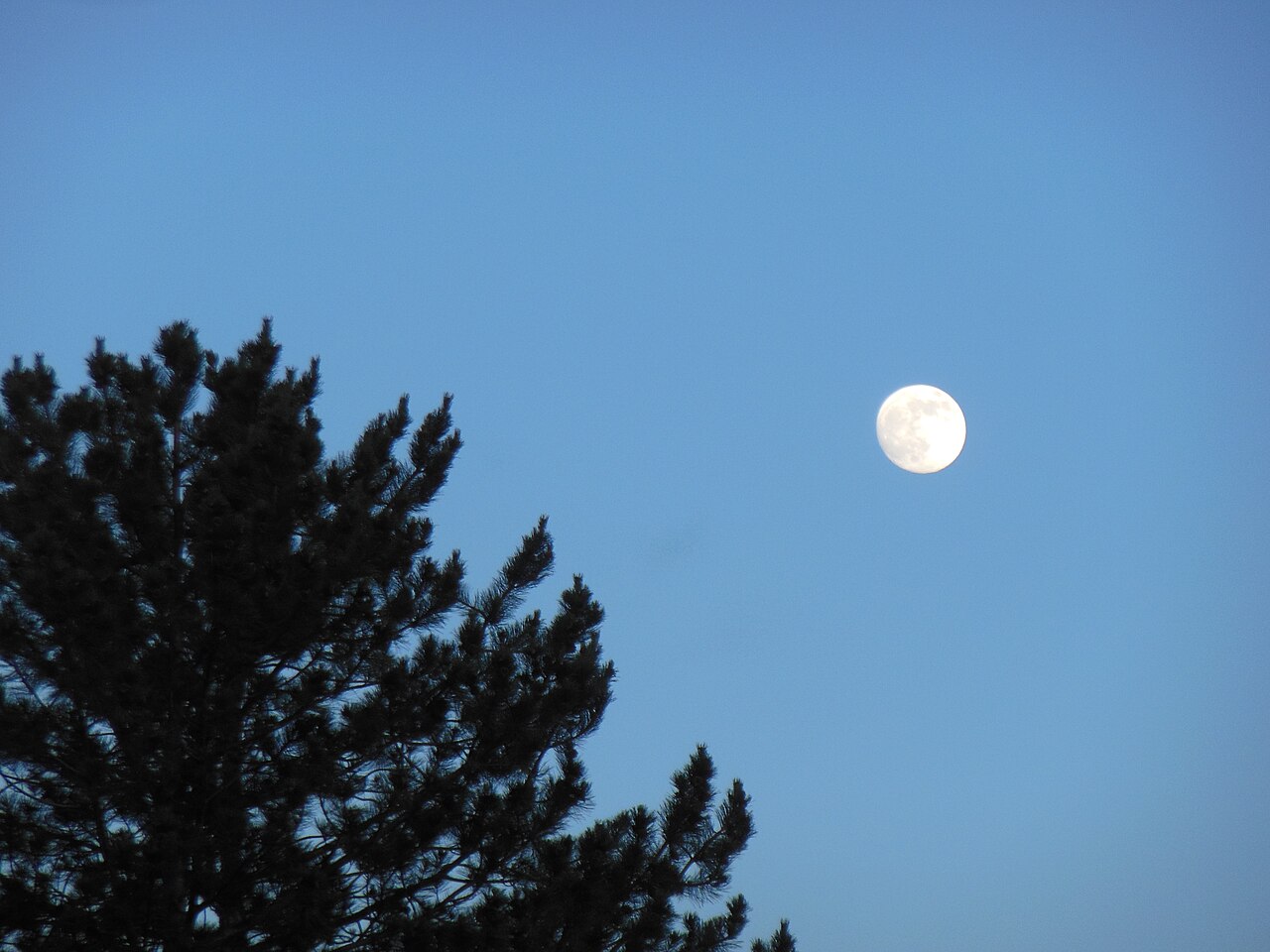
NASA planetary geologist Sarah Noble has made the same point to skywatchers, noting that the Moon actually spends almost as much time in the daytime sky as in the nighttime sky. According to Noble, the Moon shines bright enough to be seen during the day as long as it sits in the right part of the sky. During the day it simply has to compete with a bright blue background, which makes it easy to overlook rather than impossible to see.
The Moon's schedule also slides every day. As the Moon moves through its phases, it rises about 50 minutes later each day, according to Noble. That steady march is why a Moon you spotted in the afternoon last week shows up in the morning sky this week, and why daytime sightings come and go through the month.
How phases decide when the Moon is up
The Moon's phases are just snapshots of its position relative to the Sun, and that position decides when the Moon is above the horizon. The full cycle from one new Moon to the next takes about 29.5 days, during which the Moon shifts roughly 12 degrees per day relative to the Sun, as the astronomy explainer Biology Insights describes. That 29.5-day cycle is one of the three motions behind our calendar, the same arithmetic that gives us leap years every four years.
At full Moon, the Moon sits opposite the Sun in the sky. It rises around sunset and sets around sunrise, which makes it the one phase that behaves the way people imagine the Moon always behaves: a purely nighttime object. You will rarely see a full Moon high in a bright afternoon sky.
At every other phase, the Moon and Sun share the sky for at least part of the day. At first quarter, about a week after the new Moon, the Moon sits roughly 90 degrees from the Sun. It rises around noon and does not set until about midnight, hanging in the afternoon sky for hours.
The last-quarter Moon flips the pattern: it rises around midnight and sets around noon, making it a familiar sight in the morning sky after sunrise. Gibbous phases, both waxing and waning, put the Moon above the horizon for several daylight hours too.
The only phase that truly hides is the new Moon. Then the Moon sits in nearly the same direction as the Sun, and the side facing Earth is unlit.
The thin crescents just before and after the new Moon are also hard to spot, because they sit so close to the Sun that its glare drowns them out. They have not gone anywhere; they are simply lost in the light.
If you want to predict a daytime sighting, remember the 50-minute rule. Each day the Moon rises about 50 minutes later than the day before, marching through the morning, then the afternoon, then the night sky as the month progresses. Once you spot it, you can find it again the next day a little later and a little further along.
Why it looks pale and ghostly in daylight
At night the Moon looks brilliant, but in daylight it turns soft and translucent, like a pale coin pressed into blue paper. The Moon itself has not changed. What changed is the background.
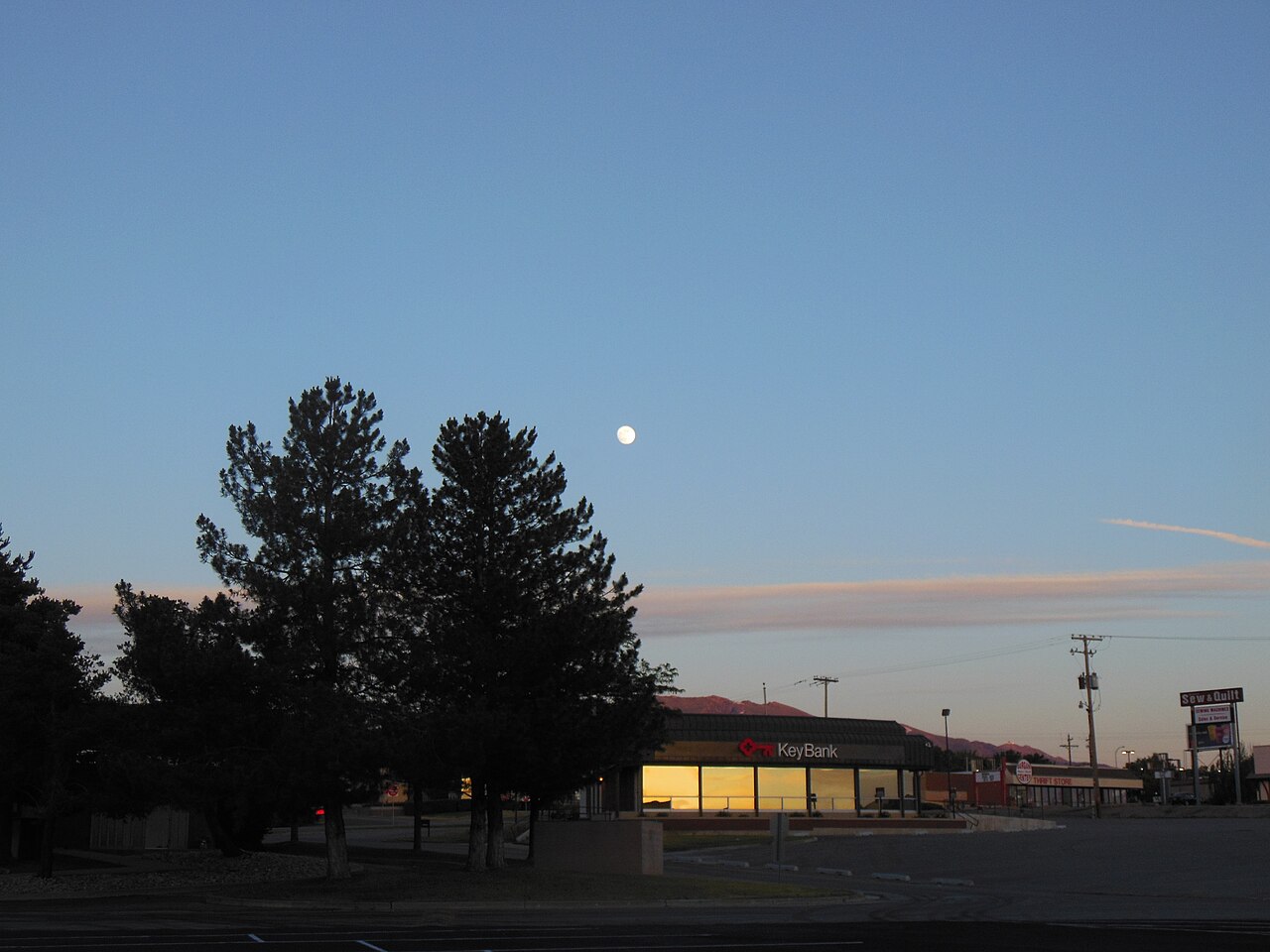
The Moon does not produce its own light. It reflects sunlight, and the side facing the Sun is the side that is lit, as Reynolds told NC State News. In daylight, that reflected light has to compete with sunlight scattered across the whole sky, the same Rayleigh scattering that makes the sky blue and sunsets orange, as explained in our piece on why the sky turns orange at sunrise and sunset. The scattered light washes out the Moon's contrast, so it looks dimmer and less sharp than it does against the black of night.
Distance and weather play smaller roles. Haze, thin cloud, and low altitude near the horizon all dim the Moon further, while a crisp, dry afternoon with the Moon high overhead gives the sharpest view. The difference between a theory and a hypothesis is a useful parallel here: the daytime Moon looks like a different object, but the explanation is the same physics working under different conditions.
Frequently asked questions
Is it rare to see the Moon during the day?
No, it is completely normal. The Moon is above the horizon during daylight for roughly half of every month. Most people simply do not look up, because the pale Moon is easy to miss against a bright sky.
What phase is the Moon when you can see it during the day?
Quarter phases are the best. The first-quarter Moon is up all afternoon, and the last-quarter Moon hangs in the morning sky.
Gibbous phases also give several hours of daytime visibility. Full Moons are nighttime objects, and new Moons are hidden by the Sun's glare.
Can the Moon and Sun be in the sky at the same time?
Yes, for at least part of almost every day of the month. The only exceptions are the few days around the new Moon, when the Moon sits too close to the Sun to be seen, and the full Moon, when they are on opposite sides of the sky.
Why does the daytime Moon look white instead of yellow?
At night the Moon can look warm or yellow near the horizon because its light passes through more atmosphere. In daylight the scattered blue skylight around it dominates, and the reduced contrast makes the Moon look pale white by comparison.
Does seeing the Moon during the day mean anything unusual?
No. It is ordinary orbital mechanics, not an omen or a rare event. If anything is unusual, it is the assumption that the Moon only comes out at night.
The bottom line
The Moon is visible during the day because its orbit keeps it above the horizon for roughly twelve hours that slide across the clock, overlapping with sunlight for much of every month. Quarter and gibbous phases give the best daytime views, the new Moon hides in the Sun's glare, and the full Moon keeps to the night. Next time you spot that pale disc overhead at noon, you are seeing the normal schedule, not a special occasion.
Related stories

Why diamond is hard and graphite is soft when both are carbon
Diamond and graphite are both pure carbon, yet diamond is 10 on the Mohs scale and graphite is 1 to 2. The difference is not the atoms;

Why Hot Water Can Freeze Faster Than Cold: The Mpemba Effect Explained
Hot water can freeze faster than cold under specific conditions. The Mpemba effect, named for a 1963 schoolboy experiment, still divides

How Magnets Work at the Atomic Level: Spins, Domains, and Iron
Magnetism comes from electrons: their spin and orbits make each atom a tiny magnet. In iron, quantum forces align these atomic magnets into