
Why Does Cramming Not Work for Long-Term Learning? The Science
Key takeaways
- Cramming loads facts into short-term memory but skips the spaced consolidation that builds durable recall.
- A UC San Diego study found wider gaps between sessions raised later recall by up to 50%.
- Spaced practice and self-testing are the only two study techniques rated high utility in a landmark 2013 review.
Every student knows the ritual: one long night, endless notes read on repeat, and the material feels mastered at 3 a.m. Then the exam is fine, but a month later nothing is left.
Cramming is not a study method; it is a memory illusion. This article explains what cramming does to memory, what the spacing-effect research found, and how to study so the material actually sticks.

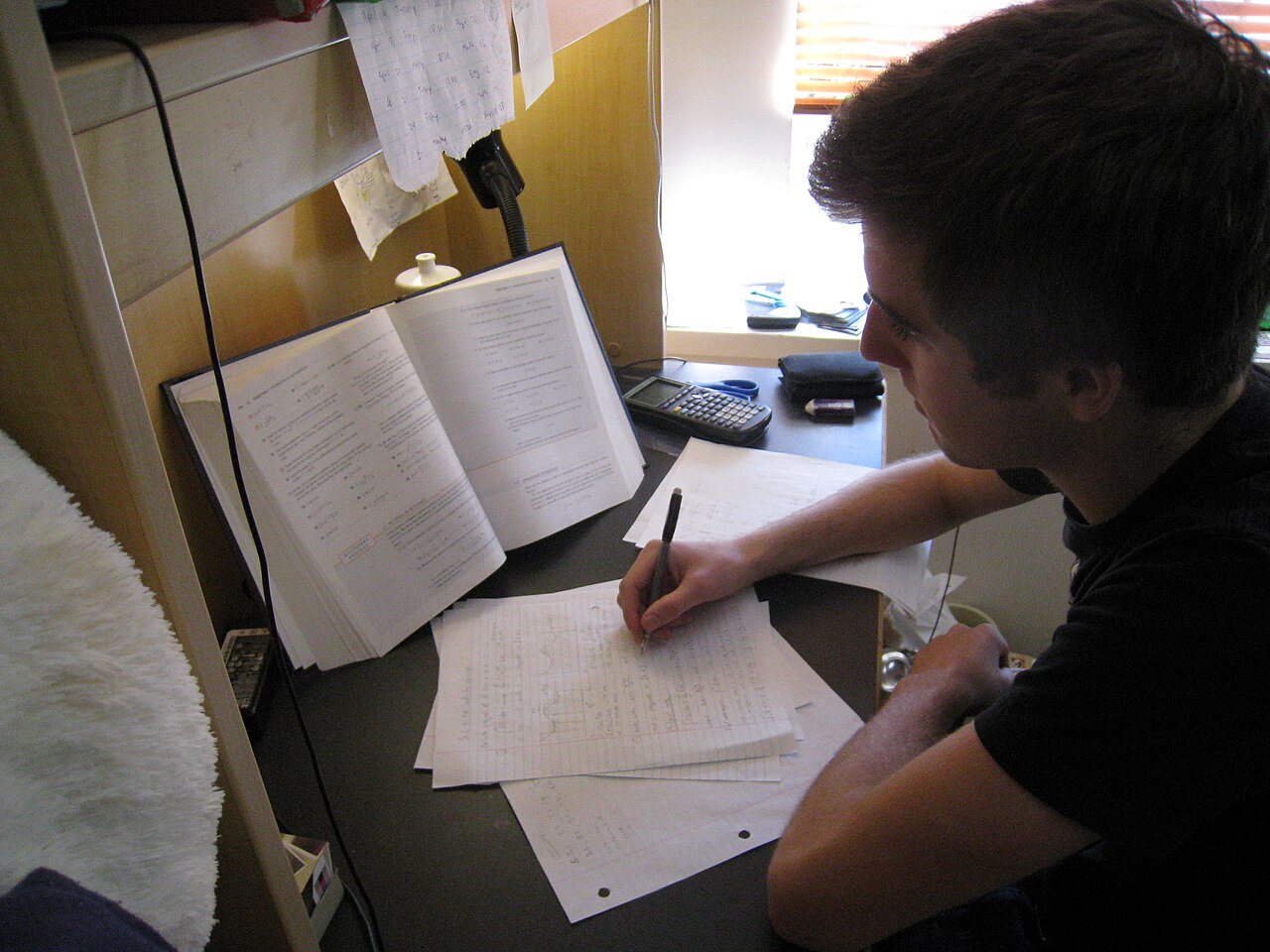
A student studying at a desk. One long session feels productive, but the research favors spaced reviews. Photograph: English106
Image Credits: Wikimedia Commons / English106
What cramming does to your memory
Cramming is massed practice: the same study hours packed into one block, usually the night before a test. It works on an immediate test because short-term recognition does not require durable memory. You recognize what you just read.
The problem is consolidation. Long-term memory needs repeated encoding passes separated by time.
The UC San Diego Temporal Dynamics of Learning Center explains that last-minute preparation denies students the benefit of spaced repetition, and while lab studies sometimes show a cramming benefit on tests given within 10 minutes of studying, those short-term gains reverse completely when the test comes after a delay. The center's summary is direct: cramming leads to rapid forgetting.
That is why cramming feels convincing. Familiarity during review is not the same as recall later, and the brain cannot tell the difference at 3 a.m.
The gap between the two methods is not constant. On immediate tests given within a day, cramming can perform close to spaced repetition, because short-term recognition needs no durable memory.
On delayed tests a week or more out, the gap widens substantially, and on cumulative finals it is largest of all. That widening-gap pattern is one of the most consistent findings in the distributed-practice literature.
Why does cramming not work for long-term learning? The spacing effect
The spacing effect is one of the oldest findings in memory research. In the 1880s, German psychologist Hermann Ebbinghaus memorized lists of nonsense syllables and tested himself at intervals. Two patterns stood out: forgetting is steep at first and then slows, and a memory that has been revisited fades more slowly than one that has not.
More than a century of experiments has confirmed the pattern. The same amount of study, spread over several sessions, produces better long-term memory than the same amount packed into one. It holds for vocabulary, facts, mathematics, and motor skills, and for children and adults.
Cepeda and colleagues found that spaced repetition produces noticeably higher retention rates over time compared with cramming, and retrieval practice over spaced intervals improves learning further. The effect is not limited to one subject or age group, which is why spacing guidance now appears in curricula from primary schools to medical training.
The numbers are striking. Led by psychologists Hal Pashler and John Wixted at UC San Diego, a study of more than 1,000 subjects tested how the gap between two study sessions affected later recall of obscure facts.
Total study time was identical across conditions. The researchers found that wider gaps between sessions reduced the rate of forgetting so much that it sometimes raised the chance of recall at the final test by 50%. Their conclusion: proper spacing of lessons can dramatically enhance learning, while cramming is not effective in the long haul.
A student reviewing study material. Each review should be an act of recall, not re-reading. Photograph: Gnarlycraig
Image Credits: Wikimedia Commons / Gnarlycraig
What the best research says actually works
The landmark review is Dunlosky, Rawson, Marsh, Nathan, and Willingham's 2013 paper in Psychological Science in the Public Interest, which evaluated ten popular learning techniques against rigorous evidence standards. Distributed practice and practice testing were the only two to receive the highest "high utility" rating. Re-reading and highlighting, the methods students prefer and crammers rely on, were rated low.
There is a reason spacing feels wrong at first. Psychologists Robert and Elizabeth Bjork call the pattern desirable difficulties: techniques that feel harder during learning often produce better retention, so the difficulty is a feature, not a bug. Cramming feels smooth and productive in the moment, which is exactly why it misleads.
Pair spacing with self-testing for the strongest effect. The 2013 review rated practice testing as the other high-utility technique, and researchers recommend combining the two: space your sessions, then test yourself at the start of each one. The combination is the closest thing memory research has to a master method.
The practical schedule follows from the research. The best gap grows with how long you need to remember: about a day for a test a week away, and a couple of weeks for a test months away.
And each review must be an act of recall, not re-reading. Cover the notes, try to retrieve the answer, and only then check. This flashcards versus recall guidance shows why testing beats rereading at building retrievable memory.
Cramming does have a few narrow legitimate uses: a true emergency exam tomorrow, a one-time certification you will never use again, or a low-stakes quiz on non-cumulative material. For cumulative finals, the gap is largest, because finals test everything from the whole term, not just the last thing you crammed.
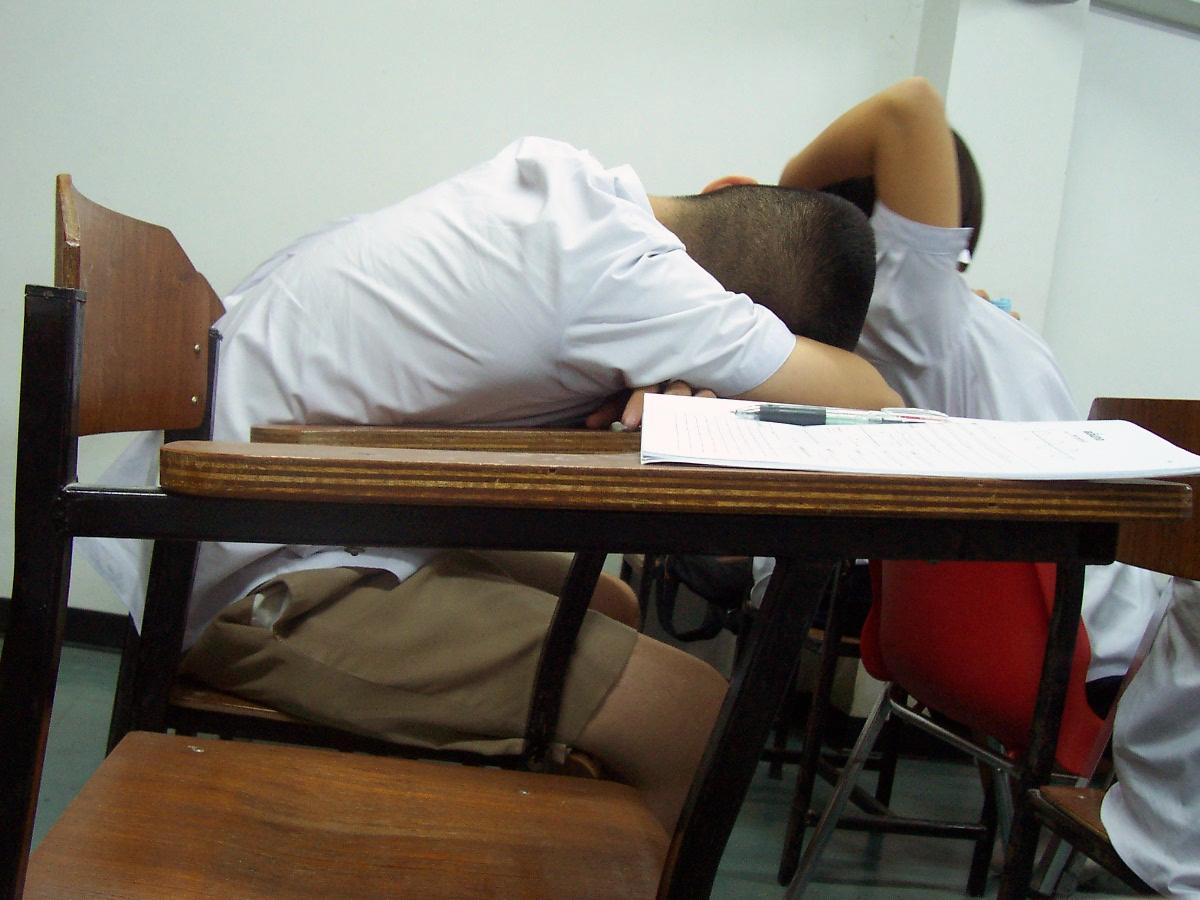
Exhausted students after a cramming session. Late-night massed study buys short-term familiarity, not lasting knowledge. Photograph: Love Krittaya
Image Credits: Wikimedia Commons / Love Krittaya
Why does cramming feel like it works?
Because familiarity masquerades as knowledge. Reading notes until they feel recognizable creates fluency during review, but that fluency is recognition, not recall, and it fades fast.
How much better is spaced study than cramming?
In the UC San Diego experiment, wider spacing sometimes raised final recall by 50% with the same total study time. The advantage grows the longer the delay before the test.
How far apart should study sessions be?
Match the gap to the test: roughly a day apart for a test a week away, and weeks apart for a test months away. Bigger gaps beat smaller ones, up to a point.
Is re-reading notes useless?
For building durable memory, nearly. The 2013 Dunlosky review rated re-reading and highlighting as low utility, while spaced practice and self-testing earned high utility.
The bottom line
Cramming buys short-term familiarity at the cost of long-term retention because it skips spaced consolidation. Spread the same hours across sessions, space the gaps to the test date, and make each review a recall test. The science has been consistent since Ebbinghaus.
Latest in Education & Study
- Why Flashcards Work Best: Recognition vs Recall
- How to Read a Textbook Faster Without Missing Key Ideas
Subscribe for weekly study-science explainers in plain language.
Related stories

Why Do We Forget Things Right After the Test? Memory Science Explains
Forgetting after a test follows the Ebbinghaus curve: about half of new learning fades within an hour. See why cramming fades and what

Why you blank on answers you knew during the test
Blanking on a test is usually retrieval failure under pressure, not lost knowledge. Research on working memory and test anxiety explains

How to choose subjects for your future career
Choosing school subjects shapes your career options. Match your interests to entry requirements, test skills in demand, and keep maths