
Why airplane windows have rounded corners on airliners
By Rive News / Research desk | Rive News / Published October 27, 2026 at 9:00 AM PKT
Key takeaways
- A pressurised fuselage stretches on every flight, and any opening in its skin concentrates stress around its edge.
- Sharp corners concentrate that stress far more than curves, so repeated flights can grow tiny cracks at a corner.
- The de Havilland Comet disasters taught engineers to round openings and test airframes for fatigue over thousands of cycles.
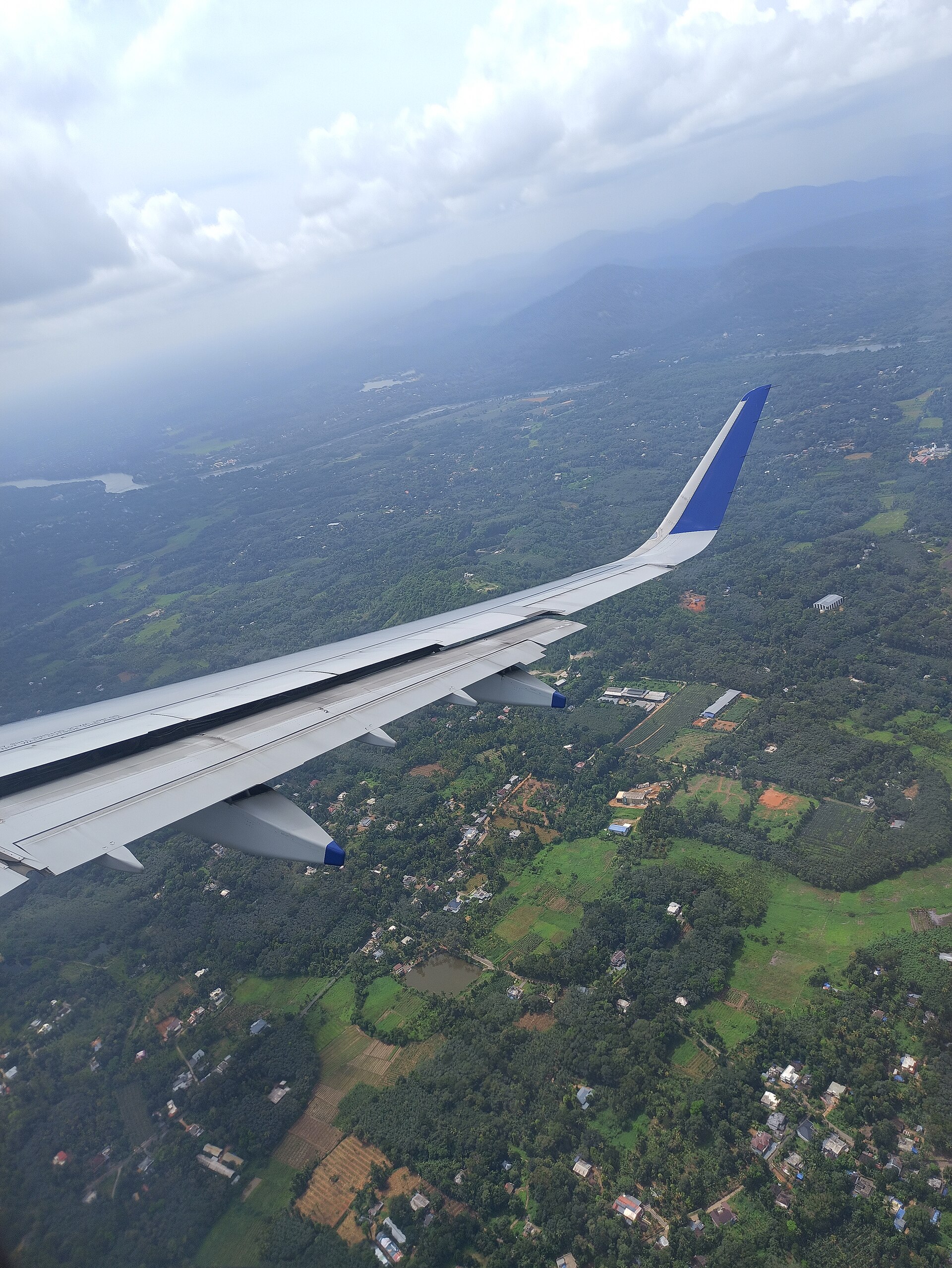
[A view from inside an airplane window.] Photograph: an airplane window
Image Credits: Wikimedia Commons
An airplane window has rounded corners because a curve spreads stress while a sharp corner gathers it. In a pressurised cabin, that difference decides whether a tiny crack stays tiny or grows with every flight.
This article explains why airplane windows have rounded corners, including stress concentration, metal fatigue, and the de Havilland Comet disasters that changed aircraft design.
A fuselage is a pressure vessel
At cruising altitude, the air outside an airliner is thin and cold, while the cabin inside is kept near ground-level pressure for passengers. That pressure difference pushes outward on the fuselage skin on every flight, like air pushing on a balloon.
The fuselage then relaxes when the plane lands and the cabin pressure returns to normal. Each flight is therefore one full pressure cycle: stretch, hold, relax, repeat.
Over a long service life, an airliner flies tens of thousands of cycles. A design that survives one pressurisation easily may still fail after thousands, because fatigue damage accumulates in small steps rather than in one overload.
That cycle count is why engineers test airframes differently today. They do not only ask whether a structure holds once, but whether it holds after the equivalent of a full working life of flights.
Why shape matters more than size
Cut a hole in a stretched sheet of metal and the stress near the hole rises. Gustav Kirsch worked out in 1898 that a round hole in a stretched plate raises the local stress about 3 times at the rim, whatever the size of the hole.
A sharp corner raises it far more. Stress flows through metal like water flowing around a rock, and a sharp corner forces that flow to turn abruptly in a tiny area, which piles the load onto a small amount of material.
BYU Design Review, summarising the Comet analysis, reports that up to 70 percent of the fatigue stress was focused in the four window corners of the early design. That concentration turned corners into the likeliest starting points for cracks.
Rounding a corner does not remove the stress around a window. It spreads the same load over a wider curve, so no single point carries the extreme peak that a sharp corner would carry.
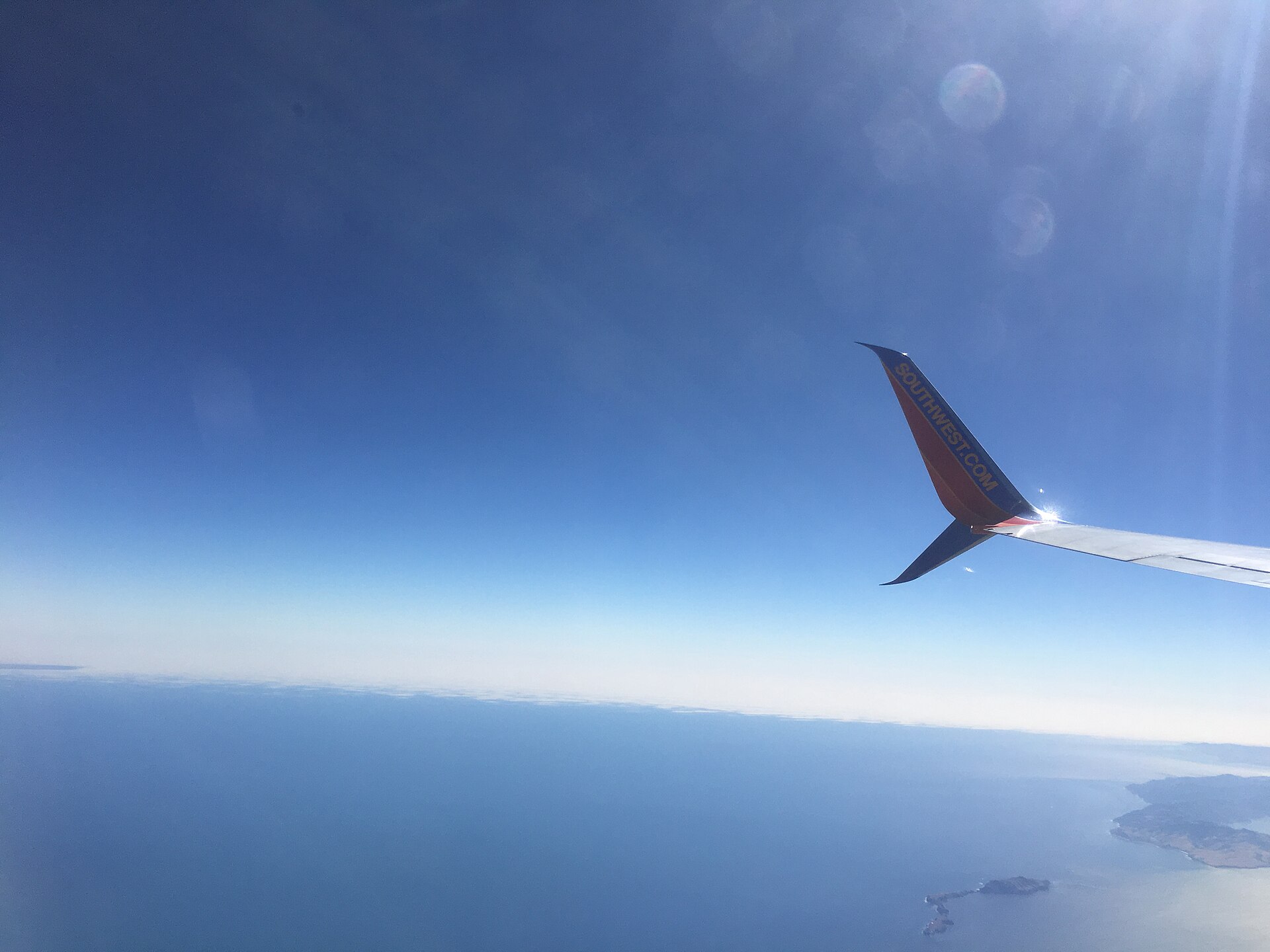
[An aircraft wing seen from a cabin window.] Photograph: an aircraft wing
Image Credits: Wikimedia Commons
The Comet: the popular story
The de Havilland Comet was the world's first commercial jet airliner, entering service with BOAC on 2 May 1952. It flew faster and higher than propeller airliners, in a smooth, near-vibration-free cabin, and it briefly made Britain the leader in jet travel.
In 1953 and 1954, three Comets disintegrated in mid-air. Two breakups in early 1954 killed 56 people across the two flights, and the fleet was grounded while investigators searched for a cause that no one had yet seen in civil aviation.
The popular story says square windows killed the Comet. That story captures a real principle, because stress does concentrate at corners, but the detailed record is more precise, and the precision matters for understanding what engineers actually changed.
What the investigation actually found
Investigators at the Royal Aircraft Establishment submerged a complete Comet fuselage in a water tank and simulated repeated pressure cycles. After 3,000 cycles, a crack emerged near a corner of the forward escape hatch, which, like the passenger windows, had sharp edges.
The inquiry into the Elba breakup traced the fatal crack to a fatigue crack at an antenna window on the roof, not to a passenger window. One Comet in the inquiry record had flown 1,290 pressurised flights before breaking up, which shows fatigue as a slow accumulation rather than a single bad flight.
Bill Withuhn, an aviation historian, summed up the lesson in a line quoted by MiGFlug, saying, "The Comet pushed the state-of-the-art beyond its limits."
The deeper problem was therefore wider than one window shape. The skin was thin for the stresses around cutouts, fatigue testing for repeated pressurisation did not yet exist as a discipline, and sharp-cornered openings of several kinds all shared the same weakness.
Later Comet versions used oval windows, stronger skin, and far more rigorous fatigue testing. The oval shape also proved easier to bond with adhesive rather than rivet, which shows that manufacturing and safety reasons can point to the same shape.
How metal fatigue grows a crack
Metal fatigue starts with microscopic damage at a stress concentration. Each pressure cycle opens and closes that damage by a tiny amount, and over hundreds or thousands of cycles the crack lengthens.
For a long time, the crack is too small to see and too small to affect normal flight. The fuselage still holds pressure, the cabin still feels normal, and nothing in the passenger experience hints at the damage growing in the skin.
At a critical size, the crack can propagate in a fraction of a second. The remaining skin can no longer contain the pressure difference, and the result is explosive decompression and structural failure.
That sudden end is what makes fatigue so dangerous. A structure can pass a single strength test with ease and still fail in service, because the test never repeated the load enough times to grow the crack.
Why modern windows look the way they do
Modern airliner windows are oval, with generous curves at every corner and no sharp point anywhere on the rim. The same rounding applies to doors, hatches, and other cutouts in the pressurised skin, because every opening follows the same physics.
Engineers also design for crack growth, not only for crack prevention. Structures are inspected at intervals, critical areas are checked for early cracks, and designs include ways to slow a crack or to keep it from tearing the whole fuselage at once.
Window glass itself is layered, with multiple panes and a small breather hole in the middle pane. That hole equalises pressure between panes and prevents fogging, and it is far too small to affect the structural story of the window shape.
Passengers sometimes ask why windows cannot be larger or square for a better view. Larger windows are possible with modern materials and thicker, stronger frames, but every increase in size still has to pass fatigue testing over a full service life.
A lesson that outlived the Comet
The Comet disasters forced aviation to treat fatigue as a design subject in its own right. Test programmes, inspection intervals, and stress calculations for cutouts all grew out of the work that followed those crashes.
Every Boeing and Airbus airliner since carries oval windows and cutouts designed around fatigue calculations that did not exist before the Comet forced them into being. That lineage is the reason a modern window looks the way it does, even on aircraft built from composites rather than aluminium.
The lesson also reaches beyond aviation. Any pressure vessel, from a submarine hull to a gas tank, must respect the same rule: never leave a sharp corner where repeated stress can gather and grow a crack.
The bottom line
Airplane windows have rounded corners because curves spread stress and sharp corners gather it. In a fuselage that stretches and relaxes on every flight, that gathering turns into fatigue cracks over thousands of cycles.
The Comet taught that lesson at a terrible price, and the corrected record makes it sharper still. It was not one window alone, but sharp-cornered openings and thin skin under repeated pressure, that failed, and rounding every opening became part of the fix.
Tags: airplanes, aviation safety, engineering
Rive News is a research desk that explains engineering history from inquiry summaries and design reviews, without claiming first-hand aerospace testing.
Related
- Why Airplane Windows Are Round and Can Never Be Opened
- Why Is Airplane Food So Bland at Altitude?
- Why Do Airlines Dim Cabin Lights?
- How Do Planes Stay in the Air?
Subscribe to Rive News for one plain-English explainer each day.
Rive News publishes research-based explainers; facts are attributed to named sources, and corrections are welcomed.
Related stories

The 3-1-1 liquids rule for planes: what each number means
TSA's 3-1-1 rule limits carry-on liquids to 3.4-ounce containers in one quart bag. Where the 2006 rule came from, what counts, and how
Why Is Airplane Food So Bland at Altitude?
A 2010 Fraunhofer study found altitude cuts sweet and salty perception by up to 30 percent. Low humidity, cabin pressure, and noise all
Carry-on size limits: why airlines each set their own
Airlines set their own carry-on limits because the FAA only requires each carrier to have a policy, not one global size. Why 22 x 14 x