
Why airplane windows are round and can never be opened
By Rive News / Research desk | Rive News / Published October 24, 2026 at 9:00 AM PKT
Key takeaways
- Airplane windows are round because square corners concentrate stress and caused fatal 1950s crashes of the de Havilland Comet.
- Windows cannot open because cabin pressure at altitude pushes outward with a force no person could overcome.
- At 35,000 feet the air outside is below minus 60 degrees Fahrenheit and less than a quarter of sea-level pressure.
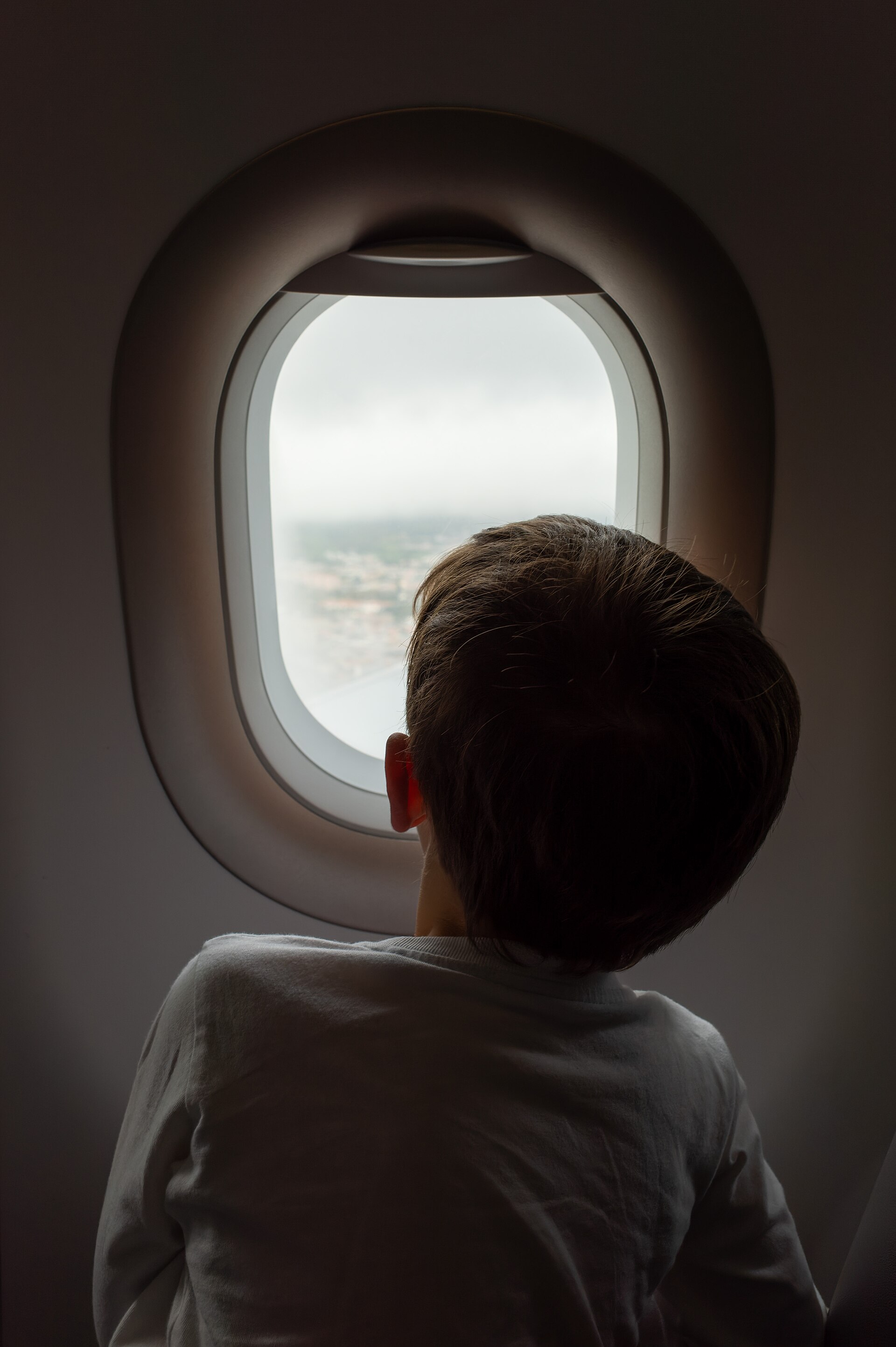
[A passenger looks out of an oval cabin window at the wing and sky. The rounded shape replaced square designs after the Comet investigations. Photograph: unknown photographer]
Image Credits: Wikimedia Commons
Airplane windows are oval because square window corners can crack under pressure, and the first jet airliners proved it the hard way. They cannot be opened because the cabin is a pressurized vessel: the air inside pushes outward far harder than any person could push back.
This article explains both facts together, including the 1950s Comet disasters, the stress-corner physics, and why the sealed window is a safety feature rather than a design flaw.
The Comet disasters that changed window design
The de Havilland Comet was the world's first commercial jet airliner, entering service with BOAC on 2 May 1952. It flew roughly twice as fast and twice as high as propeller airliners, and it briefly made Britain the leader of the jet age.
Then three Comets broke apart in flight within twelve months: in May 1953, January 1954, and April 1954, according to the Brit Brief review of the investigation. Every person aboard was killed. The wrecks showed a consistent fracture pattern, and it always began at the same place: the corners of the aircraft's square windows.
The inquiry, led by Sir Arnold Hall at the Royal Aircraft Establishment, was one of the most exhaustive accident investigations ever run. Engineers reconstructed wreckage recovered from the seabed and subjected a complete fuselage to repeated pressurization cycles in a giant water tank.
The verdict was metal fatigue. Each flight's pressurization and depressurization cycle flexed the cabin, and the sharp window corners concentrated that stress until tiny cracks grew and the fuselage ruptured.
Rounded windows were the direct fix. The redesigned Comet 4, introduced in 1958, flew with oval windows and a strengthened fuselage, and every pressurized airliner since has used rounded window openings. As MiGFlug's account of the investigation puts it, the lesson was simple: rounding the corners spreads the stress that sharp corners concentrate.
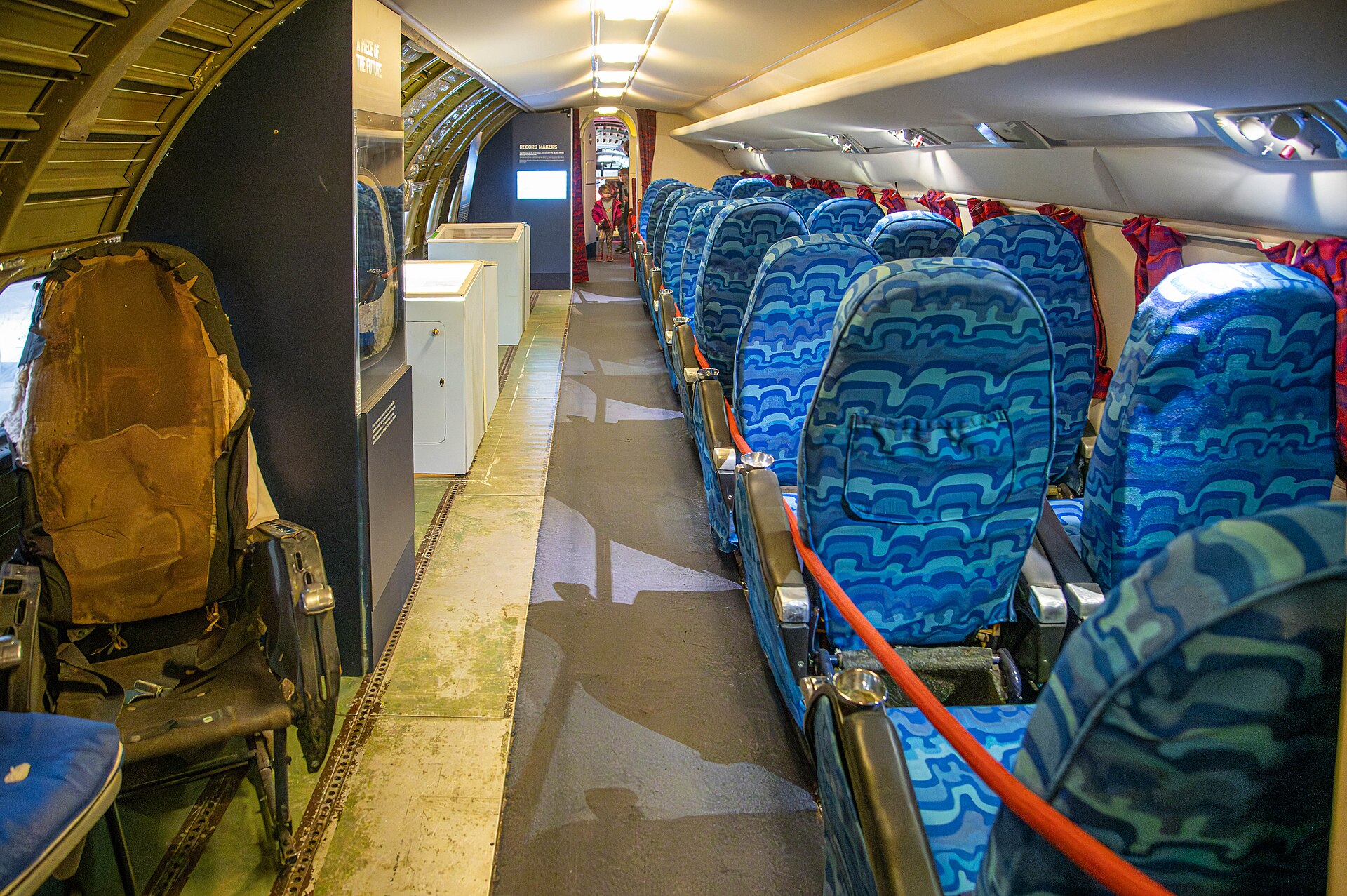
[A de Havilland DH.106 Comet preserved at the De Havilland Aircraft Museum. Early Comet airliners had square windows with sharp corners. Photograph: unknown photographer]
Image Credits: Wikimedia Commons
Why sharp corners are dangerous at altitude
The physics behind the rounded window is called stress concentration. In a pressurized cabin, the fuselage expands slightly on every flight, like a balloon inflating. Where there is a hole in the metal, the surrounding metal must carry the load that the missing piece cannot.
Sharp internal corners act as "stress-raisers," in the words of Mick Oakey, managing editor of The Aviation Historian, quoted by AFAR. Oakey explains: "They act as a focus for the forces of bending, twisting, and stretching, and cracks or breaks are much more likely to appear in those corners than anywhere else."
A rounded opening has no corners for the stress to focus on. The load spreads evenly around the curve, so microscopic cracks are far less likely to start. The same logic explains why ship portholes and submarine hull openings are round, a point engineering expert Wayne Maltry made to Reader's Digest in coverage of the Comet story.
It is worth noting that the corners do not have to look obviously sharp. Even a window that reads as "roughly square" creates stress peaks at its corners. Modern cabin windows are smooth ovals for exactly this reason: no corners at all.
Why windows cannot open: the pressure problem
At 35,000 feet, the typical cruising altitude of a commercial jet, the air pressure outside drops to less than a quarter of its sea-level value, according to The Engineering Toolbox data cited by Scientific American in 2012. The temperature outside falls below minus 60 degrees Fahrenheit (minus 51 degrees Celsius). Human lungs cannot work with that air, and human bodies cannot survive that cold.
That is why cabins are pressurized above about 10,000 feet, as Scientific American explains. Pumps push conditioned air in so the interior feels more like a mountain town than the stratosphere. The result is a pressure differential: much higher pressure inside, much lower pressure outside.
That differential is what makes opening a window physically impossible. The higher cabin pressure pushes outward on the entire window surface, effectively sealing it shut against its frame.
Trying to force one open would mean pushing against the combined weight of the atmosphere, which no person could do. This is the same reason doors and emergency exits cannot be opened mid-flight under normal pressurization.
If a window seal somehow failed, the result would be rapid depressurization. The compressed cabin air would rush out, the interior would equalize with the thin outside air, and oxygen masks would drop. Flight crews train for exactly this, and their first move is an emergency descent to around 10,000 feet, where the air is breathable again.
The tiny hole that keeps windows safe
Look closely at a cabin window and you will see a small hole in the bottom of the middle pane. That hole is deliberate engineering.
Airplane windows are built from multiple layers of acrylic or polycarbonate, typically three panes. The tiny breather hole in the middle pane lets pressure equalize between the cabin and the air gap between the outer and middle panes.
As the plane climbs and cabin pressure builds, the hole shifts almost the entire structural load onto the outer pane, which is the strongest layer.
The middle pane stays near zero net pressure difference and survives as a fail-safe backup.

[A modern triple-pane cabin window. The small hole in the middle pane balances pressure between the layers. Photograph: Unsplash, via Wikimedia Commons]
Image Credits: Wikimedia Commons
So the window is a small system: rounded shape to prevent cracks from starting, multiple panes so one failure is not catastrophic, and a breather hole to distribute the load. Nothing about it is decorative.
How to sleep on a plane when the window stays shut
None of this helps if you wanted fresh air, but the sealed window does not have to ruin your flight. A window seat still gives you a wall to lean against and control of the shade.
For the rest, a proper plan for sleeping on a plane when you cannot fall asleep covers neck support, timing, and light blocking. And when schedules go sideways, knowing what flight delay announcements really mean takes some of the mystery out of the wait.
FAQ
Did any other aircraft have the square window problem?
The wartime Liberty cargo ships famously split at square hatches for the same stress-concentration reason, with 19 ships reported splitting in half. In aviation, the Comet was the defining case, and Boeing and Douglas applied its lessons to the 707 and DC-8.
Why are the windows so small?
Smaller windows mean smaller holes in the fuselage, which means less structural load to manage around each opening. The small oval is the compromise between giving passengers a view and keeping the pressure vessel strong.
Could a window ever be opened on the ground?
Cabin windows are fixed panels, not hinged openings, so there is nothing to unlatch. On the ground the cabin is not pressurized, but the windows are still sealed structural components. Only doors and designated emergency exits are designed to open, and crews arm and disarm those at the gate.
What if a window cracks mid-flight?
The layered design handles it. A cracked inner or middle pane still leaves intact panes holding pressure, and the breather hole means the middle pane carries little load anyway. Pilots would descend as a precaution, but a cracked pane is a maintenance event, not an emergency by itself.
The bottom line
Airplane windows are round because the first jet airliner learned, through three fatal crashes, that square corners crack under pressure. They cannot open because a pressurized cabin at 35,000 feet is a pressure vessel, and the atmosphere itself holds every window shut.
The Comet's investigators, led by Sir Arnold Hall, turned those disasters into the rounded-window rule that still governs every airliner flying today. It is one of aviation's clearest examples of tragedy converted into engineering.
Tags: aviation, airplane windows, flight safety, pressurization
Rive News's research desk covers travel explainers, aviation history, and transport science.
Related
- How to sleep on a plane when you cannot fall asleep
- Why do flights get delayed, and what announcements really mean?
- Why Cruise Ships Do Muster Drills Before Sailing
Get one travel explainer in your inbox every week. Subscribe to the Rive News newsletter.
This article follows the Rive News research standards: named sources, verifiable numbers, no invented quotes. Corrections: [email protected].
Related stories

The 3-1-1 liquids rule for planes: what each number means
TSA's 3-1-1 rule limits carry-on liquids to 3.4-ounce containers in one quart bag. Where the 2006 rule came from, what counts, and how
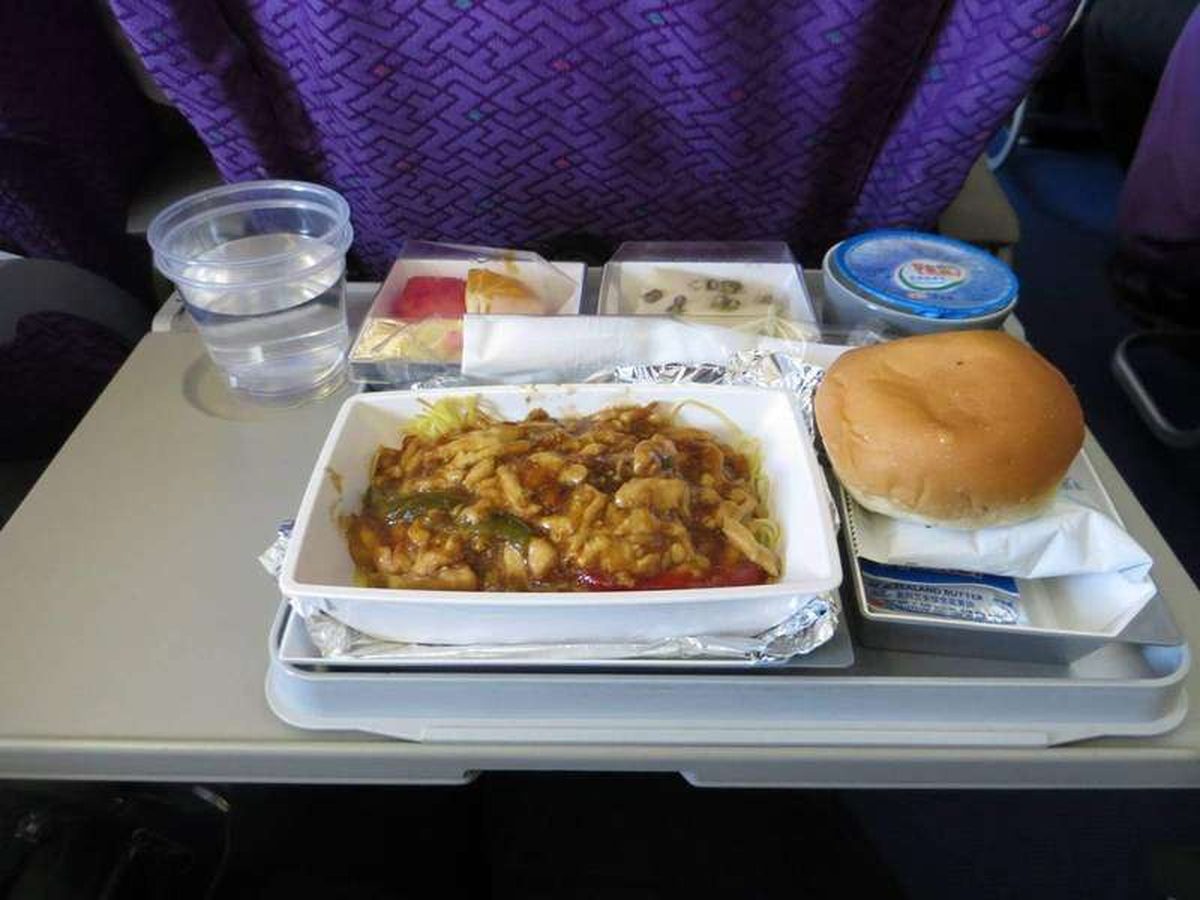
Why Is Airplane Food So Bland at Altitude?
A 2010 Fraunhofer study found altitude cuts sweet and salty perception by up to 30 percent. Low humidity, cabin pressure, and noise all

Carry-on size limits: why airlines each set their own
Airlines set their own carry-on limits because the FAA only requires each carrier to have a policy, not one global size. Why 22 x 14 x