
How Do Planes Stay in the Air: Lift Explained Simply
Key takeaways
- Four forces act on a plane: lift, weight, thrust, and drag, and lift must balance weight for level flight.
- A wing makes lift by turning air downward and by creating lower pressure above the wing.
- The popular equal-transit story of lift is a myth, and NASA's own teaching material says so.
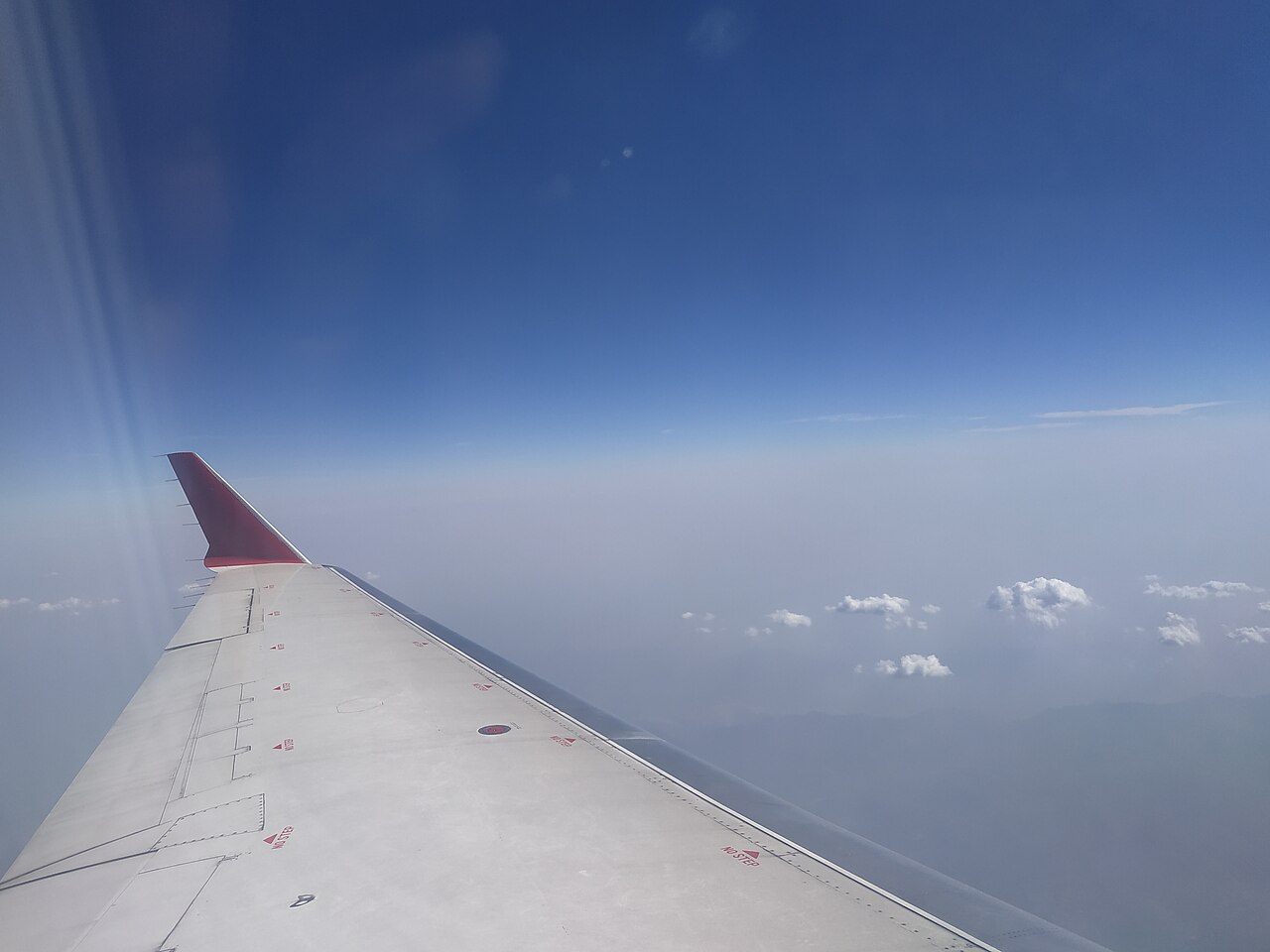
How do planes stay in the air? A loaded airliner can weigh hundreds of thousands of pounds, and some types reach a maximum takeoff weight of a million pounds or more, according to NASA. Yet the plane climbs, cruises, and lands with room to spare.
The answer is lift, the upward force made by the wings as they move through air.
This article explains the four forces on a plane, including how a wing makes lift, why the most common textbook story is wrong, and what keeps a plane steady in the sky.
The four forces
At any moment, four forces act on a plane. NASA lists them in its teaching material on Bernoulli's principle: lift, weight, drag, and thrust.
Lift is the upward force. It opposes weight and holds the plane in the air. Weight is the pull of gravity on the plane, drawing it toward Earth's center.
Thrust is the forward push from the engines. Drag is the resistance of air against the plane as it moves.
In level cruise, the forces balance in pairs. Lift equals weight, so the plane holds its altitude. Thrust equals drag, so the plane holds its speed.
When lift exceeds weight, the plane climbs. When thrust exceeds drag, the plane speeds up.
NASA puts the role of lift plainly: "Lift is the key aerodynamic force that keeps objects in the air." Everything else in this article explains where that force comes from.
Weight sets the size of the job. A heavier plane needs more lift, which means it needs more wing area, more speed, or both. That is why big jets have big wings and high takeoff speeds.
A light glider can fly slowly on long thin wings because it has little weight to support.
How a wing makes lift
A wing is not a flat board. It has a special shape called an airfoil, curved on top and flatter below, set at a slight angle to the airflow. That shape and angle are the whole trick.
As the wing moves forward, air flows around it. The wing turns the airflow downward. Air has mass, so pushing it down takes force.
By Newton's third law, the air pushes back up on the wing with an equal and opposite force. That push is a large part of lift.
At the same time, pressure changes around the wing. Air moves faster over the curved top of the wing, and faster air means lower pressure. Air below the wing moves more slowly and stays at higher pressure.
The pressure difference pushes the wing upward, from high pressure below toward low pressure above.
The Smithsonian National Air and Space Museum explains it this way: the curved top forces the air above to move faster, and according to Bernoulli's principle, fast air has lower pressure. The higher pressure below the wing pushes the wing up, lifting the plane into the sky.
These two views are not rivals. The downward turning of air and the pressure difference are two sides of the same flow. The wing turns air down, and the pressure field around the wing is what carries that push.
Both descriptions must hold for lift to exist.
The angle matters as much as the shape. Pilots call it the angle of attack: the angle between the wing and the oncoming air. A small angle gives a small lift.
A larger angle gives more lift, up to a point. Past that point, the airflow breaks away from the wing, lift collapses, and the wing stalls.
The myth most textbooks repeat
Many textbooks explain lift with a story called equal transit time. It claims that air over the top of the wing must speed up because it has farther to travel than air under the wing, so the two streams meet again at the trailing edge. The faster air then has lower pressure, which lifts the wing.
That story is wrong. Air over the top does not need to meet air under the wing at the same time. In real flows, the upper air arrives at the trailing edge earlier, not at the same moment.
There is no rule forcing the two streams to reunite.
Physicist David Anderson has argued this point for years. In an interview with New Scientist, he called the standard explanation mostly myth and said lift is a reaction force: the wing pushes air down, so air pushes the wing up. NASA's own teaching material agrees that Bernoulli's principle is not the only reason for flight, and it stresses Newton's laws alongside it.
The true Bernoulli statement still holds: where air speeds up, pressure drops. The error is only in the reason given for the speedup. The speedup comes from the wing's shape and angle turning the flow, not from a race between two air streams.
Why does the myth survive? It is simple, it sounds scientific, and it gives a neat picture. Teachers repeat it because they learned it.
Textbooks repeat it because readers expect it. The correct picture is only slightly harder: a wing turns air down, pressure differences carry the push, and Newton's laws tie it together.
Speed, flaps, and takeoff
Lift grows with speed. Double the speed, and lift roughly quadruples. That is why takeoff runs are long.
The plane must reach a speed where the wings make enough lift to support its weight.
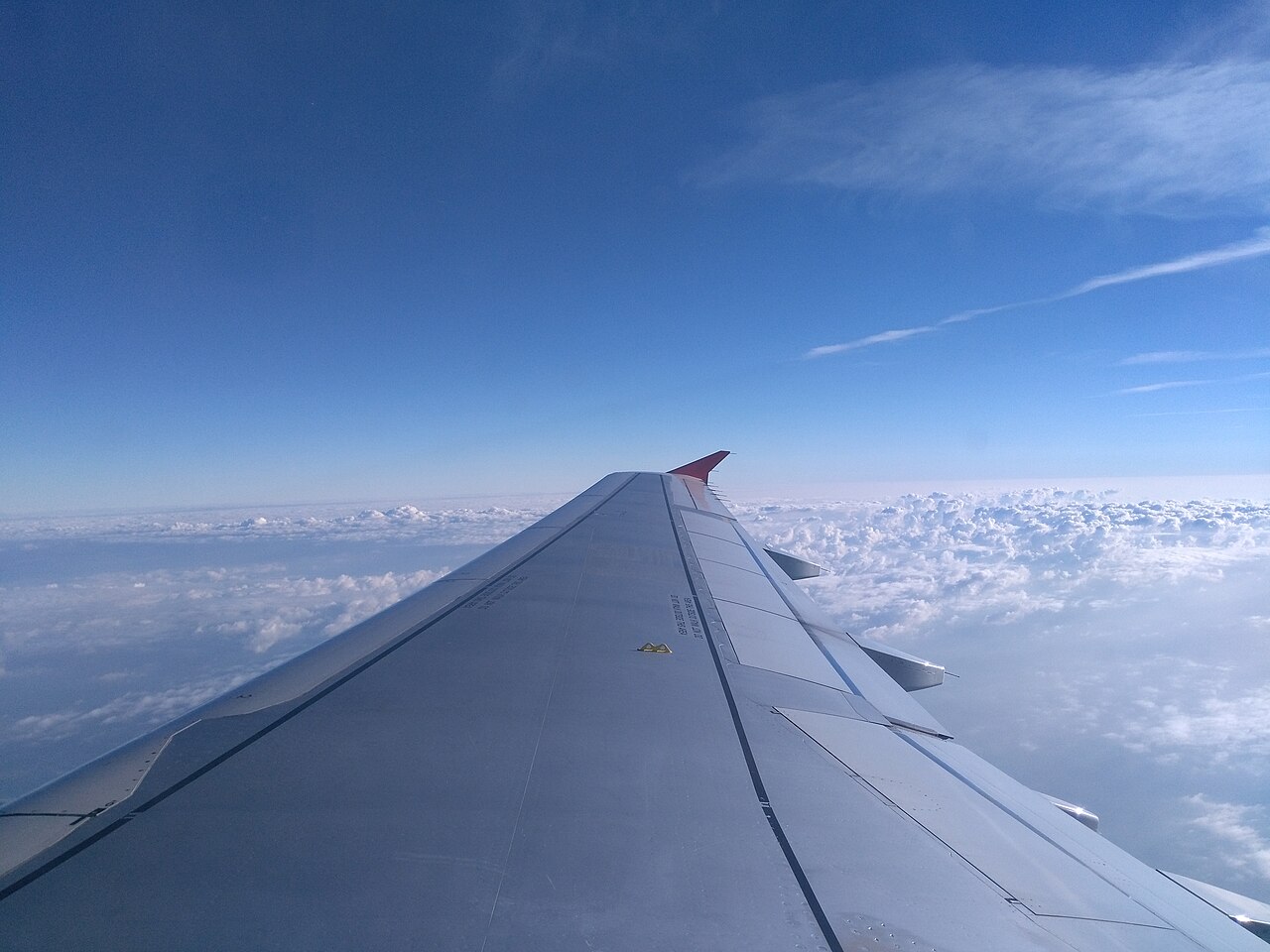
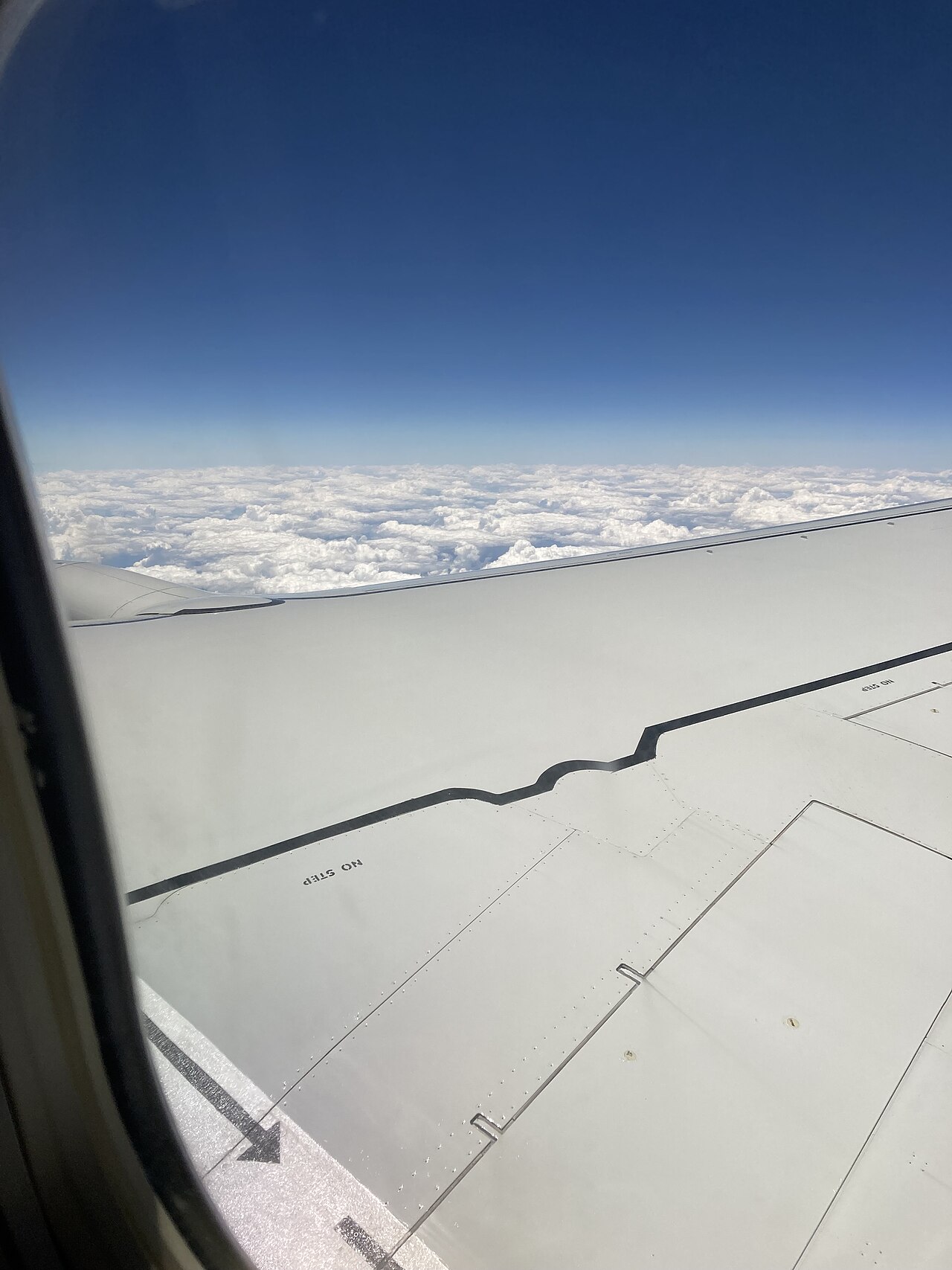
Flaps help at low speed. These panels extend from the back of the wing during takeoff and landing. They change the wing's shape and angle, which increases lift at a given speed.
That is why a plane can climb away shortly after liftoff even though it is still moving slowly.
Weight also shapes the takeoff. A plane full of fuel, cargo, and passengers needs a longer runway than the same plane flying light. Pilots check the weight, the air temperature, and the runway length before every departure.
Hot air is thinner, so wings make less lift in it, and takeoff runs get longer on hot days.
Once at cruise altitude, the plane flies where the air is thin. Thinner air means less drag, which saves fuel. But thinner air also means less lift, so the plane must fly fast to stay up.
A typical jetliner cruises near 35,000 feet at about 500 to 550 miles per hour.
What keeps a plane steady
Lift holds a plane up, but stability keeps it flying straight. The tail does much of that work. The horizontal tailplane acts like the feathers on an arrow, keeping the nose pointed into the airflow.
The vertical tail keeps the nose from swinging side to side.
Pilots steer with three controls. Ailerons on the wing edges roll the plane left and right. The elevator on the tail pitches the nose up and down.
The rudder on the vertical tail yaws the nose left and right.
Engines matter too, but not in the way many people think. An engine does not hold the plane up. It pushes the plane forward so the wings can make lift.
Gliders prove the point: with no engine at all, a glider flies by trading altitude for speed, and its wings keep making lift all the way down.
If all engines failed on a jetliner, the plane would become a heavy glider. It would descend steadily, but the wings would still fly. Pilots train for this.
In 2009, a US Airways flight lost both engines over New York and glided to a safe landing on the Hudson River, a real case of wings doing their job without thrust.
Why planes do not fall out of the sky
The short answer is that lift is reliable. It follows from the shape of the wing, the speed of the air, and the density of the air. None of those vanish without warning.
Stalls are the main exception, and pilots train to prevent and recover from them. A stall happens when the wing's angle of attack grows too large, usually because the plane flew too slowly. The fix is to lower the nose and gain speed.
Warning systems alert the crew well before a stall, and stick-shakers in the cockpit buzz the controls as a last warning.
Icing is another hazard. Ice on the wing changes its shape and adds weight, which cuts lift. Planes are de-iced before takeoff in winter, and many have heated leading edges that melt ice in flight.
Bird strikes can damage engines, but modern jets can climb and land on one engine. Redundancy runs through the whole design: two pilots, two engines on most jets, backup hydraulics, and backup instruments.
For more sky physics, see what gravity is in simple words and what causes the northern lights to appear.
Frequently asked questions
Can a plane fly with one wing?
No, not in any normal sense. Both wings make lift, and losing one wing destroys the balance of forces. A plane can fly with one engine, but a wing is not optional.
Why do planes fly so high?
High altitude means thin air, which means less drag and better fuel economy. Jets cruise near 35,000 feet, where the air is thin enough to cut drag but still thick enough for the wings to make lift at high speed.
What is a stall?
A stall is a loss of lift caused by too steep an angle of attack, usually at low speed. The airflow separates from the wing, and lift drops sharply. Pilots recover by lowering the nose and gaining speed.
Do planes need engines to stay up?
No. Engines provide thrust, which keeps the plane moving forward so the wings make lift. Gliders fly without engines by trading altitude for speed.
A jet that lost all engines would glide down, not drop like a stone.
The bottom line
Planes stay up because wings turn air downward and the pressure field around the wing pushes back up. Lift balances weight, thrust balances drag, and the tail keeps the whole system steady. The equal-transit story is a myth, but the real physics is just as elegant: a shaped wing, moving air, and Newton's laws.
Tags: planes, flight, physics, air travel
Latest in Science
- What is gravity in simple words
- What causes the northern lights to appear
- How trees talk to each other underground
Subscribe for one clear science explainer each week.
Related stories

Why diamond is hard and graphite is soft when both are carbon
Diamond and graphite are both pure carbon, yet diamond is 10 on the Mohs scale and graphite is 1 to 2. The difference is not the atoms;

Why Hot Water Can Freeze Faster Than Cold: The Mpemba Effect Explained
Hot water can freeze faster than cold under specific conditions. The Mpemba effect, named for a 1963 schoolboy experiment, still divides
How Magnets Work at the Atomic Level: Spins, Domains, and Iron
Magnetism comes from electrons: their spin and orbits make each atom a tiny magnet. In iron, quantum forces align these atomic magnets into