
What Is Gravity in Simple Words: A Plain Guide
Key takeaways
- Gravity is the pull between objects with mass, and bigger masses pull harder.
- Earth's gravity holds you on the ground and keeps the Moon in orbit around us.
- The pull weakens with distance, and Einstein described it as curved spacetime.
What is gravity in simple words? Gravity is the pull between objects that have mass. Mass is the amount of stuff in an object.
Everything with mass pulls on everything else, though most everyday pulls are too weak to notice.
Earth has a lot of mass, so its pull is strong enough to hold you on the ground. The Sun has far more mass, so its pull holds Earth in orbit. This article explains what gravity is, including why things fall, why the Moon stays with us, how gravity differs on other worlds, and how Einstein reframed the whole idea.
What gravity does
NASA Space Place gives the shortest definition: "Gravity is the force by which a planet or other body draws objects toward its center." That one sentence covers a falling apple, a rolling ball, and the orbit of the Moon.
Gravity pulls between any two masses. Your body pulls on Earth, and Earth pulls on you. Earth's pull wins because Earth is vastly more massive.
Science News Explores puts it this way: everything that has mass also has gravity, and when objects have a lot of mass, they also have a lot of gravity.
Two facts shape every gravity story. First, more mass means a stronger pull. Second, more distance means a weaker pull.
Move twice as far from a planet, and the pull drops to a quarter of its strength. Move three times as far, and it drops to a ninth.
That second rule explains why astronauts feel weightless in orbit. They are not beyond gravity. They are falling around Earth, fast enough that their path curves at the same rate as Earth's surface curves away beneath them.
Why things fall down
Drop a pencil, and it falls to the floor. It falls because Earth's gravity pulls it toward Earth's center. The floor stops it, and that is why it rests there instead of sinking further.
Near Earth's surface, falling objects speed up at about 9.8 meters per second squared. That number means a falling object gains about 9.8 meters per second of speed with each passing second, ignoring air resistance. A feather falls slowly only because air pushes back on it.
In a vacuum, a feather and a hammer fall side by side.
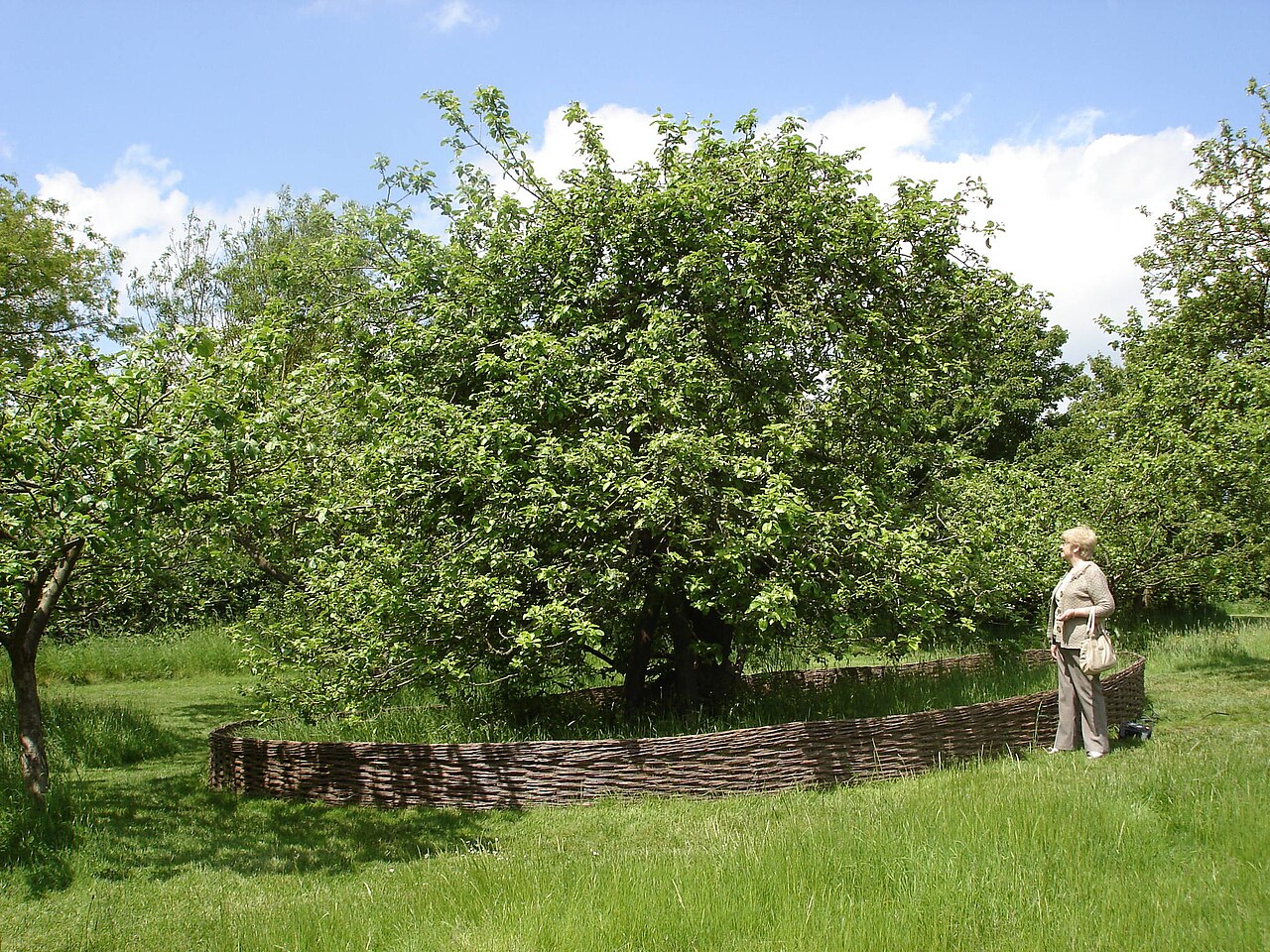
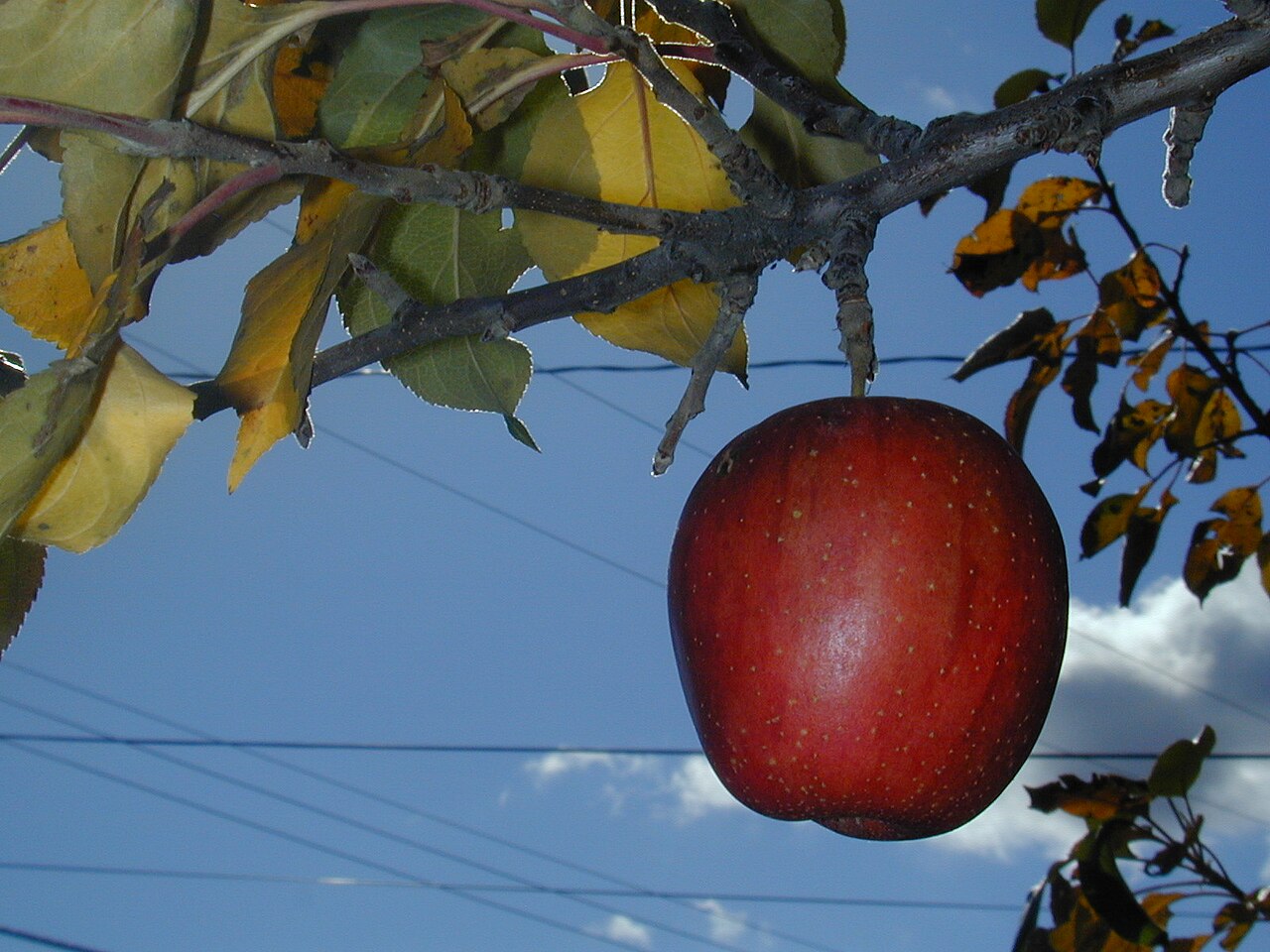
The apple story is a useful picture, even though the famous tale is simplified. Isaac Newton, who lived from 1643 to 1727, showed that the same pull that drops an apple also holds the Moon in its path. One rule explained both the everyday fall and the motion of the heavens.
That was a huge step.
Newton's rule of gravitation says the pull depends on the masses involved and the distance between them. It works well for most practical purposes, from planning bridges to aiming spacecraft at nearby planets.
Why the Moon does not fall to Earth
The Moon is falling toward Earth all the time. It never lands, because it is also moving sideways very fast. Its sideways motion keeps bending its fall into a circle around Earth.
The result is an orbit.
Think of throwing a ball. A gentle throw lands nearby. A faster throw lands farther away.
If you could throw a ball fast enough, and if there were no air in the way, the ball would keep falling toward Earth but never reach the ground, because Earth's surface curves away beneath it at the same rate. That is what an orbit is: endless falling that keeps missing.
The Sun holds Earth the same way. Earth's sideways motion around the Sun, combined with the Sun's pull, gives us a stable year-long orbit. The Sun's gravity reaches far past Earth too.
It holds planets from Mercury out to Neptune, and it shapes the paths of comets that visit from much farther away.
The Moon also pulls on Earth. That pull is weaker, but it is real. It is the main cause of ocean tides.
Water on the side of Earth facing the Moon bulges toward the Moon, and water on the far side bulges away, giving most coasts two high tides a day.
Gravity on other worlds
Gravity feels different on other worlds because mass and size differ. A planet with less mass pulls less. A planet with more mass pulls more, though a larger radius can soften the effect at the surface.
Science News Explores notes that on Mercury, you would feel like you weighed less, because Mercury's mass is less than Earth's. Your mass would not change. Only the pull on you would change.
The Moon's gravity is about one-sixth of Earth's. An astronaut who weighs 180 pounds on Earth would weigh about 30 pounds on the Moon. That is why Moon walkers could hop so high in the Apollo films.
Jupiter, the largest planet, pulls about 2.5 times harder than Earth at its cloud tops.
Gravity also weakens with height above Earth. The International Space Station orbits about 400 to 480 kilometers above Earth's surface, according to Science News Explores. At that height, a 45-kilogram object that weighs 100 pounds on the ground would weigh about 90 pounds.
The pull is still strong. The astronauts feel weightless because they are in free fall around Earth, not because gravity has vanished.
Gravity as curved spacetime
Albert Einstein, who lived from 1879 to 1955, offered a deeper picture. His general theory of relativity describes gravity not as a force pulling across space, but as the curvature of spacetime. Spacetime is the combined fabric of space and time.
A common picture helps. Imagine a stretched rubber sheet. Place a bowling ball in the middle, and the sheet dips.
Roll a small marble across the sheet, and it curves toward the bowling ball. The marble is not being pulled by a rope. It is following the dip in the sheet.
Massive objects do the same thing to spacetime. Planets, stars, and galaxies curve spacetime around them. Other objects follow those curves, and we call that motion gravity.
NASA's Blueshift blog describes it in similar terms: massive objects cause spacetime to stretch, and particles, stars, planets, and even light move along that stretched and curved surface. General relativity has passed test after test for more than a century, from the bending of starlight near the Sun to the timing signals of GPS satellites.
For daily life, Newton's picture is enough. For GPS, black holes, and the expansion of the universe, Einstein's picture is the one scientists use.
How scientists measure gravity
Gravity is invisible, but its effects are easy to measure. Scientists can weigh planets by watching how moons and spacecraft orbit them. A faster orbit at a given distance means a stronger pull.
In March 2002, NASA launched two satellites called GRACE, the Gravity Recovery and Climate Experiment. The twin satellites flew about 200 kilometers apart, and they tracked tiny changes in the distance between them. Those changes revealed where Earth's gravity was slightly stronger or weaker, which showed where water, ice, and rock were shifting.
GRACE data helped scientists track groundwater loss and ice melt around the world. Jay Famiglietti, a scientist who worked with the mission, described the method with a vivid line.
"GRACE is not looking at the ground. It's feeling the ground."
The quote captures the idea well. Gravity lets us sense mass we cannot see.
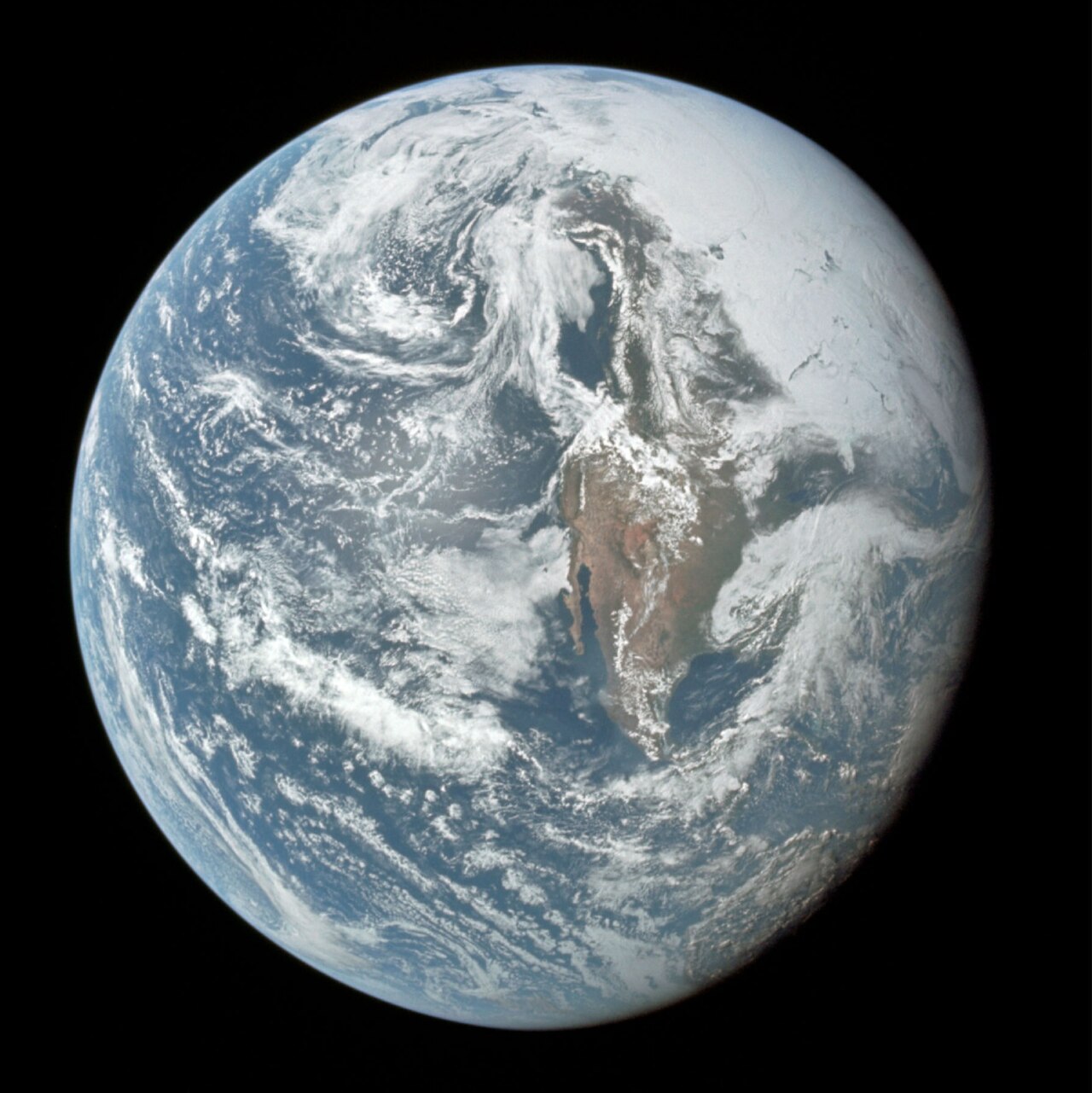
Today, a follow-on mission called GRACE-FO continues that work. The same principle applies on other worlds. By tracking orbiters around the Moon and Mars, scientists have mapped hidden mountains, buried craters, and thick ice caps.
Gravity also guides spacecraft. Mission planners use the pull of planets to speed up or slow down probes, a trick called a gravity assist. The Voyager probes, launched in 1977, used gravity assists to visit the outer planets and then leave the solar system.
Frequently asked questions
Does gravity exist in space?
Yes. Gravity exists everywhere in space, though it gets weaker with distance. Astronauts on the space station still feel about 90 percent of Earth's surface gravity.
They look weightless because they are in continuous free fall around Earth.
What would happen if Earth lost gravity for a few seconds?
Rumors of this kind spread online from time to time, and NASA has debunked them. Earth's gravity comes from Earth's mass, and Earth cannot lose its mass in seconds. If gravity vanished, buildings, oceans, and air would fly off into space, so the idea is not a harmless thought experiment.
Is gravity a force or a curve?
Both descriptions are useful. Newton described gravity as a force between masses, and that model still works for most engineering. Einstein described it as curved spacetime, and that model handles extreme cases such as black holes.
Scientists use whichever model fits the problem.
Why do we weigh less on the Moon?
Weight is the pull of gravity on your mass. The Moon has less mass than Earth, so it pulls less. Your mass stays the same wherever you go.
Only your weight changes.
Does the Sun have gravity?
Yes, and it is enormous. The Sun's gravity holds the whole solar system together. It keeps Earth in orbit, shapes comet paths, and bends the light of distant stars that passes near it.
The bottom line
Gravity is the pull between masses. It drops apples, holds the Moon, and shapes the paths of planets. Newton gave us the rules that still guide engineers.
Einstein gave us the deeper picture of curved spacetime. You can learn more about how motion works in how planes stay in the air and what causes the northern lights to appear.
Tags: gravity, physics, space, science basics
Latest in Science
- How do planes stay in the air
- What causes the northern lights to appear
- How trees talk to each other underground
Subscribe for one clear science explainer each week.
Related stories
Why diamond is hard and graphite is soft when both are carbon
Diamond and graphite are both pure carbon, yet diamond is 10 on the Mohs scale and graphite is 1 to 2. The difference is not the atoms;

Why Hot Water Can Freeze Faster Than Cold: The Mpemba Effect Explained
Hot water can freeze faster than cold under specific conditions. The Mpemba effect, named for a 1963 schoolboy experiment, still divides
How Magnets Work at the Atomic Level: Spins, Domains, and Iron
Magnetism comes from electrons: their spin and orbits make each atom a tiny magnet. In iron, quantum forces align these atomic magnets into