
Why airplane wings have small fins on their wingtips
By Rive News / Research desk | Rive News / Published October 28, 2026 at 9:00 AM PKT
Key takeaways
- The fins are winglets, and they weaken the swirling vortices that form where high and low pressure air meet at the wingtip.
- Weaker vortices mean less induced drag, so the plane burns less fuel or flies further on the same fuel.
- NASA flight tests in 1979 to 1980 measured a 6.5 percent fuel saving on a Boeing 707 fitted with winglets.
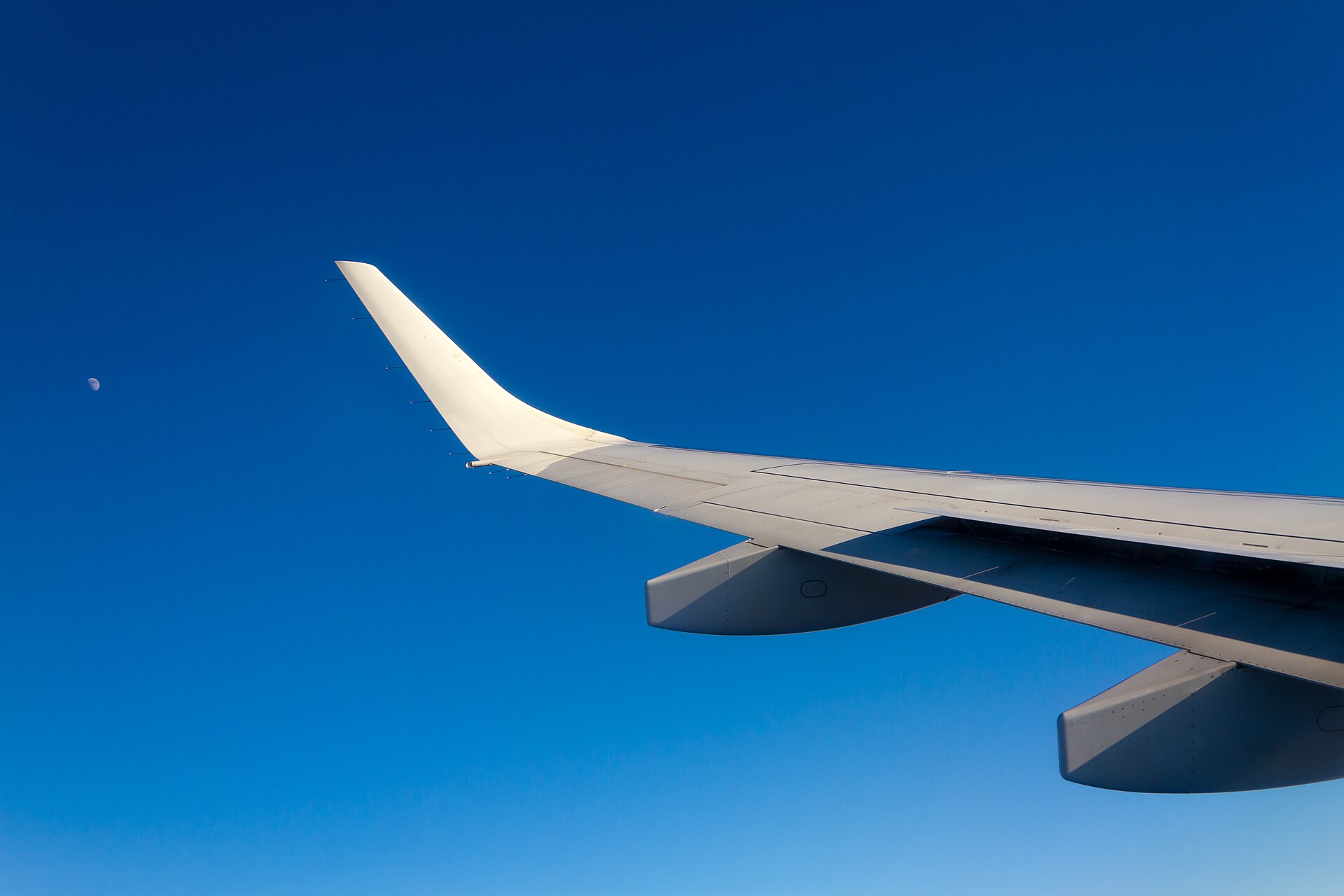
[An Embraer 190 wing with an upward winglet at its tip.] Photograph: an airliner wing and winglet
Image Credits: Wikimedia Commons
Look out of a plane window and you will see them on most modern airliners: small fins rising from the wingtips, sometimes curving upward like a breaking wave. They look decorative, but they are working hard. Those fins are called winglets, and they exist to fix a leak in how wings make lift.
This article explains the pressure problem at the wingtip, how a winglet tames it, where the idea came from, what it is worth in fuel, and why some planes still fly without one.
The pressure problem at the wingtip
A wing makes lift because air pressure below it is higher than air pressure above it. That pressure difference is the whole point of the wing, but it creates a problem at the tip. NASA's Glenn Research Center explains that winglets were developed to reduce the strength of the tip vortex, the swirling flow that forms when high-pressure air underneath escapes around the tip toward the low-pressure air on top.
The escaping air curls upward and trails behind the plane as a spinning vortex, like a horizontal tornado streaming off each wingtip.
That vortex is not just a visual curiosity. It represents energy the plane paid for and then threw away, and it shows up as induced drag, the drag created as a byproduct of making lift. Smithsonian Magazine describes wingtip vortices as twin tornados formed by the pressure difference between the wing's upper and lower surfaces, strong enough to flip smaller aircraft that blunder into them.
Induced drag is worst when the plane is flying slowly with a high lift demand, such as during climb, which is exactly when fuel burn is already high. Anything that weakens the vortex gives some of that wasted energy back.
How a winglet tames the vortex
A winglet works like a fence at the edge of the wing. By rising vertically at the tip, it blocks the easiest escape route for high-pressure air trying to curl over the top. NASA's Glenn page says the idea behind the winglet is to reduce the strength of the tip vortex and therefore make the flow across the wing more two-dimensional, closer to the clean flow a wing would have if it had no tips at all.
The vortex does not disappear, but it becomes smaller, weaker, and less costly.
There is a second way to think about it. A winglet behaves a little like extra wingspan without the full structural penalty of actually lengthening the wing. Longer wings also reduce induced drag, because the pressure leak is spread across a wider tip region, but longer wings need stronger structures and wider gates.
A winglet buys much of the same benefit in a compact vertical package. That trade is why winglets appear on planes that must fit existing airport gates, while some very large planes simply use longer wings instead.
Where the idea came from
The modern winglet comes from NASA engineer Richard Whitcomb, who wind-tunnel tested and computer-analyzed the design at NASA's Langley Research Center in the mid-1970s, according to NASA's Glenn Research Center. Whitcomb published his comparison in 1976, shortly after an energy crisis had sent fuel prices sharply upward. The Aircraft Owners and Pilots Association (AOPA) reports that his design was predicted to reduce induced drag by about 20 percent and improve the lift-to-drag ratio by 6 to 9 percent.
Those were predictions, but they were strong enough to justify real flight tests.
The tests came quickly. NASA's Glenn page records that flight tests at the Dryden Flight Research Center found a 6.5 percent reduction in fuel use on a Boeing 707 fitted with winglets, in tests run in 1979 to 1980. AOPA gives the same 6.5 percent figure for the same 707 tests.
That single number did more for winglets than any wind-tunnel chart, because it measured fuel saved on a real airliner in real flight.
Airlines pay for fuel by the ton, so a mid-single-digit saving across a fleet is worth a fortune.
What winglets are worth today
Winglets moved from experiment to standard equipment over the following decades. NASA's Spinoff account notes that the first aircraft to adopt winglets were in general aviation and business aviation, and that Boeing's 747-400 in the mid-1980s was an early widebody adopter, using winglets to increase its range. Airbus calls its version sharklets, and AOPA reports that Airbus says sharklets reduce fuel consumption by as much as 4 percent and can increase range by 100 nautical miles.
Boeing's 737 MAX uses an advanced-technology winglet that further redistributes the wing's loading, according to AOPA.
The fleet-wide savings are enormous. NASA's Spinoff account states that, according to industry figures, NASA-developed winglets have saved airlines approximately 4 billion gallons of jet fuel since their introduction. That saving also means lower carbon dioxide emissions, since burning less fuel releases less carbon, and NASA notes that winglets help reduce aircraft noise on takeoff and landing as well.
A small fin at the wingtip has therefore become one of aviation's most successful fuel-saving devices, precisely because it attacks a loss that every wing suffers.
Why some planes fly without them
If winglets are so useful, it is fair to ask why every plane does not have them. The answer is that winglets are one solution among several, and the best solution depends on the plane. Some aircraft, such as the Boeing 777, use a very long wingspan instead, which achieves the same induced-drag reduction without a vertical fin.
Longer wings work well when gates and structures allow them, and they avoid the extra weight and complexity a winglet adds at the tip.
Older planes often fly without winglets because retrofitting is not always worth the cost. A winglet changes the loads on the wing, so adding one to an existing design can require structural reinforcement and recertification. For a plane near the end of its service life, that expense may never pay back in fuel.
Small slow aircraft also gain less, because induced drag matters most at high lift and high speed combinations that they rarely reach. Winglets are common because they suit the modern airliner mission, not because they suit every flying machine.
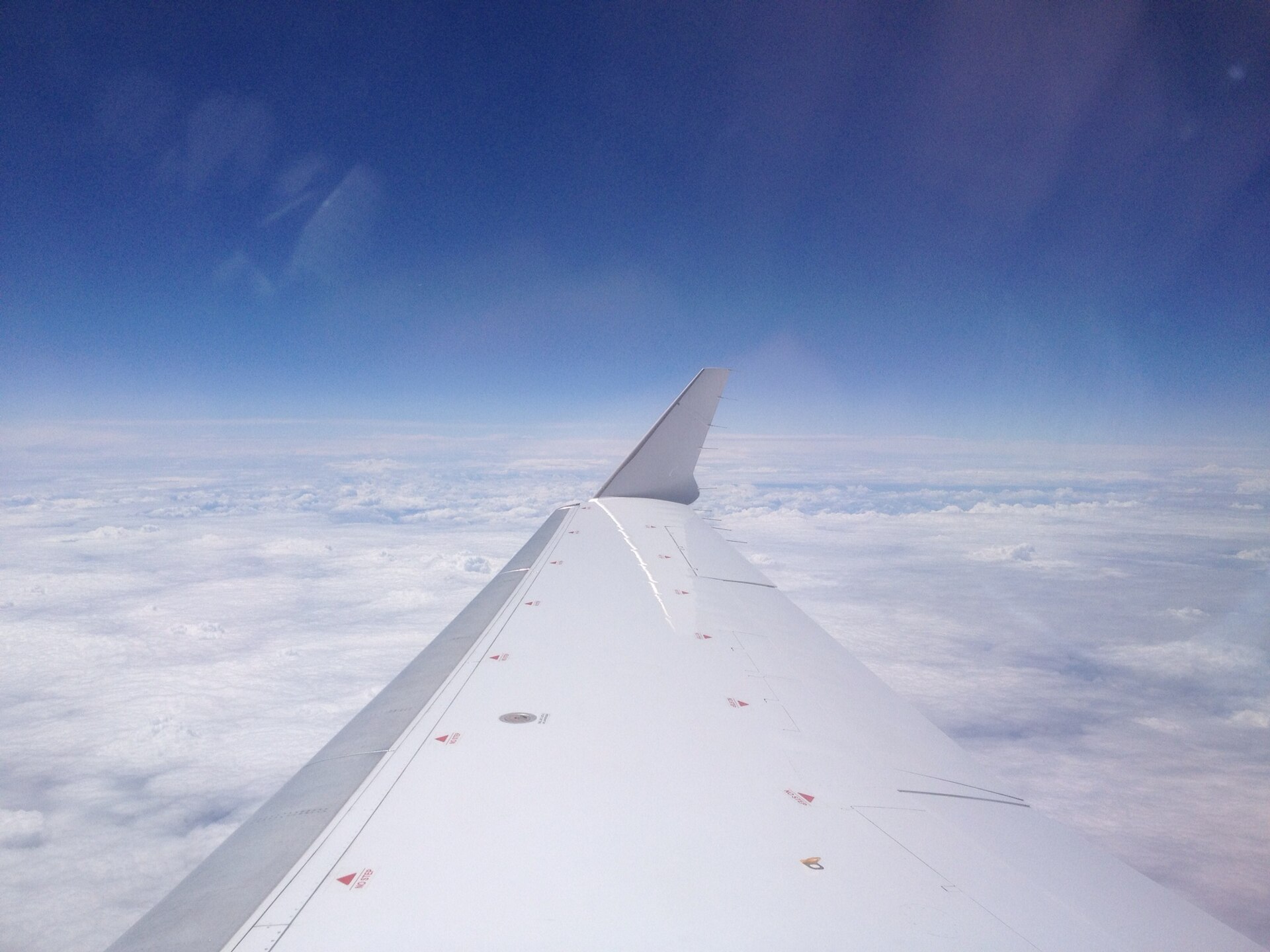
[A standalone winglet photographed against a clear sky.] Photograph: an aircraft winglet
Image Credits: Wikimedia Commons
Are winglets the same as sharklets?
Sharklets are Airbus's brand name for its winglets, and they do the same job as Boeing's winglets. The name is marketing, not a different branch of physics. Both are vertical or near-vertical extensions at the wingtip that weaken the tip vortex and cut induced drag.
Designs differ in shape, height, and whether they curve smoothly or angle sharply, because each wing needs a winglet tuned to its own airflow.
Do winglets help during takeoff and landing?
Yes, and that is when they help most. Induced drag is a larger share of total drag at low speed and high lift, which describes climb after takeoff and the approach before landing. Winglets therefore improve climb performance and can shorten takeoff distance slightly, as well as saving fuel in cruise.
Their benefit is present throughout the flight, but it is most valuable when the wing is working hardest.
Can you see wingtip vortices from the ground?
Sometimes, on humid days, you can see them as thin white trails curling off the wingtips of a landing aircraft. The low pressure inside the vortex core cools the air enough for water vapor to condense briefly into visible streaks. What you see is the vortex itself, made visible by weather, and it is the same swirling flow that winglets are designed to weaken.
Why do some winglets point both up and down?
Some designs add a small downward fin below the wing as well as the upward one. The downward part helps manage airflow on the lower surface, while the upward part handles the curl over the top. Splitting the device lets designers tune each side separately and can reduce the bending load on the wingtip.
Whether a winglet points one way or both, the goal is identical: keep high-pressure air from spilling freely around the tip.
The bottom line
Airplane wings have small fins on their tips because those fins, called winglets, weaken the vortices that leak energy off every wingtip. Weaker vortices mean less induced drag, and less drag means less fuel burned for the same journey. NASA proved the point with a 6.5 percent fuel saving on a test 707 in 1979 to 1980, and the idea has since saved billions of gallons across world fleets.
Next time you spot one from your window seat, you are looking at a small piece of engineering that pays for itself on every flight.
Tags: aviation, winglets, airplanes, fuel efficiency
Rive News's research desk writes plain-language explainers from public sources, with every key claim tied to a named document or institution.
Related
- Why airplane windows have rounded corners on airliners
- How planes stay in the air: lift explained simply
- Why is airplane food so bland at altitude
- Why do airlines dim cabin lights
Subscribe for one plain-language travel explainer in your inbox each morning.
Rive News publishes explainers from public sources; corrections are welcomed and noted on the article.
Related stories

The 3-1-1 liquids rule for planes: what each number means
TSA's 3-1-1 rule limits carry-on liquids to 3.4-ounce containers in one quart bag. Where the 2006 rule came from, what counts, and how
Why Is Airplane Food So Bland at Altitude?
A 2010 Fraunhofer study found altitude cuts sweet and salty perception by up to 30 percent. Low humidity, cabin pressure, and noise all
Carry-on size limits: why airlines each set their own
Airlines set their own carry-on limits because the FAA only requires each carrier to have a policy, not one global size. Why 22 x 14 x