
Why cruise ships use horn signals in fog and in port
By Rive News / Research desk | Rive News / Published October 28, 2026 at 9:00 AM PKT
Key takeaways
- Ship horn signals are a legal language set by the COLREGs, not casual noise or celebration.
- One short blast means turning to starboard, two mean turning to port, and three mean engines in reverse.
- Five or more short blasts signal doubt or danger, while the seven-short-one-long pattern is a separate emergency alarm.
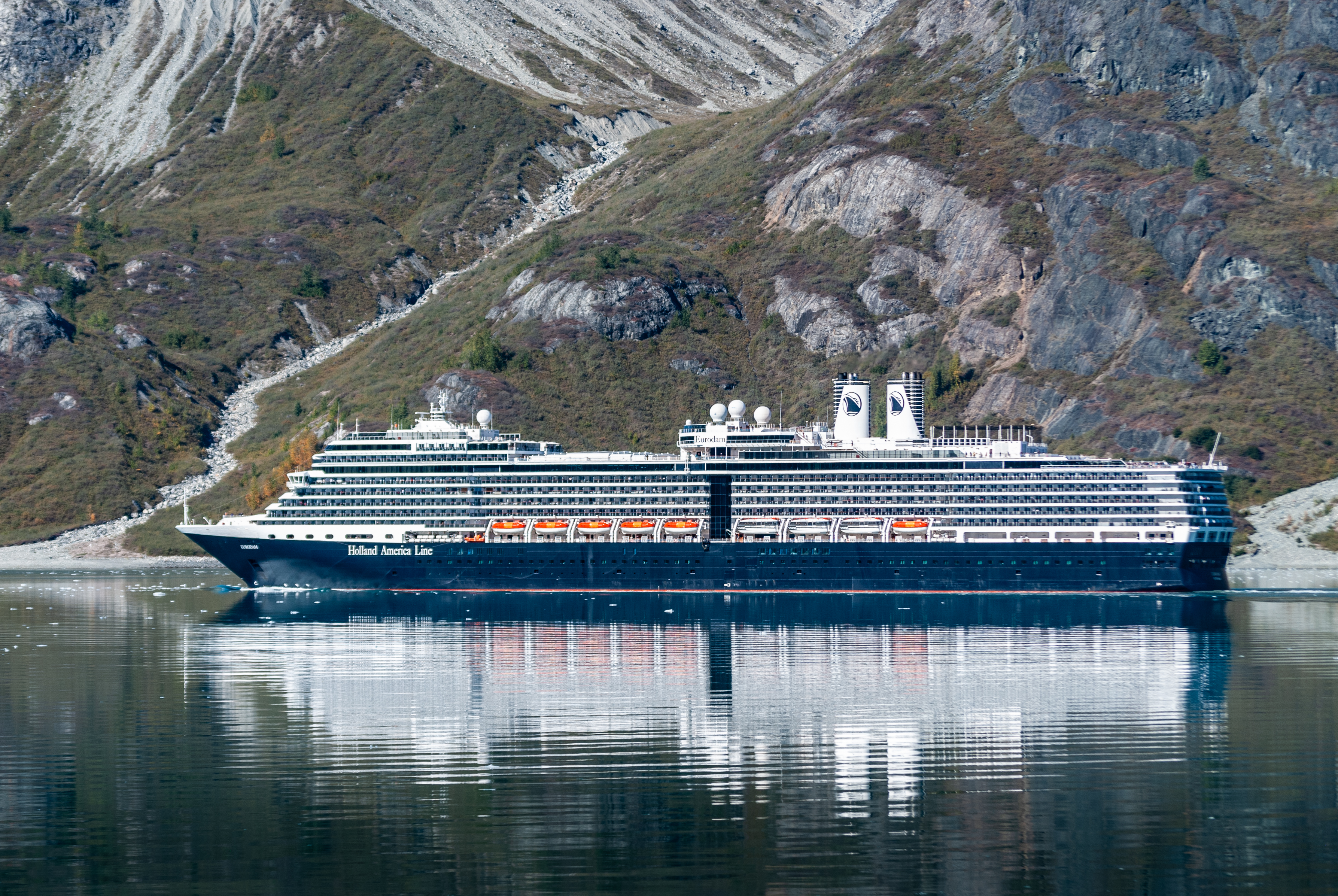
[A cruise ship sailing on open water.] Photograph: cruise ship
Image Credits: Wikimedia Commons
A cruise ship's horn can shake windows in port and carry for miles at sea. Passengers often hear it as a farewell blast or a fog warning, but most horn signals are neither celebration nor alarm. They are sentences in a legal language that ships use to tell each other what they are about to do.
This article explains why cruise ships use horn signals, including the COLREG rules behind them, what each common pattern means, how fog signals work, and how the emergency alarm differs from ordinary horn blasts.
A language ships must speak
Ships cannot swerve like cars, stop quickly, or shout across the water. A large cruise ship may need more than a kilometre to stop, and its bridge team cannot rely on radio alone, since not every nearby vessel is listening on the same channel.
The answer is sound. The International Regulations for Preventing Collisions at Sea, known as the COLREGs, set out whistle signals that every seagoing vessel must use. The rules are international law, adopted by the International Maritime Organization, and they apply whether the vessel is a cruise ship, a tanker, or a fishing boat.
Sound signals come in two lengths. A short blast lasts about one second, while a prolonged blast lasts four to six seconds, according to All At Sea's summary of the rules. Combinations of the two carry the meaning.
The manoeuvring signals: one, two, three
Rule 34 of the COLREGs covers manoeuvring and warning signals for vessels in sight of one another. When a power-driven vessel under way makes a manoeuvre, it must announce it on the whistle.
One short blast means "I am altering my course to starboard," the nautical term for right. Two short blasts mean "I am altering my course to port," or left. Three short blasts mean "I am operating astern propulsion," meaning the engines are running in reverse.
The third signal surprises many passengers. A ship sounding three short blasts is not necessarily moving backwards yet; it is warning that reverse thrust is engaged and sternway, or backward motion, is expected. On a heavy ship, that motion takes time to build.
These signals apply in international waters. Inland waterways, including United States inland rules, use similar patterns with different meanings in some cases, such as a passing agreement. Passengers on river cruises should therefore not assume every blast follows the ocean rule.
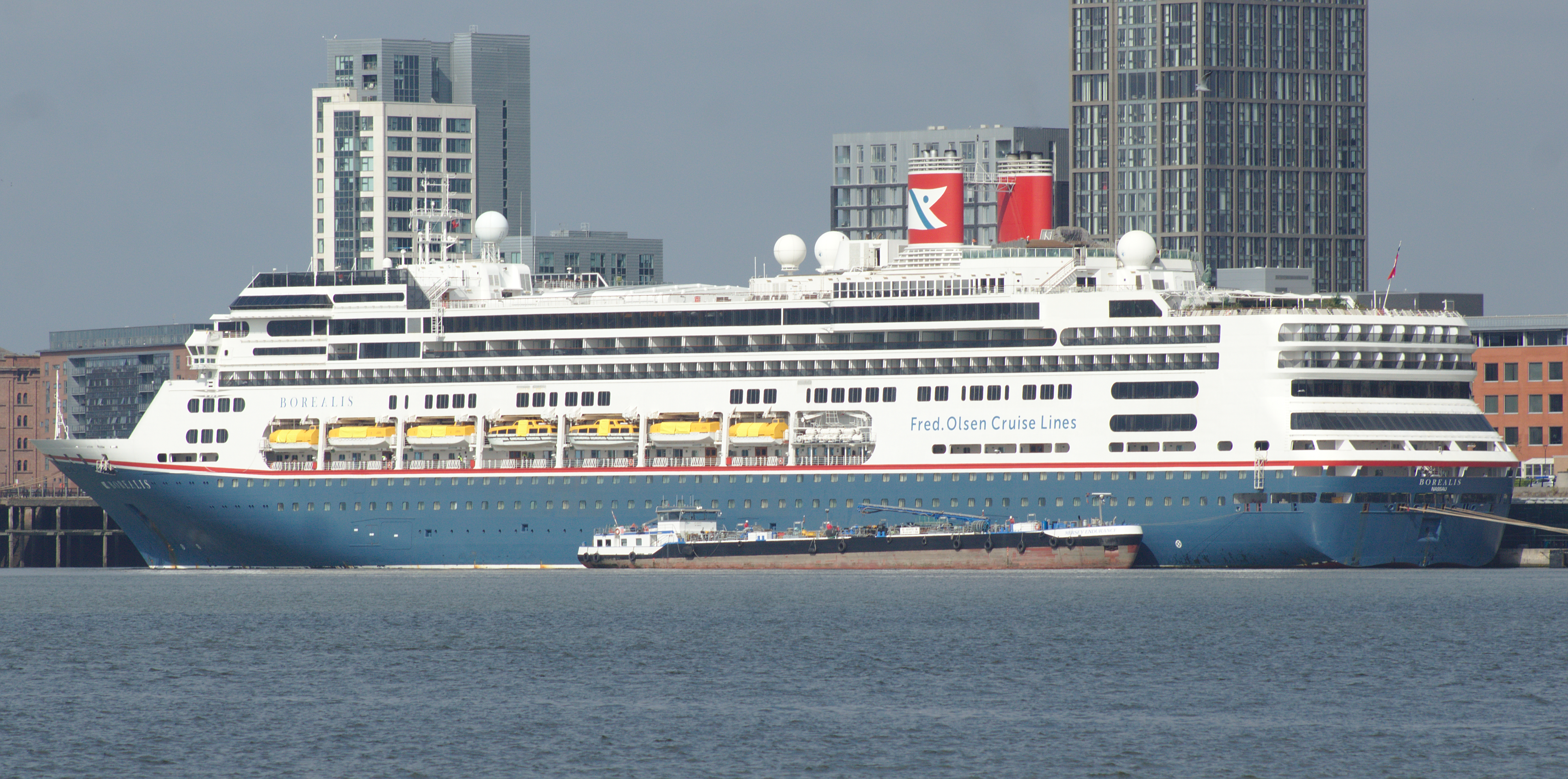
[A cruise ship at a terminal, where departure and manoeuvring signals are sounded.] Photograph: cruise ship at terminal
Image Credits: Wikimedia Commons
Overtaking and narrow channels
Overtaking is where horn signals get more elaborate. In a narrow channel or fairway, a vessel intending to overtake another sounds two prolonged blasts followed by one short blast to mean it intends to overtake on the other vessel's starboard side.
Two prolonged blasts followed by two short blasts mean the overtaking vessel intends to pass on the port side. The vessel being overtaken sounds the same signal back to show agreement, completing a short conversation in sound.
Ships also use one prolonged blast when approaching a bend in a channel where other vessels may be hidden. A vessel hearing that blast around the bend answers with one prolonged blast of its own, confirming that it is there.
These exchanges matter most in confined waters: harbour entrances, river channels, and busy straits. On the open ocean, ships usually pass at distances where sound signals are unnecessary, and radar and radio do the talking.
The danger signal: five short blasts
Five or more short, rapid blasts are the danger signal. Rule 34 says that when vessels in sight of one another fail to understand each other's intentions, or when one doubts that sufficient action is being taken to avoid collision, the vessel in doubt must immediately sound at least five short blasts.
Captain Grant H. Livingstone, writing in gCaptain, called the five-blast signal the "Grand Daddy" of COLREG debates among professional mariners. Some officers sound it readily; others reserve it for moments when collision feels imminent, partly because small-boat crews often do not understand it.
The signal is not a command to the other vessel. It is a declaration of doubt: "I do not understand what you are doing, or I do not believe we will clear each other." The correct response is for both vessels to take avoiding action, not to argue about who was right.
Passengers rarely hear five blasts, because cruise ships seldom come that close to another vessel in open water. When they do, it usually involves a small craft crossing a channel or a harbour approach.
Fog signals: sound in place of sight
Fog changes the rules entirely. When visibility drops, ships cannot see each other, so the COLREGs require them to announce their presence at regular intervals rather than only when manoeuvring.
A power-driven vessel under way in restricted visibility sounds one prolonged blast at intervals of no more than two minutes. It keeps doing so for as long as the fog lasts, which is why passengers on a foggy morning may hear the horn for hours.
A vessel stopped in the water sounds two prolonged blasts, separated by about two seconds, every two minutes. Anchored vessels use bell and gong signals instead: vessels under 100 metres ring a bell rapidly for about five seconds every minute, while larger vessels add a gong aft.
Fog signals are also why cruise ships slow down in poor visibility. Sound travels, but it does not tell the bridge team exactly where the other vessel is, so speed must fall to a level where the ship can stop in time if something appears.
Leaving port: the farewell blast
The long blast many passengers associate with departure is real, but it is not a celebration. A vessel leaving its berth commonly sounds one prolonged blast to warn nearby traffic that it is getting under way.
Cruise lines sometimes add their own flourishes, such as a melody or a series of blasts, as a signature farewell. Those extras are company tradition, not COLREG requirements, and they sit alongside the legally required signals rather than replacing them.
A ship backing off the dock may combine signals: one prolonged blast followed by three short blasts tells nearby vessels that it is under way and operating astern propulsion. Harbour pilots and tug crews listen for exactly these combinations.
The emergency alarm is a different system
One pattern causes special confusion: seven or more short blasts followed by one long blast. This is the general emergency alarm, and it belongs to a different system from the COLREG manoeuvring signals.
The alarm is defined by the SOLAS Convention, the International Convention for the Safety of Life at Sea, and its Life-Saving Appliances Code. It sounds on the ship's whistle and internal alarm system, sending passengers and crew to their muster stations.
It does not name the emergency. Fire, flooding, collision, or grounding all trigger the same pattern, and the order to abandon ship, if it ever comes, is given separately by the master over the public address system. Wikipedia's summary confirms that the signal is composed of seven or more short blasts followed by one long blast.
Passengers hear this signal during the mandatory muster drill at the start of a voyage. The drill exists so that the sound is familiar, not frightening, if it ever sounds for real.
Why horns still matter in the radar age
Modern ships carry radar, automatic identification systems, and satellite navigation, so it is fair to ask why a 19th-century horn still matters. The answer is that electronics fail, small vessels may not carry them, and sound reaches everyone nearby without any equipment at all.
A horn also works when language fails. A Filipino crew, a German pilot, and a Japanese fishing captain may share no common language, but all of them are trained to the same COLREG signals. Sound is the one channel that needs no translation and no subscription.
Finally, horns are legally required, not optional. A vessel that fails to sound the required signals in a collision case will face hard questions in court, whatever its radar showed. The horn is part of the ship's legal duty to keep a proper lookout and to act to avoid collision.
Frequently asked questions
What does one short blast from a cruise ship mean?
Under COLREG Rule 34, one short blast means the vessel is altering course to starboard, or right. Two short blasts mean a turn to port, and three mean the engines are operating astern.
What does five short blasts mean?
Five or more short, rapid blasts are the danger signal. They mean the sounding vessel doubts the other vessel's intentions or doubts that a collision will be avoided, and both vessels should take avoiding action.
Why do cruise ships sound their horn in fog?
In restricted visibility, a vessel under way must sound one prolonged blast at least every two minutes so that unseen vessels know it is there. The signal repeats for as long as the fog lasts.
What is the seven-short-one-long alarm?
Seven or more short blasts followed by one long blast is the general emergency alarm under SOLAS. It sends passengers and crew to muster stations and is sounded during drills as well as real emergencies.
Is the departure blast a legal signal?
One prolonged blast on leaving a berth warns nearby traffic that the ship is getting under way. Extra melodies or flourishes some lines add are company tradition, not legal requirements.
The bottom line
A cruise ship's horn is not decoration. It is a short, strict vocabulary that tells nearby vessels where the ship is going, whether it is overtaking, whether it is in doubt, and whether it can be seen at all.
Passengers who learn the handful of common patterns will never again mistake a manoeuvring signal for an emergency, or an emergency alarm for a farewell. On a ship, the difference between those sounds is the difference between routine and muster.
Tags: cruise ships, maritime rules, horn signals
Rive News's research desk covers everyday systems and the rules behind them, from travel documents to household technology, using public sources and named authorities.
Related
- Why cruise ships do muster drills before sailing
- Why hotels ask for a deposit at check-in
- What happens to your luggage after you check it in
- Why airlines dim cabin lights on takeoff and landing
Subscribe to the Rive News newsletter for one plain-English explainer each morning.
Rive News publishes research-based explainers; facts are attributed to named public sources, and corrections are welcomed.
Related stories

The 3-1-1 liquids rule for planes: what each number means
TSA's 3-1-1 rule limits carry-on liquids to 3.4-ounce containers in one quart bag. Where the 2006 rule came from, what counts, and how

Why Is Airplane Food So Bland at Altitude?
A 2010 Fraunhofer study found altitude cuts sweet and salty perception by up to 30 percent. Low humidity, cabin pressure, and noise all

Carry-on size limits: why airlines each set their own
Airlines set their own carry-on limits because the FAA only requires each carrier to have a policy, not one global size. Why 22 x 14 x