
eSIM for multi-country travel: how regional plans actually work
Key takeaways
- A regional eSIM is one data profile that roams across a group of countries through partner carrier networks.
- Most modern phones store 8 or more eSIM profiles but keep only 1 or 2 active at once. You can stack country profiles per trip.
- Install the eSIM on Wi-Fi before you fly. It typically activates the first time it connects to a supported network abroad.
Crossing three borders in a week used to mean three SIM cards, three kiosks, and three rounds of fumbling with an ejector tool. A regional eSIM replaces all of that with a single QR code scanned at home.
The idea is simple. Instead of buying one plan per country, you buy one plan for a region. The same profile connects you in every country it covers. No card swaps, no store visits, and your home number can stay reachable the whole time.
This article explains how to use an eSIM when traveling to multiple countries: what a regional plan actually is, how one profile works across borders, how to set it up before departure, and when to skip the regional option.

Travelers in an airport departure lounge. Photograph: Randy Breese/Wikimedia Commons
Image Credits: Wikimedia Commons
What a regional eSIM plan actually is
A regional eSIM plan is a prepaid data plan tied to a geographic area rather than a single country: Europe, Asia-Pacific, North America, and similar groupings. You buy one profile. It carries an allowance, such as 10 GB over 30 days, that you can spend anywhere inside the region.
The plan is a data product, not a phone number. Most travel eSIMs provide data only. That covers maps, messaging apps, email, and browsing.
Calls and texts go through internet-based apps unless the plan explicitly includes a number. Check this before you buy. Assuming otherwise is the most common disappointment.
Regional plans sit between two alternatives. Country-specific plans cover one nation and are usually cheaper per gigabyte if you never leave it.
Global plans cover a hundred or more countries and cost more for the convenience. The regional plan is the middle ground, priced for travelers who actually cross borders.
How one profile connects in many countries
The magic is not in the profile but in the agreements behind it. Your eSIM profile contains an IMSI, an international mobile subscriber identity. Partner networks recognize it. The plan provider has wholesale deals with carriers in each covered country. So your phone authenticates onto the local partner network as you move.
When your phone detects a new country's towers, it runs an authentication exchange. Your eSIM presents its credentials to the local network. The local network verifies them with your provider's home systems. The whole handshake takes seconds, usually finishing before you clear immigration.
Behind the scenes, your data often travels over IPX networks. These are private highways connecting carriers globally. So a session started in one country can continue into the next. From your side, the experience is one continuous connection. From the network's side, you are roaming from partner to partner under one commercial arrangement.
The eUICC chip makes this flexible by design. It stores multiple carrier profiles and switches between them remotely, over the air, without anyone handling the device, as the IoT M2M Council explains. Your travel profile is simply one more profile on that chip.
Setting up your travel eSIM before departure
Do the setup at home on Wi-Fi, not at the arrival gate. Installation usually means scanning a QR code or entering an activation code. The whole process takes a few minutes. Most travel eSIMs do not start their validity period until they first connect to a supported network at your destination.
First, confirm your phone actually supports eSIM. Also check it is not carrier-locked in a way that blocks extra profiles. Most phones from the last several years qualify, but older or budget models sometimes do not. Discovering that at the airport is a miserable experience.
Next, check the country list against your real itinerary, not just the headline region. A "Europe" plan might exclude a country you are visiting, and coverage maps change. Also confirm the data allowance against honest usage. A week of maps and messaging needs far less than a week of video calls and tethering.
Finally, label the profile clearly during setup ("Europe Trip Oct"). Set it as your data line when you land. Clear labels matter because you may accumulate several travel profiles over time.

A traveler using a phone abroad. One eSIM profile can serve an entire multi-country itinerary. Photograph: Nenad Stojkovic/Wikimedia Commons
Image Credits: Wikimedia Commons
Crossing borders: what happens on your phone
In practice, border crossings are uneventful, which is the point. As you move into a new country, the phone drops the old partner network and registers on the new one.
You may see the carrier name change in the status bar. Data usually resumes within a minute or two.
Two things can interrupt the smoothness. Some phones need data roaming toggled on for the eSIM line to attach to partner networks. Without it, the profile sits idle. And in areas with weak partner coverage, the phone may cling to a fading signal instead of switching. A quick airplane-mode toggle usually fixes that.
Keep an eye on consumption across the trip. Regional plans rarely let unused data roll over. Running dry mid-itinerary means buying a top-up or a second profile. Most providers let you monitor usage in an app or web dashboard.
Running your home line and travel eSIM together
This is where eSIM travel quietly beats the old approach. Modern iPhones from the iPhone 13 onward can store 8 or more eSIM profiles with two active at once, per MacObserver. Older models store multiple profiles but keep one active. Many Android flagships offer similar dual-active setups.
That means you can keep your home number live for calls and texts while all data flows through the travel eSIM. Two-factor codes and urgent calls still reach you. Maps and browsing use the cheap regional data. In settings, you assign one line as the default for voice and the other for cellular data.
One caution: if your home line stays active abroad, incoming calls or texts on it may trigger your home carrier's roaming charges. If your home plan charges for roaming, consider turning the home line off and relying on messaging apps. Or check what your carrier charges before you leave.
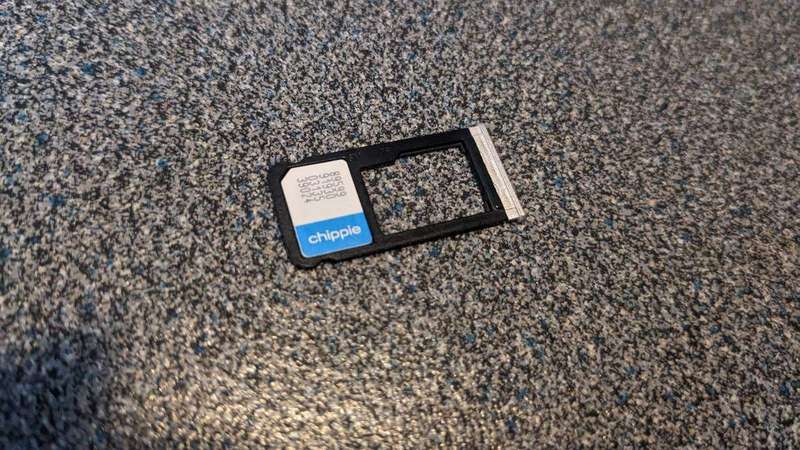
A nano SIM card. An eSIM holds the same credentials as software, with no card to swap. Photograph: Donald Trung/Wikimedia Commons
Image Credits: Wikimedia Commons
When a regional plan is the wrong choice
A regional plan is not always the best buy. If your trip stays in one country, a country-specific plan almost always gives more data for less money. Paying for 35 countries when you visit one is paying for flexibility you will not use.
Heavy data users should read the fair-use terms. Some regional plans throttle speeds after a threshold or deprioritize on partner networks. If you plan to tether a laptop all week, a local physical SIM or a larger country plan may serve you better.
Also consider trips with long stays. A month in one place often favors a local carrier plan bought on arrival. The regional eSIM then covers only the transit days. Mixing a small regional plan for travel days with a local plan for the long stay is a legitimate strategy.
Frequently asked questions
How many eSIMs can I store for a multi-country trip?
On iPhone 13 and later, you can store 8 or more eSIM profiles with two active at once. Older iPhones store multiple profiles but keep one active. That is plenty for stacking a regional plan plus a country-specific backup.
Do I need Wi-Fi to install a travel eSIM?
Yes, for the initial download. Install the profile at home on Wi-Fi before departure. The plan itself typically activates only when it first connects to a supported network at your destination.
Will my home number still work with a travel eSIM active?
Yes. On dual-active phones you can keep your home line on for calls and texts while data runs on the travel eSIM. Watch for roaming charges from your home carrier on that line.
Is a regional eSIM cheaper than buying local SIMs?
For short multi-country trips, usually yes, once you count the time and hassle of finding a SIM shop in each country. For single-country or long-stay trips, a local plan is typically cheaper per gigabyte.
The bottom line
A regional eSIM turns multi-country connectivity into a before-you-leave errand. One profile, installed on Wi-Fi, connecting through partner networks as you cross borders. Keep your home line live for calls. Run data through the travel profile. Check the country list against your actual route.
Skip the regional plan when your trip is really a single-country stay. Buy the country plan instead. Match the product to the itinerary and the technology does the rest.
Topics: eSIM, travel tips, roaming, smartphones, international travel
Rive News is the research desk behind the Rive News publication, covering technology and science through sourced, evergreen explainers.
Related stories
- How electric car batteries degrade over time: cycle and calendar aging explained
- Can an eSIM be hacked or cloned? The honest security answer
- APY vs interest rate: what compounding does to your money
- Why diamond is hard and graphite is soft when both are carbon
Get one sourced explainer like this in your inbox every morning. Subscribe to the Rive News newsletter.
© 2026 Rive News. All rights reserved.
Related stories

The 3-1-1 liquids rule for planes: what each number means
TSA's 3-1-1 rule limits carry-on liquids to 3.4-ounce containers in one quart bag. Where the 2006 rule came from, what counts, and how

Why Is Airplane Food So Bland at Altitude?
A 2010 Fraunhofer study found altitude cuts sweet and salty perception by up to 30 percent. Low humidity, cabin pressure, and noise all

Carry-on size limits: why airlines each set their own
Airlines set their own carry-on limits because the FAA only requires each carrier to have a policy, not one global size. Why 22 x 14 x