
Why your airplane seat must stay upright for landing
By Rive News / Research desk | Rive News / Published October 29, 2026 at 9:00 AM PKT
Key takeaways
- A reclined seat is unlocked, so a sudden stop can throw it forward or back with force.
- Upright seats keep the path to the aisle clear for a fast evacuation.
- An upright seat lets the passenger behind it get into a proper brace position.
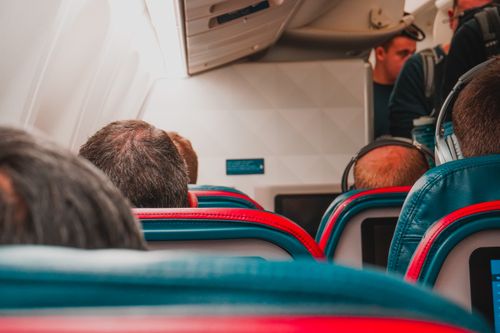
[An airplane cabin with passengers seated, showing seats and layout.] Photograph: Airplane cabin
Image Credits: Pexels
Your airplane seat must stay upright for landing because the rule protects three things at once: the seat itself, the person behind it, and the path out of the cabin. A reclined seat is not locked in place, so it can move violently in a sudden stop. An upright seat also clears the way to the aisle and lets passengers brace properly.
This article explains the rule behind the cabin announcement, including the locked-seat reason, the evacuation reason, and the brace-position reason, plus the exceptions for exit rows and passengers who cannot sit upright.
The rule in plain language
In the United States, the rule sits in section 121.311 of the Federal Aviation Regulations. It states that no certificate holder may take off or land an airplane unless each passenger seat back is in the upright position. The term "certificate holder" means the airline, and passengers must follow crew instructions given under that rule.
Other aviation authorities impose similar requirements, and airlines apply the same practice worldwide. Flight attendants check seatbacks during their final cabin walk for the same reason they check tray tables and seat belts: takeoff and landing are the phases of flight where an incident is most likely, and the cabin must be ready for one.
The rule applies to takeoff and landing alike. Once the aircraft is cruising, passengers may recline again, because the risk profile changes and the cabin crew no longer needs every seat in its most protective position.
Reason one: a locked seat is a safer seat
The most quoted reason is also the simplest. When a seat is upright, it is locked. When it is reclined, it is not locked, so a sudden change in speed can swing it forward or backward.
A former pilot quoted in coverage of the rule put it plainly: in the upright position, seats are locked and most secure against forces that may occur.
The danger runs in both directions. A sudden stop can pitch a reclined seat forward, throwing its occupant toward the seat in front. Acceleration can push it back, and a reclined seatback can press into the knees of the passenger behind.
One 2023 case reported in travel coverage involved a passenger who said his surgically repaired knee was injured during a bumpy landing after the passenger in front refused to return a seat to upright.
Seat belts help, but they only restrain the lower body. The upper body and head remain free to move during an impact, which is why the seatback itself must be in its strongest, locked position. Those few inches of recline change how far the head can travel, and distance travelled under impact means force.
Reason two: a clear path out
Evacuation is the second reason, and it may matter more than the first. Aircraft types carrying more than 44 passengers must demonstrate, under the evacuation rules, that a full load including crew can leave the aircraft in 90 seconds or less. That demonstration shapes cabin design, and upright seats are part of it.
A reclined seat narrows the gap a window or middle passenger must squeeze through to reach the aisle. In a calm cabin, that squeeze is an annoyance. In a smoky cabin with passengers moving fast, it becomes a bottleneck, and bottlenecks cost seconds that the 90-second standard does not spare.
The same logic explains why seats in front of exit rows often recline less than other seats, or do not recline at all. An exit-row seat that cannot be returned to upright in a hurry must never be allowed to block the exit in the first place. Tray tables in exit rows are configured on the same principle, so they cannot accidentally unlock during an evacuation.
Reason three: room to brace
Bracing is the third reason, and it depends on the seat in front of you as much as your own. The brace position is designed to reduce flailing and limit secondary impact, in the words of the Federal Aviation Administration's own explanation quoted in flight-crew coverage. A passenger behind a reclined seat cannot get into that position properly, because the reclined back intrudes into the space their head and arms need.
Research by the FAA in the late 1980s, using test dummies, compared ways of preparing the body for impact and shaped the brace guidance airlines still teach. Mental Floss, summarising that work, reports the FAA's finding that a proper brace position is three times safer than staying sitting up during a crash. The exact multiple matters less than the direction: bracing helps, and a reclined seat in front takes that help away.
Upright seats also help the crew see out. Flight attendants need a clear view through the windows during landing so they can spot fire or another hazard outside and direct passengers to the safer exits. A cabin full of reclined seatbacks and leaning passengers makes that scan harder.
What about the seats that never recline
Passengers sometimes notice that exit-row seats, bulkhead seats, and the last row behave differently, and the differences follow the same safety logic. Exit-row seats restrict recline so the exit stays clear. Bulkhead seats have no seat in front to brace against, so their brace guidance differs, and crew will advise passengers in those rows directly.
Some seats cannot be put upright for medical reasons. The regulation itself carves out seats carrying people who are unable to sit erect for a medical reason, provided the seat back does not obstruct access to the aisle or an emergency exit. Crew handle those cases individually, rather than by blanket exemption.
Premium cabins complicate the picture only slightly. Lie-flat beds must be returned to their upright, locked takeoff and landing position just like any economy seat. The comfort of the seat does not change the physics, and the rule does not exempt a seat because it cost more.
Does a few inches really matter
It is fair to ask whether three inches of recline can change an outcome, and the honest answer is that the inches matter through three effects at once. The unlocked seat can move farther, the head can travel farther before striking something, and the aisle path narrows for the person behind. No single effect needs to be dramatic for the combination to matter.
Aviation safety rules are also built on margins, not on single causes. A reclined seat alone will not cause an accident, and an upright seat alone will not save one. The rule exists because takeoff and landing compress many small risks into a short window, and the cabin is set to its most forgiving arrangement for that window.
That is also why crew enforce the rule even when the flight feels routine. They cannot know which landing will be the rough one, and a cabin check takes seconds. The 2023 knee-injury case shows the other side of enforcement: when one passenger ignores the rule, the cost can land on the person sitting behind them.
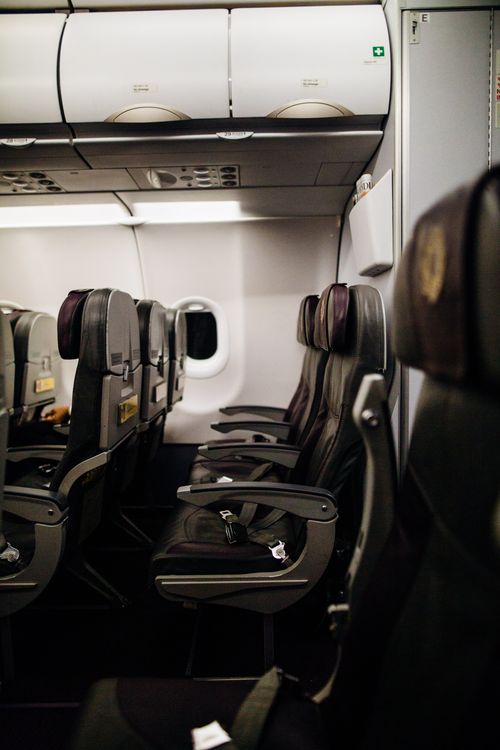
[Rows of empty airplane seats inside a modern airliner cabin.] Photograph: Airplane cabin
Image Credits: Pexels
Frequently asked questions
Is it actually illegal to keep my seat reclined for landing?
In the United States, the regulation binds the airline, and passengers must comply with crew instructions given under it. Other countries have equivalent rules, so treating a crew instruction to sit upright as optional is unwise wherever you fly.
Why can I recline during cruise but not landing?
Cruise is a lower-risk phase with no imminent need for a full evacuation or brace position. Takeoff and landing are the critical phases, so the cabin is set to its safest arrangement for those minutes only.
Why do exit-row seats recline less or not at all?
Exit rows must stay clear so passengers can reach the exit without delay. A seat that reclined fully in front of an exit could block that path, and its occupant might be unable to return it upright in an emergency.
What should I do if the passenger in front refuses to sit up?
Stay seated with your own belt fastened and tell a flight attendant quietly. Crew are trained to handle the request, and pressing the point yourself risks a confrontation in a confined cabin at the worst possible moment.
The bottom line
Putting your seat upright for landing is a small act with three safety jobs. It locks your seat into its strongest position, it keeps the aisle path clear for evacuation within the 90-second standard, and it gives the passenger behind you room to brace. The rule is written into aviation regulation for exactly those reasons.
The recline will still be there after landing, and the few minutes upright cost little against the margin they buy. When the announcement comes, sitting up is the simplest safety step a passenger can take.
Tags: air travel, flight safety, airplanes
The Rive News research desk writes plain-language explainers drawn from public sources, with every key claim tied to a named source.
Related
- Why do airlines dim cabin lights? The safety reason explained
- Why airplane windows have rounded corners on airliners
- Why airplane seats are getting smaller over time
Subscribe for one clear explainer each morning on the everyday things travellers wonder about.
Rive News publishes explainers from public sources and corrects errors when readers point them out.
Related stories
The 3-1-1 liquids rule for planes: what each number means
TSA's 3-1-1 rule limits carry-on liquids to 3.4-ounce containers in one quart bag. Where the 2006 rule came from, what counts, and how
Why Is Airplane Food So Bland at Altitude?
A 2010 Fraunhofer study found altitude cuts sweet and salty perception by up to 30 percent. Low humidity, cabin pressure, and noise all
Carry-on size limits: why airlines each set their own
Airlines set their own carry-on limits because the FAA only requires each carrier to have a policy, not one global size. Why 22 x 14 x