
Why passport covers come in different colours worldwide
By Rive News / Research desk | Rive News / Published October 28, 2026 at 9:00 AM PKT
Key takeaways
- Passports worldwide fall into four main colour families: red, blue, green, and black.
- No global rule sets the cover colour; the ICAO regulates format, durability, and machine readability instead.
- Colour choices usually signal history, faith, regional membership, or a wish to look official and hard-wearing.
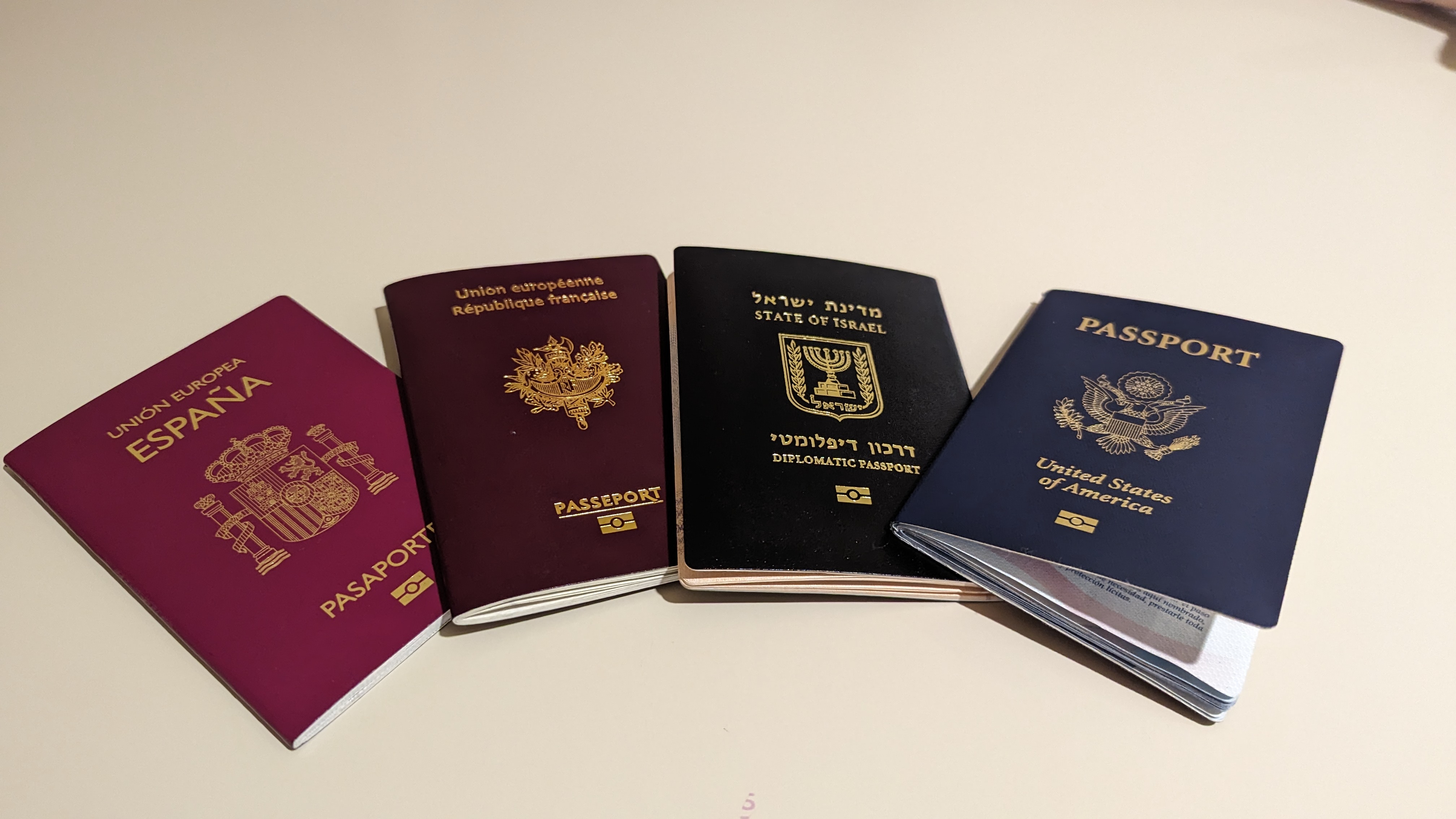
[Passports from several countries showing the main cover colour families.] Photograph: passports
Image Credits: Wikimedia Commons
A passport cover is the first thing a border officer sees, and its colour is rarely an accident. Countries pick from a narrow palette, and each shade tends to carry a story about identity, alliances, or plain practicality. The surprise is that no international authority hands out those colours.
This article explains why passports come in different colours, including what the ICAO actually controls, what each colour family usually signals, and why countries sometimes change colour entirely.
What the ICAO does and does not control
The International Civil Aviation Organization (ICAO) sets the technical standards for machine-readable travel documents in its Document 9303. Those standards cover size, format, materials, security features, and biometric data, according to reporting on the document.
The same standards demand toughness. A passport must be made of material that bends rather than creases, and it must stay machine-readable in temperatures from 14 to 122 degrees Fahrenheit and in humidity from 5 to 95 percent.
Colour is a different matter. Anthony Philbin, ICAO's chief communications officer, confirmed to Travel + Leisure that "nothing stipulates the cover colour," as Mental Floss reported.
William Waldron, vice president of security products at Holliston, LLC, a firm that produces passports for more than 60 countries, told the same outlet that his company can manufacture "any color that's in the Pantone book."
That freedom explains the variety within each family. Hrant Boghossian, vice president of the Arton Group, which runs the Passport Index database, told SUCH TV that shades derive from four main colours but that "within each colour hue, we see vast variations."
Why only four colour families dominate
If any colour is technically possible, why do passports cluster around red, blue, green, and black? The short answer is that dark, sober colours look official and hide wear.
Passports spend years in pockets, bags, and hotel safes, passing through scanners and hands. Dark covers show dirt, scuffs, and fading less readily than pale or bright ones, which is one reason governments keep returning to them.
Official appearance matters too. A travel document needs to inspire confidence at a glance, and a neon or pastel cover would sit oddly beside stamps, visas, and security features. Countries therefore treat the cover as a piece of state design, not a fashion choice.
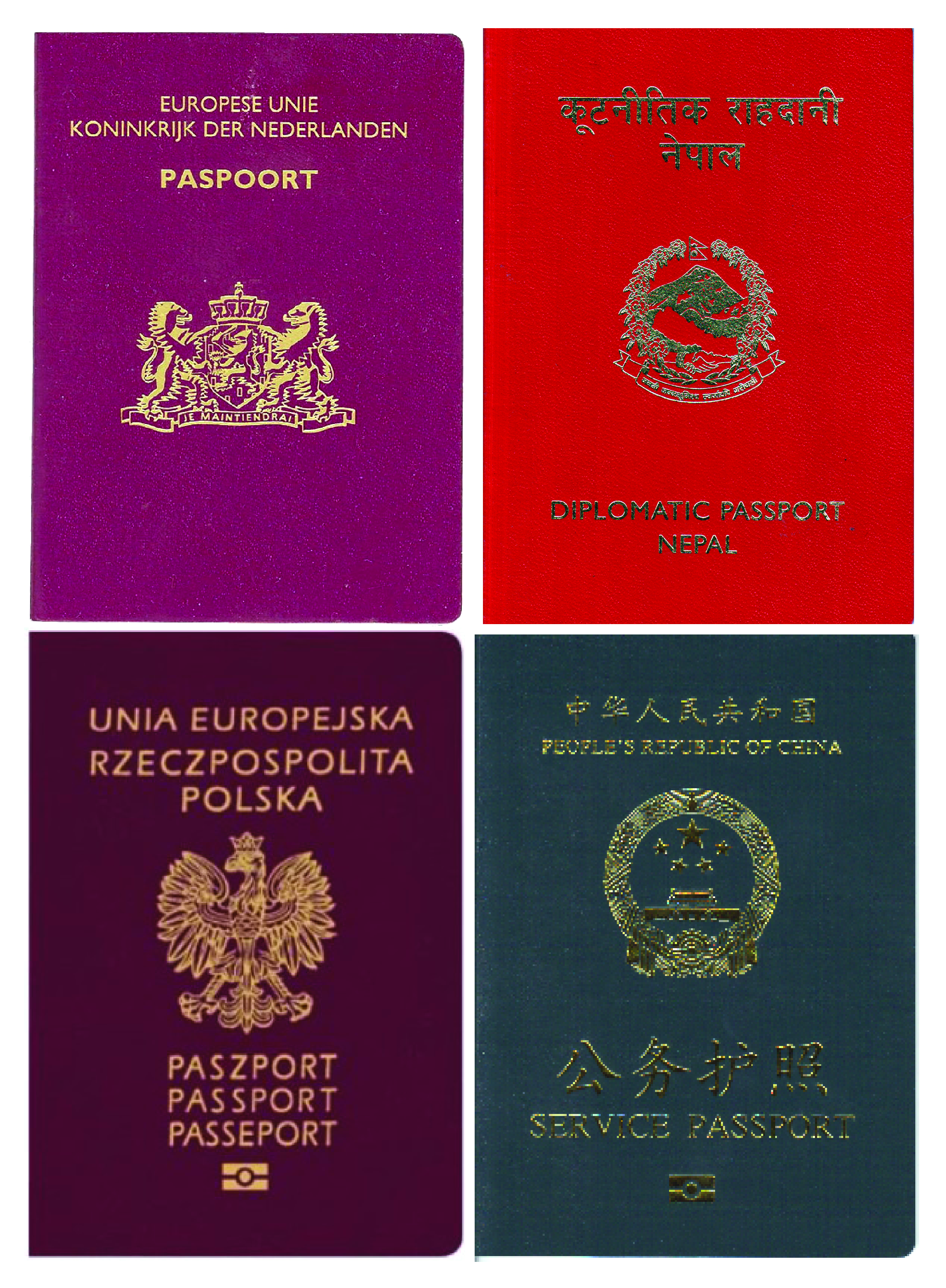
[Assorted passports showing the range of cover shades in use.] Photograph: assorted passports
Image Credits: Wikimedia Commons
Red and burgundy: Europe and shared history
Red covers, most famously in the burgundy shade used across the European Union, are the most recognisable family. Italy adopted its burgundy passport in 1981 to harmonise documents across the then European Community, according to 9Colonne.
The shade stuck as a marker of European affiliation. Turkey changed its passport to burgundy as it hoped to join the EU, Boghossian told SUCH TV, and several EU candidate countries have made similar changes to signal political alignment.
Red also appears beyond Europe. Countries with a communist past or present, including China, Serbia, Romania, and Poland, use red covers, and Nordic countries use red shades linked to their own histories.
Blue: the Americas, Oceania, and the new world
Blue is the colour of the United States, much of South America, and several Caribbean and Oceanian states. The United States switched from green to blue in 1976, during its bicentennial year, choosing a shade tied to the colours of the American flag.
South American countries largely use blue through their affiliation with Mercosur, the regional customs union. Caribbean Community states also use blue, which some analysts link to geography and to the politics of the region.
Britain offers the most famous recent switch. After leaving the EU, the United Kingdom replaced its burgundy passport with a dark blue version, a symbolic move marking its departure from the bloc, as 9Colonne reported.
Green: faith and West African unity
Green predominates in many Muslim-majority countries, where the colour carries religious and cultural weight. Morocco, Pakistan, and Saudi Arabia all issue green passports, and Boghossian told SUCH TV that most Islamic states use green because of the colour's importance in their religion.
Green has a second, regional meaning in West Africa. Members of the Economic Community of West African States, including Nigeria, Senegal, Niger, and Burkina Faso, use green covers as a sign of economic unity.
India is sometimes mistaken for a green-passport country, but its ordinary passport is navy blue. The distinction is a useful reminder that colour families describe tendencies, not strict rules.
Black: the rarest ordinary colour
Black is the rarest colour for ordinary passports, but it is widely used for diplomatic documents, which carry special status and privileges. Some countries reserve black covers for officials, which keeps the colour associated with authority.
New Zealand is the best-known exception among ordinary passports. Its black cover carries national symbolism, since black is closely tied to the country's sporting and national identity.
Diplomatic and official passports often use different colours from ordinary ones within the same country. Travellers may therefore see two or three cover colours issued by a single state, each marking a different category of holder.
Why countries change colour
A passport colour change is almost always a political statement, not a redesign for its own sake. The United Kingdom's post-Brexit switch to blue and Turkey's move to burgundy both used colour to announce a change of alignment.
Practical redesigns happen too. Canada kept its navy blue base colour in its 2013 redesign but deepened the shade and added a metallic maple leaf motif, alongside upgraded security features. The change modernised the document without breaking continuity.
Colour changes also carry costs, since stocks, printing plates, and chip-encoding lines must all change. Governments therefore rarely switch shades casually, which is why most colour families have stayed stable for decades.
What colour does not tell you
A passport's colour says nothing about its power, meaning how many destinations its holder can enter without a visa. That ranking depends on bilateral agreements, security cooperation, and readmission deals, not on the shade of the cover.
Colour also says nothing about the technology inside. Two burgundy passports can carry very different chips, and a green passport can be more secure than a blue one. The ICAO standards that matter for security sit inside the booklet, not on its face.
Finally, colour is not a reliable guide to a traveller's nationality. Regional blocs share colours, diplomatic categories differ, and some countries have changed shades within living memory. The cover is a hint about identity, not a proof of it.
Frequently asked questions
Does the ICAO choose passport colours?
No. The ICAO sets standards for size, materials, security features, and machine readability in Document 9303, but it does not stipulate cover colour. Anthony Philbin, ICAO's chief communications officer, confirmed that nothing in the rules sets the colour.
Why are most passports dark coloured?
Dark colours look official and hide dirt, scuffs, and wear better than pale shades. Passports are handled for years, so governments favour covers that still look respectable near the end of their validity.
Why is the EU passport burgundy?
Italy adopted burgundy in 1981 to harmonise documents across the then European Community. The shade became a symbol of European affiliation, and candidate countries have since adopted it to signal alignment.
Why did the UK change its passport to blue?
The United Kingdom replaced its EU-standard burgundy passport with a dark blue version after Brexit. The change was symbolic, marking the country's departure from the bloc rather than any technical need.
Why do Muslim-majority countries often use green passports?
Green carries strong religious and cultural significance in Islam. Morocco, Pakistan, and Saudi Arabia are among the countries whose green covers reflect that association.
The bottom line
Passport colours come down to choice within a narrow, practical palette. The ICAO controls what a passport must survive and how machines must read it, while each government picks the colour that fits its history, faith, alliances, or sense of official style.
That is why four families cover nearly every passport on earth, and why a change of shade, when it happens, is worth reading as a political signal. The cover is the least technical part of the document, and often the most telling.
Tags: passports, travel documents, ICAO
Rive News's research desk covers everyday systems and the rules behind them, from travel documents to household technology, using public sources and named authorities.
Related
- Why passport photos have strict rules
- What to do if your passport is lost abroad
- Why some countries require six months of passport validity
- Why some countries stamp passports and others stopped
Subscribe to the Rive News newsletter for one plain-English explainer each morning.
Rive News publishes research-based explainers; facts are attributed to named public sources, and corrections are welcomed.
Related stories

The 3-1-1 liquids rule for planes: what each number means
TSA's 3-1-1 rule limits carry-on liquids to 3.4-ounce containers in one quart bag. Where the 2006 rule came from, what counts, and how
Why Is Airplane Food So Bland at Altitude?
A 2010 Fraunhofer study found altitude cuts sweet and salty perception by up to 30 percent. Low humidity, cabin pressure, and noise all
Carry-on size limits: why airlines each set their own
Airlines set their own carry-on limits because the FAA only requires each carrier to have a policy, not one global size. Why 22 x 14 x