
Why passports have chips inside their covers now
By Rive News / Research desk | Rive News / Published October 29, 2026 at 9:00 AM PKT
Key takeaways
- A passport chip stores a digital copy of the printed data page plus a facial photo, under ICAO Doc 9303 rules.
- Fingerprints and iris scans are optional extras, so different countries store different data on the same kind of chip.
- The chip is protected by digital signatures and by a reader key derived from the printed page.
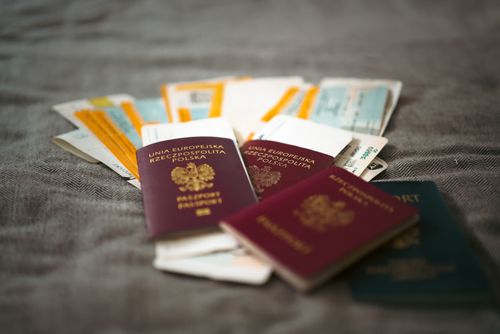
[Polish passports and travel documents on a table, booklets whose embedded chips carry the holders' details in digital form.] Photograph: Polish passports and travel documents
Image Credits: Pexels
A modern passport looks like the old one, but inside its cover sits a small electronic chip. That chip is why the booklet is called an e-passport or biometric passport. It stores the holder's details in a form that a border reader can check in seconds, and it is sealed with a digital signature from the issuing government.
This article explains why passports have chips in them now, including what the chip actually stores, how border systems read it, how it is protected against copying, and what it does not do.
What the chip is
The chip is a contactless smart-card chip with a small antenna, embedded in the front or back cover or in a centre page of the booklet. It uses the same kind of radio technology as a tap-to-pay card, but it works only over a very short range. A reader must be held close to the open booklet, which limits casual scanning.
The chip does not replace the printed passport. The photo page, the personal details, and the machine-readable zone at the bottom of the data page are all still there. The chip adds a digital copy of that information, plus a way to prove it has not been altered.
An officer can still read the booklet by eye if the electronics fail, and the printed page remains the fallback.
You can spot an e-passport by the small chip symbol on the front cover. The symbol looks like a rectangle with a circle inside it, and it is defined in the ICAO standard for travel documents. If the symbol is present, the booklet contains a chip.
If it is absent, the booklet is an older type that relies on print alone.
Why paper alone stopped being enough
Printed security features, such as watermarks and special inks, are hard to copy, but they are checked by eye. A busy border officer has seconds per traveller, and a skilled forgery can pass a quick visual check. A chip changes the test from looking at the document to verifying a digital signature.
A computer can confirm, in under a second, whether the data matches the signature of the issuing authority.
The change also supports automated gates. An e-gate reads the chip, compares the stored facial photo with a live camera image, and opens when the two match. That process would be impossible with print alone, since a printed photo cannot be compared by software without first being scanned and converted.
The chip hands the system a ready-made digital photo.
Security pressure grew after the attacks of 11 September 2001, when the United States made high-security travel documents a priority. The US Enhanced Border Security and Visa Entry Reform Act of 2002 pushed countries toward machine-readable, biometric documents for visa-free travel. Travellers entering the United States visa-free with a passport issued on or after 26 October 2006 must hold a biometric passport.
That rule alone drove adoption across dozens of countries.
What the chip actually stores
Under ICAO Doc 9303, every e-passport must carry two mandatory data groups. Data Group 1 repeats the machine-readable zone: name, nationality, date of birth, passport number, and expiry date. Data Group 2 holds a digital copy of the facial photograph.
Those two groups are the global baseline, and every country follows them.
Beyond that baseline, countries may add fingerprint images, iris scans, or both. When a country adds fingerprints, it must store the actual fingerprint image, not just a template, so that any border system can read it. The same rule applies to iris data.
In practice, many European countries store fingerprints, while the United States stores only the facial image on its chips.
Malaysia was the first country to issue biometric passports, in 1998. By the end of 2008, 60 countries were issuing them, and by mid-2019 the number had passed 150, according to the history recorded for biometric passports. The chip itself has grown more capable over time, but the basic idea has stayed the same: a digital copy of the data page, plus a face, plus a signature.
How a border check uses the chip
At a staffed booth, the officer places the open passport on a reader. The reader first scans the printed machine-readable zone optically. That printed text is used to derive an encryption key, in a step called Basic Access Control.
Only a reader that has read the printed page can then talk to the chip. A hidden scanner in a crowd cannot pull data from a closed passport in a pocket, because it lacks that printed key.
Once unlocked, the chip sends its data groups and its digital signature. The border system checks the signature against the issuing country's public key, which is shared through ICAO's Public Key Directory. If the signature matches, the data has not been changed since the government wrote it.
If it does not match, the document is flagged.
The system then compares the stored facial photo with the person standing at the booth, either by the officer's eye or by a camera at an automated gate. The chip does not decide who may enter a country. It only answers one question reliably: does this booklet belong to the person holding it, and has anyone altered it?
How the chip is protected against copying
Three layers of protection work together. The first is the digital signature described above, which proves the data came from a real issuing authority and has not been changed. A forger who copies the data onto a blank chip cannot copy the signature's secret key, so the copied chip fails the check.
The second layer is access control. Basic Access Control ties chip access to the printed page, and a newer protocol called PACE strengthens that protection with stronger cryptography. Many recently issued e-passports support PACE.
Both methods mean the chip stays silent until a reader has physically handled the booklet.
The third layer is optional active authentication. Under this method, the chip proves it holds a private key that only a genuine chip would have. That step is designed to catch a straight clone, where someone copies the data but not the key.
Not every country uses it, but the standard provides for it, and the layers overlap so that defeating one does not defeat them all.
What the chip does not do
The chip does not track your movements. It has no battery and no GPS, and it only responds when a reader powers it from a few centimetres away. It cannot report your location, and it does not store your travel history.
The chip also does not store your fingerprints unless your country chose to add them. A United States passport chip, for example, holds only the facial image as its biometric, according to the US Department of Homeland Security privacy assessment cited in e-passport explainers. Travellers who worry about fingerprint storage should check their own country's policy, since the answer differs by issuer.
Finally, the chip does not make a passport valid forever. It is written during manufacture and locked afterwards, so the data cannot be updated in the field. When your details change or the booklet expires, you need a new passport, and the old chip becomes useless once the booklet is cancelled.
The chip is a snapshot, not a living record.
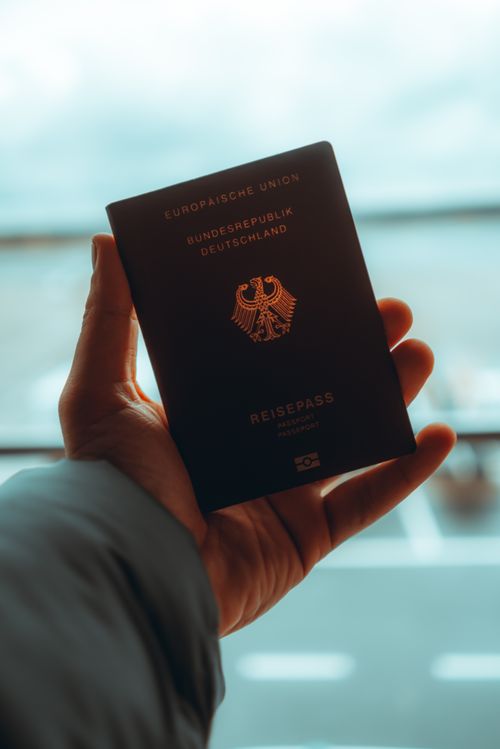
[A hand holds a German passport, a booklet whose chip carries the holder's details in digital form.] Photograph: Hand holding a German passport
Image Credits: Pexels
What happens when the chip fails
A damaged chip does not automatically cancel a passport. Border officers can fall back on the printed data page and the visual photo, just as they did before chips existed.
That fallback matters because chips can break. Bending a booklet sharply, exposing it to water, or crushing it in luggage can damage the antenna. The chip symbol on the cover is a promise that electronics are inside, not a guarantee they will work forever.
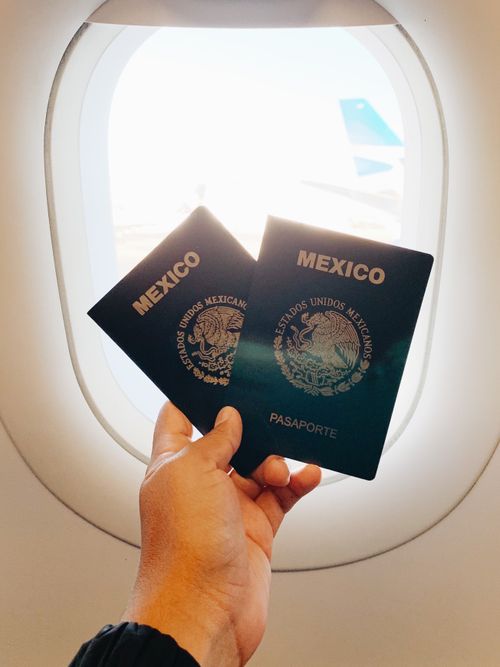
[A hand holds two Mexican passports near an airplane window, booklets from the era when biometric travel documents spread worldwide.] Photograph: Mexican passports near an airplane window
Image Credits: Pexels
Why every country did not switch at once
Rolling out e-passports meant building chip-personalisation plants, joining ICAO's public key directory, and training border staff. Smaller countries moved later, and some still issue older booklets alongside new ones.
Cost also played a part. A chip booklet costs more to produce than a printed one, and governments pass some of that cost to applicants through passport fees.
Frequently asked questions
Does my passport chip store my fingerprints?
It depends on your country. The ICAO baseline requires only the printed details and a facial photo. Some countries, including many in Europe, add fingerprints.
The United States stores only the facial image. Your issuing authority's passport page will say what your booklet contains.
Can someone scan my passport chip from a distance?
No, not in practice. The chip works only over a few centimetres, and readers must first derive a key from the printed machine-readable zone. A scanner in a crowd cannot read a closed passport, because it has not seen the printed page.
Keeping the booklet closed and in a pocket or bag adds further protection.
What should I do if my passport chip stops working?
Keep using the booklet, but expect manual checks instead of automated gates. Tell the issuing authority when you renew, and avoid bending or soaking the booklet in the meantime. A failed chip does not shorten the printed validity, though officers may take longer to verify the document.
Is an e-passport required for all international travel?
No. Many countries still accept older machine-readable passports until they expire. Some programmes, such as the United States Visa Waiver Program, require a biometric passport for passports issued after 26 October 2006.
Check the entry rules of your destination before you travel.
The bottom line
Passports have chips because a printed page alone could no longer prove itself quickly or reliably at a busy border. The chip carries a digital copy of the data page and a facial photo, sealed with the issuing government's signature, and it opens only to a reader that has seen the printed page. It does not track you, and it does not decide whether you may enter.
It simply makes forgery harder and identity checks faster, which is why it became the world standard.
Tags: passports, e-passport, biometric passport, border control
Rive News's research desk covers everyday questions about travel, science, and how familiar systems work, using published sources and official records.
Related
- Why passport photos have strict rules
- What to do if your passport is lost abroad
- Why some countries require six months of passport validity
- Why some countries stamp passports and others stopped
Subscribe to Rive News for one clear explainer each day on the systems behind everyday travel.
Rive News follows a published-standards policy: claims are checked against public sources, corrections are noted on the article, and no invented quotes or statistics are used.
Related stories

The 3-1-1 liquids rule for planes: what each number means
TSA's 3-1-1 rule limits carry-on liquids to 3.4-ounce containers in one quart bag. Where the 2006 rule came from, what counts, and how

Why Is Airplane Food So Bland at Altitude?
A 2010 Fraunhofer study found altitude cuts sweet and salty perception by up to 30 percent. Low humidity, cabin pressure, and noise all
Carry-on size limits: why airlines each set their own
Airlines set their own carry-on limits because the FAA only requires each carrier to have a policy, not one global size. Why 22 x 14 x