
Why Do Pilots Say 'Heavy' After Their Callsign? The Safety Logic
Key takeaways
- The FAA calls any aircraft with a maximum takeoff weight of 300,000 pounds or more "heavy," and pilots must say it after the callsign.
- The word is a wake-turbulence warning: heavier aircraft spin stronger wingtip vortices that can flip a smaller plane flying too close.
- Air traffic controllers use the callout to apply separation minima, such as eight nautical miles for a small plane behind a super aircraft.
Tune in to an air traffic control frequency near any major airport and you will hear it constantly. "United 804 Heavy, cleared to land runway 27 Left."
The word heavy rides at the end of the callsign like a title, and it is not pilot swagger. It is a mandatory safety callout, and it exists because of physics happening invisibly behind the aircraft.
The short version: heavy tells everyone on the frequency that this airplane is big enough to generate dangerous wake turbulence. This article explains the weight rule behind the word, how wake turbulence works, what the callout changes for controllers and other pilots, and the one category that ranks even above heavy.
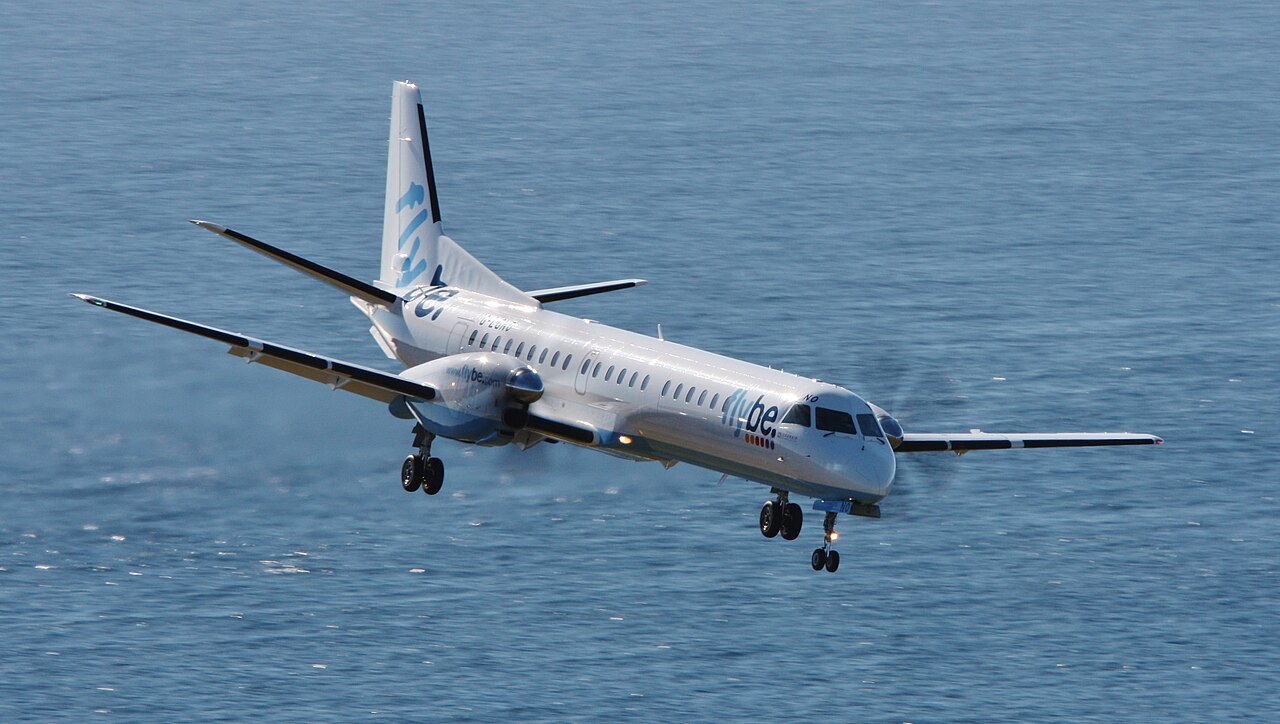
A Saab 2000 airliner landing on runway 33 at Sumburgh. Photograph: Ronnie Robertson
Image Credits: Wikimedia Commons / Ronnie Robertson
The weight rule behind the word
In the United States, the Federal Aviation Administration sorts aircraft into weight classes based on maximum takeoff weight, the heaviest the aircraft is ever certified to be at takeoff. The classes run from small through large to heavy, with a special super category on top. The FAA defines heavy aircraft as those with a maximum takeoff weight of 300,000 pounds or more, roughly 136 tonnes, according to a 2015 FAA guideline summarized by Simple Flying.
That definition is the entire technical meaning of the word. When a pilot says "heavy" after the callsign, they are stating a certified fact about the aircraft type, not describing how loaded the plane happens to be today.
A 747 flying nearly empty with almost no fuel still announces itself as heavy. The designation follows maximum capability, not real-time weight, because the rules are built for worst-case planning.
International rules line up closely. The International Civil Aviation Organization uses the same 300,000-pound threshold for its heavy wake turbulence category, though its separate light/medium categories differ slightly from the American small/large split. This matters because the wake turbulence behind an aircraft is determined by the maximum weight it can carry, not by how it was loaded for one particular flight.
Why wake turbulence makes the callout matter
The practical reason for saying heavy is wake turbulence, the invisible disturbance an aircraft leaves behind as it moves through the air. As wings generate lift, high-pressure air below the wing curls around the wingtip into the low-pressure region above, spinning off rotating vortices that trail behind the aircraft like horizontal tornadoes. Heavier aircraft generate stronger vortices, and those vortices sink slowly and persist for minutes.
This is where the danger sits. A light plane flying into the wake of a heavy jet can experience a violent rolling motion, loss of control, or even structural damage.
The hazard peaks during takeoff and landing, when aircraft are low, slow, and close together, exactly the conditions where there is no altitude left for recovery. Simple Flying notes that wake turbulence can literally flip a lightweight aircraft that gets too close behind a large one.
The word heavy exists so that every pilot on the frequency hears the warning without looking anything up. A pilot in a small turboprop hearing a heavy jet ahead immediately knows the air behind that aircraft is hazardous and that extra spacing is required.
It is the cheapest possible safety signal: one spoken word, heard by everyone, understood instantly. Larger aircraft cruise at altitudes that also help with fuel efficiency, but it is the low-altitude phases of flight where wake turbulence turns deadly.
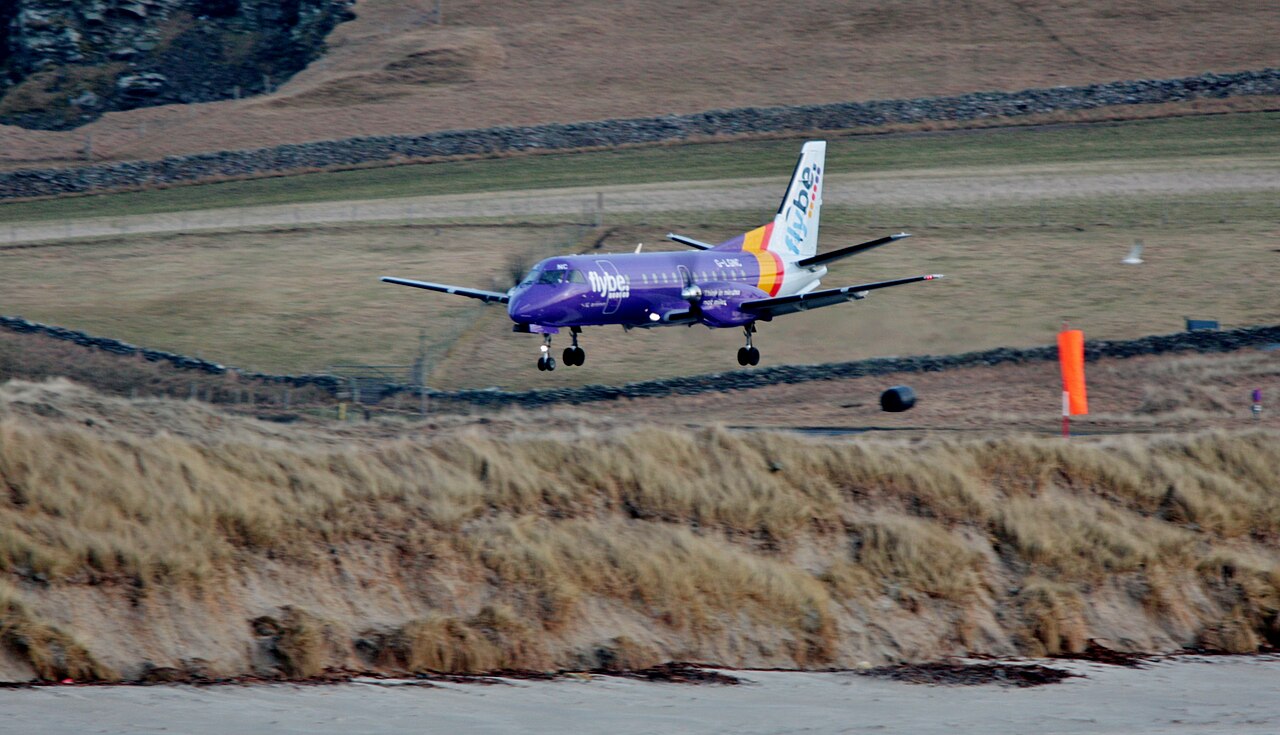
A Saab 340 on approach. Photograph: Ronnie Robertson
What the callout changes in practice
Air traffic controllers use the weight categories to apply separation standards, minimum distances between aircraft that vary with the sizes involved. The heavier the aircraft ahead, the more space the aircraft behind must keep. Per the FAA guidelines summarized by Simple Flying, the numbers work like this: a small aircraft following a super-category aircraft needs eight nautical miles of separation; a large aircraft following a heavy needs five nautical miles; a heavy following another heavy needs four nautical miles.
When a pilot checks in with "heavy" on initial contact, the controller can set that spacing immediately without digging up the aircraft type's weight class. In busy terminal airspace, where controllers sequence dozens of aircraft onto parallel runways, that instant recognition saves real seconds and real radio congestion. Other pilots use it too: hearing "Speedbird 281 Heavy" on the frequency tells a waiting Cessna exactly how long the wake behind that departure will matter.
There is also a ground-side dimension. Wake turbulence affects taxiing aircraft and vehicles operating near runways, and the callout keeps everyone in the airport's movement area aware of which aircraft generate the strongest wakes. The same separation logic applies on departure, where controllers may delay a light aircraft's takeoff roll until a heavy's vortices have drifted or decayed.
Super: the category above heavy
One aircraft type ranks above heavy. The super designation is reserved for the Airbus A380, the largest passenger aircraft flying, and formerly the Antonov An-225, the giant cargo plane destroyed in Ukraine in 2022. These aircraft generate such extreme wake turbulence that they get their own category with even larger separation minima.
A small plane trailing an A380 needs eight nautical miles of spacing, more than double what a heavy following a heavy requires. Interestingly, the A380 itself needs only about 2.5 nautical miles behind most other traffic, because its own wake is the hazard, not the one it is following. The Boeing 757 once had a reputation for producing stronger-than-expected vortices and is now formally categorized as heavy, closing a quirk that puzzled controllers for years.
How the callout is used around the world
Some countries require pilots to say heavy on every transmission, while others require it only on initial contact with a new ATC sector, according to GlobalAir.
The FAA practice is that once a flight is designated heavy, the suffix is used throughout the flight, from pushback to touchdown. A forgotten suffix does not create chaos, since controllers know the aircraft type and its category, but it is mandatory all the same.
Do military aircraft use heavy too?
Yes. Military transports and tankers with sufficient maximum takeoff weight, such as the C-5 Galaxy and the KC-10, use the heavy suffix on ATC frequencies just like airliners do.
Why not just say the aircraft type?
Controllers usually know the type, but the suffix warns every pilot on the frequency at once, including those who may have missed the original check-in. It compresses the safety message into a single word that cannot be misheard as anything else.
Does a light fuel load change the designation?
No. The classification is based on certified maximum takeoff weight. A half-empty 747 is still heavy, because the rules are written for the aircraft's worst-case wake, not today's fuel burn.
Is there a category below small?
ICAO uses "light" for aircraft at 7,000 kg or less, which covers most private piston aircraft. The FAA folds these into its small category, so American pilots rarely say "light" on the radio.
The bottom line
Pilots say heavy because the word carries a certified fact and an immediate warning in one syllable: this aircraft weighs 300,000 pounds or more at maximum, and its wake is dangerous to lighter aircraft. Controllers use it to apply spacing minima, from four to eight nautical miles, that keep following aircraft out of trouble.
It is one of aviation's elegant pieces of design, a single spoken word that makes an invisible hazard visible to everyone on the frequency. The science of how altitude changes the ride and why wings sweep backward round out the picture of what is happening around a heavy jet.
Latest in Travel
- Why Planes Cruise at 35,000 Feet
- Why Airplane Wings Are Swept Back
- Why Airplane Food Tastes Bland at Altitude
Subscribe for travel explainers that make the strange things about flying make sense.
Related stories
The 3-1-1 liquids rule for planes: what each number means
TSA's 3-1-1 rule limits carry-on liquids to 3.4-ounce containers in one quart bag. Where the 2006 rule came from, what counts, and how
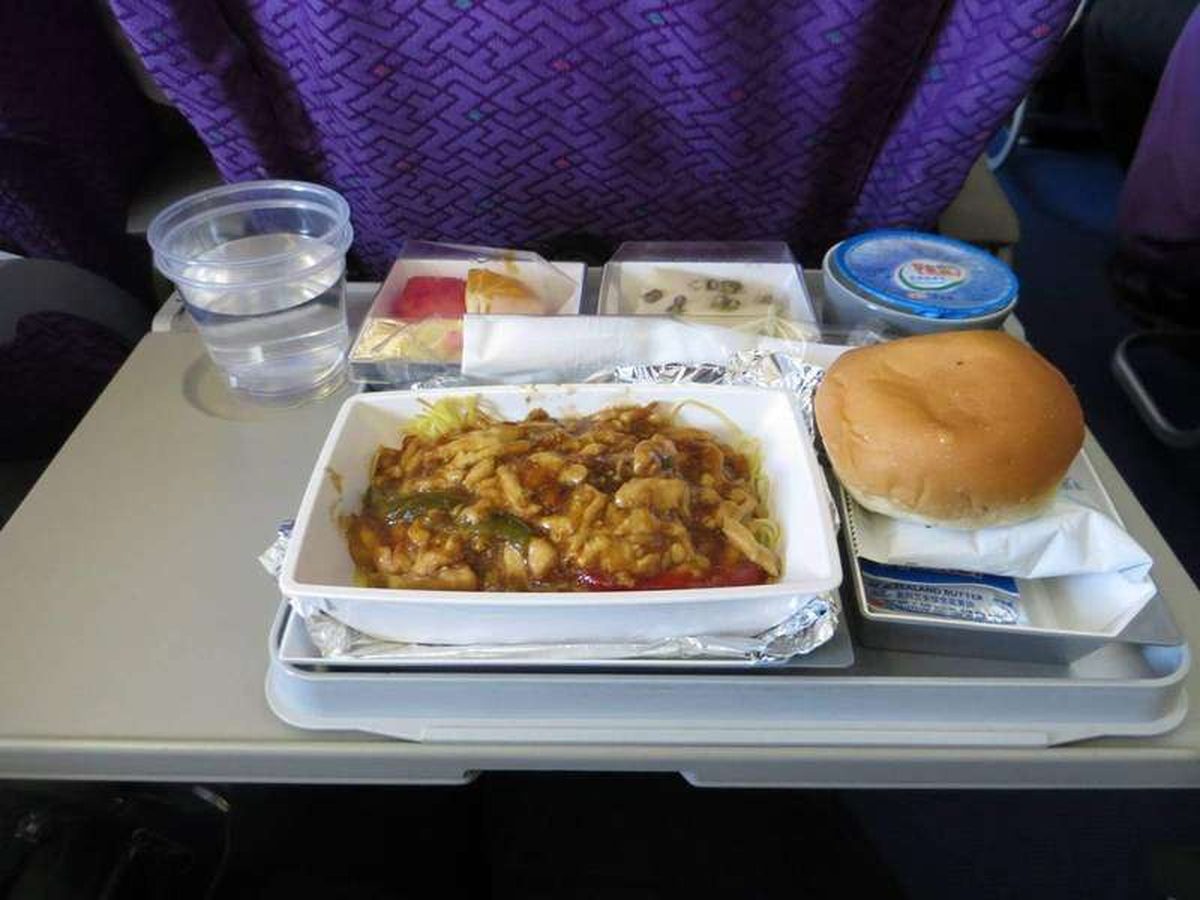
Why Is Airplane Food So Bland at Altitude?
A 2010 Fraunhofer study found altitude cuts sweet and salty perception by up to 30 percent. Low humidity, cabin pressure, and noise all
Carry-on size limits: why airlines each set their own
Airlines set their own carry-on limits because the FAA only requires each carrier to have a policy, not one global size. Why 22 x 14 x