
Why planes fly at 35000 feet above the weather
By Rive News / Research desk | Rive News / Published October 29, 2026 at 9:00 AM PKT
Key takeaways
- Most jets cruise between 31,000 and 42,000 feet, with 35,000 feet near the middle of that band.
- At 35,000 feet the air is about a quarter as dense as at sea level, so drag falls and fuel burn per mile drops.
- Higher is not always better, because thin air also starves engines of oxygen and lift.
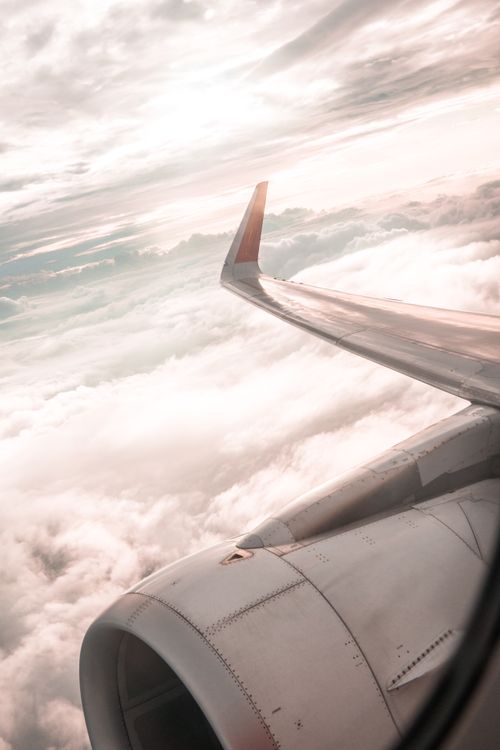
[A view from an airplane window shows the wing and fluffy clouds below during flight, the world as it looks near cruising altitude.] Photograph: Airplane wing above clouds
Image Credits: Pexels
When a pilot announces a cruising altitude of 35,000 feet, the number sounds oddly precise. It is not a single fixed height for every flight. It is the middle of a band, roughly 31,000 to 42,000 feet, where jet physics, engine design, weather, and air traffic rules all line up.
Most long flights settle somewhere in that band, and 35,000 feet is a common round number inside it.
This article explains why planes fly at 35000 feet, including the thin-air advantage, the engine limit that caps it, the weather they fly above, the direction rules that assign altitudes, and why short flights never get there at all.
Thin air means less drag
Drag is the resistance of air against a moving aircraft, and it grows with air density. At sea level the air is thick, so a jet must burn more fuel to push through it. As the aircraft climbs, the air thins, and the same speed costs less fuel.
At 35,000 feet, air density is roughly a quarter of what it is at sea level, according to cruising-altitude explainers that summarise the standard atmosphere.
That change matters over a long flight. A jet crossing an ocean burns most of its fuel in cruise, so even a small improvement in fuel per mile adds up to tonnes saved. Airlines care about this in cash terms, since fuel is one of their largest costs.
The altitude band is, in part, an economic choice dressed as a physics fact.
Thin air also lets a jet fly faster over the ground for the same effort. Instruments measure indicated airspeed, which depends on air density, while the aircraft's true speed through the air rises as density falls. A jet at altitude can therefore cover ground quickly without its instruments showing an extreme speed.
Engines set the ceiling
If thin air were the only factor, jets would climb as high as possible. They do not, because jet engines breathe air. A turbofan compresses incoming air, mixes it with fuel, and burns the mixture to produce thrust.
Less air per second means less oxygen for combustion, and less thrust to show for it.
Modern airliners use high-bypass turbofans, which are designed to work best at cruise speed and altitude. Their fan blades and compressors are fixed in shape, tuned for the conditions where the aircraft spends most of its time. Push the aircraft much higher, and the engine cannot draw in enough air to hold speed.
The aircraft then risks flying too slowly to generate the lift its wings need.
That limit appears as the service ceiling, typically around 45,000 feet for commercial airliners. Above that height, the air is too thin for the aircraft to stay airborne at a safe speed. Concorde reached about 60,000 feet, but it used different engines and a different wing, and it paid for the privilege with far higher fuel burn per passenger.
Ordinary jets stay well below the ceiling, where their engines still breathe comfortably.
Most weather sits below cruise altitude
Thunderstorms, icing, and most turbulence live in the lower atmosphere, in the troposphere. Cruising above 30,000 feet puts a jet above nearly all significant weather, which makes for smoother and safer flights.
Flying above the weather does not mean flying above all turbulence. Clear-air turbulence can occur near the jet stream at cruise altitude, and pilots still detour around storm tops that poke higher than usual. But the everyday bumps of low-level flying, from thermals over hot ground and showers, are left far below.
Passengers feel the difference as a smoother ride once the seatbelt sign goes off.
Temperature is another part of the story. At 35,000 feet the outside air can fall below minus 51 degrees Celsius. That cold air is actually helpful for engines, since cold air is denser than warm air at the same pressure, giving the compressor slightly more to work with.
Direction decides the exact number
Air traffic rules assign altitudes by direction so that aircraft heading toward each other do not share a level. Under the semicircular system, eastbound traffic generally uses odd flight levels, such as 35,000 feet, while westbound traffic uses even ones, such as 36,000 feet. Controllers assign a specific level within the band based on the route, traffic, and the aircraft's weight.
The Federal Aviation Administration's cruising-altitude rule, in regulation 91.159, spells out the same idea for visual flight below 18,000 feet: odd thousands plus 500 feet for courses from 0 through 179 degrees, and even thousands plus 500 feet for courses from 180 through 359 degrees. The jet levels above 18,000 feet follow the same odd-east, even-west logic without the 500-foot offset. The rule keeps opposing traffic vertically separated by at least 1,000 feet.
Weight also changes the assigned altitude during a flight. A heavy jet fresh from takeoff cannot climb as high as the same jet after burning off fuel. Pilots often step-climb, starting lower and requesting a higher level as the aircraft lightens.
A flight announced at 35,000 feet may therefore end its cruise at 39,000 feet, or it may have started at 33,000 feet and climbed in steps.
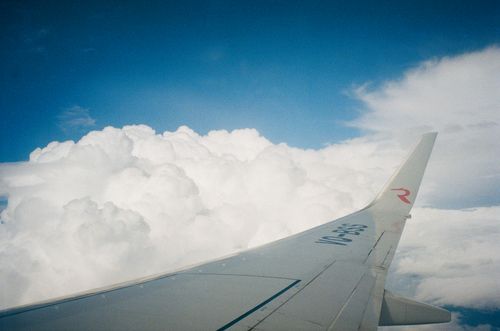
[An airplane wing flies above fluffy white clouds under a clear blue sky, near the altitude where jets cruise.] Photograph: Airplane wing above fluffy clouds
Image Credits: Pexels
Why short flights stay lower
A short flight may never reach 35,000 feet at all. Climbing burns extra fuel, and on a 45-minute hop the aircraft would start descending almost as soon as it levelled off. The fuel spent climbing would exceed the fuel saved in a brief cruise.
Controllers therefore keep short flights lower, where the climb is shorter and the descent can begin sooner.
The same logic applies to turboprop aircraft, which cruise lower than jets by design. Their propellers lose efficiency at high altitude, and their cabins are often unpressurised or pressurised to a lower limit. A turboprop hopping between nearby cities may cruise at 20,000 to 25,000 feet, and nobody on board expects a 35,000-foot announcement.
Flight length, aircraft type, and route all feed into the altitude choice. The 35,000-foot figure is a habit of long jet flights, not a law of aviation. Change any of those inputs, and the sensible altitude changes with it.
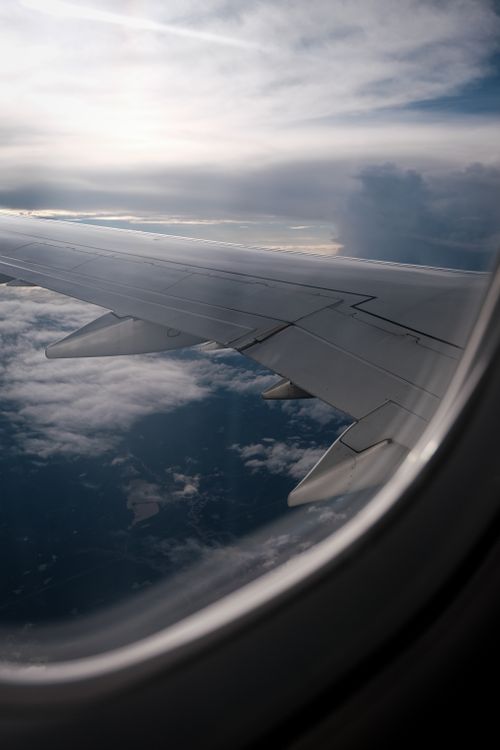
[A scenic aerial view from an airplane window shows fluffy clouds below, the passenger's-eye version of cruising altitude.] Photograph: Aerial view from an airplane window
Image Credits: Pexels
The cabin hides how extreme it is outside
At 35,000 feet the outside air is too thin for humans to breathe normally. A person exposed to it without protection would lose consciousness quickly, which is why the cabin is pressurised to an equivalent of about 6,000 to 8,000 feet. That pressure is low enough to be comfortable for most passengers, and high enough to keep the fuselage structure within its design limits.
Pressurisation is also why your ears pop during climb and descent. The cabin pressure changes as the aircraft climbs to cruise and descends to land, and the air trapped in your middle ear must equalise. Swallowing or yawning opens the Eustachian tubes and lets the pressure balance.
The pop is a side effect of the same system that makes high-altitude flight survivable.
Oxygen masks drop only if cabin pressure fails. At cruise altitude, the time of useful consciousness without supplementary oxygen is measured in seconds to a minute, depending on the person. The masks buy time for the pilots to descend to an altitude where the air is breathable.
What 35000 feet is not
It is not the highest a plane can fly, and it is not the altitude every flight uses. Military aircraft, business jets, and Concorde all flew higher, using different engines and wings. Small aircraft fly far lower, and even airliners vary their cruise by thousands of feet from one flight to the next.
It is also not chosen for the view, though the view is good. The altitude is a compromise that balances drag, engine breathing, weather, traffic separation, and climb cost. Any one factor alone would push the number higher or lower.
Together they hold it in a band, and 35,000 feet sits near the middle of that band for a typical long-haul jet.
Next time the captain announces the cruise altitude, listen for the exact figure. An odd number on an eastbound flight and an even number on a westbound one will confirm the direction rule. A step up mid-flight will show the aircraft lightening as it burns fuel.
The number is not random. It is the visible tip of a set of trade-offs made before takeoff.
Frequently asked questions
Do all planes cruise at 35,000 feet?
No. Most long-haul jets cruise between 31,000 and 42,000 feet, and 35,000 feet is a common value inside that band. Short flights stay lower, turboprops cruise lower still, and business jets often fly higher, up to about 45,000 feet or more.
Why do planes not fly even higher to save more fuel?
Because jet engines need air to burn fuel and wings need air to make lift. Above roughly 42,000 to 45,000 feet for most airliners, the air is too thin for the engines to hold speed safely. The fuel saved on drag would be lost to engines struggling to produce thrust.
Why is eastbound different from westbound altitude?
Traffic separation rules assign odd flight levels to eastbound flights and even levels to westbound flights, so opposing aircraft do not share an altitude. Controllers pick the exact level within the band based on route, traffic, and aircraft weight.
Why does my flight cruise lower on a short trip?
Climbing costs fuel, and a short flight would spend most of its time climbing and descending if it aimed for 35,000 feet. Staying lower saves the climb fuel and still gets the aircraft to its destination on time.
The bottom line
Planes fly near 35,000 feet because the air there is thin enough to cut drag and fuel burn, yet dense enough for engines to breathe and wings to lift. Weather sits below, traffic rules split the band by direction, and climb cost keeps short flights lower. The number is a compromise, not a magic height, and it moves a few thousand feet either way on every route.
Tags: cruising altitude, air travel, aviation, jet engines
Rive News's research desk covers everyday questions about travel, science, and how familiar systems work, using published sources and official records.
Related
- Why flight paths curve on maps
- How the jet stream makes eastbound flights faster
- Why airplane food tastes bland at altitude
- Why ears pop on planes and how to stop it
Subscribe to Rive News for one clear explainer each day on the systems behind everyday travel.
Rive News follows a published-standards policy: claims are checked against public sources, corrections are noted on the article, and no invented quotes or statistics are used.
Related stories

The 3-1-1 liquids rule for planes: what each number means
TSA's 3-1-1 rule limits carry-on liquids to 3.4-ounce containers in one quart bag. Where the 2006 rule came from, what counts, and how
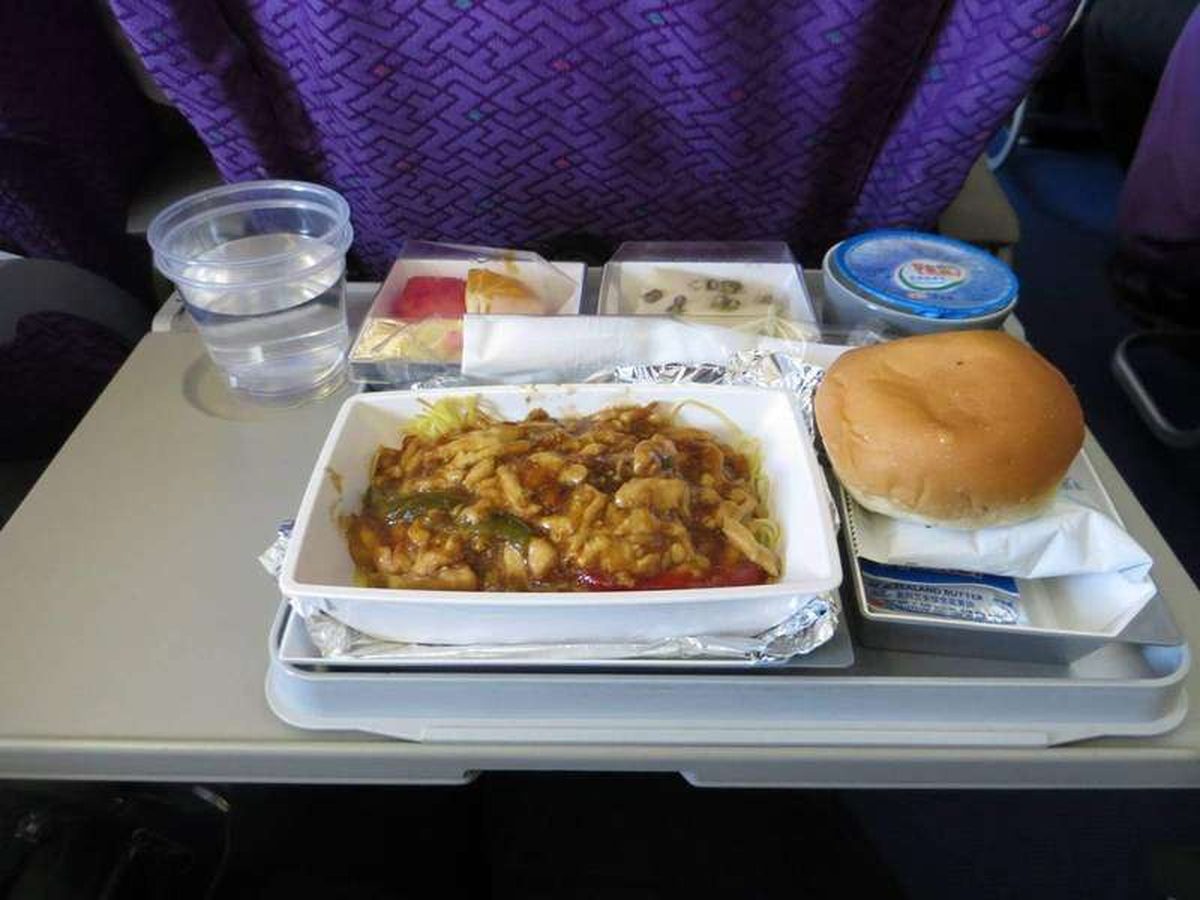
Why Is Airplane Food So Bland at Altitude?
A 2010 Fraunhofer study found altitude cuts sweet and salty perception by up to 30 percent. Low humidity, cabin pressure, and noise all

Carry-on size limits: why airlines each set their own
Airlines set their own carry-on limits because the FAA only requires each carrier to have a policy, not one global size. Why 22 x 14 x