
What to wear on a long flight to stay comfortable
By Rive News / Research desk | Rive News / Published October 27, 2026 at 9:00 AM PKT
Key takeaways
- Wear soft layers you can add or remove, because cabin temperature swings and one heavy coat cannot adjust.
- Graduated compression socks are the most evidence-backed item, cutting symptomless deep vein thrombosis in trials.
- Choose loose trousers, slip-on shoes, and a spare shirt in your personal item, so delays and lost bags hurt less.
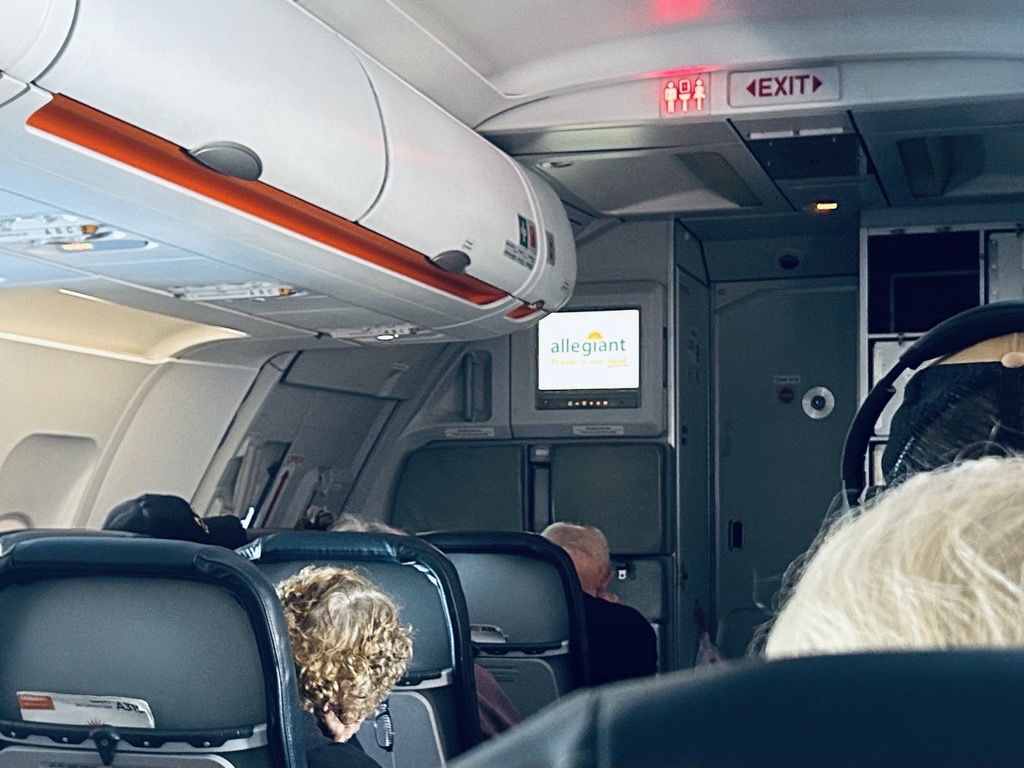
[Rows of seats fill an airplane cabin before departure.] Photograph: the subject
Image Credits: Wikimedia Commons
A long flight outfit has one job, and it is not looking impressive at the gate. It has to stay comfortable through hours of sitting, temperature changes, security lines, airport walking, and an arrival that may come long after the planned landing. The clothes that fail are usually the ones that felt fine for an hour in a shop, then tightened, chilled, or bunched up by hour six.
The fix is not a special travel uniform. It is a small set of choices, layered so each piece can be adjusted, with one item that carries real evidence behind it. Everything else is comfort and taste, and it helps to know which is which before packing.
This article explains the layering rule, the case for compression socks, what to wear from waist to shoes, what to skip, and what to pack as a backup.
Start with layers, not one heavy coat
Cabins change temperature through a flight, and they do it without asking permission. A single heavy coat becomes a burden when the cabin warms up, because it must be stuffed overhead, draped over a lap, or worn while sweating. Two or three thinner layers adjust in seconds, and that adjustability is the whole point.
A practical set is a soft base layer against the skin, a mid layer for warmth, and a light outer layer for drafts. A long-sleeved top, a light knit or fleece, and a packable jacket or wrap cover most cabins. Merino wool earns its reputation here, because it regulates temperature, resists odour over many hours, and feels soft against skin, though a synthetic base layer and a light fleece do most of the same job for less money.
Cotton is the fabric to be careful with. It holds moisture, and a cotton top that gets damp from sweat or a spilled drink can leave its wearer feeling clammy for hours.
Breathable, stretchy fabrics that move with the body are kinder on a long sit, and they wrinkle less on arrival. Wear the bulkiest pieces on the plane, including the jacket and the walking shoes, since that frees bag space and adds warmth when the cabin cools.
Compression socks are the item that matters most
Sitting still for hours lets blood pool in the legs, and graduated compression socks push back against that pooling. Graduated means the pressure is greatest at the ankle and eases further up the leg, which helps blood move back toward the heart instead of collecting in the lower leg. Put them on before boarding, not after ankles start to swell, so the pressure works from the start of the sit.
The evidence behind them is stronger than for any other flight clothing item. A Cochrane review of 12 randomised trials covering 2,918 airline passengers found that travellers wearing graduated compression stockings developed less symptomless deep vein thrombosis, or DVT, and less leg swelling. In the trials of stockings on both legs, 3 of the stocking wearers had a symptomless DVT, compared with 47 of those without stockings, among 2,637 passengers with follow-up data.
That finding needs its limits stated plainly. The trials measured symptomless clots found on scans, and they reported no deaths, pulmonary emboli, or symptomatic DVTs, so they could not show whether stockings prevent the dangerous forms of clotting.
The baseline risk for a healthy person on one flight is also low to begin with. Even so, the socks reduced swelling, were well tolerated, and carried no significant adverse effects in the review, which makes them a cheap and low-risk addition for most travellers.
This article is for general information only and is not medical advice; talk to a clinician about any symptoms. Anyone with a previous clot, recent surgery, pregnancy, active cancer, or another clotting risk should ask a doctor what is appropriate before flying, because that group is where the choice matters most. Compression is one measure among others, and it does not replace moving, walking the aisle, and exercising the calf muscles during the flight.
[Sunset light fills an airplane window above the clouds.] Photograph: the subject
Image Credits: Wikimedia Commons
Trousers, shoes, and the details that add up
Trousers should be loose, soft at the waist, and easy to sit in for hours. An elastic waistband, a drawstring, or a fabric with some give beats a rigid waistband that digs in as the body shifts. Cabin pressure changes can expand gas in the digestive system, and anything tight around the middle becomes genuinely uncomfortable once that happens.
Shoes should be comfortable, walkable, and easy to slip off and on. Slip-on shoes save time at security, let feet breathe during the flight, and still work for a long walk through a connecting airport.
Avoid new shoes on a long travel day, and avoid heels or stiff leather that punish feet after hours of sitting and standing. A pair of warm socks over compression socks, or a soft pair for sleeping, adds comfort without adding bulk.
Small items earn their place by solving small problems. A wide scarf doubles as a blanket, an eye mask blocks cabin light, and a spare shirt and underwear in a personal item cover delays and separated luggage.
Lip balm and hand lotion fight dry cabin air, and a reusable water bottle, filled after security, makes drinking through the flight easier. Pack those items where they can be reached without opening the overhead bin, because an essential buried under luggage is barely an essential at all.
What to skip, and what to pack as backup
Skip anything tight, scratchy, stiff, or hard to adjust in a cramped seat. Tight jeans, structured jackets, fussy belts, and shoes that need breaking in all fail the same test, which is whether they still feel fine at hour eight. Skip strong perfume too, since a scent that fades for its wearer can stay strong for a seat neighbour in a sealed cabin.
Skip a single outfit with no backup. A spare shirt, spare underwear, and essential medication belong in a personal item, not in checked luggage, because a delay or a lost bag can leave a traveller in the same clothes for a day or more.
The backup set does not need to be stylish, and it does not need to match the flight outfit. It needs to be clean, dry, and reachable.
Think of the flight outfit as the arrival outfit as well. It should be comfortable enough to sleep in, presentable enough to walk into an airport or a hotel, and durable enough to survive a delay. An outfit that meets all three tests, in soft layers with compression socks underneath, is the one worth wearing.
The bottom line
For a long flight, wear soft layers, loose trousers with a forgiving waistband, slip-on shoes, and graduated compression socks put on before boarding. The layers handle temperature swings, the loose fit handles hours of sitting, and the socks carry the strongest evidence of any clothing choice, with less swelling and fewer symptomless clots in trials.
Add a scarf, a spare shirt in a personal item, and water within reach, and skip anything tight, scratchy, or new. Comfort on a long flight is not about buying a special outfit, and it is about choosing pieces that still work at hour eight.
Tags: flights, travel clothing, long-haul travel
Rive News is a research desk that writes plain-English explainers from public sources. It does not replace medical advice for an individual traveller.
Related
- The 3-1-1 liquids rule for planes: what each number means
- Why do airlines dim cabin lights
- How to beat long flight boredom without buying anything
- Why do ears pop on planes, and how do you stop it
Subscribe for one plain-English explainer each morning.
Rive News follows a simple standard: named sources, no invented quotes, and corrections noted openly.
Related stories
The 3-1-1 liquids rule for planes: what each number means
TSA's 3-1-1 rule limits carry-on liquids to 3.4-ounce containers in one quart bag. Where the 2006 rule came from, what counts, and how
Why Is Airplane Food So Bland at Altitude?
A 2010 Fraunhofer study found altitude cuts sweet and salty perception by up to 30 percent. Low humidity, cabin pressure, and noise all
Carry-on size limits: why airlines each set their own
Airlines set their own carry-on limits because the FAA only requires each carrier to have a policy, not one global size. Why 22 x 14 x