
How to stop your car windows from fogging up
By Rive News / Research desk | Rive News / Published October 20, 2026 at 9:00 AM PKT
Key takeaways
- Windows fog when moist cabin air meets cold glass, and your breath and body heat constantly add moisture to that air.
- The fastest fix is the heater with the air-con running together, aimed at the windscreen, since the air-con dries the cabin air while the heater warms the glass.
- Prevention means removing the moisture sources: damp mats, wet clothing, blocked drains, and the recirculation setting that traps humid air inside.

A fogged windscreen seen from the driver's seat, with smears where the wipers cleared part of the glass.
Image Credits: Wikimedia Commons
A fogged windscreen is water doing something simple. The air inside your car holds moisture, and when that moist air touches glass that is colder than the air, the moisture condenses into tiny droplets on the surface. Your breath and even your body heat keep adding water vapour to the cabin, which is why a car full of people fogs faster than an empty one, according to the RAC.
Driving with fogged glass is not just annoying. The RAC is blunt about it: do not move off until all glass surfaces on the car are clear, because driving with impaired visibility is dangerous and illegal. This article takes a closer look at window fogging, including why it happens, how to clear fogged windows fast, how to prevent it, and when fogging signals a fault.
Why car windows fog up
Fogging needs two ingredients: humid air and a cold surface. In winter the windscreen is the coldest surface in the cabin, so it fogs first. Rainy weather, wet shoes, damp coats, and even a wet dog in the back seat all load the cabin air with extra moisture, and every passenger's breath adds more with each exhale.
Your climate settings can make it worse. The recirculation mode, which reuses cabin air instead of drawing in fresh air, traps all that moisture inside and lets humidity climb, according to The News Wheel, reporting RAC guidance. In damp winter conditions, recirculation is one of the most common reasons windows keep fogging no matter what else you try.
Dirty glass fogs faster too. The film of dust and traffic grime on the inside of the windscreen gives water droplets more to cling to, so a filthy screen mists up sooner and clears slower than a clean one. This is why the cheapest prevention of all is simply cleaning the inside of the glass regularly, a habit that pays off most on cold mornings when the temperature gap is at its widest.
How to clear fogged windows fast
The RAC teaches three methods, in order of what your car offers.
Method one: the heater, used properly. Start the heater on cold, then raise the temperature slowly as the air dries out, rather than blasting hot air straight away. Point the airflow directly at the windscreen and side windows. The warmer air dries the glass through evaporation and gradually warms the glass itself, which stops vapour condensing on it again, according to the RAC.
Method two: heater plus air-con. If your car has air conditioning, switch it on together with the heater. Hot air alone dries the glass a little but then cools and condenses again, so the air-con's real job here is keeping the cabin air dry while the heater does the warming, the RAC explains. This combination is the fastest demisting setup most cars have.
Method three: open the windows. In cars without climate control, cracking the windows works well. Cold outside air is dry, and letting it circulate lowers the cabin's moisture level quickly, according to the RAC. Once the screen is clear, close up and warm the cabin gradually to a comfortable temperature.
If the misting turns severe while you are moving, pull over safely and wait until the glass is fully clear before continuing. No journey is worth driving half-blind.
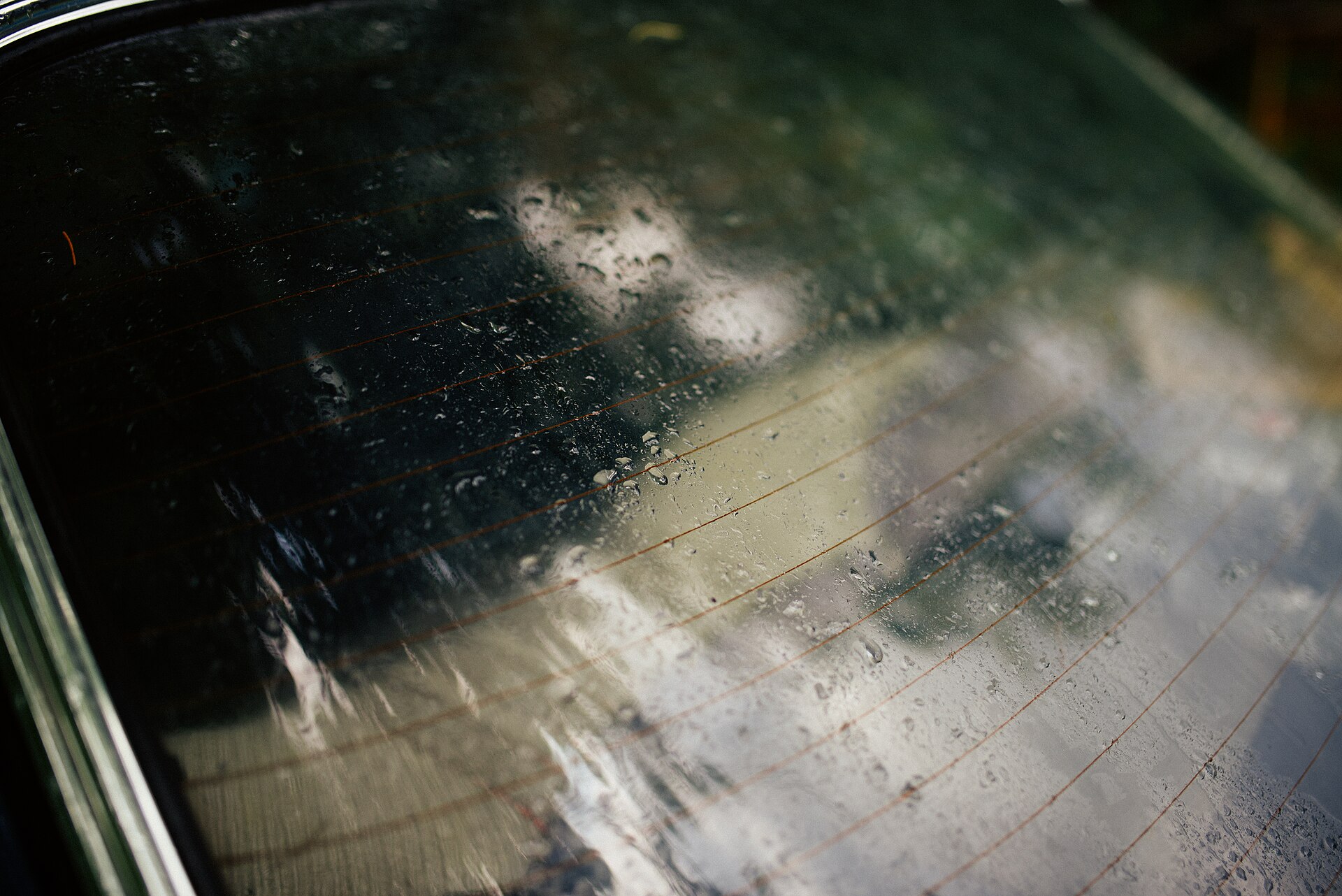
Rain on a car window; wet weather loads the cabin air with the moisture that later fogs the glass.
Image Credits: Wikimedia Commons
How to prevent windows fogging up
Clearing fog is reactive. Prevention means taking moisture out of the equation before it reaches the glass.
- Remove damp items. Wet floor mats, damp coats, and soggy sports kit left in the car overnight are often the main moisture source. The RAC emphasizes that letting these dry inside the car, even once, is enough to cause repeated fogging, according to The News Wheel.
- Use moisture absorbers. Silica gel packs or a sock filled with cat litter placed on the dashboard or under the seats soaks up cabin humidity cheaply.
- Avoid recirculation in winter. Keep the air intake on fresh air so humid cabin air gets flushed out instead of recirculated.
- Check the drains. Blocked sunroof and door drains let water pool where it should escape, feeding cabin humidity silently.
- Try the shaving foam trick. The RAC confirms that wiping the inside of the windscreen with shaving foam, then buffing it off completely with a second clean towel, leaves a thin film that resists misting. It wears off and needs reapplication, but it is the same trick ice hockey players use on their visors.
- Keep a microfibre cloth handy. For sudden fogging on the move, a proper demister pad or microfibre cloth clears glass without smearing it the way a sleeve does.
One more habit is worth breaking. Sitting on the driveway idling the engine for ten minutes to warm the car also burns extra fuel for little benefit, and modern engines warm faster under gentle driving. Clear the glass with the methods above and drive off gently instead.
When fogging signals a fault
Sometimes the windows keep fogging no matter what you do, and that points to the car rather than the weather. If the demister barely moves air, the problem may be a blocked cabin filter, clogged vents, or a failing blower motor. If the air never gets warm, suspects include a broken heater, a faulty thermostat, or low coolant, according to the RAC.
One specific warning sign deserves attention: a windscreen that fogs with a slightly sweet smell, or a greasy film that will not wipe clean. That can mean the heater matrix is leaking coolant into the cabin airflow. Coolant loss leads toward overheating on the road, so treat persistent sweet-smelling fog as a prompt to visit a garage, not as a cleaning problem.
Why does only the windscreen fog up and not the side windows?
It usually does reach the side windows eventually, but the windscreen fogs first because it is the largest and coldest single pane, facing the outside air head-on. Directing airflow at all the glass, not just the screen, keeps the whole cabin clear.
Does air-con really help in winter?
Yes. The air-con's demisting job is dehumidifying, not cooling. Run together with the heater, it strips moisture from the cabin air so the warm air does not just re-condense on the glass, according to the RAC.
Will cracking a window make the car colder?
Slightly, for a few minutes. But the dry outside air clears the screen faster than sealed, humid cabin air ever will, and you can close up and warm the cabin once visibility is restored.
Is it illegal to drive with a fogged windscreen?
Driving with impaired visibility is dangerous and illegal. The RAC's rule is simple: do not move off until every piece of glass on the car is clear.
The bottom line
Fogging is a moisture problem, not a glass problem, so the lasting fixes all remove moisture: dry the cabin air with heater plus air-con, flush humid air out instead of recirculating it, and take the damp clutter out of the car. Keep the inside of the glass clean, keep a microfibre cloth within reach, and if the fog keeps winning despite all of it, let a garage check the heating and ventilation system.
Rive News is a research desk covering practical car care. We write from documented sources, never from invented test drives.
Latest in Automotive
- Why your car struggles on cold mornings
- What to do when your car overheats on the road
- Why your car uses more fuel than before
- How to check your car oil level in two minutes
Subscribe for one practical car-care article every morning.
Copyright 2026 Rive News. Facts checked against public sources listed above.
Related stories

Why Does Tire Pressure Drop in Cold Weather?
Cold weather can cut tire pressure by 1 psi for every 10°F drop, thanks to the ideal gas law. Here is what happens inside the tire and what
Why Do Brake Rotors Warp, or Do They Actually?
Mechanics rarely see a truly warped rotor. The shudder usually comes from uneven pad deposits a few thousandths of an inch thick. Here

How to Buy a Used Car Without Getting Scammed: The Checklist
Over 450,000 cars a year have rolled-back odometers, NHTSA says. This checklist covers VIN checks, title washing, and the inspection that