
What Is the Difference Between Front and Rear Wheel Drive in Practice
Key takeaways
- Front-wheel drive pulls the car with the front wheels; rear-wheel drive pushes it with the rears, and that split changes handling, traction, and cost.
- FWD cars run a 60 to 70 percent front weight bias and tend to understeer, while RWD cars sit near 50:50 and tend to oversteer.
- FWD wins on price, fuel economy, and snow traction; RWD wins on balanced feel and performance driving.
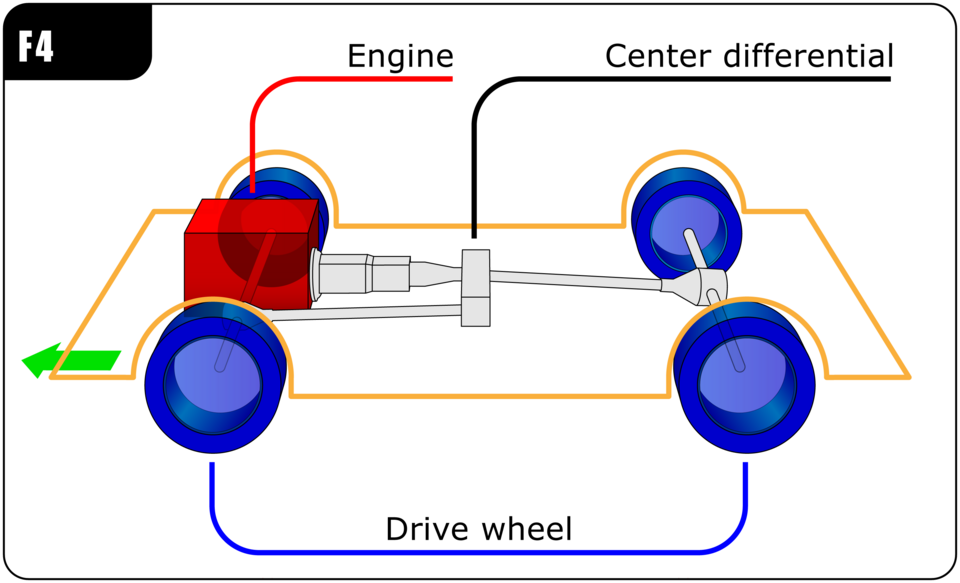
Front-wheel-drive and rear-wheel-drive layouts differ in where the engine's power goes. Diagram: Wikimedia Commons contributor
Image Credits: Wikimedia Commons
Front-wheel drive and rear-wheel drive answer one simple question: which wheels get the engine's power. The answer shapes how the car steers, how it behaves at the limit, how much cabin space it has, and what it costs to build. Most everyday cars today are front-wheel drive, while performance cars and many luxury sedans stay rear-wheel drive for reasons this article lays out in practical terms.
How the two layouts work
In a front-wheel-drive car, the engine, transmission, and differential are combined into a single transaxle unit that sits transversely at the front of the car. Power travels a short path to the front wheels, which both steer the car and pull it forward, according to Engineer Fix.
In a rear-wheel-drive car, the engine usually sits longitudinally up front, and power runs rearward through a driveshaft to a differential that turns the rear wheels. The front wheels handle steering only. That separation of duties is the mechanical heart of the difference.
The packaging difference is immediate. Because everything sits up front in an FWD car, there is no driveshaft tunnel running through the cabin, which frees up floor space, especially in the rear seats. An RWD car's driveshaft needs a raised tunnel along the floor, which eats into interior room.
What changes in handling
The most noticeable difference shows up in corners. FWD cars concentrate most of their mechanical weight over the front axle, often a 60 to 70 percent front bias. The front tires must steer, accelerate, and do most of the braking at once, which can overwhelm their grip in hard cornering.
When the front tires lose grip first, the car pushes wide of the intended line. That behavior is called understeer, and engineers consider it the safer, more predictable reaction for average drivers: lift off the throttle and the nose tucks back in.
RWD cars, with weight spread closer to an even 50:50 split, handle more neutrally but tend toward oversteer when pushed, where the rear tires slide and the back of the car swings out. Correcting oversteer takes more skill, which is why enthusiasts prize it and beginners fear it.
Torque steer is a quirk unique to powerful FWD cars. Under hard acceleration, unequal loading on the drive shafts can yank the steering wheel to one side, because the same wheels that steer are also being driven. RWD cars never do this, since the steering wheels carry no drive torque.
Acceleration itself favors RWD physics. Hard acceleration shifts weight rearward, pressing the rear tires into the pavement.
On an RWD car that means more grip on the driven wheels and a stronger launch. On an FWD car, the same weight transfer unloads the front drive wheels, which can cause wheel spin instead.
Traction, weather, and daily driving
For everyday driving in bad weather, FWD has a built-in advantage. The engine's mass sits directly over the driven wheels, pressing them down and improving traction on snow and wet roads. That is why FWD dominates commuter cars in regions with real winters.
RWD cars have less weight over their drive wheels, so they lose traction more easily on slick surfaces. A rear-driven car can break its tail loose on a wet roundabout or a snowy hill, especially with summer tires.
Modern traction control tames this considerably, but the physics still favors FWD when conditions turn poor. Drivers shopping for winter capability often compare drivetrains the way they compare tire types, a topic adjacent to the kind of practical car news covered in the Essex police car windscreen case, where vehicle dynamics met real consequences.
In dry conditions the picture flips for keen drivers. RWD's balanced weight distribution gives more neutral, adjustable handling, and the separation of steering and driving lets the front tires focus purely on cornering. That is why sports cars, from affordable coupes to supercars, overwhelmingly choose RWD or RWD-based all-wheel drive.
Cost, space, and efficiency
FWD is cheaper to build. The integrated transaxle installs as one unit on the assembly line, with fewer parts and no long driveshaft.
That saving reaches buyers as lower prices and also trims weight, which helps fuel economy. Electric vehicles complicate the old rules, since a motor can sit on either axle, which is part of why models like Tesla's Cybertruck use layouts that would be impractical with a combustion engine.
RWD costs more because it needs a driveshaft, a separate rear differential, and the structural tunnel to house them. Maintenance can also run higher with more moving parts in the driveline. But manufacturers keep paying that premium for performance models because buyers of those cars value the driving feel it delivers.
Interior space is the quiet FWD win. Families get a flatter rear floor and often a roomier cabin in the same footprint. RWD buyers trade that space for balance and feel.
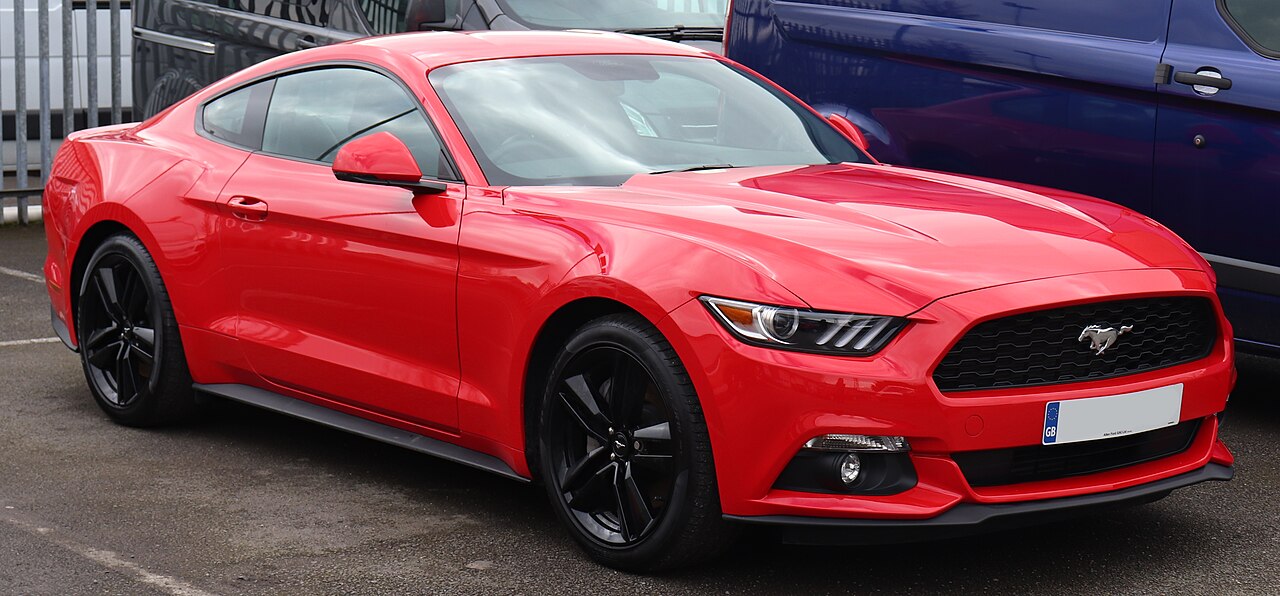
The Ford Mustang has stayed rear-wheel drive across generations, prized for its balanced handling. Photograph: Wikimedia Commons contributor
Image Credits: Wikimedia Commons
Which is better in snow, FWD or RWD?
FWD is generally better in snow. The engine's weight sits over the driven front wheels, which improves traction on slippery surfaces. RWD cars need dedicated winter tires and careful throttle control to stay composed in the same conditions.
Is RWD more fun to drive than FWD?
Most driving enthusiasts say yes. The near 50:50 weight balance and the tendency to oversteer make RWD cars feel more adjustable and engaging. FWD's understeer is safer for most drivers but less rewarding at the limit.
Does FWD save fuel compared to RWD?
Typically, yes, though the gap has narrowed. FWD cars are lighter and have a shorter, simpler driveline with fewer losses. The difference matters most in small, efficient cars where every kilogram counts.
Why are most cars front-wheel drive now?
Packaging, cost, and weather traction explain it. FWD gives more interior space, costs less to manufacture, and grips better in rain and snow, which matches what most buyers need from a daily driver.
The bottom line
Choose front-wheel drive for affordable, efficient, all-weather transport with predictable manners. Choose rear-wheel drive for balanced handling, stronger launches, and a more engaging drive. Neither is objectively better; the right answer depends on what you ask the car to do every day.
Latest in Automotive
- Why cars have a rev limiter
- Essex police car windscreen case on the A120
- Tesla Cybertruck cancelled for Australia
Subscribe for one practical car explainer in your inbox every morning.
Related stories

Why Does Tire Pressure Drop in Cold Weather?
Cold weather can cut tire pressure by 1 psi for every 10°F drop, thanks to the ideal gas law. Here is what happens inside the tire and what
Why Do Brake Rotors Warp, or Do They Actually?
Mechanics rarely see a truly warped rotor. The shudder usually comes from uneven pad deposits a few thousandths of an inch thick. Here

How to Buy a Used Car Without Getting Scammed: The Checklist
Over 450,000 cars a year have rolled-back odometers, NHTSA says. This checklist covers VIN checks, title washing, and the inspection that