
Why do cars have a rev limiter: engine protection explained
By Rive News / Research desk | Rive News / Published October 31, 2026 at 9:00 AM PKT
Key takeaways
- A rev limiter is an ECU function that caps engine speed at the redline to stop parts from destroying themselves.
- The main danger at high RPM is valve float, where valves stay open too long and pistons can strike them.
- It works by cutting fuel or spark, and it cannot stop over-revving caused by a bad downshift.
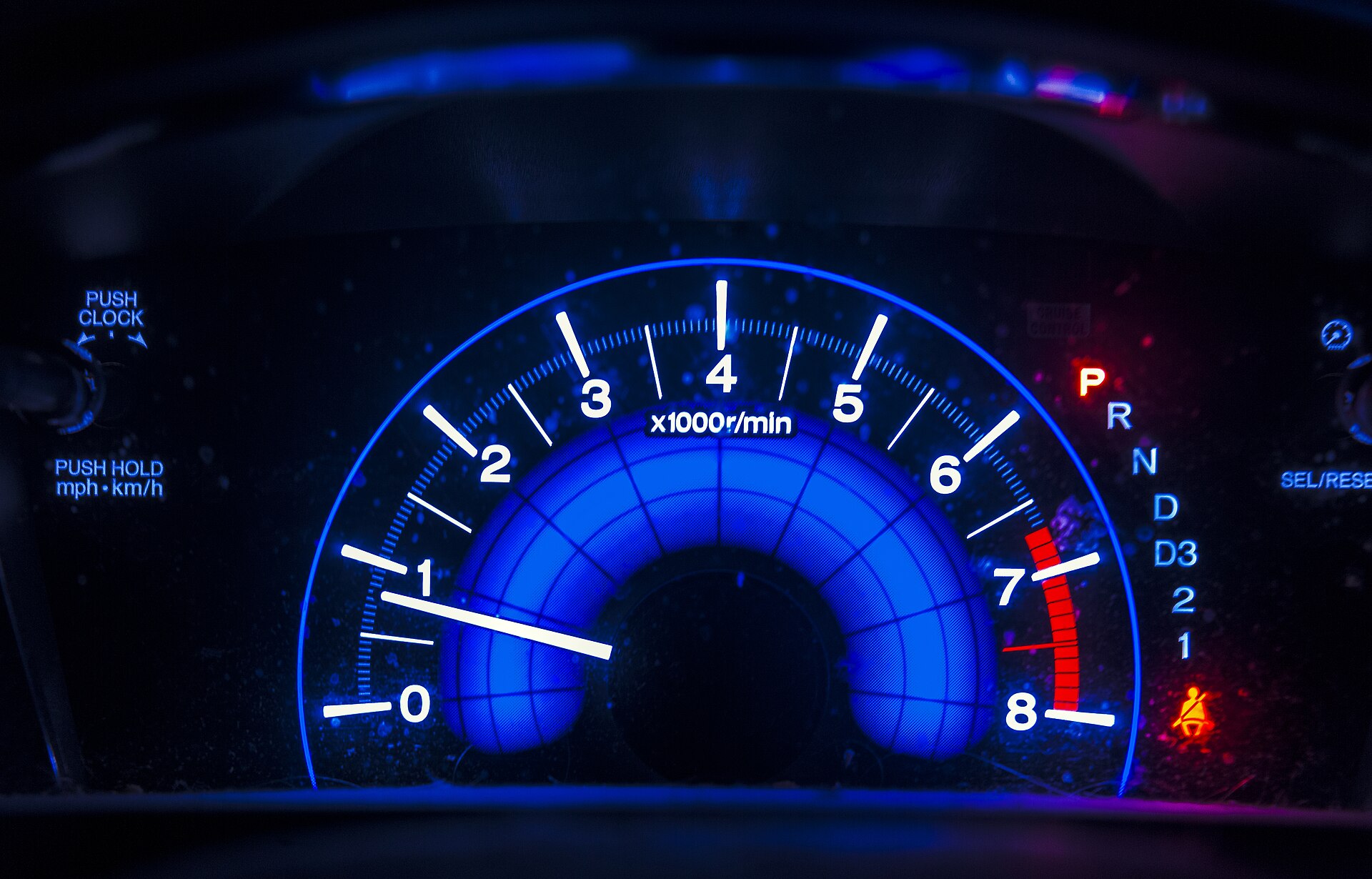
[A tachometer display on a 2012 Honda Civic with the redline zone at the top of the dial.] Photograph: Daniel Case
Image Credits: Wikimedia Commons
Wikimedia Commons
A rev limiter is a device fitted in modern vehicles with internal combustion engines. It exists to protect the engine by restricting its maximum rotational speed, measured in revolutions per minute, or RPM. Once the needle reaches the manufacturer's limit, the car's computer steps in and refuses to let it spin any faster.
This article explains why cars have a rev limiter, including what the limiter does, why engines need a speed ceiling, how the ECU intervenes, and what the limiter cannot protect against.
What a rev limiter actually does
The rev limiter prevents the engine from being pushed beyond the manufacturer's limit, known as the redline. That is the red zone marked on the tachometer, and beyond it engine damage may occur, according to Wikipedia's "Rev limiter" article.
The limit is a programmed function inside the engine control unit, or ECU. The ECU watches engine speed through sensors on the crankshaft. When the RPM approaches the set threshold, it acts to stop the engine from accelerating further, usually by interrupting combustion.
The intervention is automatic. The driver does not press anything or make a choice. The car simply stops making more power at the limit.
Drivers usually notice the limiter as a sudden stutter or loss of pull at full throttle. It can sound like a sputtering, machine-gun-like noise as combustion switches on and off rapidly.
Why engines need a speed ceiling
Inside an engine, the pistons change direction twice every revolution. The inertial loads on the pistons, connecting rods, and crankshaft bearings grow with the square of engine speed. Doubling the RPM quadruples the tensile and compressive forces on the rod assembly, as the automotive explainer EngineerFix reports in its rev-limiter guide.
That math is unforgiving. An engine built to survive 6,000 RPM would face roughly four times the rod stress at 12,000 RPM. No production valvetrain or bottom end is built with that kind of margin.
The other killer is the valvetrain. The camshaft opens the intake and exhaust valves, and valve springs slam them shut again. At very high RPM, the inertia of the valves and their hardware can overcome the closing force of the springs.
When that happens, the valve does not fully close before the piston starts its upward travel. Engineers call this valve float. A floating valve can hang open long enough for the rising piston to strike it, bending the valve stem and often wrecking the piston crown and cylinder head.
The redline is therefore set just below the calculated onset of valve float for that engine. The stiffness of the valve springs and the mass of the valvetrain parts largely determine where that point sits.
There is a second reason for the ceiling that has nothing to do with breakage. Engines running at redline produce higher levels of unburnt hydrocarbons and nitrogen oxides, which can push the vehicle outside its certified emissions profile, per EngineerFix. The limiter keeps the engine inside the emissions window it was tested for.
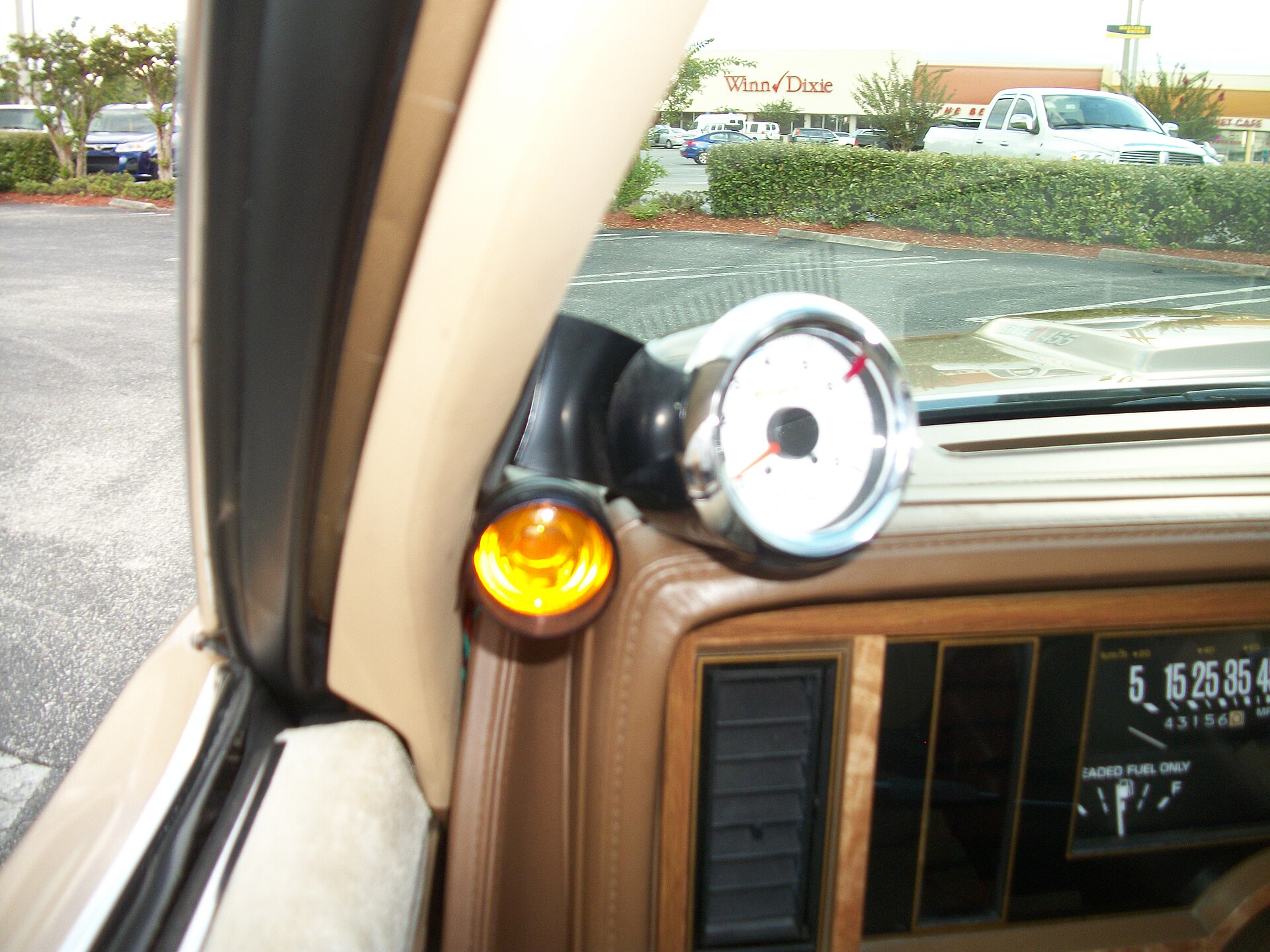
[The tachometer of a 1986 Buick Regal showing its redline marking.] Photograph: DanTD
Image Credits: Wikimedia Commons
How the ECU enforces the limit
The ECU has two main ways to kill power: cutting fuel or cutting spark. Both work by interrupting the combustion process, but they differ in side effects.
Fuel-cutting limiters are the most common in road cars. The ECU deactivates the fuel injectors, starving the cylinders of the air-fuel mixture. Wikipedia's rev-limiter article notes this method wears less on exhaust components, particularly the catalytic converter, because no unburnt fuel reaches it.
Ignition-cut limiters shut off the spark plugs instead. The fuel keeps flowing, so unburnt mixture passes into the exhaust, where it can ignite at the turbocharger or in the exhaust pipe. That is why production cars mostly avoid it, though some aftermarket and racing systems prefer ignition cut because it acts slightly faster and helps turbocharged engines hold boost.
Many ECUs combine both methods. Some cut fuel and spark together to bring RPM down quickly.
The intervention itself comes in two flavors. A soft-cut limiter begins trimming power gradually, sometimes 100 to 200 RPM before the maximum, by cutting fuel to selected cylinders or retarding ignition timing. The driver feels a gentle plateau rather than a wall.
If the driver keeps pushing, the hard cut arrives. This is the immediate, complete interruption of fuel or spark to most or all cylinders. Power cycles on and off rapidly just below the limit, producing the familiar stutter.
Redlines themselves vary enormously. The Free Dictionary's encyclopedia entry on redline notes they range from a few hundred RPM in huge engines like those in trains and generators to more than 10,000 RPM in small high-performance engines. A diesel pickup may redline near 3,500 RPM while a sportbike engine spins past 14,000.
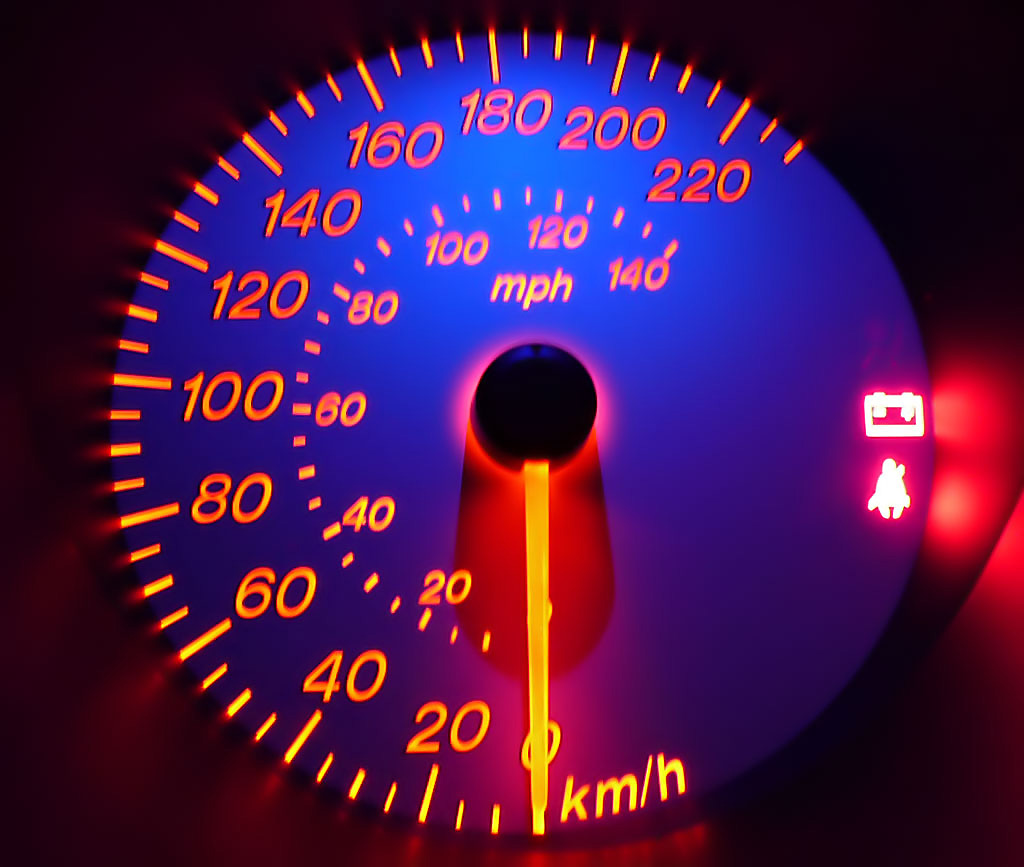
[A car dashboard with the instrument cluster visible behind the steering wheel.] Photograph: Mimiliz
Image Credits: Wikimedia Commons
What a rev limiter cannot stop
A limiter cuts engine power. It cannot prevent the engine from being mechanically driven past the redline.
The classic case is a money shift: downshifting into too low a gear at speed, so the wheels force the crankshaft to spin faster than the limiter allows. Wikipedia's rev-limiter article is explicit that in this situation the limiter will cut power but the RPM still goes past redline, and the damage happens anyway.
Removing the limiter does not create free performance either. Some drivers raise or delete the limit hoping for more speed, but the factory limit is set where the engine's volumetric efficiency peaks.
Extra revs beyond that point produce little extra power and push the internals into forces they were not designed for. Valve train instability, broken connecting rods, and piston damage are the documented outcomes, according to EngineerFix's guide to limiter removal.
It is also worth knowing that limiters do not protect against a cold engine being revved hard. Cold oil flows poorly, and clearances are wrong until the engine warms. A cold-start idle that sits high is the ECU's way of warming things up, not an invitation to redline it in the driveway.
How the limiter relates to everyday driving
In an automatic car, you may never meet the limiter. The ECU usually upshifts before the engine reaches the redline, even at full throttle. The limiter is mostly a backstop for manual mode, launch control, and enthusiastic driving.
It sits alongside other electronic safeguards. Traction control manages wheel slip by cutting power too, using some of the same actuator tricks.
Adaptive cruise control watches the road ahead. A torque converter in an automatic absorbs the shock when the limiter cycles at a gear change.
None of these systems exist because drivers are careless. They exist because metal parts have hard physical limits, and the cheapest way to respect them is software.
Does bouncing off the rev limiter damage the engine?
Occasional contact with the limiter is not catastrophic. It is designed for exactly that moment and brings RPM down before damage occurs. Repeated, prolonged bouncing adds heat and stress, so it is not a habit to keep.
Why does my car sound like it is sputtering at redline?
That is the hard cut cycling. The ECU interrupts fuel or spark, RPM drops slightly, power returns, RPM climbs again, and the cycle repeats several times per second. The on-off combustion is the sputtering sound.
Can a rev limiter be removed?
Aftermarket engine tunes can raise or remove it. Doing so voids the powertrain warranty in most cases and exposes the engine to forces beyond its design limits. Valve float and rod failure are the documented risks.
Is the redline the same as the rev limiter setting?
Close but not identical. The redline is the marked limit on the tachometer. The limiter usually engages at the redline or a few hundred RPM above it, per The Free Dictionary's redline entry.
Do electric cars have rev limiters?
Electric motors have their own speed limits enforced by the inverter, but they do not need a combustion-style rev limiter. There are no valves, pistons, or connecting rods to protect, so the failure modes are different.
The bottom line
Cars have rev limiters because engine internals have a hard speed ceiling, set by valve float and the square-law growth of rod forces. The ECU enforces that ceiling by cutting fuel or spark, most often with a soft cut followed by a hard cut at the redline.
It also keeps emissions in check and the warranty intact. What it cannot do is save an engine from a mechanical over-rev like a bad downshift, so drive like the limiter is a guardrail, not a target.
Tags: rev limiter, redline, engine RPM, valve float, ECU, engine protection
Rive News's research desk covers how everyday machines work, from engines to electronics.
Related
- Traction control and wheelspin
- Why cars idle higher on a cold start
- Torque converters in plain terms
- How adaptive cruise control sees ahead
Subscribe to the Rive News newsletter for one clear explainer every morning.
Rive News publishes research-backed explainers. Corrections: reply to any article and we will review it.
Related stories

Why Does Tire Pressure Drop in Cold Weather?
Cold weather can cut tire pressure by 1 psi for every 10°F drop, thanks to the ideal gas law. Here is what happens inside the tire and what

Why Do Brake Rotors Warp, or Do They Actually?
Mechanics rarely see a truly warped rotor. The shudder usually comes from uneven pad deposits a few thousandths of an inch thick. Here

How to Buy a Used Car Without Getting Scammed: The Checklist
Over 450,000 cars a year have rolled-back odometers, NHTSA says. This checklist covers VIN checks, title washing, and the inspection that