
Why Does Your Car Idle Higher on a Cold Start
Key takeaways
- A cold engine idles at 1,200 to 1,500 RPM versus 600 to 900 RPM warm, by deliberate ECU programming.
- The fast idle heats the catalytic converter toward its roughly 400 C working temperature as quickly as possible.
- Cold fuel vaporizes poorly and cold oil drags, so extra fuel, air, and revs keep combustion stable until warm-up.
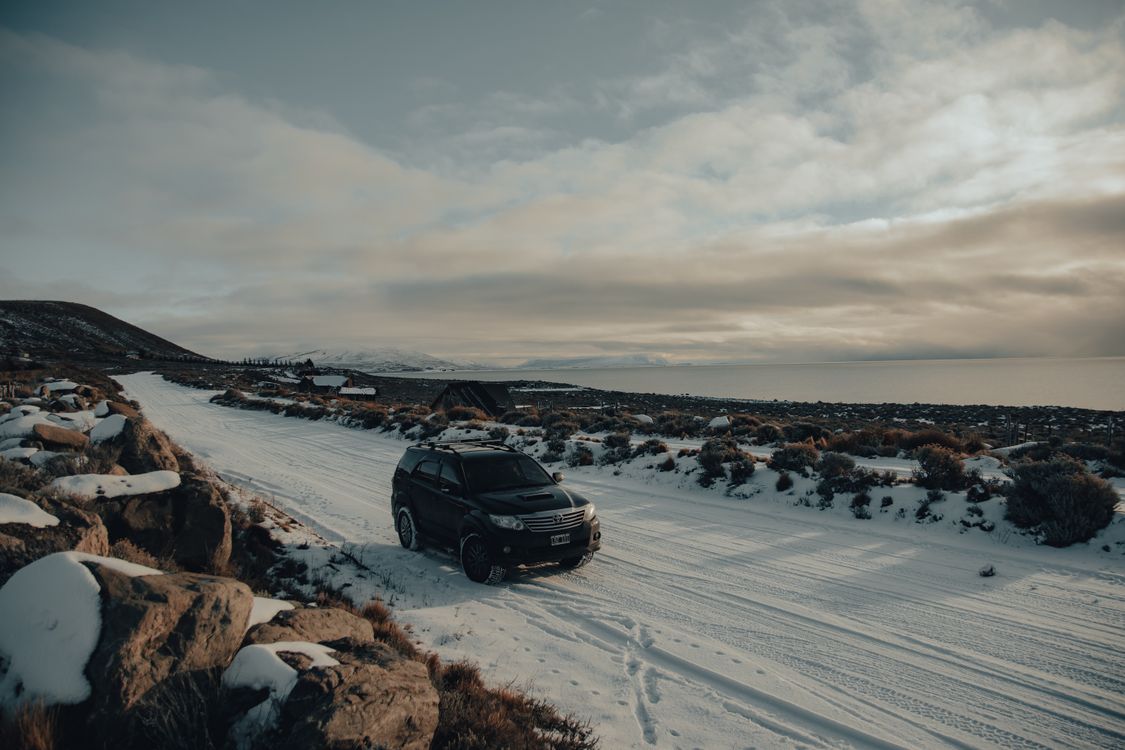
Turn the key on a cold morning and the tachometer jumps to 1,200 or 1,500 rpm, far above the lazy 700 rpm the engine will settle into later. It sounds busy, almost strained, and first-time drivers often wonder if something is wrong.
Nothing is. Your car's computer ordered that fast idle on purpose, and it has three good reasons.
This is the modern replacement for the manual choke your grandparents used. This article explains the three jobs the high idle performs: stabilizing cold combustion, heating the catalytic converter, and overcoming cold oil, plus how to tell normal fast idle from a genuine fault.
Cold fuel does not burn properly
The first problem is chemistry. Liquid gasoline does not burn well. It has to vaporize into a fine mist mixed with air before the spark plug can ignite it cleanly.
When the engine is cold, fuel sprayed into the intake tends to condense on the cold metal surfaces instead, a phenomenon engineers call wall-wetting. The mixture that actually reaches the combustion chamber ends up leaner than intended, which causes misfires and rough running.
The engine control unit compensates with cold start enrichment: it injects extra fuel to make up for what condenses on the walls. Engineer Fix's technical explainer describes exactly this, noting that the ECU commands the injectors to deliver extra fuel because cold components vaporize it poorly.
But a richer mixture alone is not enough. Burning more fuel per cycle releases more energy, and the engine needs to spin faster to turn that energy into smooth, stable rotation rather than lumpy, near-stall shuddering.
That is the fast idle. The ECU opens the throttle or a bypass air valve a little wider, admits more air to match the extra fuel, and holds the engine at 1,200 to 1,500 rpm.
A normal warm engine idles between 600 and 900 rpm, so the cold idle is roughly double. As the coolant temperature sensor reports warming metal, fuel vaporizes properly again, the enrichment tapers off, and the idle glides down to normal, usually within 30 seconds to two minutes depending on the weather.
Heating the catalytic converter is the main event
The second reason is emissions, and on modern cars it is the dominant one. Your catalytic converter scrubs hydrocarbons, carbon monoxide, and nitrogen oxides from the exhaust, but only once it is hot. Below its light-off temperature, roughly 400 degrees Celsius, the chemical reactions barely happen, and the car pollutes far more per second than when warm.
Regulators measure emissions from the very first second of starting, so manufacturers are under intense pressure to shrink the cold-start pollution spike. The fast idle is their main weapon.
Spinning the engine faster pushes a larger volume of hotter exhaust gas into the converter, dragging it up to working temperature quickly. Engineer Fix notes that the ECU often retards ignition timing during this phase as well, which sends even hotter exhaust downstream, all in service of lighting off the catalyst.
How fast does this work in practice? MOTOR Magazine's driveability analysis of a 2004 Toyota Corolla showed the strategy in action: the car's small close-coupled converter, mounted right at the exhaust manifold to catch heat early, typically lights off in under 20 seconds.
On their test car the idle started near 1,700 rpm and did not reach the 750 rpm warm target until 425 seconds in, with the high idle deliberately maintained to cut hydrocarbon emissions and get the catalyst lit. Modern cars are faster, but the principle is identical.
This is also why the ECU runs open-loop during warm-up, following pre-programmed fuel tables rather than oxygen-sensor feedback. The oxygen sensors need heat to give accurate readings, so the computer flies blind on purpose-built maps until they come online, then switches to precise closed-loop control.
Cold oil fights every rotation
The third reason is mechanical. Engine oil thickens as it cools, and thick oil resists flow.
That resistance drags on every moving part: the crankshaft, the camshafts, the pistons. At normal idle speed, a stone-cold engine would struggle to maintain rotation and build oil pressure, risking a rough idle or a stall.
The fast idle solves this by brute force. Higher revs spin the oil pump faster, pushing the thick oil through the galleries sooner and getting protective lubrication to bearings and cam lobes quickly.
Engineer Fix's cold-start guide makes the point directly: without the speed increase, the cold engine would struggle, resulting in a rough idle or stalling. It is the same reason you are advised to drive gently rather than idle for ten minutes: light load warms the oil faster than sitting still, and the fast idle covers the vulnerable first minute.
None of this harms the engine. The revs involved, 1,200 to 1,800 rpm at most, are well within the engine's comfort zone.
What does cause wear is thrashing a cold engine at high rpm and heavy throttle before the oil has thinned, which is why the standard advice remains: start it, wait half a minute, and drive off gently. Your tyre pressures deserve the same cold-weather attention, since they drop as temperatures fall.
When a high idle is not normal
Fast idle is a programmed phase with a clear signature: elevated revs that taper smoothly downward as the temperature gauge climbs. Anything outside that pattern deserves a look.
If the idle stays above 1,500 rpm after several minutes of driving, or never drops once the engine is fully warm, suspect a fault rather than a feature. Common culprits include a vacuum leak letting unmetered air in, a carbon-fouled throttle body holding the plate ajar, a stuck idle air control valve, or a faulty coolant temperature sensor telling the ECU the engine is colder than it is. Engineer Fix's diagnostics guide lists all of these, and notes that a dead coolant sensor can trap the ECU in its cold-start routine permanently.
An idle that surges up and down, or one that races past 2,000 rpm on a mild morning, is also abnormal. The rule of thumb is simple: brief, smooth, and temperature-linked is normal.
Persistent, erratic, or extreme is a workshop visit. As with a windscreen that keeps fogging, a symptom that never clears points to a cause worth fixing.
How long should the high idle last?
In mild weather, 30 to 60 seconds. In freezing conditions, up to a couple of minutes. If it persists beyond three to five minutes of driving, or never drops at all, have the car checked.
Should I wait for the revs to drop before driving off?
No need to wait it out. Start the engine, give it 30 seconds or so for oil to circulate, then drive gently. Light driving warms the engine and the catalytic converter faster than idling in the driveway, and it wastes less fuel.
Does the high idle waste a lot of fuel?
A little, but far less than the old habit of idling for ten minutes. The enrichment phase is brief by design, and the faster catalyst light-off that it buys actually reduces overall emissions. Remote starters left running for ages are the real fuel wasters.
Why does the idle sometimes jump back up at a stoplight in winter?
Electrical loads like the heater blower, heated screens, and headlights demand more from the alternator, so the ECU raises the idle slightly to keep up. That is a separate load-compensation behavior, not the cold-start sequence repeating.
The bottom line
Your car idles higher on a cold start because its computer is solving three problems at once: keeping combustion stable while cold fuel vaporizes poorly, heating the catalytic converter to its roughly 400 C working temperature as fast as emissions rules demand, and pushing thick cold oil around the engine. Expect 1,200 to 1,500 rpm for a minute or two, tapering smoothly as the engine warms. Start it, wait half a minute, drive gently, and let the fast idle do exactly what it was programmed to do.
Image Credits: Pexels / Gaspar Zaldo; freestocks.org; Nikita Nikitin
Latest in Automotive
- Why Tyres Lose Pressure Slowly Even Without a Puncture
- Why Your Windscreen Fogs Up on the Inside
- Why Your Indicators Make That Clicking Sound
- Why Car Doors Lock Automatically When You Drive Off
Subscribe for one plain-English car explainer every morning.
Related stories

Why Does Tire Pressure Drop in Cold Weather?
Cold weather can cut tire pressure by 1 psi for every 10°F drop, thanks to the ideal gas law. Here is what happens inside the tire and what

Why Do Brake Rotors Warp, or Do They Actually?
Mechanics rarely see a truly warped rotor. The shudder usually comes from uneven pad deposits a few thousandths of an inch thick. Here

How to Buy a Used Car Without Getting Scammed: The Checklist
Over 450,000 cars a year have rolled-back odometers, NHTSA says. This checklist covers VIN checks, title washing, and the inspection that