
Why do indicators click when you signal a turn
By Rive News / Research desk | Rive News / Published October 29, 2026 at 9:00 AM PKT
Key takeaways
- The original click was the sound of a thermal flasher relay snapping its contacts open and shut.
- Later electromagnetic relays clicked for a similar reason, as a moving armature struck its contacts.
- Many modern cars have no clicking part at all, so the sound is played through a speaker as a deliberate reminder.
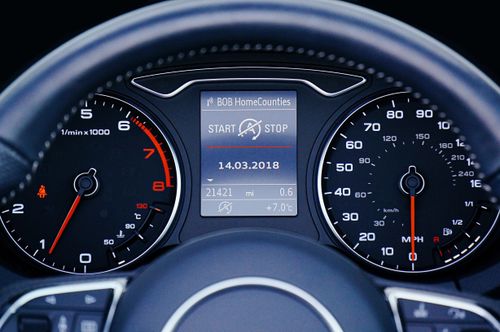
[A car dashboard displaying its speedometer, tachometer, and digital display.] Photograph: Car dashboard gauges
Image Credits: Pexels
Indicators click because the part that once made them flash also made a noise, and carmakers kept the noise long after the part changed. In early cars, the click was the flasher relay itself at work. In many modern cars, it is a recording of that sound, played on purpose.
This article traces the click through its three stages: the thermal relay, the electromagnetic relay, and the synthetic sound of today. It also explains why a click that suddenly speeds up is worth checking, and why a silent indicator is not always a broken one.
The original click: a strip of metal bending
The earliest common flasher was the thermal flasher relay, a small cylindrical unit behind the dashboard. Its heart was a bimetallic strip: two different metals bonded together, chosen because they expand at different rates when heated.
SlashGear describes the cycle clearly. When the driver moved the indicator stalk, current flowed through the flasher unit and heated the bimetallic spring or strip inside. As it heated, the strip bent or snapped into contact with another metal tab, completing the circuit and lighting the indicator bulbs.
As the strip cooled, the contact broke, the circuit opened, and the bulbs went dark.
Each snap open and snap shut made a sound, and the metal casing of the flasher unit amplified it. The result was the familiar click-clack, in step with the flashing lights. OrganizerTone walks through the same cycle in detail: current heats the strip, the strip bends and breaks the circuit with a clack, the strip cools and straightens to reconnect the circuit with a click, and the cycle repeats until the driver cancels the signal.
The sound was never the point of the design. It was a byproduct of a cheap, reliable way to make lights blink without any electronics. But drivers quickly learned to use it as feedback.
The click told them the signal was on, even when they could not see the dashboard light, and it reminded them to cancel the signal after a turn.
Why the click changed with the relay
Thermal flashers had a quirk that drivers still recognise today: their flash rate depended on the electrical load. With all bulbs working, the strip heated and cooled at its designed rate. If a bulb failed, less current flowed, the strip heated more slowly, and the flash rate changed.
Drivers learned that a strangely fast or slow click often meant a bulb had gone.
Electromagnetic flashers replaced the heated strip with a different moving part, but kept the click. Wonderful Engineering describes the design: a chip sends pulses to an electromagnetic relay, whose wound coils create a magnetic field when current flows. That field pulls a hinged metal armature, opening the contacts and cutting current to the lights.
When the pulse ends, the magnetic field collapses, the armature falls back, the circuit closes, and the lights come on again.
The armature striking its contacts made the click in this design, just as the snapping strip had in the older one. The mechanism was more consistent than a heated strip, since it did not depend on temperature in the same way, but it still had a moving part that made a sound. For decades, the click remained an honest report of something physical happening behind the dashboard.
Solid-state flashers changed that. These electronic units switch lights on and off with transistors and have no moving parts at all. A solid-state flasher is silent by nature.
If carmakers had simply fitted silent flashers and stopped there, the indicator click would have vanished from new cars.
The modern click is often a recording
It did not vanish, because drivers missed it. The click had become part of how people drive: a rhythmic reminder that the signal is running, audible without looking down, and a prompt to cancel it after turning. Removing it made indicators easier to leave on by mistake, which confuses other drivers.
So many modern cars recreate the sound deliberately. The body control module or instrument cluster plays a short click through a small speaker or the car's audio system, timed to the flashing lights. Wonderful Engineering notes that in modern cars with computer boards and silent solid-state relays, the sound is played via speakers as a remembrance of the older design.
Gumtree answers on silent indicators make the same point for cars like the Tesla Model 3, where the sound is generated synthetically through the dashboard.
This is why a modern indicator click can sound identical across cars that share no mechanical parts. It is a designed sound, chosen to be familiar, rather than a noise leaking from a relay. It also explains why the click can sometimes be adjusted in volume or tone through vehicle settings, and why a software fault can silence it while the lights keep flashing normally.
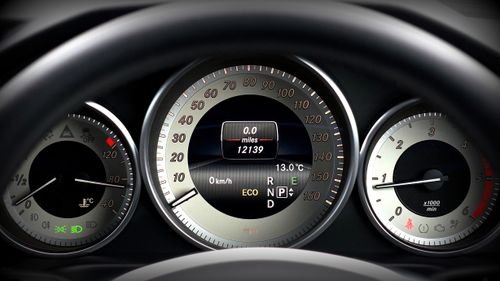
[Close-up of a car dashboard showing its speedometer, odometer, and temperature gauge.] Photograph: Dashboard gauges close-up
Image Credits: Pexels
What fast clicking means
A click that suddenly speeds up is the most useful diagnostic the indicator system offers. In older thermal systems, the cause was usually a failed bulb. Less current meant a different heating cycle, and the flash rate shifted.
Drivers learned to treat a fast click as a bulb warning before they ever looked at the lights.
In modern systems, the logic is often deliberate rather than accidental. The body control module monitors the indicator circuit and, when it detects a bulb failure or an unexpected load, it doubles the flash rate on purpose. The fast click and fast dashboard light are a designed warning, not a side effect.
Either way, the action is the same: check the indicator bulbs on the side that is flashing fast, front and rear, and replace the failed one.
A click that appears when the indicator is not in use points elsewhere. A faulty flasher relay, worn contacts in the indicator stalk, or moisture in the wiring can cause intermittent clicking with no lights. JustAnswer threads on this fault repeatedly point to the relay and the stalk switch as the first checks.
The relay sits near the fuse box on many cars, and swapping it with a matching relay, such as the hazard relay, is a common test.
A silent indicator with working lights is a different fault. On older cars, it may mean the relay has been replaced with a silent solid-state unit, or that the relay's sound is muffled. On modern cars, it may mean a failed dashboard speaker, a muted setting, or a software glitch.
If the lights flash at the normal rate and the dashboard arrow blinks, the signalling itself is working, and the missing sound is an annoyance rather than a safety failure. Still, without the audible reminder, it is easier to leave an indicator running, so it is worth fixing.
Why the sound matters for safety
The click does real work as feedback. A driver who signals for a lane change and then forgets to cancel leaves a misleading signal running. Other drivers may expect a turn that never comes, or hesitate when they should proceed.
The click, repeating steadily, is a prompt that the signal is still active.
Could the click disappear one day?
The indicator click is a small piece of design history that drivers hear every day. It began as the noise of a bending strip of metal, survived as the snap of an electromagnetic relay, and now lives on as a deliberate sound in cars that have nothing left to click. Each stage kept the same rhythm, because the rhythm itself had become part of driving.
Frequently asked questions
Why do indicators make a clicking sound at all?
In older cars, the click was the flasher relay snapping its contacts open and shut to make the lights blink. In many modern cars, the click is a synthetic sound played through a speaker, kept because drivers use it as feedback.
What is a thermal flasher relay?
It is an early indicator control that used a bimetallic strip. Current heated the strip, which bent and broke the circuit, then cooled and reconnected it. That heating and cooling cycle made the lights flash and produced the click.
Why does my indicator click faster than normal?
A faster click usually means a bulb has failed on that side, or the car has detected a circuit fault and doubled the flash rate as a warning. Check the front and rear indicator bulbs on the fast side first.
Why is my indicator silent but the lights still flash?
On modern cars, the click is generated by the dashboard speaker or audio system, so a failed speaker, a muted setting, or a software glitch can silence it while the lights work normally. On older cars, a replaced silent relay can have the same effect.
When was the first modern indicator introduced?
Edgar A. Walz Jr. patented an early modern directional signal in 1925, but indicators did not become common until Buick introduced its Flash-Way Directional Signal in 1939.
The bottom line
Indicators click because the first flasher relays clicked as they worked, and drivers came to depend on that sound. Electromagnetic relays kept the click, and modern cars recreate it through a speaker now that silent electronics do the switching. A steady click means the signal is running.
A fast click means check a bulb. A missing click means check the speaker, the setting, or the relay.
Tags: indicators, turn signals, car electrics, flasher relay
Rive News is a research desk that writes plain-English explainers from published sources. It does not test vehicles itself and does not replace a mechanic's advice.
Related
- Why some car headlights look blue on the road
- Why headlights dim when you start your car
- How a car horn actually makes its loud warning sound
- Why does your car shake when you brake
Subscribe to Rive News for a weekly explainer on how everyday things work.
Rive News publishes explainers based on public sources. Corrections are welcomed and applied with a visible update note.
Related stories

Why Does Tire Pressure Drop in Cold Weather?
Cold weather can cut tire pressure by 1 psi for every 10°F drop, thanks to the ideal gas law. Here is what happens inside the tire and what
Why Do Brake Rotors Warp, or Do They Actually?
Mechanics rarely see a truly warped rotor. The shudder usually comes from uneven pad deposits a few thousandths of an inch thick. Here

How to Buy a Used Car Without Getting Scammed: The Checklist
Over 450,000 cars a year have rolled-back odometers, NHTSA says. This checklist covers VIN checks, title washing, and the inspection that