
Why headlights dim when you start your car
By Rive News / Research desk | Rive News / Published October 26, 2026 at 9:00 AM PKT
Key takeaways
- Headlights dim at startup because the starter motor briefly draws 100 to 300 amps, pulling system voltage down.
- A short dim of under a second on a healthy car is normal and not a fault.
- Dimming that lasts longer, or comes with slow cranking, points to a weak battery or poor connections.
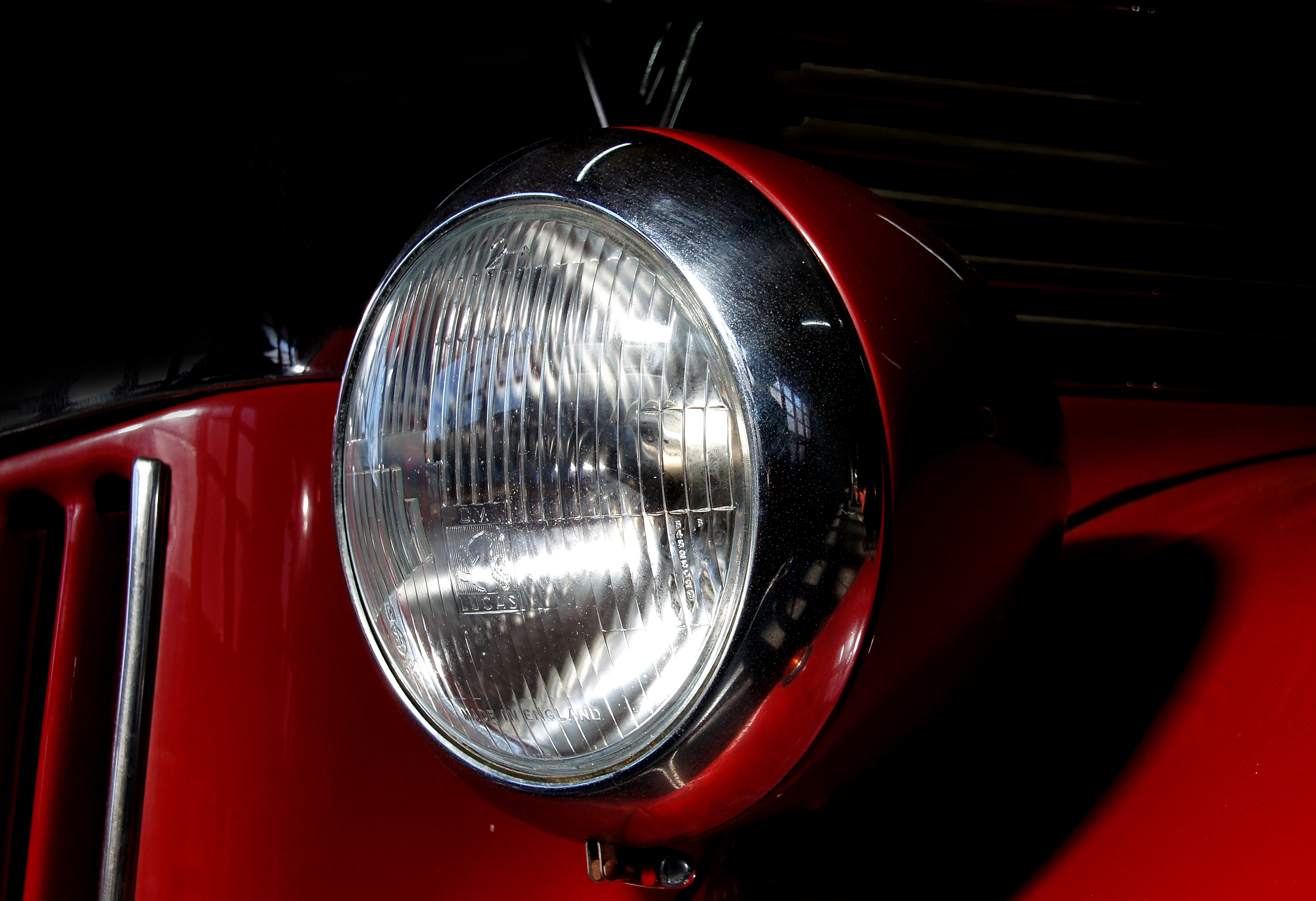
[Car headlights shining in the dark before the engine starts.] Photograph: car headlights at night
Image Credits: Wikimedia Commons
Headlights dim when you start a car because the starter motor takes a huge gulp of electrical current in the first moment of cranking. That sudden demand drags the voltage available to the rest of the car down for a second or two.
The dimming is a visible sign of a voltage dip, not of the headlights themselves failing. Once the engine catches and the starter switches off, the alternator takes over and brightness returns.
This article explains how the starter creates that dip, what counts as normal, and when dimming is a warning worth acting on, including the battery test, the connection check, and the other symptoms that change the diagnosis.
What happens in the first second of starting
Turning the key, or pressing the start button, connects the battery to the starter motor. The starter has to spin a cold engine against compression and thick oil, which is the hardest job any part of the car does electrically.
Engineer Fix puts the draw for a standard four cylinder engine at 100 to 300 amps, and over 400 amps for larger V8 or diesel engines. Those numbers dwarf everything else in the car, since a headlight bulb draws only a few amps by comparison.
A car battery holds a nominal 12 volts, but that figure is not fixed under load. Every battery has internal resistance, and pushing hundreds of amps through that resistance costs voltage, so the rest of the system briefly runs on less.
The Institute of Physics teaching resource IOPSpark makes the same point in plainer terms. It notes that a very large current in the starter means a very large current in the battery, which produces a significant voltage drop across the battery's internal resistance.
Why headlights show the dip so clearly
Headlights are voltage sensitive, so a small voltage change shows up as a visible change in brightness. For an old style bulb, power falls with the square of voltage, which means a modest dip costs a noticeable amount of light.
Modern LED headlights behave a little differently, since their control electronics try to hold output steady. Even so, a deep enough dip can still make them flicker or dim for a moment at startup.
Dashboard lights and interior lights dim for the same reason. They share the same supply, so the same dip reaches them at the same instant.
The effect is most obvious at night, when headlights are the brightest thing on the car. In daylight, with lights off, most drivers never notice the dip at all.
[Car headlights glowing at night in city traffic.] Photograph: car headlights at night
Image Credits: Wikimedia Commons
What normal dimming looks like
Normal dimming is brief and shallow. Engineer Fix describes a quick, slight dimming lasting less than a second as standard operation, and it appears just as the starter engages, before the engine begins to turn steadily.
A healthy 12 volt battery should not fall below 9.6 volts during cranking, according to the same source. That 9.6 volt floor is the number workshops use when they load test a battery, and it gives a concrete line between normal and weak.
Once the engine is running, the alternator restores system voltage to roughly 13.8 to 14.5 volts. Flyriver cites that range for a running engine, and it explains why the lights look brighter a moment after startup than they did with the ignition on and the engine off.
Short cranking in warm weather usually produces the smallest dip. Cold mornings make it worse, because cold oil is thicker, the engine is harder to turn, and a cold battery delivers less current.
When dimming means something is wrong
Duration is the first warning sign. Dimming that lasts through the whole crank, or lights that go nearly dark and stay dark, suggest the battery cannot hold voltage under load.
Slow cranking is the second warning sign. If the engine turns over sluggishly while the lights fade, the starter is not getting the current it needs, and the battery is the usual suspect.
A clicking sound with no cranking is a third sign. It often means voltage has collapsed so far that the starter solenoid cannot stay engaged, and the battery or its connections need attention.
Dimming that continues after the engine is running points elsewhere. That pattern suggests a charging fault, such as a failing alternator or a slipping drive belt, rather than a starting fault.
Flickering that never settles, or lights that pulse with engine speed, also belong in the charging category. A healthy charging system holds voltage steady once the engine is running.
The battery, the connections, and the starter
A weak battery is the most common cause of excessive dimming. Batteries lose capacity with age and with heat, and a battery that starts the car in summer can fail on the first cold morning of winter.
Corroded or loose terminals cause the same symptom with a healthy battery. Corrosion adds resistance to the circuit, and that extra resistance steals voltage exactly when the starter needs it most.
A white or green crust on a terminal is easy to spot. Cleaning the terminals and tightening the clamps costs nothing and fixes a surprising number of dimming complaints.
The starter itself can also be at fault, though it is less common. A worn starter can draw more current than it should, dragging voltage down further than a healthy starter would.
If you have already ruled out the battery and the connections, and your car battery keeps dying overnight, the draw may be elsewhere in the system. A parasitic drain leaves the battery partly empty before you even turn the key.
Simple checks you can do at home
Start with a visual check of the battery terminals. Look for corrosion, swelling on the battery case, and clamps that move when you tug them gently.
Next, watch how the car behaves on a cold start. Note whether the dimming is a blink or a fade, and whether the engine cranks at normal speed.
A free battery test at most parts stores settles the question properly. The tester applies a load and reports whether voltage stays above the 9.6 volt floor during cranking.
If the battery tests good, ask the shop to check the charging system too. A charging test takes minutes and shows whether the alternator is holding voltage in the 13.8 to 14.5 volt range with the engine running.
Do not ignore a battery that is more than four or five years old and already showing long dimming. Replacing it before winter is cheaper than a tow from a cold car park.
Why some cars dim more than others
Diesel engines dim lights more noticeably than small petrol engines. Their higher compression makes them harder to turn, and their starters draw more current, sometimes over 400 amps.
Large engines follow the same pattern. More cylinders and more displacement mean more resistance for the starter to overcome on every crank.
Cars with many accessories running at startup also show more dip. If the heater fan, heated seats, and headlights are all on, the battery is already sharing current before the starter joins in.
That is also why headlights dim when you use power windows. A window motor is another heavy load, just a smaller one than the starter.
Electric cars do not behave this way, since they have no starter motor. Their 12 volt battery still powers lights and accessories, as explained in our piece on the 12 volt battery in an electric car, but the big traction battery does the driving work.
Frequently asked questions
Is it normal for headlights to dim when starting the car?
Yes, a brief slight dim of under a second is normal. The starter draws 100 to 300 amps on a typical four cylinder engine, and that load dips system voltage for a moment.
Can a bad battery cause headlights to dim?
Yes, and it is the most common cause of excessive dimming. A weak battery falls further under load, so lights fade more and cranking slows, and a load test showing below 9.6 volts confirms it.
Do headlights dim because the car cuts power to them?
No, the car does not deliberately switch the headlights off at startup. The dimming comes from the voltage drop itself, though some cars do delay accessories until after cranking.
Why do my lights dim more in winter?
Cold thickens engine oil and weakens battery output at the same time. The starter then needs more current while the battery can deliver less, so the voltage dip grows.
The bottom line
Headlights dim at startup because the starter motor briefly demands hundreds of amps, and that demand pulls system voltage down across the battery's internal resistance. A blink of dimming under a second is normal, and brightness returns as soon as the alternator takes over.
Treat longer dimming, slow cranking, or clicking as a prompt to test the battery and clean the terminals. Those two checks catch most causes, and they cost little compared with being stranded.
If the battery tests good and the dimming persists, get the starter and charging system checked. If the car will not start at all, our step by step jump start guide covers the safe way to get going, and a new battery fitted safely is a straightforward next step.
Tags: car battery, starter motor, headlights, car electrical system
The Rive News research desk writes plain English explainers from public sources, with every key claim tied to a named document or dataset.
Related
- Why your car battery keeps dying overnight
- Why headlights dim when you use power windows
- How to jump start a car safely
- How to change a car battery yourself safely
Subscribe for one practical explainer a week, no hype and no filler.
Rive News publishes explainers from public sources. Corrections are welcomed and fixed promptly.
Related stories

Why Does Tire Pressure Drop in Cold Weather?
Cold weather can cut tire pressure by 1 psi for every 10°F drop, thanks to the ideal gas law. Here is what happens inside the tire and what
Why Do Brake Rotors Warp, or Do They Actually?
Mechanics rarely see a truly warped rotor. The shudder usually comes from uneven pad deposits a few thousandths of an inch thick. Here

How to Buy a Used Car Without Getting Scammed: The Checklist
Over 450,000 cars a year have rolled-back odometers, NHTSA says. This checklist covers VIN checks, title washing, and the inspection that