
Why does your windscreen fog up inside cars
By Rive News / Research desk | Rive News / Published October 29, 2026 at 9:00 AM PKT
Key takeaways
- Inside fog is condensation: water vapour in cabin air turns to liquid droplets on glass colder than the dew point.
- Breath, wet coats, damp mats, and leaks all raise cabin humidity and push the dew point up.
- Air conditioning dries the air even in winter, and warm air then helps evaporate the film from the glass.

[An interior car view on a rainy day, with water droplets on the windscreen and wipers in motion.] Photograph: Rainy windscreen from inside
Image Credits: Pexels
A windscreen fogs up inside when warm, moist air in the cabin meets glass that is colder than the air's dew point. The vapour in the air turns into tiny liquid droplets on the glass, and those droplets scatter light into the milky film drivers call fog.
This article explains how that film forms, where the moisture comes from, why it appears worst on cold mornings and in rain, and which clearing methods actually work. It also covers the case that matters most: fog that keeps coming back after the obvious moisture sources are gone.
What condensation really is
Air can hold water vapour, but how much it can hold depends on temperature. Warm air holds more vapour than cold air. The dew point is the temperature at which air becomes saturated with vapour and can no longer hold it all as a gas.
The University of Illinois physics department puts the rule simply: water condenses on a surface if the surface temperature is below the dew point of the air next to that surface. Warm, humid air next to a cooler surface fogs up. That single sentence explains almost every fogged windscreen.
When cabin air touches cold glass, the thin layer of air next to the glass cools. If it cools to or below its dew point, the excess vapour has nowhere to go except onto the glass as liquid. The droplets are microscopic, but together they scatter light and turn a clear view into a haze.
Glass is often the coldest surface in the cabin because it is thin and in direct contact with outside air. In winter, the inside face of the windscreen can sit close to the outside temperature even while the heater warms the rest of the cabin. That gap between warm cabin air and cold glass is the whole problem.
Where the moisture comes from
A car cabin is small, sealed, and full of moisture sources. The most constant one is the people inside it. Every breath adds water vapour to the air, and several passengers on a cold morning can raise cabin humidity noticeably within minutes.
Wet items add more. Damp coats, umbrellas, snowy boots, and soaked floor mats all evaporate slowly into cabin air. A spilled drink or wet carpet padding can keep releasing moisture for days.
Engineer Fix lists wet mats, damp clothing, and spills among the common contributors, alongside leaks through door and window seals.
Ventilation matters too. If fresh air cannot enter, or if a blocked intake or saturated cabin filter traps humid air inside, the moisture has no way out. Running the heater on recirculation for a long time has a similar effect: it warms the same moist air again and again instead of replacing it with drier outside air.
That is why fog often appears worst at the start of a journey. The car has stood cold overnight, the glass is at its coldest, and then warm, breathing occupants climb in and add moisture all at once. The glass has not yet warmed, the cabin air is suddenly humid, and the dew point condition is met within minutes.
Why cold mornings and rain make it worse
Cold weather creates the temperature gap that fog needs. The outside air chills the glass, while the heater and the occupants warm the cabin air. The bigger the gap, the more readily vapour condenses.
Rain adds moisture on both sides of the equation. Wet passengers and wet mats raise cabin humidity, and damp outside air can leak in through worn seals. Engineer Fix notes that leaky seals introduce outside moisture especially during rain or high humidity, which pushes the interior dew point higher and makes condensation easier.
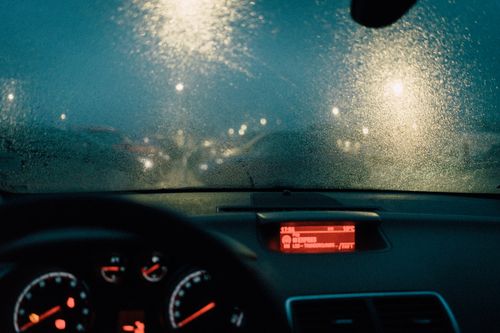
[Raindrops on a car windscreen at night, with blurred lights beyond the glass.] Photograph: Rain on windscreen at night
Image Credits: Pexels
How demisting actually works
Clearing inside fog means breaking the dew point condition in one of two ways: warm the glass above the dew point, or dry the air so its dew point falls. The best demister settings do both at once.
Air conditioning is the drying step, and it works in winter too. As cabin air passes over the cold evaporator coils inside the air conditioning system, water condenses on those coils and drains away. The air that comes out is drier, even if it is then heated before it reaches the windscreen.
The University of Illinois answer describes exactly this: the air conditioner dehumidifies air because water condenses inside it on the cold refrigerant tubes, and heating that dried air past its dew point helps evaporate condensation from the glass.
Heat is the second step. Warm air directed at the windscreen raises the glass temperature. Once the glass sits above the dew point of the cabin air, new droplets stop forming, and existing droplets evaporate.
Hotter air evaporates them faster, because evaporation needs heat energy.
Fresh air mode helps more than recirculation for clearing fog. Outside air in winter is usually drier in absolute terms than warm cabin air, even if it feels damp. Bringing it in replaces humid cabin air with drier air, which lowers the dew point.
Recirculation keeps recycling the same moist air and slows the process.
A cloth can wipe the film away, but wiping alone does not fix the cause. Wiping is useful as a first step for visibility, but the heater, air conditioning, and fresh air settings are what keep it clear.
Preventing the film in the first place
The most effective prevention is removing moisture before it reaches the glass. Shake snow and rain off coats and boots where possible, and dry wet floor mats rather than leaving them to evaporate inside the car. A wet mat left in a closed car overnight will still be releasing moisture the next morning.
Keep the cabin filter and fresh air intake clear. A blocked intake traps humid air, and a saturated filter can itself hold moisture. Both are routine service items, and both affect how quickly a car demists.
Check seals if fog keeps returning. Door and window seals, the boot seal, and the seal around the heating and ventilation intake can all let water in. A musty smell, damp carpet, or water in the spare wheel well alongside persistent fog points toward a leak rather than normal condensation.
When fog signals a real fault
Most inside fog is normal and clears with the demister. A few patterns deserve a closer look.
Fog that appears on only one side of the car, or that returns within minutes every time despite correct demister use, may mean a water leak. Check the carpets, especially the footwells, and look for dampness after rain or car washing.
A sweet smell alongside fog, or a greasy film that smears rather than wipes clean, can point to a leaking heater core, which circulates engine coolant through a small radiator behind the dashboard. Coolant mist on the inside of the glass is not ordinary condensation, and it needs a workshop visit.
A note on safety
A fogged windscreen is a visibility problem, not a minor inconvenience. Driving with a hazy screen narrows the field of view and makes it harder to judge distance and movement, especially at night when oncoming lights scatter through the droplets.
Clear the screen fully before moving off where possible, rather than peering through a wiped patch. If fog returns while driving, pull over safely before adjusting settings or wiping the glass by hand. The few minutes spent demisting are worth more than the risk of driving blind into a junction.
Frequently asked questions
Why does my windscreen fog up inside but not outside?
Inside fog happens when warm, moist cabin air meets glass colder than its dew point. Outside fog happens in the reverse case, when warm, humid outside air meets glass cooled by air conditioning. Which side fogs depends on which side holds the warmer, moister air.
Does turning on the air conditioning help in winter?
Yes. Air conditioning dries air by condensing water on its cold evaporator coils, even in cold weather. Running it with the heater sends warm, dry air to the windscreen, which both warms the glass and lowers the dew point of the air touching it.
Why does the fog come back after I wipe it?
Wiping removes droplets but does not warm the glass or dry the air. As long as the glass stays below the dew point of the cabin air, new vapour keeps condensing. The demister settings, not the cloth, fix the cause.
Should I use recirculation or fresh air to clear fog?
Fresh air usually clears fog faster. It replaces humid cabin air with drier outside air, lowering the dew point. Recirculation reuses the same moist air and can slow clearing, especially with several passengers.
What if my windscreen fogs up every day even in dry weather?
Persistent daily fog with no wet items or passengers points to a trapped moisture source: a leak, damp carpet, blocked drain, or stuck recirculation. Check footwells and seals, and have the ventilation system inspected if nothing obvious is wet.
The bottom line
Inside fog is water vapour meeting cold glass at the dew point, nothing more mysterious than that. Breath and wet belongings supply the moisture, cold glass supplies the surface, and the demister breaks the combination by drying the air and warming the glass. Fog that clears with the demister is normal.
Fog that keeps returning after the car is dry deserves a check for leaks.
Tags: windscreen, condensation, car maintenance, driving safety
Rive News is a research desk that writes plain-English explainers from published sources. It does not test vehicles itself and does not replace a mechanic's advice.
Related
- Why your car fogs up inside on cold mornings
- How to stop your car windows from fogging up
- Why windscreen wipers judder across the glass
- Why does your car use more fuel than before
Subscribe to Rive News for a weekly explainer on how everyday things work.
Rive News publishes explainers based on public sources. Corrections are welcomed and applied with a visible update note.
Related stories

Why Does Tire Pressure Drop in Cold Weather?
Cold weather can cut tire pressure by 1 psi for every 10°F drop, thanks to the ideal gas law. Here is what happens inside the tire and what
Why Do Brake Rotors Warp, or Do They Actually?
Mechanics rarely see a truly warped rotor. The shudder usually comes from uneven pad deposits a few thousandths of an inch thick. Here

How to Buy a Used Car Without Getting Scammed: The Checklist
Over 450,000 cars a year have rolled-back odometers, NHTSA says. This checklist covers VIN checks, title washing, and the inspection that