
Why your car fogs up inside on cold mornings
By Rive News / Research desk | Rive News / Published October 27, 2026 at 9:00 AM PKT
Key takeaways
- Interior car fog is condensation: warm, moist cabin air cools against cold glass and drops its water as droplets.
- Your own breath is a major moisture source, adding about 25 milligrams of water to the air with every exhale.
- Running the defroster with air conditioning on clears fog fastest, because the system both warms the glass and dries the air.

[A fogged car window on a cold morning, covered in fine condensation droplets.] Photograph: Wikimedia Commons contributor
Image Credits: Wikimedia Commons
Fog on the inside of a car window is condensation, the same process that mists up a bathroom mirror after a hot shower. Warm air inside the cabin holds invisible water vapor, and when that air touches glass chilled by cold weather, it cools past the point where it can hold the moisture. The excess water then appears as tiny liquid droplets on the glass.
The key concept is the dew point, the temperature at which air becomes saturated with water vapor. When glass sits below the dew point of the air touching it, vapor condenses on it. This article explains why car windows fog up inside, including the dew point, the moisture sources in your cabin, why cold mornings are worst, and how to clear and prevent it.
What fog on the inside of a window actually is
Fog is not steam, smoke, or dirt. It is liquid water that was previously floating in the cabin air as vapor. Air can hold more water vapor when it is warm than when it is cold, so cooling the air forces some of that vapor out.
The windshield is usually the first surface to fog because it is the largest piece of glass and the most exposed to outside cold. Side windows follow, and the rear window often fogs last because it is smaller and partly shielded. Fog forms on whichever side of the glass is colder than the dew point of the air beside it.
That rule also explains why fog sometimes appears on the outside of the glass instead. On a humid summer day, air conditioning can chill the windshield below the dew point of the warm outdoor air. Then condensation forms outside, and the wipers clear it.
Why cold mornings make it worse
Cold mornings combine all three ingredients for interior fog at once. The glass is at its coldest after sitting out overnight, the cabin air warms up quickly once people get in and the heater starts, and the gap between glass temperature and cabin temperature is at its widest.
Overnight, moisture also settles inside the car from damp floor mats, wet coats, and humid air trapped when the doors were last closed. By morning, the cabin air is already loaded with water vapor before anyone breathes a word. The first minutes of driving are therefore the worst, and the fog often thickens as passengers settle in.
Heating the glass above the dew point is what actually clears the fog. That is why a defroster works even though it blows warm air, and why simply wiping the glass only helps briefly. Wiping removes droplets but leaves the cold glass and moist air unchanged, so the fog returns within minutes.
Where the moisture comes from
People are the biggest everyday source. A physics textbook problem based on the work of Randall Knight notes that an adult exhales about 25 milligrams of water with each breath when breathing dry air. At a resting rate of roughly 12 breaths per minute, four passengers can add grams of water to a small sealed cabin in under an hour.
Wet items are the second source. Snow melting off boots, rain-soaked coats, damp floor mats, and even a hot drink all release water vapor into the cabin. A leaking door seal or sunroof can add a steady trickle of outside moisture too, and this often shows up as fog that returns every morning regardless of the weather.
The climate control setting matters as well. Recirculation mode traps moist cabin air and cycles it past the cold glass again and again. Fresh-air mode brings in drier outside air, which is one reason it clears fog faster even when the outside air feels damp.
How to clear fog fast
The fastest routine uses the defroster, heat, and air conditioning together. Set the airflow to the windshield, turn the temperature up, and switch the air conditioning on. The heater warms the glass above the dew point while the air conditioning strips moisture from the air before it reaches the glass.
Turn recirculation off so fresh air enters the cabin. Crack a window slightly if the fog is stubborn, since that vents moist air directly. Resist the urge to wipe constantly while driving, because taking a hand off the wheel and smearing the glass only trades one visibility problem for another.
Most cars clear a fogged windshield within a few minutes this way. If one patch lingers while the rest clears, that patch may be sitting over a cold spot, such as a shaded corner of the glass. Directing a vent toward it or waiting for the whole windshield to warm up usually finishes the job.
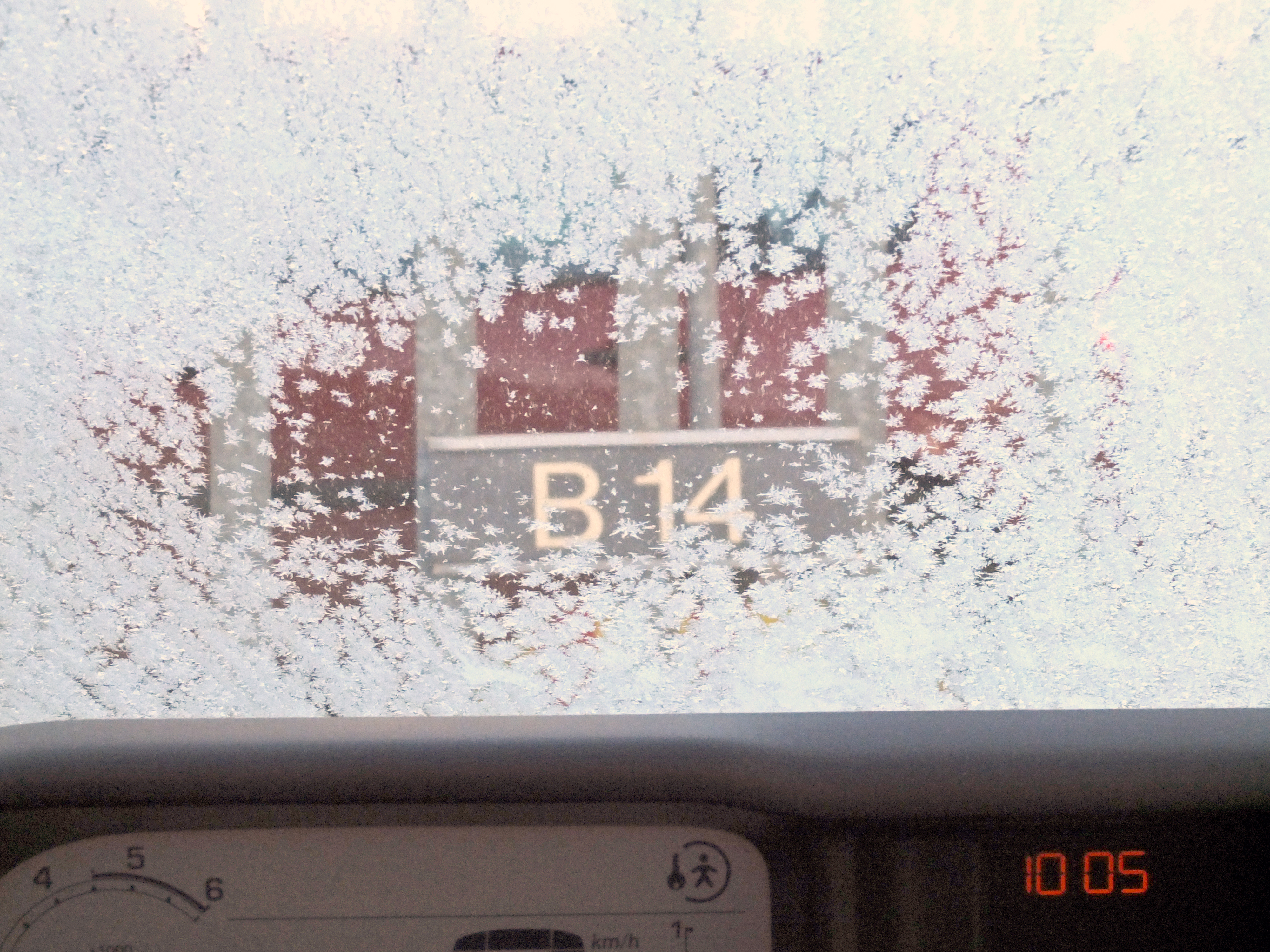
[Frost crystals spread across a car windshield on a freezing morning.] Photograph: Wikimedia Commons contributor
Image Credits: Wikimedia Commons
How to stop it coming back
Keeping the cabin dry is more effective than fighting fog every morning. Shake snow and rain off coats and boots before getting in, and dry wet floor mats when you get the chance. A clean cabin air filter also helps, since a clogged filter restricts airflow and lets humidity build up.
Clean glass fogs less dramatically than dirty glass. Grease and film on the inside of the windshield give droplets something to cling to, so a regular wipe with glass cleaner leaves a surface that fogs more evenly and clears faster.
A separate guide to stopping car windows from fogging up covers more prevention habits. Some drivers use anti-fog treatments, which work by spreading condensation into a thin transparent layer instead of droplets, though they need reapplying.
Parking choices help at the margins. A garage keeps the glass warmer overnight, and even parking out of the wind reduces how cold the windshield gets. Neither option removes the need for a working defroster, but both shorten the foggy minutes at the start of a trip.
When fog means something is wrong
Normal fog clears with the defroster and stays away once the glass warms up. Fog that never clears, returns within minutes every time, or leaves a greasy film points to a mechanical fault. The most common culprit is a leaking heater core, which releases engine coolant vapor into the cabin.
A heater core leak often comes with a sweet smell and a sticky residue on the glass. Coolant on the windshield does not behave like water condensation, and wiping it tends to smear rather than clear it. Low coolant levels and damp carpets near the dashboard are further clues.
Persistent dampness without a sweet smell usually means a water leak instead. Check door and trunk seals, sunroof drains, and the cabin air filter housing after heavy rain. Fixing the leak matters beyond comfort, since trapped moisture feeds mold and rust over time.
Frequently asked questions
Why does my car fog up only in winter?
Winter gives the biggest temperature gap between warm cabin air and cold glass, and cold air outside means the glass stays below the dew point longer. Summer fog happens too, but it usually forms on the outside of the glass because the air conditioning has chilled it.
Should I use hot or cold air to defog?
Use warm air with the air conditioning switched on. Warm air raises the glass above the dew point, and the air conditioning dries the air before it hits the glass. Cold air alone can clear light fog, but it works more slowly and leaves the glass cold.
Does cracking a window really help?
Yes, because it vents moist cabin air and lets drier outside air in. The effect is strongest when the car is stationary or moving slowly. Once the defroster is running well, you can close the window again.
Is it safe to drive with a fogged windshield?
No, not if the fog blocks your view of the road. Pull over and clear it before setting off, or wait for the defroster to do its work. Driving with a smeared or partially fogged windshield is a common cause of low-speed collisions in winter.
The bottom line
Interior car fog is simple physics: moist cabin air meets glass below its dew point and leaves water behind. Your breath, wet clothing, and trapped humidity supply the moisture, while cold mornings supply the chilled glass.
Warm defroster air plus air conditioning clears it fastest, because that combination warms the glass and dries the air at the same time. If fog never clears or smells sweet, get the heater core and seals checked, since that kind of fog is a symptom, not just weather.
Tags: car windows, condensation, cold weather driving, defroster
Rive News is a research desk that explains everyday science and practical topics from public sources, without invented experts or first-hand claims.
Related
- How to stop your car windows from fogging up
- Why electric cars lose range in winter
- Why your car uses more fuel than before
Subscribe for one practical explainer in your inbox every morning.
Standards: facts in this article trace to the public sources listed above; corrections are published when a source is shown to be wrong.
Related stories

Why Does Tire Pressure Drop in Cold Weather?
Cold weather can cut tire pressure by 1 psi for every 10°F drop, thanks to the ideal gas law. Here is what happens inside the tire and what

Why Do Brake Rotors Warp, or Do They Actually?
Mechanics rarely see a truly warped rotor. The shudder usually comes from uneven pad deposits a few thousandths of an inch thick. Here

How to Buy a Used Car Without Getting Scammed: The Checklist
Over 450,000 cars a year have rolled-back odometers, NHTSA says. This checklist covers VIN checks, title washing, and the inspection that