
Why windscreen wipers judder across the glass in rain
By Rive News / Research desk | Rive News / Published October 28, 2026 at 9:00 AM PKT
Key takeaways
- Judder is stick-slip motion: the blade grips the glass, then jumps free, over and over across each sweep.
- The three main causes are worn rubber, contamination on the glass, and a blade sitting at the wrong angle.
- Cleaning the glass and blade fixes many cases, but hardened or torn rubber needs replacement.
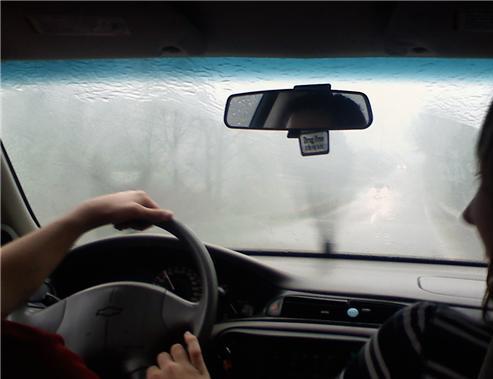
[Rain drops on a car windscreen.] Photograph: the rain-covered windscreen
Image Credits: Wikimedia Commons
A juddering wiper does not glide. It skips, hops and shudders across the glass, leaving smeared arcs and a noise that is hard to ignore. The effect is worse in light rain than in a downpour, and it often appears suddenly after months of quiet wiping.
The cause is friction that is not steady. This article explains the stick-slip motion behind the judder, separates the three main causes, and works through the fixes in order from cheapest to most involved. It covers blade wear, glass contamination, blade angle and the arm and linkage faults that sit behind stubborn cases.
What judder actually is
A healthy wiper blade slides across a wet windscreen with steady, even friction. The rubber edge flexes slightly as it moves, then flips over cleanly when the arm reverses direction at the end of each stroke. That flip is part of the design, not a fault.
Judder happens when friction becomes uneven. Engineer Fix describes it as the blade sticking and then jumping rather than gliding smoothly, caused by inconsistency in the blade's friction against the glass.
The blade grips, the arm keeps pushing, the grip breaks suddenly, and the blade jumps forward. Repeated dozens of times per sweep, that cycle becomes the visible judder and the noise.
Light rain makes it worse because there is less water to lubricate the rubber. In heavy rain the extra water can mask the problem, which is why a blade that judders in drizzle may seem fine in a storm. Dry wiping is the extreme case: rubber dragged across dry glass will almost always judder and squeak, and it wears the edge fast.
Judder is not just annoying. A skipping blade leaves unwiped bands across the driver's view, and at motorway speed in rain that can cut visibility badly. It is worth fixing promptly rather than living with it through a wet season.
Worn rubber is the most common cause
Rubber ages even when the car sits still. Sunlight, ozone and temperature swings harden the wiping edge, and the sharp square edge the blade needs becomes rounded or torn. Engineer Fix notes that exposure to ozone, ultraviolet radiation and extreme temperature changes causes rubber to harden, crack or lose its supple edge, and a stiff blade cannot flip over smoothly at the end of each stroke.
The result is dragging and catching instead of gliding. A blade that has lost its edge also streaks, so judder plus streaking together is a strong sign the rubber is done. Cleaning can help a dirty blade, but no cleaning restores rubber that has hardened or cracked through.
Replacement intervals vary with climate, but most makers and retailers suggest every 6 to 12 months. Cars parked outdoors in strong sun wear blades faster, and winter frost and ice are hard on rubber too. If the blades are over a year old and juddering, replacement is the sensible first step rather than the last resort.
Check the edge before buying. Lift the arm, run a finger gently along the rubber, and feel for roughness, nicks or a curled lip.
A blade that feels like a saw edge or has visible splits has no more life to give. Also check that the blade is the right length and fitting for the car, since a wrong blade can sit unevenly and judder from day one.
Contamination on the glass
Even a new blade will judder on a contaminated windscreen. Road film, exhaust residue, tree sap, hard water deposits and wax from car washes all leave a thin layer on the glass that the eye cannot see. Engineer Fix lists road oil, exhaust residue, tree sap and car wash wax remnants as common culprits that raise friction between blade and glass.
The contamination creates microscopic peaks and valleys that grab the rubber edge. 7zap describes the same layer and suggests a simple test: after washing, run a clean dry finger across the glass, and if you feel resistance or hear a faint squeak, bonded contamination is present. Uneven water beading when you spray the glass is another tell.
Wax and water-repellent coatings deserve special care. A fresh, even coating can help blades glide, but a patchy or worn coating does the opposite, giving the blade alternating grip and slip across the sweep.
CarRoar notes that some glass sealants contain tiny fibre-like structures that can raise friction and trigger chatter. If judder started soon after a coating was applied, the coating is a prime suspect.
Cleaning the glass properly often fixes contamination judder outright. Wash with a good glass cleaner, then use a clay bar or a dedicated glass polish for bonded film that washing alone will not shift. Engineer Fix notes that decontamination often resolves chattering even when the blades are relatively new, which is why it is worth doing before buying parts.
Blade angle: the cause most drivers miss
A blade can be new and the glass spotless, yet the wiper still judders. In that case the blade angle is usually wrong.
The rubber edge is designed to trail slightly behind the direction of travel, leaning like a ski on snow. 7zap puts the designed lean at roughly 15 to 30 degrees in the direction of travel.
When the wiper arm is bent, the blade has been fitted badly, or the rubber has taken a set from sitting in one position, that angle changes. The edge then folds too far, flips backward, or stands straight up against the glass instead of trailing. Any of these states breaks the smooth flip at the end of each stroke and starts the stick-slip cycle.
You can check the angle by eye. With the wipers parked and the ignition off, lift the arm slightly and look at the blade's profile from the side.
The rubber lip should lean away from the arm's pivot point, toward the direction it wipes. If it stands upright or leans the wrong way, the arm needs adjustment.
Adjusting an arm means bending it gently back to the correct angle, and it takes care not to crack the arm or damage the pivot. Many drivers leave this to a garage, since a bent arm that is over-corrected will judder in the opposite direction. If the arm itself is twisted or the pivot is loose, replacement parts are the honest fix.
Arm pressure, linkage and the motor
Pressure matters as much as angle. Too much spring pressure forces the rubber hard into the glass and raises friction, while too little pressure lets the blade skip and bounce. Springs weaken with age, and a blade that judders only at motorway speed may be losing contact as aerodynamic lift peels it off the glass.
The linkage that drives both arms can also wear. Play in the pivot bushes or a loose linkage rod lets the blade wander across the glass instead of following a steady arc. That wandering shows up as judder that changes with wiper speed or that affects one arm more than the other.
Motor faults are rarer and usually announce themselves differently. A failing motor runs slowly, stalls mid-sweep or stops in random positions rather than causing clean judder. If the blades move at full speed but still judder, the motor is probably innocent and the blade, glass or arm is guilty.
Winter brings its own version. Ice on the glass or a blade frozen to the screen will judder violently if forced, and running frozen wipers can strip the linkage or burn the motor. Always clear ice and free the blades by hand before switching the wipers on in frost.
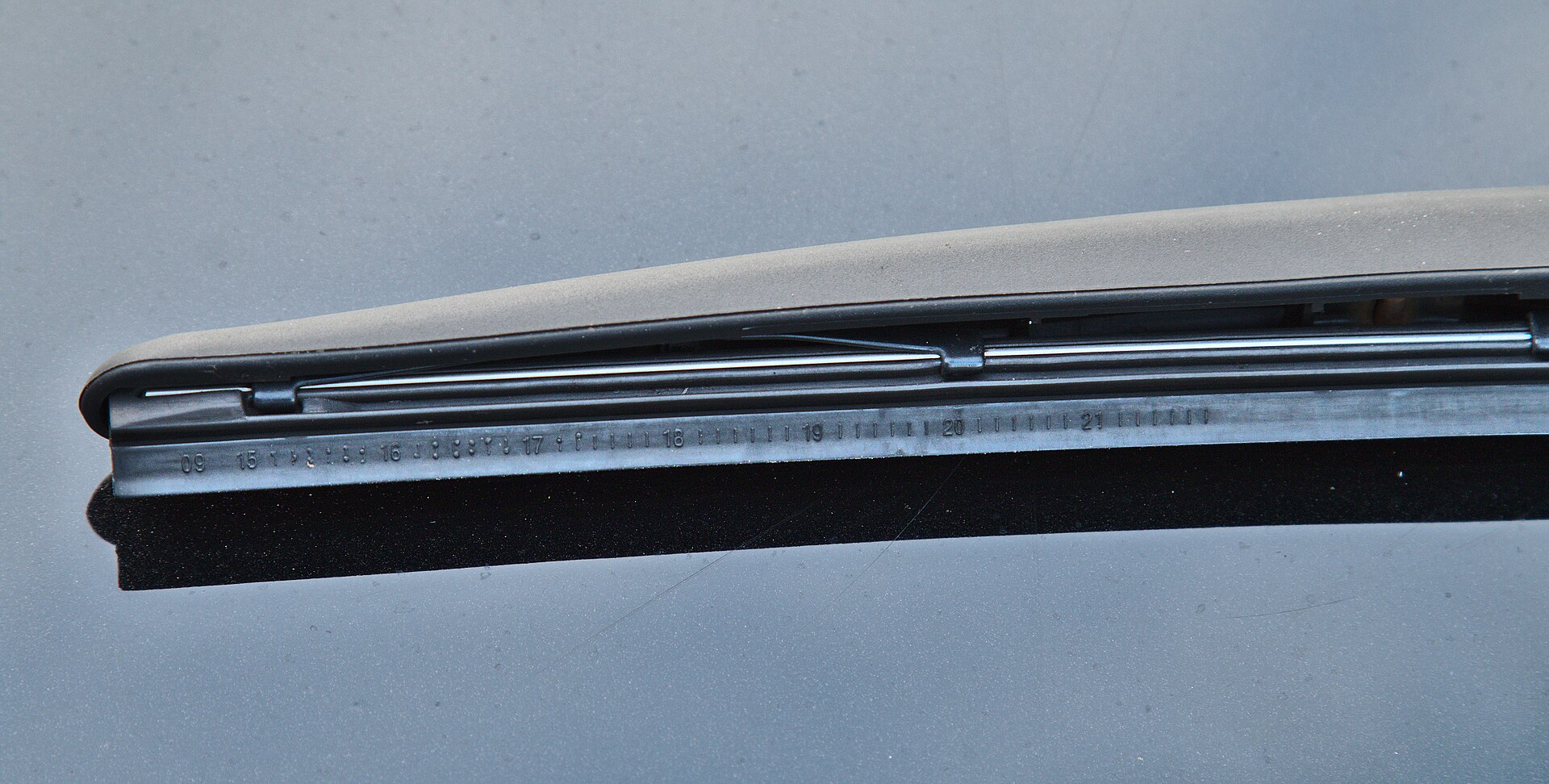
[The worn tip of a used windscreen wiper blade.] Photograph: the used wiper blade tip
Image Credits: Wikimedia Commons
Fixing judder in order
Work through the fixes cheapest first. Start by cleaning the windscreen thoroughly with glass cleaner and, if needed, a clay bar or glass polish. Clean the rubber edges too with a damp cloth, since grit embedded in the rubber acts like sandpaper on every sweep.
Next, check the blade edge and age. Replace blades that are torn, hardened or more than a year old, and make sure the new blades are the correct fitting for the car. Some new blades carry a fine powder coating that reduces friction until the rubber beds in, and a brief bedding period is normal.
If new blades on clean glass still judder, check the blade angle and arm condition. Look for a bent arm, a loose pivot or uneven pressure across the blade. A garage can adjust or replace the arm and check the linkage in one visit.
Top up the washer fluid with a proper screenwash rather than plain water. Screenwash adds lubrication that plain water lacks, and it helps the blades glide in light rain where judder is worst. Do not use washing-up liquid, which leaves a film that makes contamination worse.
Frequently asked questions
Why do new wiper blades sometimes judder?
New blades can judder if the glass is contaminated, the arm angle is wrong, or the blade has not bedded in yet. If the judder lasts more than a few wet drives, clean the glass and check the arm angle before blaming the blade.
Does rain-repellent coating cause wiper judder?
It can, when the coating is patchy, worn or badly applied. An even fresh coating usually helps blades glide, but uneven coating gives the blade alternating grip and slip, which triggers the stick-slip cycle.
How often should wiper blades be replaced?
Most makers suggest every 6 to 12 months, with cars parked outdoors in strong sun or harsh winters needing the shorter end of that range. Streaking, judder and a rough or split rubber edge are the signs that replacement is due.
Can I stop wiper judder by just cleaning the windscreen?
Often yes, if contamination is the cause. A proper clean with glass cleaner and a clay bar or polish for bonded film fixes many cases, even on fairly new blades, so it is worth doing before buying parts.
The bottom line
Wiper judder is uneven friction turning a smooth sweep into a series of grips and jumps. Worn rubber, contaminated glass and a wrong blade angle are the three causes to separate, and the fix follows the cause: clean the glass, replace tired rubber, or correct the arm angle. Work through them in that order and most judder disappears without a garage bill, but a bent arm or worn linkage is a job worth handing over.
Tags: windscreen wipers, car maintenance, rain driving, visibility
Rive News's research desk covers everyday motoring questions with sourced explainers and no invented claims.
Related
- Windscreen wipers that streak when new
- How to stop your car windows from fogging up
- Why your car fogs up inside on cold mornings
- How to drive safely in heavy rain
Subscribe for one practical motoring explainer each week.
Standards: every factual claim in this article traces to a named public source listed above.
Related stories

Why Does Tire Pressure Drop in Cold Weather?
Cold weather can cut tire pressure by 1 psi for every 10°F drop, thanks to the ideal gas law. Here is what happens inside the tire and what
Why Do Brake Rotors Warp, or Do They Actually?
Mechanics rarely see a truly warped rotor. The shudder usually comes from uneven pad deposits a few thousandths of an inch thick. Here

How to Buy a Used Car Without Getting Scammed: The Checklist
Over 450,000 cars a year have rolled-back odometers, NHTSA says. This checklist covers VIN checks, title washing, and the inspection that