
Tyres lose pressure slowly even without a puncture
By Rive News / Research desk | Rive News / Published October 29, 2026 at 9:00 AM PKT
Key takeaways
- A healthy tyre can lose about 1 to 2 psi a month simply because air seeps through rubber.
- Cold weather lowers the gauge reading by roughly 1 psi for every 10 degrees Fahrenheit of temperature drop, even when no air has escaped.
- Valve stems, bead seals, and corroded rims cause most genuine slow leaks, and a soapy-water test can often reveal them.
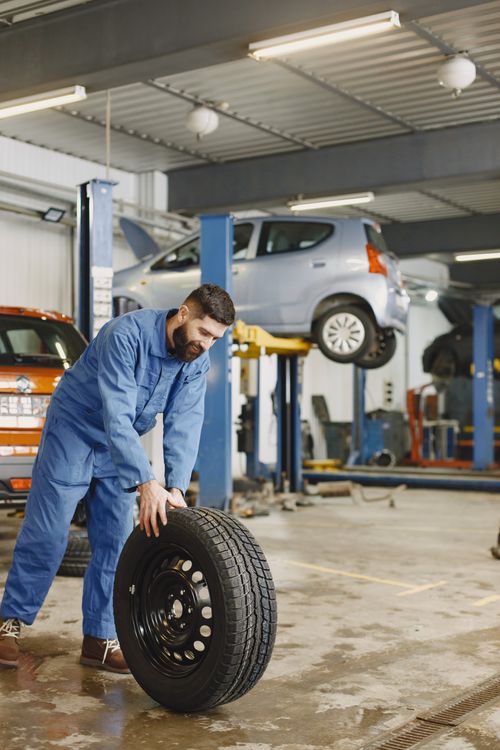
[A mechanic handles a tyre in a busy automotive repair workshop.] Photograph: Tyre in workshop
Image Credits: Pexels
A tyre that slowly loses pressure without a puncture is not behaving strangely. It is doing what rubber, valves, and metal seals do over time: letting a small amount of air escape, or making the remaining air read lower when it cools.
This article explains the difference between air that has truly left the tyre and pressure that has only fallen with temperature. It covers permeation through the rubber, leaks at the valve and the bead seal, damage to the wheel, and the simple checks that separate a normal monthly loss from a fault that needs a tyre shop.
What normal slow loss looks like
Tyre rubber is slightly porous. Air molecules can work their way through the inner liner over weeks and months, even when the tread has no hole in it.
Apollo Tyres describes this as permeation, a natural process that happens to all tyres. The company notes that it becomes more noticeable in older tyres and in extreme temperatures. Jalopnik makes the same point in plainer terms: rubber is not completely impermeable to air, and it slowly lets air escape through the inner liner.
The size of this loss is modest but steady. Guidance reported from the US National Highway Traffic Safety Administration (NHTSA) puts it at about 1 psi a month, while AAA puts the typical monthly figure at about 1 to 2 psi. That range matters.
A tyre set at 32 psi in January could read near 29 psi by March without any damage at all, once temperature effects are added in.
Temperature changes the reading without a leak
Temperature is the most common reason a driver suspects a puncture that is not there. Air inside a tyre follows a simple rule: as it cools, its pressure falls, and as it warms, its pressure rises.
AAA states the rule of thumb clearly. For every 10-degree Fahrenheit drop in temperature, a tyre can lose about 1 psi. Apollo Tyres gives the same figure, noting about 1 psi lost for each 10 degrees Fahrenheit of cooling.
A cold snap can therefore move a borderline tyre across the warning threshold overnight. A tyre that was already 2 psi low in mild weather can read 4 or 5 psi low after a sharp fall in temperature. The tyre pressure monitoring system then lights up, and the driver reasonably assumes something has pierced the tread.
The reverse also happens. Driving warms tyres, and warm air reads higher on a gauge. That is why pressure should be checked cold, before driving or after the car has stood for several hours.
Checking a hot tyre and bleeding air to reach the door placard figure will leave it underinflated once it cools.
The valve stem is a frequent slow-leak point
If one tyre keeps losing air faster than the other three, the valve is a good place to look first. The valve is the only intentional opening in the whole wheel assembly, and it depends on small parts that age.
Inside the stem sits a spring-loaded valve core. It acts as a one-way seal, letting air in during inflation and holding it in afterwards. If the core loosens, gets dirty, or its seal hardens, air can weep past it in a slow, steady stream.
The stem itself can also fail. Rubber snap-in stems crack with age, heat, ozone, and road chemicals, especially at the base where the stem flexes through the wheel. Apollo Tyres notes that a cracked or deteriorated stem, or a stem not properly sealed to the rim, can create a slow leak.
Jalopnik adds that a missing valve cap lets dirt interfere with the core, which is why the cheap plastic cap is worth keeping.
Cars with tyre pressure monitoring sensors add one more joint. The sensor often sits in or beside the valve, and its grommet or collar nut can leak if it is worn or not torqued correctly after a tyre change. A leak that starts right after new tyres are fitted points to the valve or the bead first, not to the tread.
A simple test helps. Spray or brush soapy water over the valve stem and cap area, then watch for bubbles. Bubbles that keep forming mark escaping air.
Tightening a loose core is a small job, and a cracked stem is normally replaced rather than repaired.
The bead seal and the wheel itself
The bead is the stiff inner edge of the tyre that presses against the rim to form an airtight seal. In a tubeless tyre, that seal is doing the job a tube used to do. Anything that stops the bead sitting flush against clean metal gives air a path out.
Corrosion is the usual culprit on older wheels. Moisture and road salt pit aluminium and steel rims, leaving a rough surface under the bead. Apollo Tyres lists corrosion, damage, and poor installation as bead-leak causes, and notes that the problem shows up more on wheels that have been mounted and removed several times.
Engineer Fix describes the same repair: remove the tyre, clean the rim seat back to smooth metal, and apply bead sealer before refitting.
Hairline cracks in the wheel are rarer, but they follow the same logic. Any crack through the air chamber gives air a direct exit. A wheel that loses pressure quickly after a pothole strike, or that shows a visible crack, needs professional inspection rather than repeated top-ups.
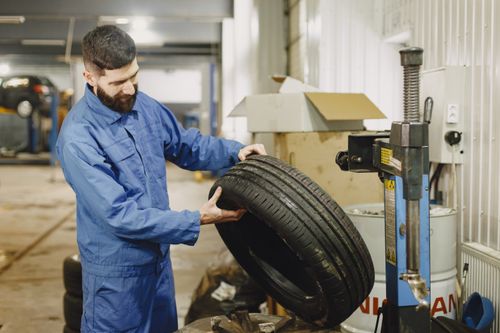
[A mechanic examines a tyre in an automotive garage.] Photograph: Tyre inspection
Image Credits: Pexels
How to tell a leak from normal loss
The pattern over time is the best diagnostic a driver has. Normal permeation affects all four tyres at roughly the same slow rate. A fault usually singles out one tyre.
Start with a cold reading on all four tyres, using the same gauge, and write the numbers down. Top up to the pressure on the driver door placard, not the maximum printed on the tyre sidewall. Recheck a week later, again cold.
If all four have dropped by a similar small amount, that is normal loss plus temperature. If one tyre has dropped several psi while the others barely moved, that tyre has a leak somewhere in the valve, bead, or wheel. The soapy-water test on the valve and around the bead can narrow it down before a shop visit.
Pay attention to timing as well. A loss that appears only after a tyre change suggests a fitting or valve issue. A loss that worsens in wet, salty winter conditions points toward rim corrosion.
A loss that follows a kerb strike points toward a bent rim or a damaged bead.
What actually helps
A monthly cold check is the single most useful habit. It catches slow loss before it affects handling, braking, and fuel use, and it builds the baseline that makes a real leak obvious.
Keep the valve caps on. They cost almost nothing and keep dirt and moisture out of the valve core. When tyres are replaced, ask whether the valves are being replaced too, since a new tyre on an old cracked stem inherits the old stem's leak.
When to get it looked at
Book a tyre shop visit if one tyre repeatedly loses more than the others, if the pressure falls noticeably within a week, or if the soapy-water test shows bubbles at the valve or bead. The same applies after a pothole strike that bends a rim, or if a tyre keeps triggering the warning light after correct inflation.
A slow pressure drop with no puncture is usually a combination of physics and ageing parts. Air seeps through rubber, cold weather lowers the reading, and valves and bead seals wear out. Measured monthly and checked cold, it is easy to manage, and the one tyre that breaks the pattern will tell you where to look.
Frequently asked questions
Why does tyre pressure drop in cold weather if no air escapes?
Cold air takes up less space at the same volume, so its pressure falls as temperature falls. Roughly 1 psi is lost for every 10 degrees Fahrenheit of cooling, according to AAA and Apollo Tyres. The air is still inside the tyre; it is simply pressing less hard against the walls.
How much pressure loss per month is normal?
About 1 to 2 psi a month is normal for a healthy tyre, based on NHTSA guidance reported by ISHN and AAA. Loss well above that rate, or loss concentrated in one tyre, suggests a valve, bead, or wheel leak rather than permeation.
Can a valve cap really stop a leak?
The cap is not the main seal; the valve core is. A cap keeps dirt and moisture away from the core, which helps the core seal properly over time. A missing cap alone rarely causes a fast leak, but it raises the chance of core contamination.
Does nitrogen stop tyres losing pressure?
Why is only one tyre losing air?
A single-tyre loss usually means a local fault: a loose or dirty valve core, a cracked stem, corrosion under that tyre's bead, or damage to that wheel. Check that tyre with soapy water and have it inspected if the loss repeats within days.
The bottom line
Tyres lose pressure slowly because rubber is not perfectly airtight, and because valves and bead seals age. Temperature swings make the gauge reading move even when no air has escaped. A monthly cold check, kept valve caps, and attention to the one tyre that drops faster than the rest will catch almost every case early.
Tags: tyres, tyre pressure, car maintenance, TPMS
Rive News is a research desk that writes plain-English explainers from published sources. It does not test vehicles itself and does not replace a tyre professional's advice.
Related
- Why tyre pressure drops when it gets cold
- How to make your tyres last longer
- What tyre tread patterns actually do
- Why tyres lose pressure when it gets cold
Subscribe to Rive News for a weekly explainer on how everyday things work.
Rive News publishes explainers based on public sources. Corrections are welcomed and applied with a visible update note.
Related stories

Why Does Tire Pressure Drop in Cold Weather?
Cold weather can cut tire pressure by 1 psi for every 10°F drop, thanks to the ideal gas law. Here is what happens inside the tire and what

Why Do Brake Rotors Warp, or Do They Actually?
Mechanics rarely see a truly warped rotor. The shudder usually comes from uneven pad deposits a few thousandths of an inch thick. Here

How to Buy a Used Car Without Getting Scammed: The Checklist
Over 450,000 cars a year have rolled-back odometers, NHTSA says. This checklist covers VIN checks, title washing, and the inspection that