
What tyre tread patterns actually do on wet and dry roads
By Rive News / Research desk | Rive News / Published October 27, 2026 at 9:00 AM PKT
Key takeaways
- A tyre tread pattern is a system of grooves, blocks and sipes that clears water and grips the road.
- New tyres can disperse up to 30 litres of water per second at 50 mph, according to Continental.
- At the 1.6 mm legal tread minimum, wet braking distance grows by 6.8 metres versus a new tyre.
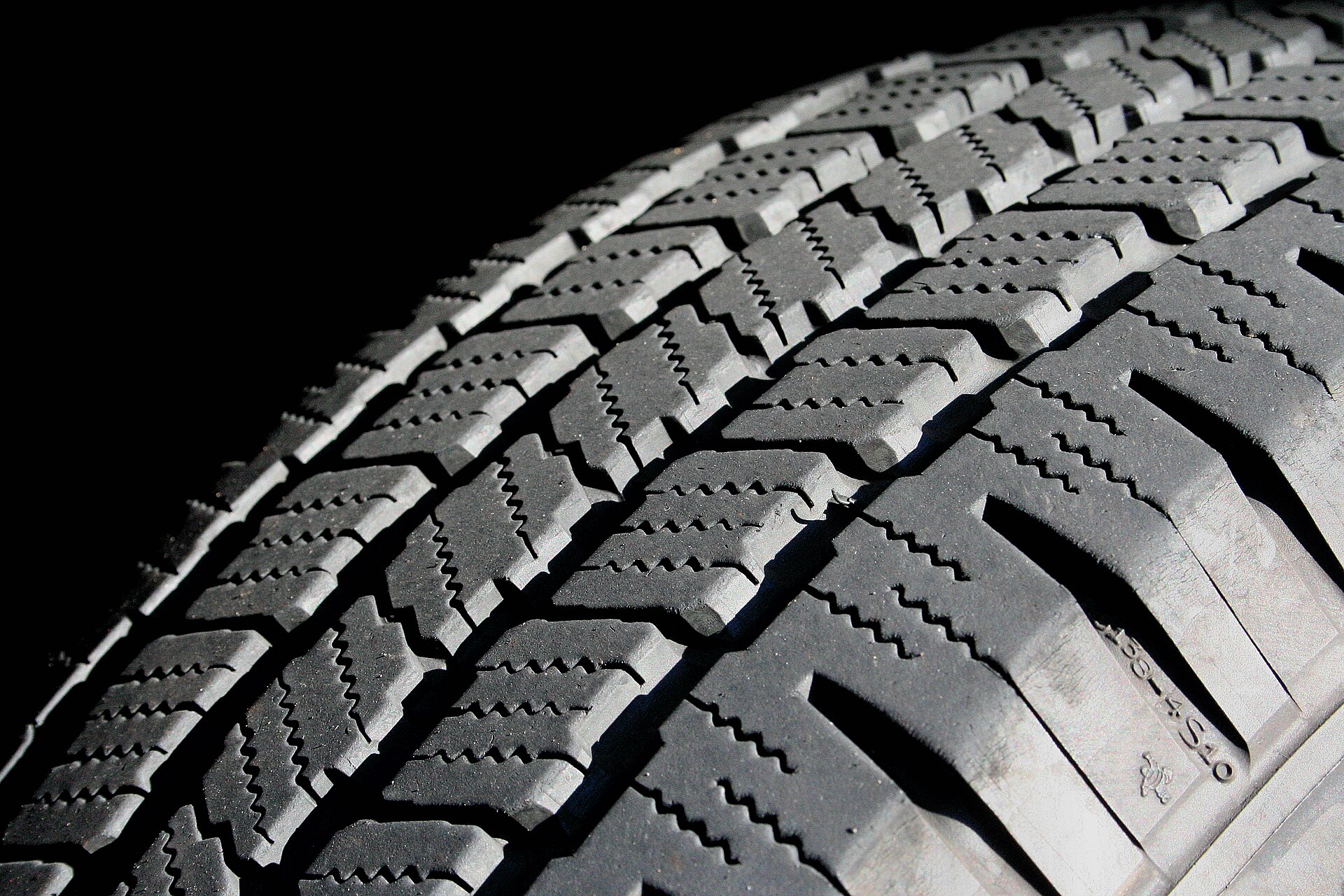
[A close-up of a tyre tread shows the grooves and blocks that make up the pattern.] Photograph: Wikimedia Commons contributor
Image Credits: Wikimedia Commons
A tyre tread pattern is the arrangement of grooves, blocks and thin slits cut into the rubber that meets the road. It is the only part of the car that touches the road surface, and it has to handle acceleration, braking and steering through that small contact area.
The pattern does two jobs at once. It clears water, mud and loose material out of the way so rubber can reach the road, and it creates edges that bite into the surface for grip.
This article explains what a tyre tread pattern is, how its grooves clear water, what sipes and tread blocks do, why patterns differ between tyre types, and how tread depth changes safety.
What a tyre tread pattern is
The tread is the outer band of rubber wrapped around the tyre, and its pattern is made of raised blocks separated by channels. The wide channels are called grooves, the raised sections are tread blocks, and the thin slits cut into the blocks are called sipes.
Patterns fall into three broad families. A symmetrical pattern repeats the same design across the whole tread, an asymmetrical pattern puts a different design on the inner and outer halves, and a directional pattern forms a V shape that points in the direction of travel.
Each family trades one strength for another. Directional patterns are built to push water outward and backward from under the tyre, while asymmetrical patterns split the work, with one side tuned for clearing water and the other for cornering grip.
How grooves clear water from the contact patch
On a wet road, the grooves act as drainage channels. As the tyre rolls, water is forced into them and pushed out to the sides and behind the contact patch, leaving only a thin film for the rubber to work through.
Continental describes the tread pattern's primary job as expelling water that can affect the contact patch, along with providing grip and traction. When the grooves cannot keep up, a wedge of water builds up ahead of the tyre and lifts it off the road entirely.
That loss of contact is called aquaplaning, and it is different from an ordinary skid. The tyres are not sliding on the road surface at all, they are gliding on water, so steering and braking inputs stop working until contact returns.
The volumes involved are large. According to Continental, new tyres are capable of dispersing up to 30 litres of water a second at 50 mph, which shows how much drainage a healthy tread has to perform in heavy rain.
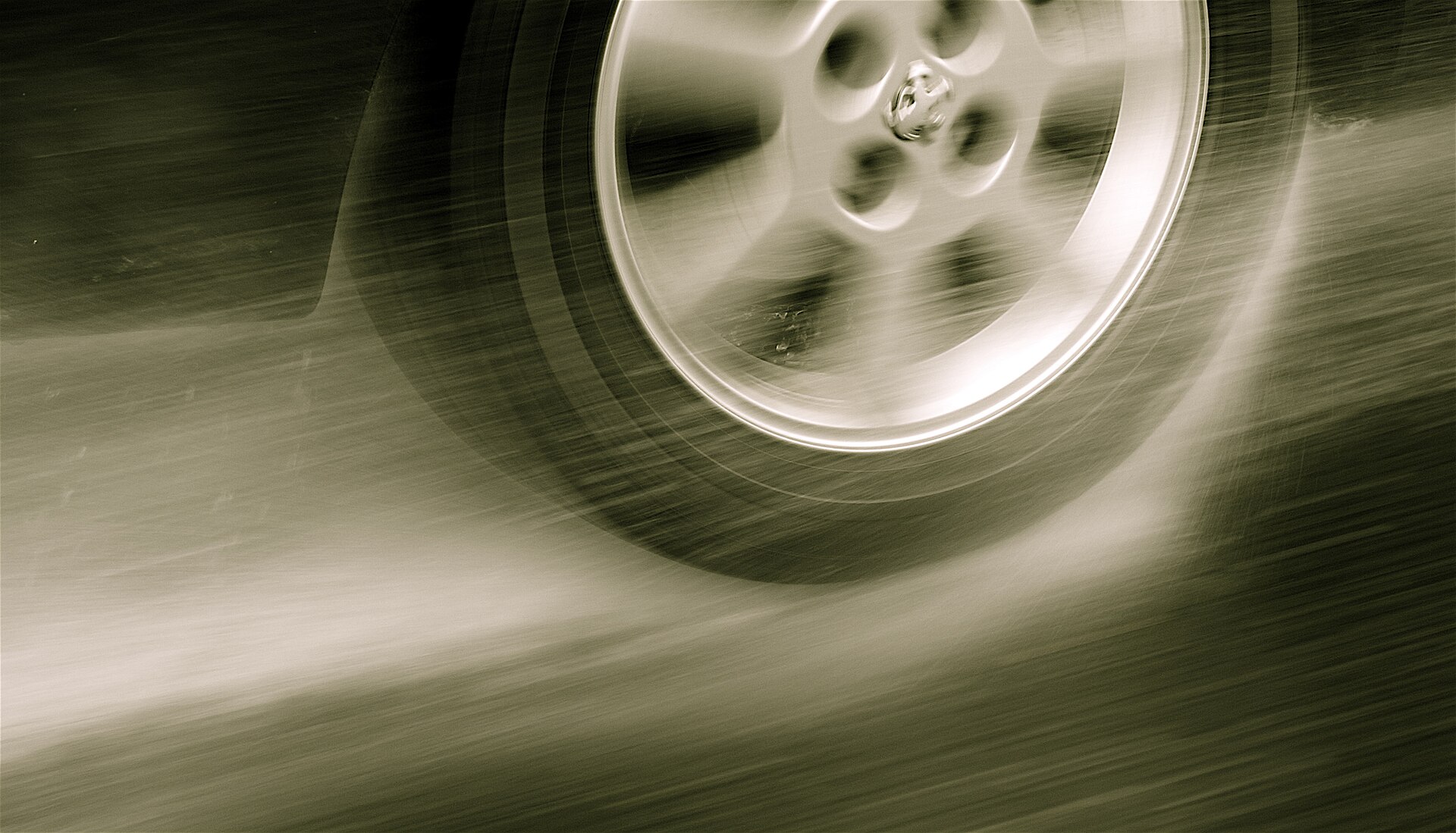
[A car drives through heavy rain, when tread grooves must clear large volumes of water.] Photograph: Flickr contributor, via Wikimedia Commons
Image Credits: Wikimedia Commons
What sipes and tread blocks do
Grooves handle the bulk of the water, but a thin film always remains. That is where sipes come in: these tiny slits create extra edges that cut through the remaining water film and help the rubber hold the road.
"A tyre's tread pattern plays an important role in helping to manage water on the road surface. The grooves are designed to channel and evacuate water from beneath the tyre, while the tread edges and sipes help cut through the remaining water film to maintain contact with the road," Joe Brammer of Michelin said.
Tread blocks do the gripping work once the water is out of the way. Their edges bite into the road surface during acceleration, braking and cornering, and stiffer, larger blocks give more stable dry handling.
Smaller, more flexible blocks with many sipes suit wet and cold conditions better. They bend and create more biting edges, but they wear faster and can feel less precise on dry roads.
Why tread patterns differ between tyre types
Summer tyres use fewer sipes and larger, stiffer blocks, because their priority is dry grip and stable handling in warm weather. Winter tyres go the other way, with many sipes and softer rubber compounds that stay flexible in the cold.
All-season tyres sit between the two, with a moderate number of sipes and a pattern meant to cope with a wide range of conditions. The compromise is real: no single pattern is best at everything, so each type gives something up.
Race cars on dry tracks show the other extreme. They use slick tyres with no tread pattern at all, which works only because there is no water to clear, and it underlines that much of a road tyre's pattern exists to deal with water and loose surfaces rather than dry grip alone.
How tread depth changes safety
A pattern can only clear water while it still has depth to work with. Continental states that the legal minimum tread depth is 1.6 mm for summer tyres, and worn tyres near that limit are far less effective at clearing water.
The effect on braking is measurable. In a test at Continental's Contidrom test location, braking distance increased by 6.8 metres on tyres at the 1.6 mm legal minimum compared with a full tread depth of 8 mm.
Tyres with 3 mm of tread remaining took only 2.2 metres longer to stop than new tyres. Continental also notes that at 3 mm, tyres can still retain a high amount of their water displacement capability, while at 1.6 mm that capability is effectively and dramatically reduced.
The lesson is plain: tread depth is not a pass-or-fail line at the legal limit. Performance falls away gradually as the pattern wears, and the last millimetres cost the most.
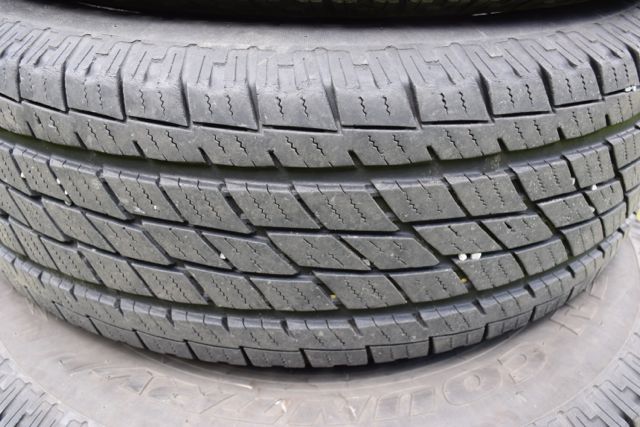
[A highway tyre tread shows grooves running across the tread to channel water away.] Photograph: Wikimedia Commons contributor
Image Credits: Wikimedia Commons
What to check on your own tyres
Continental advises drivers to check tyre pressure regularly and to monitor tread depth using the tread wear indicators moulded into the grooves. Replacing tyres before they reach the legal minimum keeps more of the wet-weather safety margin intact.
Uneven wear across the tread is worth attention too, since it can point to pressure or alignment problems rather than normal wear. If one edge is wearing faster than the rest, that is a sign to have the car checked rather than simply fitting a new tyre.
Wet-weather driving also rewards a slower speed and a longer following distance. Lower speed gives the grooves more time to clear water, and the extra gap covers the longer stopping distances that wet roads bring.
Frequently asked questions
Do slick tyres grip better in the dry?
On a dry track, yes, because a smooth tyre puts more rubber in contact with the road. On a public road, no, because the first rain would leave a slick tyre with no way to clear water, which is why road tyres are legally required to have a tread pattern.
How often should I check tread depth?
Check it at least once a month and before any long journey, alongside tyre pressure. Tread wear indicators in the grooves give a quick visual check, and a gauge gives an exact reading in millimetres.
Does tread pattern matter more than tyre brand?
Both matter, but the pattern and the rubber compound do the physical work of clearing water and gripping. A well-designed pattern on a mid-range tyre will usually outperform a worn premium tyre in the wet, because depth and design decide how much water gets moved.
Can a tread pattern stop aquaplaning completely?
No pattern can remove the risk entirely. Deep standing water, very high speed and worn tread can overwhelm any design, so speed and tread condition matter as much as the pattern itself.
The bottom line
A tyre tread pattern is a drainage system and a grip system in one, and both jobs depend on grooves, sipes and blocks working together. Its performance fades as it wears, with wet braking and water clearance dropping sharply near the legal minimum.
Check tread depth and pressure monthly, replace tyres before they reach 1.6 mm, and slow down in heavy rain. Those three habits protect most of the safety the pattern was designed to give.
Tags: tyres, tread pattern, wet grip, aquaplaning
Rive News's research desk covers everyday motoring, home and work topics from published sources and official guidance.
Related
- How to make your tyres last longer
- Why tyre pressure drops in cold weather
- How run-flat tyres work and what the tradeoffs are
- Why tyres wear unevenly on the inside edge
Subscribe to Rive News for one practical explainer in your inbox each morning.
Rive News publishes research-based explainers and corrects errors promptly when readers point them out.
Related stories
Why Does Tire Pressure Drop in Cold Weather?
Cold weather can cut tire pressure by 1 psi for every 10°F drop, thanks to the ideal gas law. Here is what happens inside the tire and what
Why Do Brake Rotors Warp, or Do They Actually?
Mechanics rarely see a truly warped rotor. The shudder usually comes from uneven pad deposits a few thousandths of an inch thick. Here

How to Buy a Used Car Without Getting Scammed: The Checklist
Over 450,000 cars a year have rolled-back odometers, NHTSA says. This checklist covers VIN checks, title washing, and the inspection that