
Run-Flat Tires: How They Work and What the Tradeoffs Are
Key takeaways
- Run-flat tires use stiff, reinforced sidewalls to support the car after air loss.
- Most designs allow about 50 miles at 50 mph after a puncture, so you can reach help.
- The tradeoffs are a firmer ride, higher cost, more weight, and usually no repair after a flat.
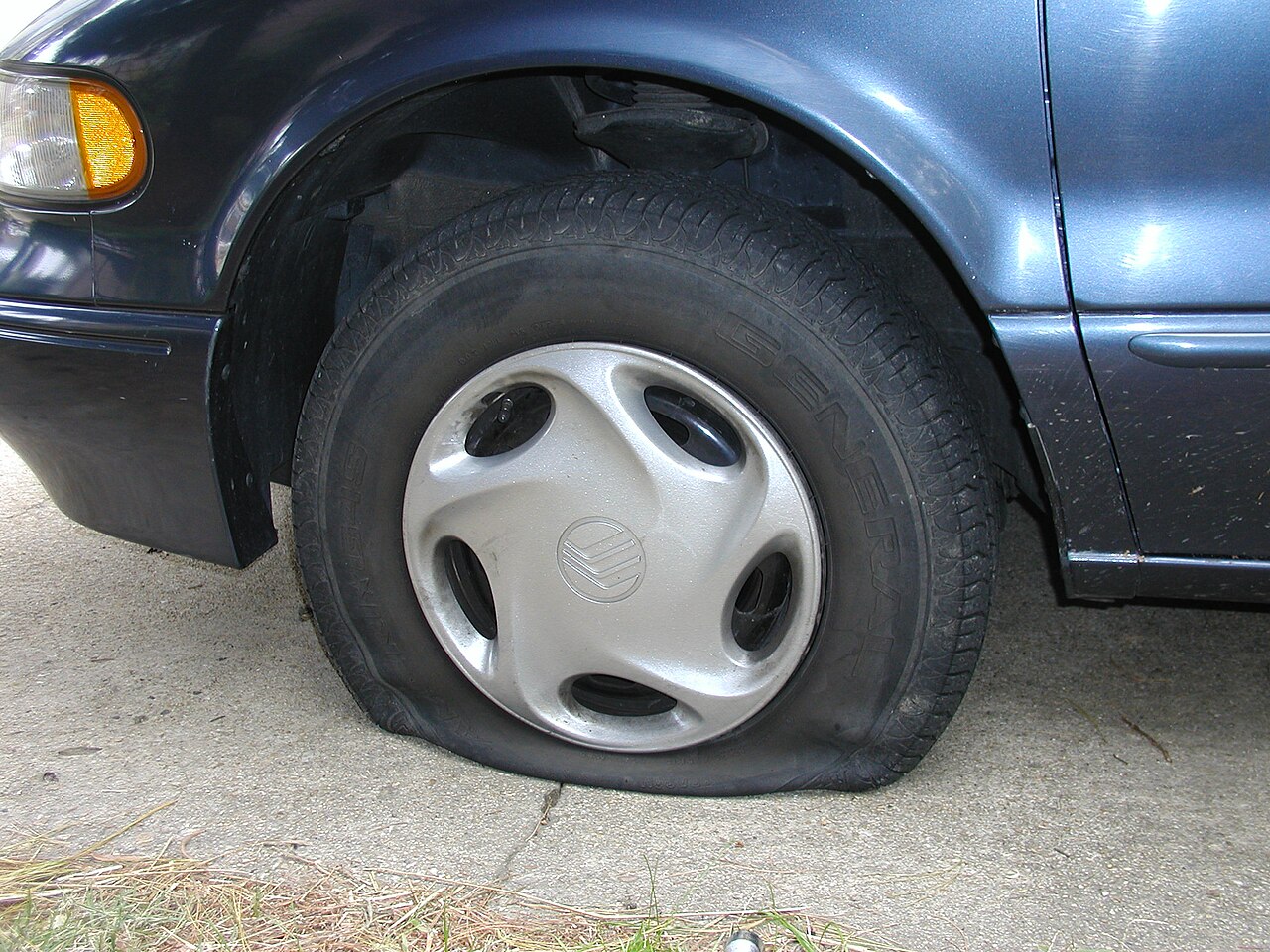
A flat tire usually means stopping where you are. Run-flat tires change that deal.
They let the car keep moving after a puncture, far enough to reach a service station or a safe place to stop. The technology is not new, but it still confuses drivers who meet it for the first time.
This article explains how run-flat tires work, how far they go after a puncture, why they need a tire pressure monitoring system, and what tradeoffs come with the design.
How a normal tire carries the car
A standard tire does not carry the car by itself. The air inside does the work. Tire Rack's often-cited explanation, quoted by HowStuffWorks, puts it plainly: the air inside the tire bears the weight, while the tire gives that air its shape and structure.
Lose the air, and the tire collapses under the car's weight. The rim can drop onto the road, and the driver loses control.
That is why a blowout is dangerous. Most blowouts do not start with a sudden puncture in a healthy tire. HowStuffWorks, citing Tire Rack, notes that they more often follow an unnoticed slow leak.
The tire runs underinflated, weakens, and then fails under load. A run-flat tire is designed to survive exactly that sequence.
How run-flat tires work
A run-flat tire carries the car on its structure, not only on its air. The key is a reinforced sidewall with a stiff insert.
When pressure drops to zero, that insert stops the sidewall from being crushed between the rim and the road. The tire keeps its shape, stays seated on the rim, and keeps rolling.
Tire Review describes the design as a self-supporting sidewall. The sidewall insert provides vertical stiffness to prevent collapse, while the bead and apex hold the tire seated on the rim with little or no inflation pressure.
The bead, where rubber meets metal, is reinforced so the seal survives pressure loss. In a normal tire, that seal often fails once pressure drops.
There are two main systems. The self-supporting type, the common one, uses the reinforced sidewall described above.
The auxiliary-supported type adds a support ring inside the tire that carries the weight only after pressure loss. Tire Review notes that the ring system is more complex, heavier, and less common, though it can soften some of the ride penalty.
The idea is old. Tire Review traces flat-free concepts to the 1930s, when engineers tried fabric inserts, then metal rings, then sealants.
HowStuffWorks notes that Goodyear has built run-flat designs for racing since 1966, with multi-chamber NASCAR tires that keep working after a chamber fails. The road version is simpler, but the goal is the same: keep the tire round and the car controllable after air loss.
How far you can drive on a run-flat
The standard figure is about 50 miles (80 km) at up to 50 mph (80 km/h) with zero pressure. HowStuffWorks gives 50 to 55 miles as the range for most brands, and Michelin states that speed and distance limits vary by model, so the tire's own documentation is the final word.
Some designs go further. Tire Review states that a run-flat can allow continued driving with zero air pressure for up to 95 miles at a maximum speed of 50 mph. HowStuffWorks cites State Farm for reports of some types reaching 100 to 200 miles.
Treat the higher figures as design maximums, not targets. The safe move after any pressure loss is to slow down and head for the nearest service center.
Distance also depends on load and road conditions. A heavily loaded car, rough roads, and high speeds all shorten the safe range.
A run-flat with low pressure cannot absorb potholes and debris the way a firm tire can. HowStuffWorks warns that driving hard on a deflated run-flat risks further damage, including rim damage.
Why TPMS is not optional
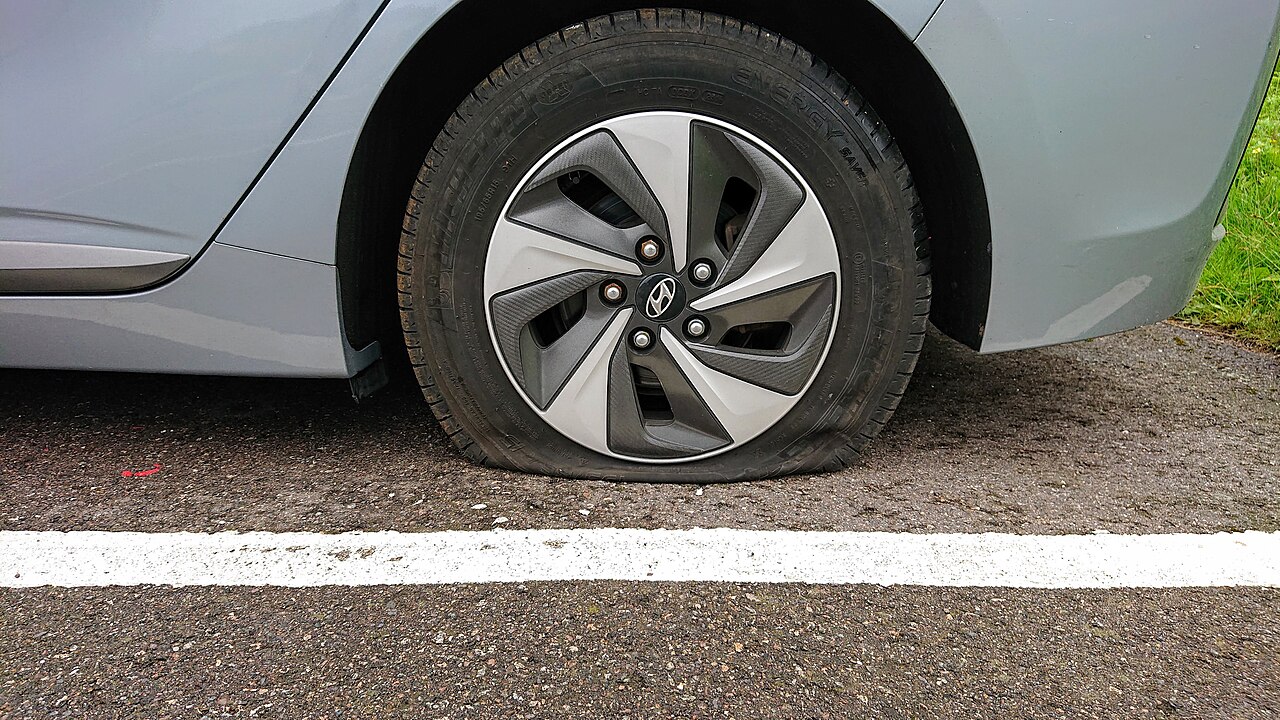
A flat run-flat looks inflated. The stiff sidewall holds the tire's shape even at zero pressure, so a visual check will not reveal the problem. That is why cars with run-flats are fitted with tire pressure monitoring systems, or TPMS.
Tire Review explains that TPMS forms the detection phase of the mobility system. It warns the driver when a tire drops at least 25 percent below the recommended pressure. Without that warning, a driver could run on a punctured run-flat for days, wear through the sidewall insert, and end up with a sudden failure at speed.
Michelin makes the same point: because a flat run-flat looks identical to an inflated one, a working TPMS is not optional. If the TPMS warning light comes on, slow down, check the pressure, and treat the tire as punctured until proven otherwise. Do not ignore the light because the tire looks fine.
The ride tradeoff
The same stiff sidewall that saves the car after a puncture makes the ride firmer every day. A run-flat transmits more road harshness into the cabin, since the sidewall flexes less and absorbs less.
Tire Review calls ride and comfort the most important target conflict in run-flat development. As run-flat distance improves, ride and comfort tend to get worse, and engineers spend much of their effort trying to flatten that tradeoff.
Weight is another cost. Reinforced sidewalls make run-flats heavier than conventional tires. Extra unsprung weight can dull handling and slightly reduce efficiency.
Tread choice is narrower too. HowStuffWorks, citing Consumer Reports, notes that run-flats offer fewer specialized tread types for sport driving or off-roading, and some drivers find the tread less capable in basic driving.
Tread wear can also be faster. HowStuffWorks reports that run-flat tread tends to wear down sooner, which can mean replacing all four tires earlier than expected. The stiffer construction concentrates wear differently, and the tire cannot be rotated or repaired as freely as a conventional one.
The cost and repair tradeoff
Run-flats cost more than conventional tires. The reinforced construction is more expensive to build, and fewer shops stock them. HowStuffWorks warns buyers to expect sticker shock at replacement time.
Since many cars with factory run-flats have no spare tire, the owner also loses the cheapest fallback. A can of sealant and a small compressor often replaces the spare in the trunk.
Repairs are limited. Michelin states that after a pressure loss, a run-flat usually cannot be repaired, since the sidewall may be damaged internally even if the outside looks fine.
HowStuffWorks agrees: a punctured run-flat generally cannot be plugged the way a conventional tire can. The tire did its job by getting the car to safety, and then it gets replaced.
Switching away from run-flats is possible but needs thought. Michelin advises that cars with factory run-flats often have no spare, so switching to conventional tires means carrying a spare, a plug kit, or a roadside assistance plan.
Some owner's manuals specify run-flats as a requirement. Talk through the change with a tire retailer before committing.
Which cars use run-flats
Run-flats moved from racing and niche models into mainstream luxury cars. Tire Review reports that Chevrolet offered run-flats as an option on the Corvette in 1994 and made them standard in 1997.
BMW debuted the Z8 with run-flats in 2000, put them on the Mini Cooper in 2002, and spread them across the 3, 5, 6, and 7 Series by 2004. Lexus fitted them to the SC Coupe in 2000.
By 2019, Tire Review notes, BMW and Mercedes-Benz dominated run-flat fitment among automakers. The market remains small, at about 3.2 million tires, though volume had doubled over the previous decade. Touring tires made up about 47 percent of that market in 2019. The spread of TPMS, which is now standard on most new cars, removed one barrier to wider use.
Who run-flats suit best
Run-flats suit drivers who value safety and convenience over ride softness and cost. Drivers who travel alone, cover long stretches of road, or often drive at night gain the most. Avoiding a roadside tire change on a narrow shoulder is a real safety benefit.
Drivers who prize ride comfort, drive mostly in town near tire shops, or want the lowest running costs may prefer conventional tires with a spare or a mobility kit. A mobility kit with sealant and a compressor handles most tread punctures, though it cannot fix a sidewall puncture and often ruins the TPMS sensor, according to Tire Review.
The honest answer is that neither choice is wrong. The right tire depends on where the car is driven, who drives it, and how much the owner values the ability to keep moving after a puncture.
Can you mix run-flat and conventional tires?
No, not on the same car in normal use. Mixing constructions changes handling, since the sidewalls flex differently.
If one run-flat needs replacement, match it with the same type and, ideally, the same model. Check the owner's manual for the manufacturer's requirement.
Do run-flats prevent all flats?
No. They handle tread punctures and slow leaks by keeping the car mobile.
They cannot survive sidewall cuts, large gashes, or rim damage. The tire also has a limited range after pressure loss, so it buys time rather than removing the problem.
How do I know my tire is a run-flat?
Check the sidewall markings after the tire size. Common marks include RFT, Run Flat, SSR, ZP, or EMT, depending on the brand. The owner's manual and the tire maker's guide list the exact marking for each model.
The bottom line
Run-flat tires trade comfort and cost for mobility after a puncture. Reinforced sidewalls carry the car for about 50 miles at 50 mph, and TPMS tells the driver the tire has lost pressure. The price is a firmer ride, heavier tires, higher replacement cost, and a tire that usually cannot be repaired after a flat.
For drivers who dread a roadside tire change, that trade is worth it. For others, conventional tires with a spare remain the simpler choice.
Tags: tires, run-flat tires, car safety, car maintenance
Latest in Auto
- What the 12V battery does in an electric car
- Why tires wear unevenly on the inside edge
- Why your car drifts right on straight highways
- Why new windshield wipers still streak
Subscribe to the Rive News newsletter for one practical car guide each week.
Related stories

Why Does Tire Pressure Drop in Cold Weather?
Cold weather can cut tire pressure by 1 psi for every 10°F drop, thanks to the ideal gas law. Here is what happens inside the tire and what

Why Do Brake Rotors Warp, or Do They Actually?
Mechanics rarely see a truly warped rotor. The shudder usually comes from uneven pad deposits a few thousandths of an inch thick. Here

How to Buy a Used Car Without Getting Scammed: The Checklist
Over 450,000 cars a year have rolled-back odometers, NHTSA says. This checklist covers VIN checks, title washing, and the inspection that