
Why do car doors lock automatically when you drive off
By Rive News / Research desk | Rive News / Published October 29, 2026 at 9:00 AM PKT
Key takeaways
- Most systems lock at a low preset speed, typically 10 to 20 km/h, or when the gear lever leaves Park.
- A speed signal reaches the body control module, which then commands the door lock actuators to engage.
- Locked doors still open from inside on most cars, so the feature guards mainly against opening from outside.
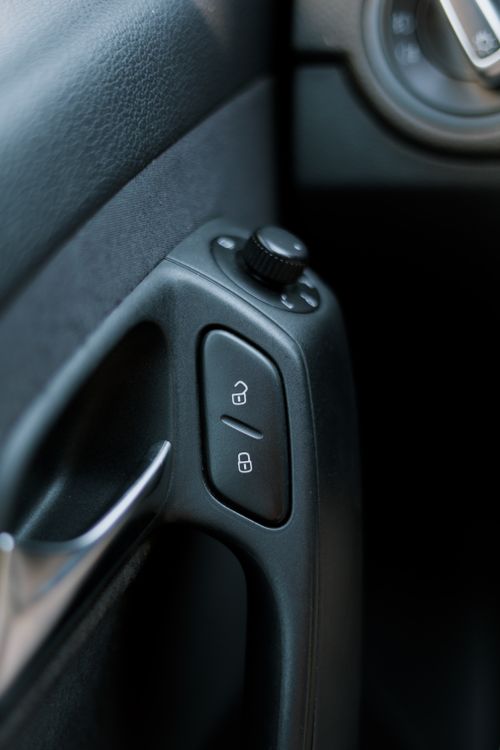
[Close-up of car door lock controls inside a vehicle.] Photograph: Car door lock controls
Image Credits: Pexels
Car doors lock automatically when you drive off because the car is programmed to secure itself once it is clearly moving. The usual trigger is speed, and the usual threshold is low, often between 10 and 20 km/h.
This article explains how the system works, why manufacturers set it up that way, how it differs from gear-shift and passive locking, and what happens in a crash. It also covers why a locked door can usually still be opened from inside, which surprises many drivers the first time they notice it.
The short answer: a signal, a module, and a motor
Automatic locking is an electronic chain with three links. A sensor reports speed or gear position, a control module decides the threshold has been met, and small electric motors in each door do the locking.
Engineer Fix describes the speed-based version this way: the vehicle speed sensor monitors movement, and once the car exceeds a low threshold, often 9 to 12 mph (15 to 20 km/h), the body control module commands the door lock actuators to engage. V3Cars gives a similar range, typically 10 to 20 km/h, and the same sequence: speed monitoring, threshold detection, signal to the actuators, then locking.
The actuator is a small motor or solenoid inside the door that moves the lock mechanism. When it receives the command, it pulls the lock into its secured position, and the driver hears the familiar thunk or click from all four doors at once. The whole event takes a fraction of a second, and it happens without the driver touching any button.
Why manufacturers added the feature
Two purposes drive the design: preventing accidental opening, and deterring theft.
Accidental opening matters most with children. A child who pulls an interior handle at speed could open a door, and automatic locking adds a layer against that, especially combined with child locks on the rear doors. Engineer Fix and V3Cars both name child safety among the main reasons for the feature, alongside general passenger safety.
Theft deterrence matters at low speed. A thief can open an unlocked door at a red light or in a traffic jam and grab a bag or a phone, or in rarer cases attempt a carjacking. A locked door forces an intruder to break glass or force the mechanism, which takes time and draws attention.
Gumtree's explainer puts it plainly: automatic locking is a safety and anti-theft feature designed to prevent doors from suddenly opening while driving.
Speed locking, gear-shift locking, and passive locking
Not every car uses speed as the trigger. Manufacturers choose among three main designs, and some cars let the driver pick between them in the settings menu.
Speed-based locking is the most common. It waits for the speed signal to cross the preset threshold, then locks all doors. Engineer Fix notes that the signal comes from the powertrain or wheel speed sensors to the body control module, which then sends the lock command.
Gear-shift locking works earlier. The doors lock the moment the driver shifts out of Park into Drive or Reverse, before the car has moved at all. This suits automatic cars well, since the shift itself signals intent to drive.
It also secures the car while it is still stationary, which speed locking does not.
Passive locking is a different feature altogether. It locks the car after the driver walks away with the key fob, using proximity sensors to detect that the fob has left the area. Engineer Fix describes it as a stationary system tied to keyless entry, not a driving feature.
A car can have passive locking without drive-off locking, or both.
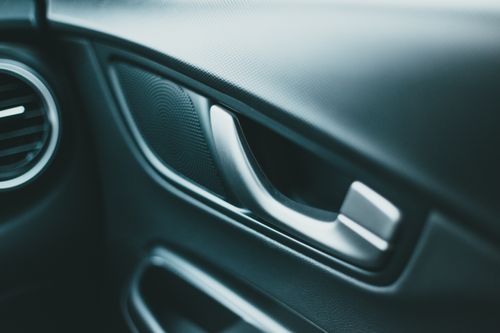
[Close-up of a closed car door and speaker near a shiny door handle.] Photograph: Car door handle
Image Credits: Pexels
Why locked doors still open from inside
Many drivers test the feature by pulling an interior handle after the doors lock, and find the door opens. That is not a fault. On most cars, the interior handle is deliberately left able to override the lock.
The reason is escape. In a crash, fire, or submersion, occupants need to get out quickly, and a system that trapped them inside would be far more dangerous than the theft risk it prevents. Automatic locking therefore secures the door against outside handles, while interior handles usually remain functional.
The child lock, where fitted on rear doors, is the separate control that stops a rear door opening from inside at all.
Some luxury models add crash-activated unlocking on top of this. When airbags deploy or a crash sensor triggers, the body control module unlocks all doors automatically, so rescuers can open them from outside. Gumtree's explainer notes this feature on certain models, and it reflects the same priority: after a crash, access matters more than security.
This design means automatic locking should not be relied on to keep a determined passenger inside. For a child who might open a door, the child lock is the real control. Automatic locking helps, but it is not a substitute for it.
Unlocking: what happens when you stop
Most systems reverse themselves when the journey ends, though the exact trigger varies by manufacturer. Common patterns include unlocking when the ignition is switched off, when the driver's door is opened after stopping, or when the gear lever returns to Park.
V3Cars lists two common unlock triggers: the car coming to a stop with the driver's door opened, and the ignition being turned off. Wheel Whisperer gives a similar list, adding that some implementations unlock when speed drops to zero. The variation is why two cars from different makers can feel different: one unlocks the moment the engine stops, another waits for the driver to open their door.
Drivers who dislike the feature can usually change it. Many cars offer a setting in the infotainment system or instrument cluster menu for auto-lock on or off, and some allow choosing between speed and gear-shift triggers. Older cars sometimes need a button sequence, such as holding the lock button with the ignition on, or a dealer visit to change the setting.
The owner's manual for the specific model is the reliable guide, since the menu path and the sequence differ widely.
If automatic locking stops working, the usual suspects are a door sensor that thinks a door is open, a faulty actuator in one door, or a changed setting after a battery replacement or software update. A single door that fails to lock while the others do points to that door's actuator or wiring. All doors failing together points to a setting, a module, or a speed signal problem.
Is it required by law, and is it always on?
Automatic drive-off locking is not a universal legal requirement, and not every car has it. Some manufacturers have offered it only on certain trims, and some have removed or softened it in particular markets over rescue-access concerns. Gumtree's explainer notes that in some countries, manufacturers have discontinued the feature, while others keep it with crash unlocking added.
What to do if you do not like it
Check the vehicle settings first. Look for a door lock or safety section in the infotainment menu, and search for auto-lock, drive-off lock, or speed-sensitive lock. If the car has no menu option, the owner's manual may describe a button sequence, and a dealer can usually change the setting with diagnostic equipment.
Think about the trade-off before switching it off. The feature costs nothing in daily use and guards against opportunistic theft in traffic and accidental opening by children. Drivers who regularly carry children may prefer to keep it on and use the child locks as well.
Drivers who frequently need quick exits, such as delivery drivers, may reasonably prefer it off.
Frequently asked questions
At what speed do car doors lock automatically?
Most systems lock between 10 and 20 km/h, according to V3Cars and Engineer Fix, which gives a range of about 9 to 12 mph. The exact threshold is set by the manufacturer and varies by model.
Do car doors lock automatically in every car?
No. The feature varies by manufacturer, model, and trim, and some cars do not have it at all. Some cars use gear-shift locking instead, locking when the lever leaves Park rather than at a speed threshold.
Can you open a locked car door from inside?
On most cars, yes. The interior handle usually overrides the lock so occupants can escape after a crash. Rear child locks, where fitted and engaged, are the control that prevents opening from inside.
Do doors unlock automatically after a crash?
Many modern cars unlock all doors when airbags deploy or a crash sensor triggers, so rescuers can open them from outside. The exact behaviour depends on the model and its crash-sensing system.
How do I turn off automatic door locking?
Many cars offer an auto-lock setting in the infotainment or instrument cluster menu. Older models may need a button sequence described in the owner's manual, or a dealer visit to change the setting with diagnostic tools.
The bottom line
Car doors lock when you drive off because a speed or gear signal tells the body control module the car is moving, and the module commands the door actuators to secure the car. The threshold is low, usually 10 to 20 km/h, because the risks begin in slow traffic and at junctions. Locked doors still open from inside on most cars, by design, so that occupants and rescuers can get out when it matters most.
Tags: car doors, car safety, auto locking, body control module
Rive News is a research desk that writes plain-English explainers from published sources. It does not test vehicles itself and does not replace a mechanic's advice.
Related
- What to do if your key fob stops working
- How a car airbag decides when to inflate in a crash
- Why does your car battery keep dying overnight
- Why headlights dim when you start your car
Subscribe to Rive News for a weekly explainer on how everyday things work.
Rive News publishes explainers based on public sources. Corrections are welcomed and applied with a visible update note.
Related stories

Why Does Tire Pressure Drop in Cold Weather?
Cold weather can cut tire pressure by 1 psi for every 10°F drop, thanks to the ideal gas law. Here is what happens inside the tire and what
Why Do Brake Rotors Warp, or Do They Actually?
Mechanics rarely see a truly warped rotor. The shudder usually comes from uneven pad deposits a few thousandths of an inch thick. Here

How to Buy a Used Car Without Getting Scammed: The Checklist
Over 450,000 cars a year have rolled-back odometers, NHTSA says. This checklist covers VIN checks, title washing, and the inspection that