
Why Cars Have a Redline on the Rev Counter: Engine Limits Explained
Key takeaways
- The redline marks the maximum safe engine speed, set by engineers below the true failure point to leave a safety margin.
- The main danger is valve float: at extreme RPM the valve springs cannot close the valves in time, and pistons can strike them.
- Modern cars carry a rev limiter that cuts fuel or spark near the redline, but it cannot save an engine from a bad manual downshift.
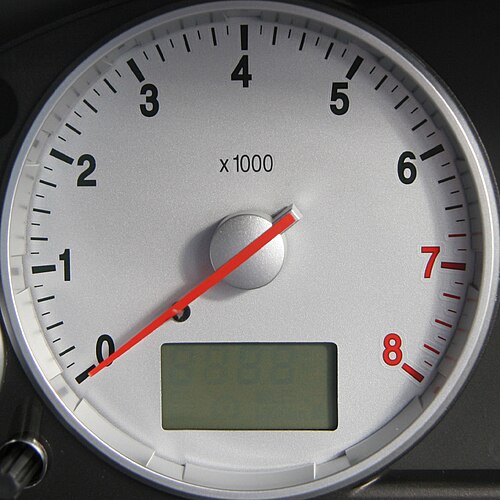
The red band on the tachometer marks the engine's safe speed limit. Photograph: Wikimedia Commons contributor
Image Credits: Wikimedia Commons
Glance at any tachometer and you will see the scale end in a band of red. That redline is not decoration and not a challenge.
It is an engineered boundary: the fastest the manufacturer considers safe for continuous operation. This article explains how engineers set it, what breaks when you cross it, and how the rev limiter keeps most drivers out of trouble.
What the redline represents
Engine speed is measured in revolutions per minute, the number of times the crankshaft spins each sixty seconds, and the tachometer displays it in real time. The red zone at the top of the gauge marks the maximum speed the manufacturer recommends. It is calculated from the engine's design, materials, and the stroke of its internal parts, not picked from thin air.
Crucially, the published redline sits well below the engine's actual failure point. Engineers build in a safety margin so that a brief visit to the red zone does not end the engine's life.
Typical limits vary widely: diesel engines often redline around 4,500 RPM because their combustion process is slower, while ordinary petrol engines sit between 7,000 and 8,000 RPM, according to CarParts.com. Formula 1 engines have run as high as 15,000 RPM under the rules, possible only with tiny displacement, low mass, and very short strokes.
Valve float: the main mechanical danger
The most feared consequence of crossing the redline is valve float. In a four-stroke engine, the camshaft opens the intake and exhaust valves and the valve springs snap them shut, in precise time with the pistons. As RPM climbs, everything moves faster, and the valve springs have less and less time to do their job.
At extreme speeds the inertia of the valve and its hardware overcomes the spring's closing force. The valve floats: it fails to seat fully before the piston starts its upward travel.
The piston crown can then strike the still-open valve, bending the valve stem or punching a hole in the piston crown. The speed where this begins depends on spring stiffness and valvetrain mass, so the redline is typically set just before the calculated onset of valve float.
The forces elsewhere are brutal too. At 7,000 RPM the piston and connecting rod reverse direction thousands of times per minute, loading the connecting rod with extreme tensile and compressive stress.
Push far past the redline and a rod can fail outright and punch through the side of the engine block. Extended redlining also overheats the engine and accelerates wear across every moving part, a reminder that mechanical limits apply to all machinery, from engines to the transmissions discussed in why cars have a rev limiter.
How the rev limiter protects the engine
Modern cars do not trust drivers with this boundary. The engine control unit constantly monitors RPM through crankshaft sensors, and as speed approaches the redline it triggers the rev limiter.
The usual method is a fuel cut: the injectors are momentarily deactivated so the cylinders get no charge to burn, and engine speed drops back below the limit. Some systems interrupt the spark instead. The familiar stutter or bouncing feeling under hard acceleration is the limiter doing its job.
The limiter is excellent at stopping damage from acceleration, but it has one blind spot: it cannot fight the wheels. In a manual car, shifting into too low a gear at speed forces the engine to spin faster through the mechanical link of the clutch and gearbox.
Enthusiasts call this the money shift, and it can fling the engine far past the redline faster than any fuel cut can respond. Automatics avoid the problem because the transmission chooses the gears.
Why the red zone exists at all
If the redline is dangerous, why let the needle approach it? Because the engine's best performance lives near the top of its range.
Peak power in many cars arrives within a few hundred RPM of the redline, so drivers who want maximum acceleration need access to that region. The redline marks the edge of the useful envelope, and the limiter stands guard just inside it.
Brief visits are not the enemy. Hitting the limiter for a moment while merging onto a highway will not destroy a healthy engine.
What shortens engine life is sustained operation at the limit: minutes of redline running overheat components and multiply wear. Engineers assume drivers will occasionally touch the boundary, which is why the margin exists, and they assume nobody lives there.
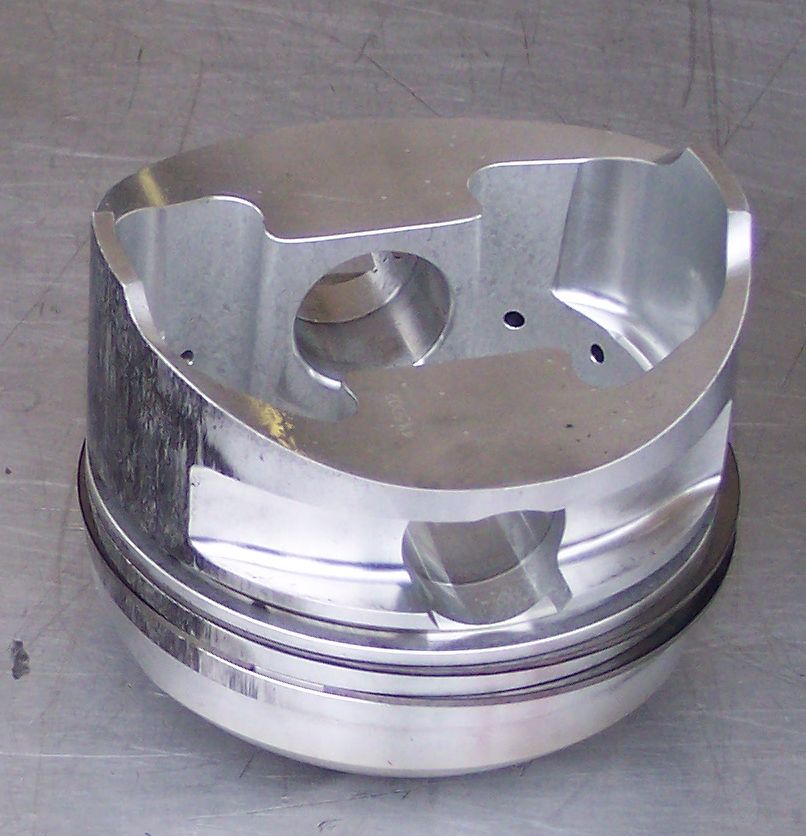
At 7,000 RPM a piston reverses direction thousands of times per minute. Photograph: Wikimedia Commons contributor
Image Credits: Wikimedia Commons
What happens if you redline your car once?
Almost certainly nothing. The rev limiter cuts fuel or spark to stop the engine accelerating further, and the safety margin below the true failure point absorbs a brief visit. It is repeated or sustained redlining that causes damage.
Can you damage an engine with a rev limiter?
From acceleration alone, rarely. But a rev limiter cannot protect against a mechanical over-rev, such as downshifting into too low a gear in a manual car. In that case the wheels drive the engine past the limit regardless of the limiter.
Why do diesel engines have lower redlines?
Diesel combustion is slower than petrol combustion, and diesel engines are built with heavier, longer-stroke internals that cannot change direction as quickly. Typical diesel redlines sit around 4,500 RPM versus 7,000 to 8,000 for petrol engines.
What is valve float in simple terms?
The engine's valves open and close in precise time with the pistons. Spin the engine too fast and the valve springs cannot shut the valves quickly enough. A valve left open can be struck by the rising piston, which bends or breaks parts instantly.
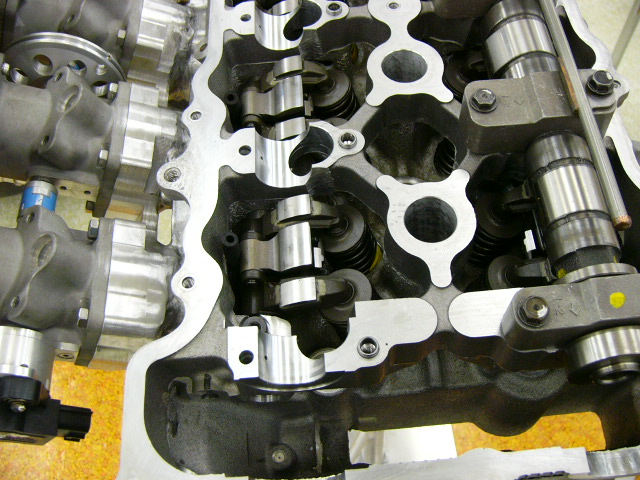
The cylinder head houses the valves that float if engine speed runs away. Photograph: Wikimedia Commons contributor
Image Credits: Wikimedia Commons
The bottom line
The redline is the line between the engine's working range and its danger zone, set by engineers who know exactly where valve float begins. The rev limiter enforces it automatically, and the safety margin forgives the occasional brush with the limit. Respect the red band and the engine will last; live in it and the repair bill will explain why it is red.
Latest in Automotive
- Why cars have a rev limiter
- Essex police car windscreen case on the A120
- Tesla Cybertruck cancelled for Australia
Subscribe for one practical car explainer in your inbox every morning.
Related stories

Why Does Tire Pressure Drop in Cold Weather?
Cold weather can cut tire pressure by 1 psi for every 10°F drop, thanks to the ideal gas law. Here is what happens inside the tire and what

Why Do Brake Rotors Warp, or Do They Actually?
Mechanics rarely see a truly warped rotor. The shudder usually comes from uneven pad deposits a few thousandths of an inch thick. Here

How to Buy a Used Car Without Getting Scammed: The Checklist
Over 450,000 cars a year have rolled-back odometers, NHTSA says. This checklist covers VIN checks, title washing, and the inspection that