
Why Do Electric Cars Still Have a 12 Volt Battery?
Key takeaways
- An EV's traction battery runs at 400 to 800 volts, far too dangerous for door locks, lights and computers, so a separate 12V system handles them.
- The 12V battery's most critical job is energizing the contactors that connect the high-voltage battery; without it, the car cannot start.
- A DC-DC converter replaces the alternator, stepping high voltage down to keep the 12V battery charged while driving.
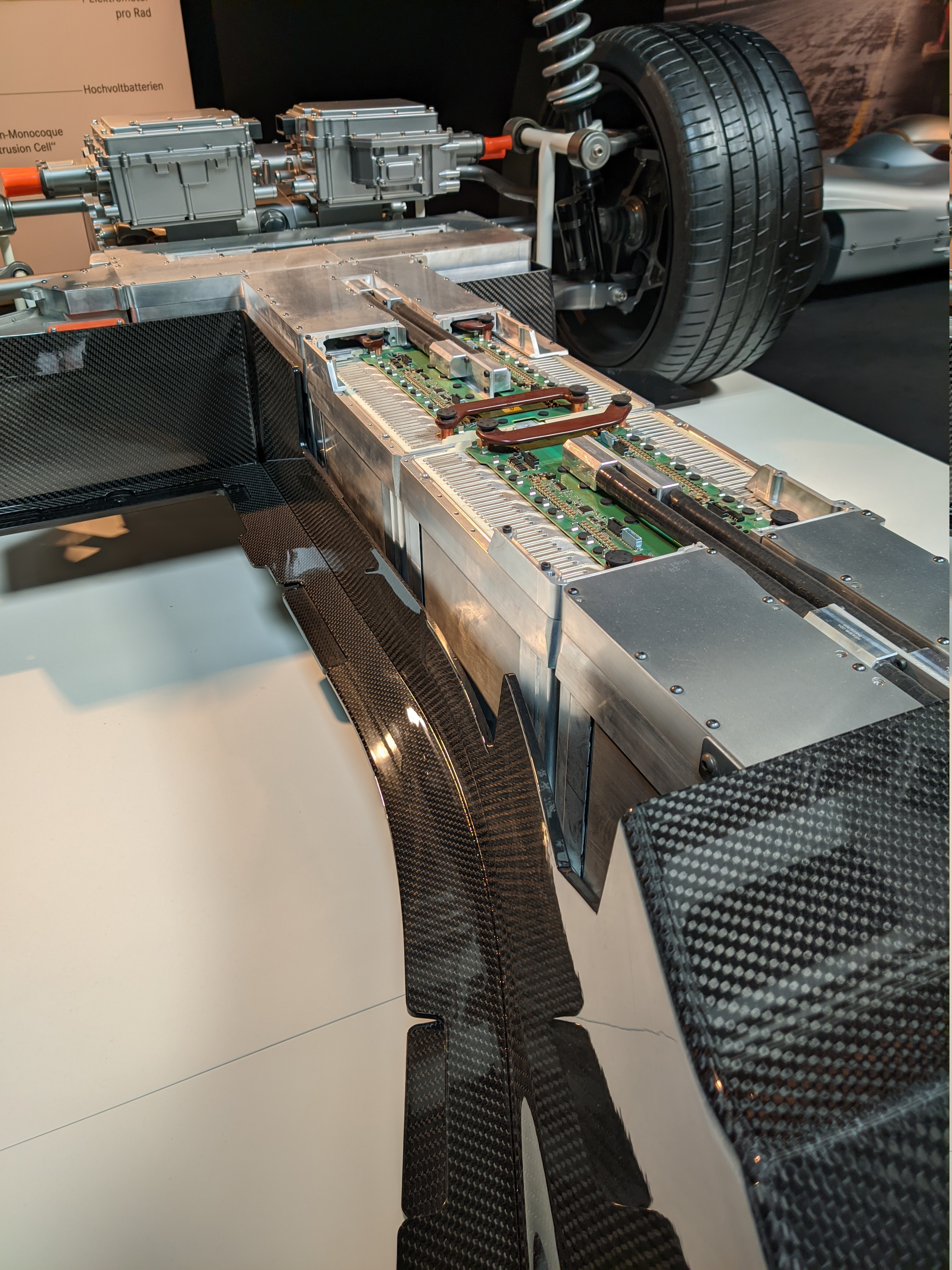
A cutaway display of an EV battery pack. The high-voltage traction battery drives the motor, while a separate 12V battery runs everything else. Photograph: Wikimedia Commons
An electric car carries a battery pack big enough to move two tons of metal down the highway, yet pop the frunk and you will find the same humble 12-volt lead-acid battery your grandfather's sedan used. It looks redundant. It is not.
This article explains why electric cars still have a 12 volt battery, including the safety problem with high voltage, the bootstrap job the small battery performs, what it actually powers, how the DC-DC converter keeps it charged, and why engineers have not deleted it.
The safety problem: 400 volts is not for door locks
An EV's traction battery typically operates at 400 volts, and many newer designs run at 800 volts or even up to 900 volts, according to EngineerFix. That voltage exists for one reason: moving the car efficiently. Pushing serious power at low voltage would demand thousands of amps, generating dangerous heat and requiring absurdly thick wiring.
That same voltage is far too dangerous for the small stuff. Running 800 volts to the radio, the dome light, or the door-lock actuator would introduce lethal risk to occupants and service technicians for zero benefit. Automotive safety rules require the high-voltage system to be completely isolated and de-energized when the vehicle is parked or in a crash.
So the car keeps two electrical worlds. The high-voltage world moves the wheels.
The 12-volt world runs everything else. The 12V battery is the dedicated power source for the low-voltage side, a deliberate engineering decision rather than leftover tradition.
The bootstrap job: waking the high-voltage system
Here is the chicken-and-egg problem at the heart of every EV. When the car is off, the traction battery is physically disconnected from the rest of the vehicle by large electro-mechanical relays called contactors. That isolation prevents power leakage and keeps the high-voltage system safely de-energized while parked, as InsideEVs explains.
Contactors are essentially giant switches, and each one is closed by energizing a small electromagnetic coil. That coil needs 12 volts. So the sequence every time you start an EV goes like this: the 12V battery wakes the vehicle control unit, the computers run their self-checks, the battery management system gives the all-clear, and only then does 12V power snap the contactors shut, connecting the traction battery to the motors.
If the 12V battery is dead, none of that happens. The car will not start even with a fully charged traction battery sitting underneath it.
As one EngineerFix explainer puts it, without the small battery the EV would be "a very heavy paperweight. "
What the 12V battery actually powers
Beyond the contactors, the 12V battery runs nearly every system the driver touches. The vehicle control unit, the car's electronic brain, boots from 12V. So do the network of electronic control units and sensors that manage driving, the pre-charge circuit that limits the current surge when the high-voltage battery first connects to the motor controller's capacitors, and the diagnostics the battery management system runs before allowing drive power.
Safety systems live on the 12V rail too: airbag deployment, anti-lock braking, and electronic stability control pumps. Then come the comfort items everyone recognizes, including headlights, taillights, turn signals, power windows, windshield wipers, HVAC blower fans, door locks, and the infotainment screen. Even while parked, the 12V system keeps the security alarm, remote monitoring, and over-the-air update readiness alive.
Engineers kept the 12V standard for a practical reason. Decades of automotive components, from blower motors to window regulators, are already designed, tested, and mass-produced for 12 volts. As Jalopnik notes, redesigning every one of those parts for a new voltage would add cost and risk to an already difficult engineering job, so proven designs carry over.
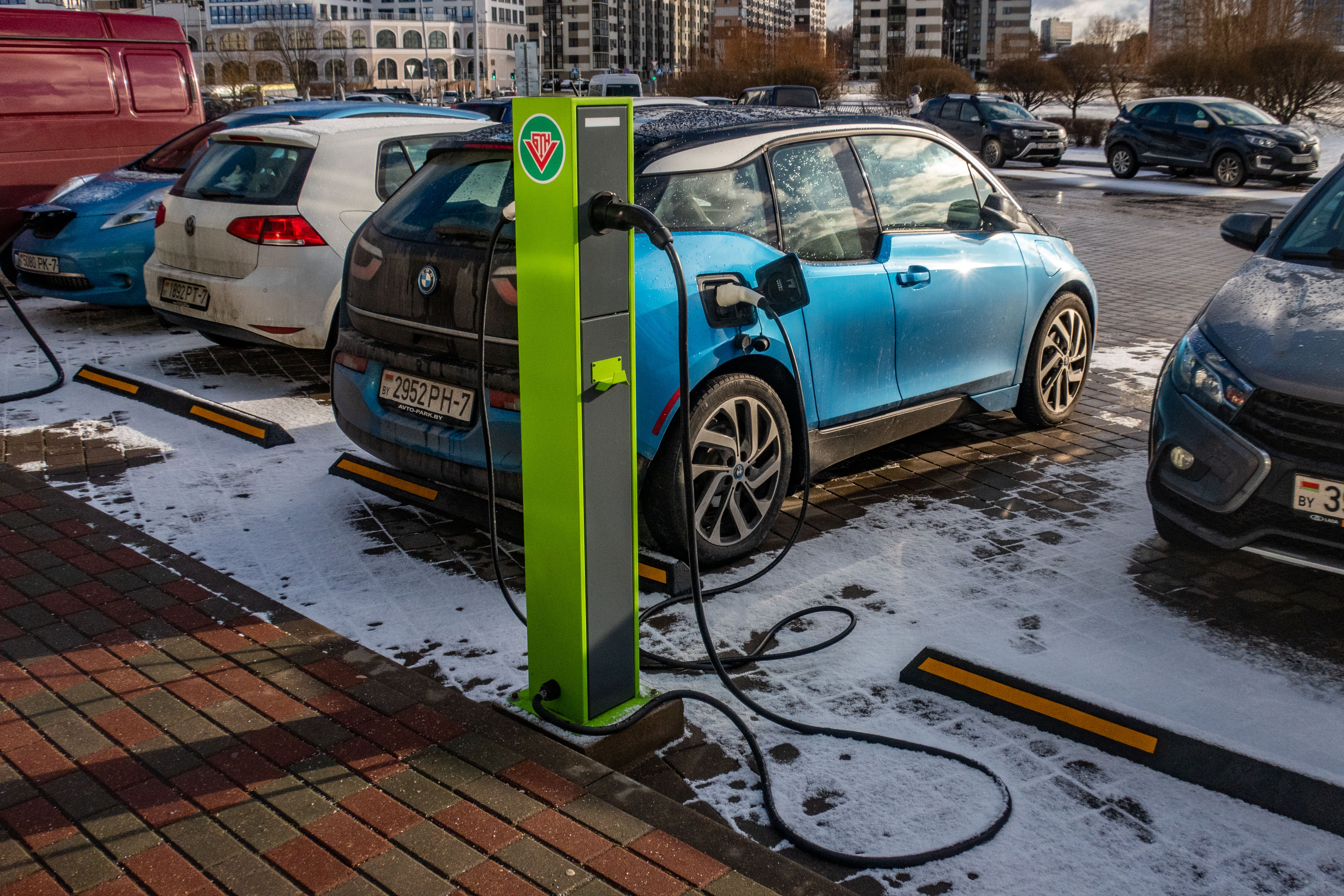
Electric cars charging in Minsk, Belarus. Charging replenishes the traction battery; the 12V system is topped up separately by the DC-DC converter. Photograph: Homoatrox / Wikimedia Commons
The DC-DC converter: the EV's alternator
A gas car keeps its 12V battery charged with an alternator spun by the engine. An EV has no engine to spin one, so it uses a DC-DC converter instead. This device takes the traction battery's 400-plus volts and steps it down to roughly 12 to 14 volts, trickle-charging the auxiliary battery and powering the 12V loads while driving.
The converter only runs when needed. When the 12V battery's state of charge drops, the converter wakes and tops it up from the main pack. Most EVs also wake themselves periodically while parked for days or weeks, click the contactors, and recharge the 12V battery so the car can still start after a long trip away, according to InsideEVs.
This arrangement explains a quirk many EV owners discover: a dead 12V battery bricks the car just like in a gas vehicle. The fix is the same too. Jump-starting an EV only restores the low-voltage system, giving it enough power to close the contactors, after which the DC-DC converter takes over charging.
Why not just delete it?
Engineers have asked this question, and some concepts have tried. The obstacles are stubborn.
First, redundancy: if the DC-DC converter fails or the high-voltage system shuts down in a crash, the 12V battery still powers the hazard lights, airbags, and door locks. That independent reserve is a safety feature, not a bug.
Second, standardization. The entire global supply chain for automotive electronics speaks 12 volts, a standard that settled into place in the 1960s when cars needed more cranking power for bigger engines. Abandoning it would mean re-engineering and re-certifying thousands of components.
Third, cost. A plain lead-acid 12V battery is cheap, proven in automotive heat and vibration, and available in every town on earth. As Jalopnik's engineering-minded take puts it: with a component this proven, why reinvent the battery?
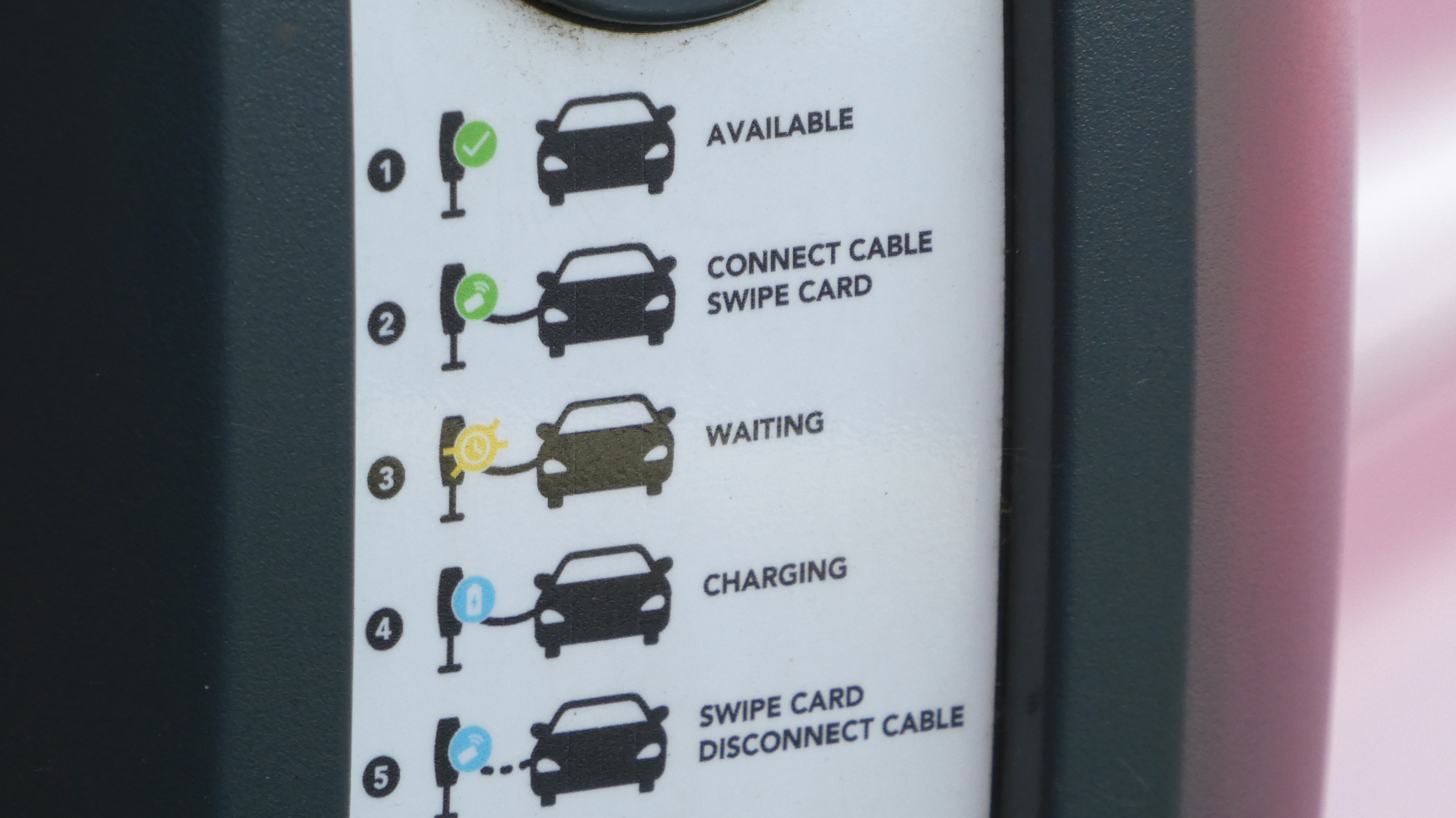
Detail of an EV charging station. The 12V battery keeps working even when the car is not plugged in. Photograph: Pamsimhaho / Wikimedia Commons (CC0)
Some newer EVs are experimenting with lithium 12V batteries or 48-volt auxiliary systems, and Tesla has moved some models to a lithium low-voltage battery. But the architecture stays the same: a separate low-voltage system, isolated from the traction pack, doing the quiet jobs that make the car usable.
Can an electric car be jump-started?
Yes, and the procedure targets the 12V battery only. A jump restores low-voltage power so the computers can boot and the contactors can close.
Once the high-voltage system is online, the DC-DC converter takes over. Always follow the manufacturer's jump points, since the 12V battery is sometimes hidden in the frunk or under a panel.
How long does an EV 12V battery last?
Typically three to five years, similar to a gas car, though constant small drains from always-on electronics can shorten that. Many EVs now monitor 12V health and warn the driver before failure. If your EV starts behaving strangely, with glitchy electronics or refusal to wake, the 12V battery is the prime suspect.
Why does the 12V battery die if the big battery is full?
Because the two systems are isolated when the car is off. The traction battery cannot charge the 12V battery unless the contactors close and the DC-DC converter runs, and the car only does that periodically while parked. A failing 12V battery may not hold charge between those top-ups.
Will future EVs drop the 12V battery?
Probably not entirely. Higher auxiliary voltages like 48V are gaining ground for efficiency, but the core idea, a separate low-voltage system for safety and standardization, is likely to stay. The chemistry may change from lead-acid to lithium, but the architecture has proven its worth.
The bottom line
The 12V battery survives in electric cars because it solves three problems at once: it keeps lethal high voltage away from everyday electronics, it provides the bootstrap power that wakes the traction battery, and it offers an independent reserve that works even when the main system is down. The DC-DC converter does the daily charging work, but the little battery remains the key that starts everything.
Next time you see one under the frunk, you will know it is not a leftover. It is the reason the big battery is allowed to sleep safely.
Latest in Automotive
- Why do cars have a rev limiter?
- Why do some messages show as green and others as blue?
- How do trees survive freezing winters without moving?
- Why do pilots dim the cabin lights before night landings?
Subscribe for one clear explainer like this every morning.
Image Credits: Wikimedia Commons (EV battery pack); Homoatrox / Wikimedia Commons (EVs charging in Minsk); Pamsimhaho / Wikimedia Commons, CC0 (charging station detail)
Related stories

Why Does Tire Pressure Drop in Cold Weather?
Cold weather can cut tire pressure by 1 psi for every 10°F drop, thanks to the ideal gas law. Here is what happens inside the tire and what

Why Do Brake Rotors Warp, or Do They Actually?
Mechanics rarely see a truly warped rotor. The shudder usually comes from uneven pad deposits a few thousandths of an inch thick. Here

How to Buy a Used Car Without Getting Scammed: The Checklist
Over 450,000 cars a year have rolled-back odometers, NHTSA says. This checklist covers VIN checks, title washing, and the inspection that