
Why Do You Blank on Names but Remember Faces?
Key takeaways
- Faces are recognized, while names must be recalled, and recall is the harder job.
- Face and name processing run through partly separate brain systems, so one can work while the other stalls.
- Names stick better when tied to a story, a face feature, or a repeated use.
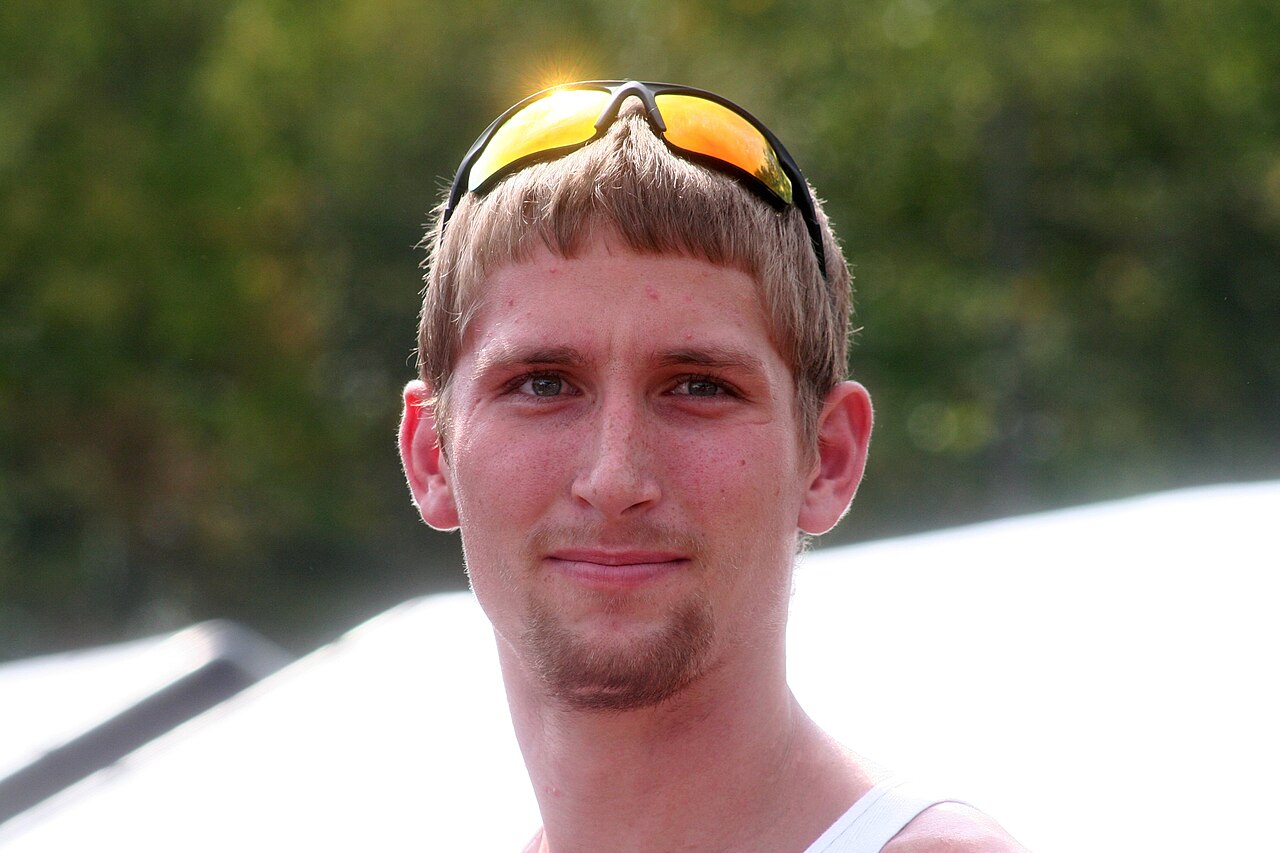
You walk into a party, spot a familiar face, and smile. You remember where you met this person. You even remember what you talked about.
Then the name is gone, completely gone, and you hope they do not ask if you remember them.
This moment is one of the most common memory glitches in daily life. It feels like a failure, but neurologists say it is mostly the brain working as built. Faces and names travel through different systems, and the face system gets there first.
This article explains why you blank on names but remember faces, including the recognition-versus-recall gap, the brain systems involved, and the tricks that actually help names stick.
Recognition is easier than recall
The core answer is a difference between two kinds of memory. Recognizing a face is recognition: the face is in front of you, and the brain only has to judge whether it has seen it before. Remembering a name is recall: nothing is in front of you, and the brain must produce the word from scratch.
Recall is harder than recognition in almost every domain. It is easier to pick the right answer from a list than to write it unaided. It is easier to recognize a song than to sing it from memory.
Names sit on the hard side of that line, while faces sit on the easy side.
The asymmetry also hides half the problem. You only notice a forgotten name after you have already recognized the face. The face did its job, then the name failed, so the failure is visible.
The reverse case, knowing a name but not recognizing the face, rarely reaches awareness. You walk past countless faces you should know and never realize it, because no face triggered the comparison.
A study from the University of York made this point with a fair test. Researchers gave participants equal demands on faces and names by testing both as recognition. Participants recognized 73 percent of faces shown in the same photo and 64 percent when shown a different photo of the same person.
They recognized 85 percent of names in the same format and 83 percent in different fonts and sizes.
Rob Jenkins of the University of York said the finding surprised people because it contradicted intuition. His team concluded that while many people may be bad at remembering names, they are likely even worse at remembering faces. The everyday experience misleads us, because it compares face recognition with name recall, two tasks of unequal difficulty.
The famous-person version of the test backed this up. When the researchers used famous faces and names, scores evened out, with participants recognizing roughly as many faces as names. Familiarity closed the gap.
The problem was never that names are intrinsically impossible. It is that recall demands more than recognition, and new acquaintances have had little time to build familiarity.
Faces and names run through different systems
The second answer is anatomical. Face processing has dedicated machinery in the brain, while name processing borrows general language systems. The face system is fast, automatic, and older in evolutionary terms.
The name system is slower, deliberate, and dependent on attention.
A model developed by Vicki Bruce and Andrew Young in 1986 laid out the sequence. Recognizing a familiar person runs through stages: the visual system registers the face, a recognition unit matches it to a known person, and then identity information follows, such as who the person is and where you know them from. The name comes last in that chain.
A break anywhere along it can leave you with a clear sense of familiarity and no name.
Later research filled in the regions. The occipital face area helps identify a face as a face. The fusiform face area, in the temporal lobe, handles familiar faces and face-like objects.
Other regions gather the scattered facts about a person into a coherent picture. Damage to these areas can produce face blindness, where a person cannot recognize familiar faces at all, even while other kinds of recognition stay intact.
Names have no such dedicated area. Doctor Biplab Das, a neurologist at Batra Hospital in New Delhi, explains that names are abstract verbal labels with no visual or emotional meaning of their own. The hippocampus helps form new memories, and the prefrontal cortex helps retrieve them later.
Without an association, a story, repetition, or context, names simply do not stick as well.
The evolutionary story fits. Humans needed to tell friend from foe by face long before spoken names existed. The face system evolved to identify people quickly from holistic patterns: the arrangement of eyes, nose, mouth, and expression as a whole.
Names arrived later as cultural labels, pasted onto a system that was never built for them. A face is a pattern the brain is tuned to read. A name is a tag the brain must deliberately file.
There is also a bottleneck at the moment of introduction. When you meet someone, your attention is often on yourself: what to say next, how you look, whether your handshake is right. The name arrives in that distracted window and gets weakly encoded.
Minutes later, the face is familiar but the name never made it into storage. Psychologists call this the next-in-line effect: information arriving just before your own turn to speak gets less attention. Introductions are built from exactly that moment.
The Baker paradox shows why names are slippery
A classic experiment shows how arbitrary names are. In 1987, Kathryn McWeeny and colleagues ran a study called Putting Names to Faces. They showed people faces paired with words, and the same word was sometimes an occupation and sometimes a surname.
People recalled "Baker" far more often when it meant a baker than when it was the surname Baker.
Gill Cohen later named the pattern the Baker paradox. An occupation connects to a web of meaning: bread, ovens, early mornings, aprons. A surname connects to nothing except the person, and a person you just met has few connections yet.
The occupation gives memory many handles. The surname gives it one, and a weak one at that.
The paradox explains a common experience. You remember that a man is a plumber, that he likes cycling, and that you met him at a wedding, but his name is gone. The facts survived because they link to other knowledge.
The name failed because it links to nothing. It is a single arbitrary sound, and arbitrary items are the first things memory drops.
It also explains why a name can vanish seconds after you hear it. The name was never forgotten in the usual sense. It was never stored.
The introduction passed, attention moved on, and the word left no trace. People blame their memory, but the failure happened at encoding, not at retrieval.

When forgetting names is normal, and when it is not
Occasional name blanking is normal, and it happens to everyone. It is most common when meeting many new people, when tired or stressed, or when the introduction was rushed. A blank at a party, a conference, or a first day at work is a routine glitch, not a warning sign.
The picture changes when the pattern spreads. Doctor Das lists warning signs: forgetting the names of close friends or family members, difficulty recognizing familiar faces rather than just recalling names, and trouble remembering everyday facts or details. If memory problems spill into multiple areas, such as recognition, orientation, and daily functioning, a medical evaluation becomes important.
The rule of thumb is simple. Forgetting a name at a party is normal. Forgetting who the person is, is not.
A single failed label points to the recall gap. A failed recognition points to something broader, and it deserves a check.
How to make names stick
Names stick when they get what faces already have: connections, repetition, and attention at the moment of encoding. The tricks below work because they supply those three things.
Use the name immediately. When you hear it, say it back in your next sentence: "Good to meet you, Lena." That single repetition moves the name from a passing sound to a spoken act, and speaking engages more of memory than hearing alone.
Attach the name to something meaningful. Link it to a face feature, a job, or a story: Lena with the laugh, Marcus the marathon runner. The link does not need to be logical.
It needs to be vivid, because vivid links survive. This is the Baker paradox used in your favor: give the name a web of meaning, and recall has handles to grab.
Repeat it across the conversation. Use the name once when greeting, once in the middle, and once when saying goodbye. Three spaced uses beat ten rushed repetitions at the start, because spacing forces a fresh retrieval each time.
Spaced retrieval is the same principle that makes remade notes beat copied ones.
Write it down soon after. A quick note after a meeting, with the name plus one fact, locks in the encoding while it is still fresh. The note also gives you a review list before the next meeting.
A name reviewed once within a day is far more likely to survive than a name left to fade.
If you blank anyway, be honest and direct. "I remember your face and our conversation, but your name has slipped my mind" works better than bluffing. Most people have been on both sides of that sentence, and they would rather hear it than carry a conversation built on guessing.
The honesty also relaxes the stress that blocks recall, and the name often surfaces a minute later once the pressure drops.
Short self-set deadlines can help here too, in a small way: giving yourself a 60-second window after a meeting to write down every new name turns a vague intention into a task with a cutoff. What gets scheduled gets stored.

The bottom line
You blank on names but remember faces because the two jobs are unequal. Face recognition is fast, automatic, and backed by dedicated brain machinery. Name recall is slow, deliberate, and tied to a single arbitrary label with no web of meaning.
The York study shows the gap is about recall, not about faces being magically memorable. Give a name attention at the start, a vivid link, and a few spaced repetitions, and it stands a far better chance of surviving the party.
Tags: memory, names, faces, psychology
Latest in Education
- Why Does Rewriting Notes Rarely Help but Remaking Them Does?
- Why Do Deadlines Improve Focus, Even Artificial Ones?
- What Is the Feynman Technique and Why Does It Expose Gaps?
Subscribe for one research-backed study tip each week.
Related stories

Why Do I Blank Out During Tests Despite Studying: Test Anxiety and Retrieval Failure
Blanking out in exams is retrieval failure, not missing knowledge. Anxiety drains working memory; rereading builds false confidence. Here

How to Study for Exams Without Burning Out
Sleep 7-8 hours, study in 25-50 minute blocks, and exercise daily. The science-backed way to study for exams without burning out, and what

Why Do I Forget What I Just Read? Science Has an Answer
You forget what you just read because of the forgetting curve, mapped by Ebbinghaus in 1885. Science explains why memory fades fast and how