
Why it is harder to learn anything when you are tired
By Rive News / Research desk | Rive News / Published October 29, 2026 at 9:00 AM PKT
Key takeaways
- Sleep loss hurts learning twice: it weakens attention while you study and weakens memory formation afterward.
- A 2025 study found sleep deprivation disrupts prefrontal control of memory retrieval, with recovery linked to REM sleep.
- Tired learners also judge their own performance poorly, so extra effort often feels productive while achieving less.

A young woman deeply focused on studying at a desk, surrounded by books and notebooks. Photograph: Polina Tankilevitch
Image Credits: Pexels
What tiredness does to learning
Learning when you are tired feels like reading through fog. Words go in, but they do not stick, and the same page needs reading twice.
The reason is not laziness. Sleep loss changes how the brain takes in new information, holds it, and files it away.
This article explains what happens to attention, memory encoding, and memory control when you are tired, what recent research found, and how to study when a full night's sleep is not possible.
Attention goes first
Attention is the gate for learning. If you cannot hold focus on a sentence, the brain never gets a clean copy of it to store.
Sleep deprivation weakens the prefrontal cortex, the region that directs attention and working memory. Working memory is the mental scratchpad that holds a few items while you work with them.
When that scratchpad shrinks, multi-step reasoning breaks down. You lose track of the earlier part of a problem before reaching the end of it.
This is why tired students often reread the same paragraph. The words were seen, but attention slipped partway through, so the meaning was never assembled.
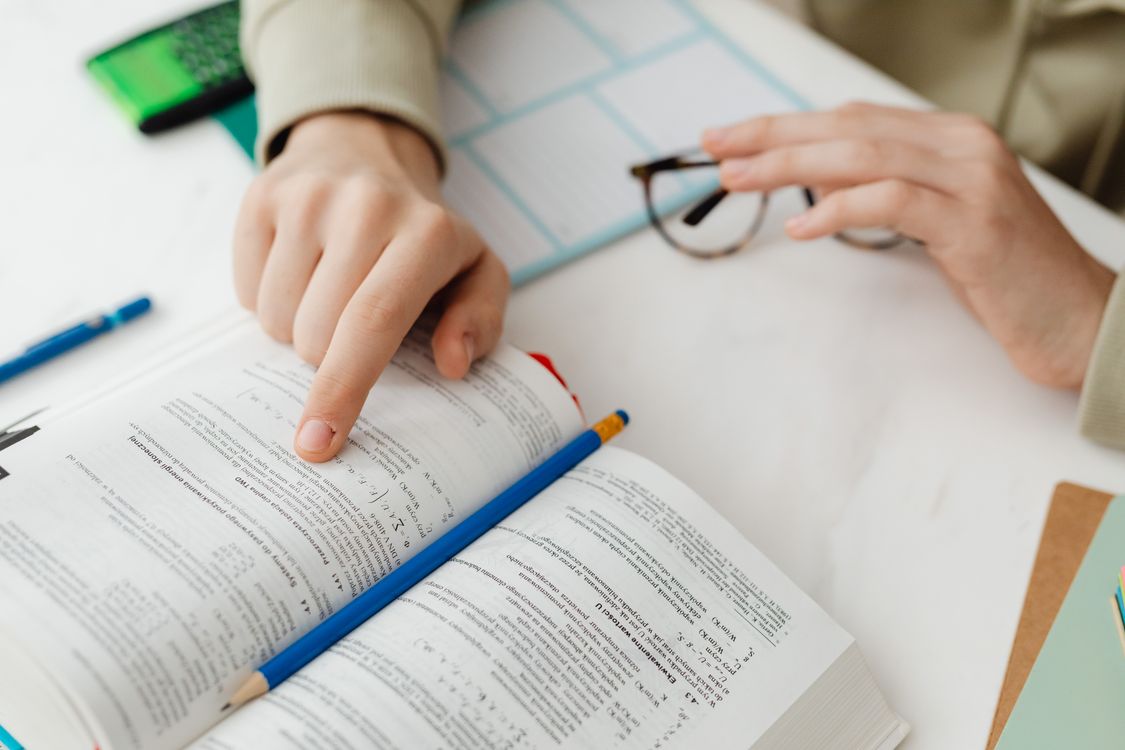
Close-up of a student studying with a textbook and pencil at a desk indoors. Photograph: kaboompics
Image Credits: Pexels
Encoding weakens while you study
Encoding is the process of turning experience into a memory trace. It depends on the hippocampus, a structure that binds new facts together.
Sleep loss disrupts communication between the hippocampus and the prefrontal cortex. A 2026 study in iScience, by Weiran Zheng and Duyan Geng, measured this directly in rats learning a maze task.
The researchers found that learning normally strengthened forward connectivity from the ventral hippocampus to the medial prefrontal cortex. Sleep deprivation impaired that forward connection, and the sleep-deprived animals learned more slowly and less accurately.
Human studies show a matching pattern. In an early functional MRI study, volunteers kept awake for 35 hours showed altered brain activation during verbal learning, and their free recall was significantly impaired compared with the rested state.
The prefrontal cortex actually worked harder after sleep loss, according to that study, yet recall still fell. Effort rose while results dropped, which matches the familiar feeling of studying hard while tired and remembering little.
Memory control also suffers
Sleep loss does more than weaken new learning. It also weakens control over memories you already hold.
A 2025 study in the Proceedings of the National Academy of Sciences, led by Marcus Harrington at the University of York, tested this in people. Sleep deprivation disrupted prefrontal inhibition of memory retrieval.
In plain terms, tired participants were worse at pushing unwanted memories aside. The overnight restoration of that control was associated with time spent in rapid eye movement (REM) sleep.
That finding matters for studying, because learning often requires suppressing the wrong answer. When you practise a new rule, you must hold back the old habit that competes with it.
A tired brain struggles with that suppression. Old answers intrude more easily, and new ones have a harder time winning.
Why tired learners misjudge themselves
One of the cruellest effects of sleep loss is that it dulls self-assessment. People who have slept six hours a night for two weeks show cognitive deficits similar to a full night without sleep, yet report feeling only slightly tired.
That gap between felt tiredness and actual impairment is dangerous for students. It encourages one more chapter, one more practice set, long past the point where study stops paying off.
Recognition also feels easier than recall when tired. Rereading notes feels fluent, because the material looks familiar, but familiarity is not the same as being able to reproduce it in an exam.
Practice tests expose the gap. If you cannot write the answer from memory, the material is not learned yet, however familiar it looked on the page.
The sleep that follows matters too
Learning does not end when the book closes. During sleep, the brain replays and consolidates new memories, strengthening the traces that matter and pruning weaker ones.
The synaptic homeostasis hypothesis describes this nightly reset. Waking strengthens synapses with each experience, and sleep downscales them, keeping the system able to learn again the next day.
Without that reset, the brain stays saturated with weak, competing connections. New learning then has to fight through yesterday's noise as well as today's material.
This is why an all-nighter followed by an exam performs badly on two counts. Encoding was weak during the night, and consolidation never happened before the test.
Studying when you cannot sleep properly
Sometimes a bad night is unavoidable. The goal then is damage control, not heroics.
Shorten study blocks. Twenty-five to forty minutes of focused work, followed by a real break, fits a tired attention span better than a two-hour grind.
Switch from rereading to retrieval. Short practice tests and flashcards force the brain to produce answers, which both strengthens memory and reveals what is actually missing.
Do the hardest material first, while alertness is highest. Save routine tasks, like organising notes, for the low-energy part of the session.
A short nap of 20 minutes can restore alertness for a few hours, according to sleep research generally. Longer naps risk sleep inertia, the groggy period after waking from deep sleep.
Avoid starting new, difficult topics late at night when exhausted. Reviewing familiar material is a better use of a tired evening, and the new topic can wait for a rested morning.
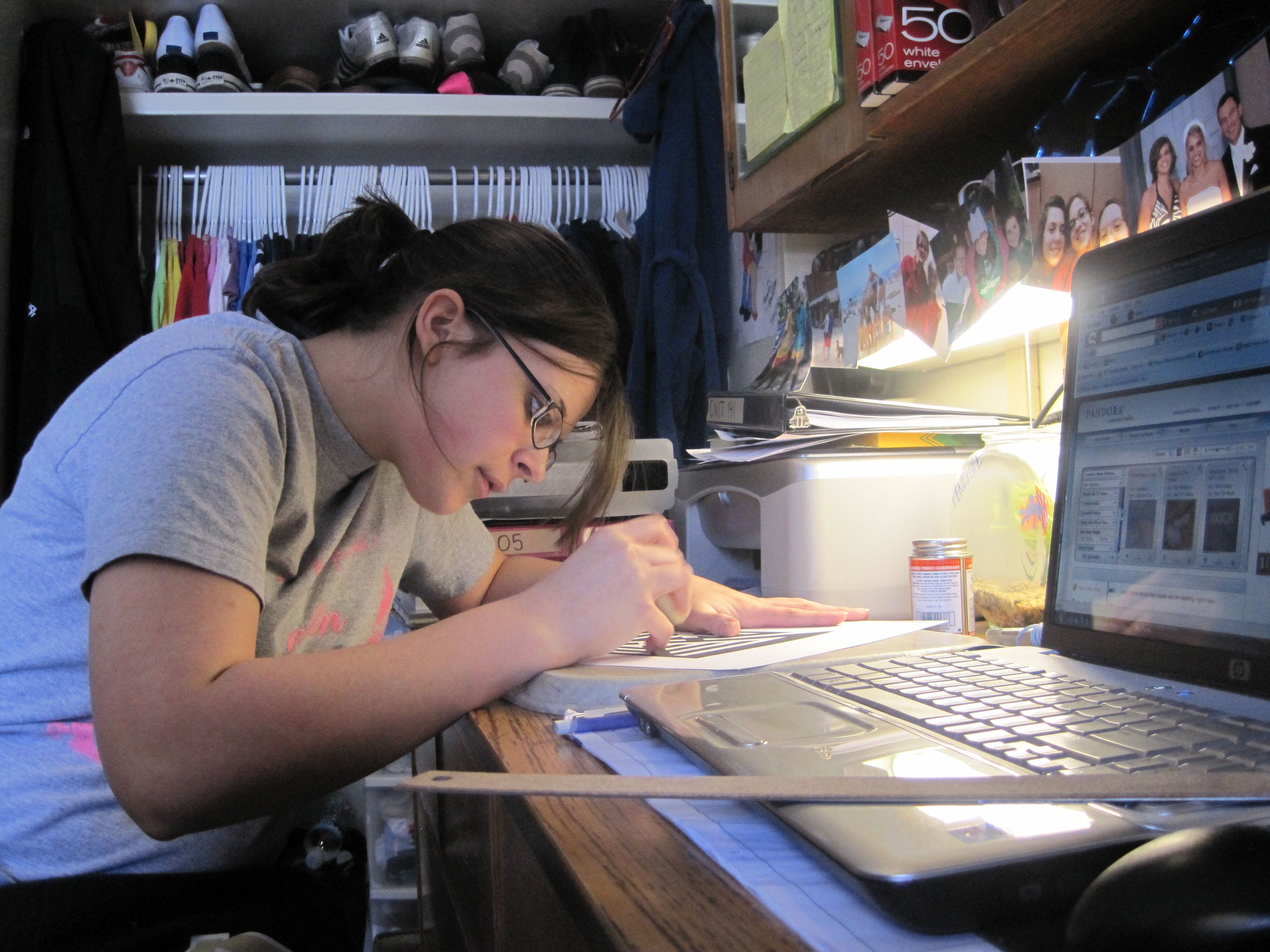
A student studies at a desk, where matching hard material to peak alertness hours pays off more than adding hours. Photograph: Wikimedia Commons
Image Credits: Wikimedia Commons
Frequently asked questions
Why can I read for hours when tired but remember nothing?
Because reading uses recognition, which survives tiredness better than recall. The words look familiar, but the hippocampus never encoded them strongly enough for you to reproduce them later.
Does coffee fix tired learning?
Caffeine can restore alertness for a few hours, but it does not restore memory encoding or consolidation. It masks the feeling of tiredness without repairing the underlying deficit.
Is a short nap before studying helpful?
A nap of around 20 minutes can improve alertness and encoding for the session that follows. Longer naps may leave you groggy, so keep it short and earlier in the day when possible.
Why do all-nighters feel productive?
Sleep loss dulls self-assessment, so effort feels like progress. Practice tests usually show the opposite: recall after an all-nighter is weaker than after a shorter, rested session.
How much sleep do students actually need for learning?
Most adults need 7 to 9 hours for full memory consolidation, though individual needs vary. Regular short sleep produces cumulative deficits that feel mild but measure large.
The bottom line
Learning is harder when you are tired because sleep loss attacks every stage of the process. Attention slips, encoding weakens, hippocampus-prefrontal communication breaks down, and control over competing memories fades.
Recent studies give this a concrete basis, from impaired hippocampal drive in rats to disrupted prefrontal memory control in people. The practical lesson is simple: protect sleep before important learning, and when sleep is short, study in short blocks, test yourself, and trust the test score over the feeling of fluency.
Tags: sleep, learning, memory, tiredness, studying
Rive News's research desk covers how people learn, study, and work, drawing on published research and documented findings.
Related
- How sleep consolidates what you studied into lasting memory
- Why all-nighters feel productive but lead to worse test scores
- Why study breaks improve focus and memory retention
- Why practice tests beat rereading for exam success
Subscribe to Rive News for one research-backed study explainer each week.
Rive News publishes general educational information based on cited public sources; facts are checked against those sources before publication.
Related stories

Why Do I Blank Out During Tests Despite Studying: Test Anxiety and Retrieval Failure
Blanking out in exams is retrieval failure, not missing knowledge. Anxiety drains working memory; rereading builds false confidence. Here

How to Study for Exams Without Burning Out
Sleep 7-8 hours, study in 25-50 minute blocks, and exercise daily. The science-backed way to study for exams without burning out, and what

Why Do I Forget What I Just Read? Science Has an Answer
You forget what you just read because of the forgetting curve, mapped by Ebbinghaus in 1885. Science explains why memory fades fast and how