
Why study breaks improve focus and memory retention
By Rive News / Research desk | Rive News / Published October 27, 2026 at 9:00 AM PKT
Key takeaways
- Focus fades during unbroken study because the brain stops registering a constant stimulus, not because willpower runs out.
- In a 2011 study, brief breaks during a 50 minute task kept performance steady while continuous workers declined.
- Short breaks of 5 to 10 minutes suit most study blocks, with a longer break after about four blocks.
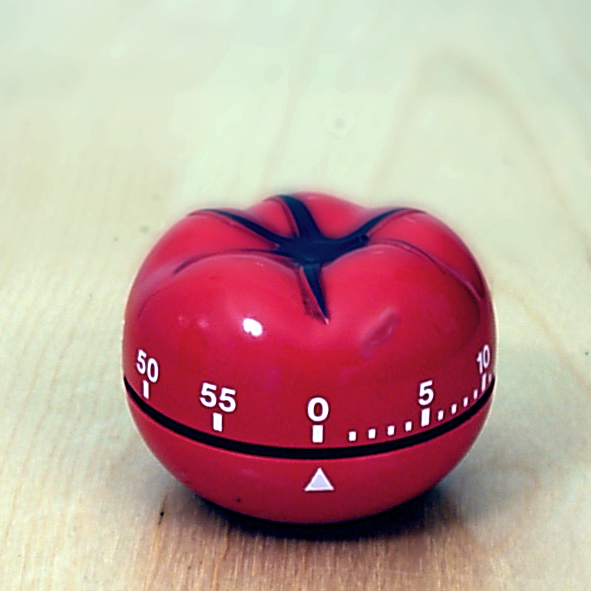
A Pomodoro timer marks 25 minute work intervals with short breaks between them. Photograph: the subject
Image Credits: Wikimedia Commons
A study break is a short, planned pause between blocks of focused work. It is not quitting, and it is not a reward for finishing everything, since the break comes in the middle of the session by design. Students who schedule breaks tend to return sharper than students who push through the same hours without stopping.
The reason is attention, not laziness. Sustained focus on one task drains performance over time, even when the student still wants to keep going. A brief change of activity lets the brain reset its response to the task, so the same material feels fresh again on return.
This article explains study breaks and focus, including why attention fades, what research shows about brief pauses, how long breaks should last, which break activities help most, and how to build breaks into a study plan.
Why attention fades without a pause
The brain is built to notice change and to filter out anything that stays the same. Clothes touching skin fade from awareness within minutes, a ticking clock disappears from attention, and a nose sitting in the middle of vision is edited out entirely. The same filtering applies to a study task that never changes.
Psychology professor Alejandro Lleras at the University of Illinois argues that this habituation, not exhaustion, explains most of the fade. When attention stays fixed on one stimulus for a long time, the brain gradually stops registering it, so reading continues while comprehension drops. Students often discover this when they reach the bottom of a page and realise they absorbed nothing from it.
The American Psychological Association reports a related finding from William Helton at George Mason University. Helton and colleagues gave students a 45 minute railway monitoring task, with one group working straight through and other groups taking a five minute break halfway. Every break group performed better than the no break group, regardless of how they spent the break.
The APA summary quotes Helton describing the effect as a mental fuel that gets burned up during demanding work, even though researchers still debate exactly what gets depleted.
That debate matters less than the practical result. Whether the cause is habituation, fatigue, or a mix of both, the outcome is the same: unbroken effort produces declining returns, and a pause restores performance.
What the research shows about brief pauses
The clearest early result comes from a 2011 study by Ariga and Lleras at the University of Illinois. Participants worked on a demanding task for 50 minutes, with one group working continuously and others taking two brief breaks.
The break groups kept their performance steady across the full period, while the continuous group declined noticeably. Lleras summed up the lesson in one line, saying that brief mental breaks will actually help you stay focused on your task.
A later comparison of break styles adds useful detail. A 2023 study by Felicitas Biwer and colleagues compared 25 students using structured Pomodoro breaks with 35 students taking self regulated breaks.
The self regulated group chose longer study sessions, which came with higher fatigue and lower concentration and motivation, though both groups completed similar amounts of work. Structure, in other words, protected attention even when total output looked similar.
A 2025 scoping review of Pomodoro interventions reached a stronger conclusion. It found that time structured Pomodoro interventions consistently improved focus, reduced mental fatigue, and enhanced sustained task performance compared with self paced breaks. The review covered anatomy lesson retention, which makes the finding directly relevant to students rather than only to office workers.
Memory research points the same way. Coachbit notes that breaks let the brain consolidate information and that distributed practice with gaps beats massed practice for retention. A break is therefore not lost study time, since part of learning happens while the student is away from the desk.
How long a break should last
Break length should match the length of the work block that came before it. The Pomodoro Technique, developed by Francesco Cirillo in the late 1980s, uses 25 minute work intervals with short breaks of 5 to 10 minutes, followed by a longer break of 20 to 30 minutes after four intervals. That structure suits students who struggle to start, since 25 minutes feels manageable.
Longer work blocks need longer breaks. A student working in 50 minute blocks, as in the Ariga and Lleras study, benefits from a break of around 10 minutes, while a 90 minute deep work block may need 15 to 20 minutes to restore attention fully. Coachbit notes that natural attention cycles run roughly 90 to 120 minutes, after which performance declines without rest, so blocks longer than that rarely pay off.
The danger is a break that swallows the session. A five minute phone check easily becomes forty minutes, because feeds are designed to hold attention.
A timer, a planned return time, and a break activity chosen in advance all protect the boundary. If the break needs a timer to end, that is a sign the structure is working, not a sign of weak discipline.
Students should also watch for the opposite trap, which is stacking too many short breaks. Ten breaks in an hour leaves no block long enough to build momentum on hard material. Two or three solid work blocks with real breaks between them beat a dozen fragments.
Which break activities help most
The best break activity changes the stimulus without adding a new demand. Walking, stretching, getting water, looking out of the window, and sitting quietly all qualify, since they move attention away from the material without forcing fresh concentration. Helton's railway study found that every break type helped, from sitting quietly to listening to music, which suggests the pause itself matters more than the exact activity.
Movement carries an extra benefit. Coachbit notes that movement breaks support the production of brain derived neurotrophic factor, a protein linked to learning capacity. A short walk therefore does double duty, restoring attention and priming the brain for the next block, while a walk outside adds daylight and a change of scenery.
Screens are the weakest break choice, even though they feel restful. Scrolling a feed replaces one demanding visual task with another, and it rarely gives attention the reset it needs. Students who must use a phone during breaks do better with a single deliberate activity, such as one song or one short message, followed by a hard stop.
Social breaks sit in the middle. A brief chat with a friend can lift mood and motivation, but an open ended conversation can easily run long. A fixed return time keeps the benefit without the cost, and a study partner who shares the same schedule makes that boundary easier to hold.

Students working on a laptop, where planned breaks matter as much as the study blocks themselves. Photograph: the subject
Image Credits: Wikimedia Commons
How to build breaks into a study plan
Start by fixing the work block before choosing the break. A student revising for an exam might use 25 minute blocks for dense new material and 50 minute blocks for familiar review, with break lengths matched to each. Writing the plan down the night before removes the decision from the moment when focus is already fading.
Pair breaks with a visible timer. A kitchen timer, a phone timer, or an app all work, and the physical act of starting the timer signals the start of focused work. Cirillo built the Pomodoro Technique around that ritual, using a tomato shaped kitchen timer while he was a university student.
Place the hardest material first in each block, not after the break. Attention is strongest at the start of a block, so new concepts belong there, while review and flashcards fit the tail end. Returning from a break to a hard problem also benefits from the reset, since the brain has had time to process the material in the background.
Review the plan weekly rather than daily. If breaks keep overrunning, shorten the work blocks or change the break activity.
If focus still fades mid block, the block is probably too long for that subject. Small adjustments beat grand overhauls, and a plan that survives a bad week is worth more than a perfect plan abandoned by Wednesday.
Frequently asked questions
How often should I take a study break?
Take a short break of 5 to 10 minutes after every 25 to 50 minutes of focused work. Add a longer break of 20 to 30 minutes after about four work blocks, or after 90 to 120 minutes of total study.
Do breaks really help memory, or just focus?
Both, since breaks support consolidation, the process where the brain stabilises new information. Distributed practice with gaps produces stronger long term retention than the same hours spent in one unbroken session.
Is watching videos a good study break?
Short, deliberate video watching can work, but open ended scrolling usually does not restore attention. A walk, a stretch, or quiet rest gives the brain a cleaner reset than another demanding screen task.
What if I feel guilty taking breaks?
Guilt usually comes from measuring study by hours logged instead of material learned. Breaks raise the quality of those hours, so a session with breaks often teaches more than a longer session without them.
The bottom line
Study breaks improve focus because they interrupt the brain's habit of tuning out a constant task, and research shows even brief pauses keep performance steady across long sessions. Short breaks of 5 to 10 minutes, a longer break after several blocks, and a movement based activity give most students the best return. Plan the breaks before starting, protect them with a timer, and treat the pause as part of studying rather than as time stolen from it.
Try one structured session tomorrow, with 25 minute blocks and real breaks, and compare how much you remember the next day. The result will tell you more than any further reading on the subject.
Tags: study breaks, focus, memory, Pomodoro technique
The Rive News research desk writes plain language explainers from public sources, with every key claim tied to a named document or dataset.
Related
- What is the Pomodoro Technique, and does it work
- How to stay focused while studying at home
- Why practice tests beat rereading every time
- How spaced repetition actually works
Subscribe for one practical explainer each week, written in plain language and checked against public sources.
Rive News standards: no invented quotes, no invented statistics, and every number traced to a public source.
Related stories

Why Do I Blank Out During Tests Despite Studying: Test Anxiety and Retrieval Failure
Blanking out in exams is retrieval failure, not missing knowledge. Anxiety drains working memory; rereading builds false confidence. Here

How to Study for Exams Without Burning Out
Sleep 7-8 hours, study in 25-50 minute blocks, and exercise daily. The science-backed way to study for exams without burning out, and what

Why Do I Forget What I Just Read? Science Has an Answer
You forget what you just read because of the forgetting curve, mapped by Ebbinghaus in 1885. Science explains why memory fades fast and how