
Why Morning People and Night Owls Study Differently
Key takeaways
- Chronotype sets when alertness, memory, and focus peak, and it varies from strongly morning to strongly evening.
- Morning students score higher on average, but much of the gap reflects early class schedules and sleep loss, not ability.
- Studying in sync with your chronotype, and protecting sleep, beats forcing a schedule that fights your biology.
What is a chronotype?
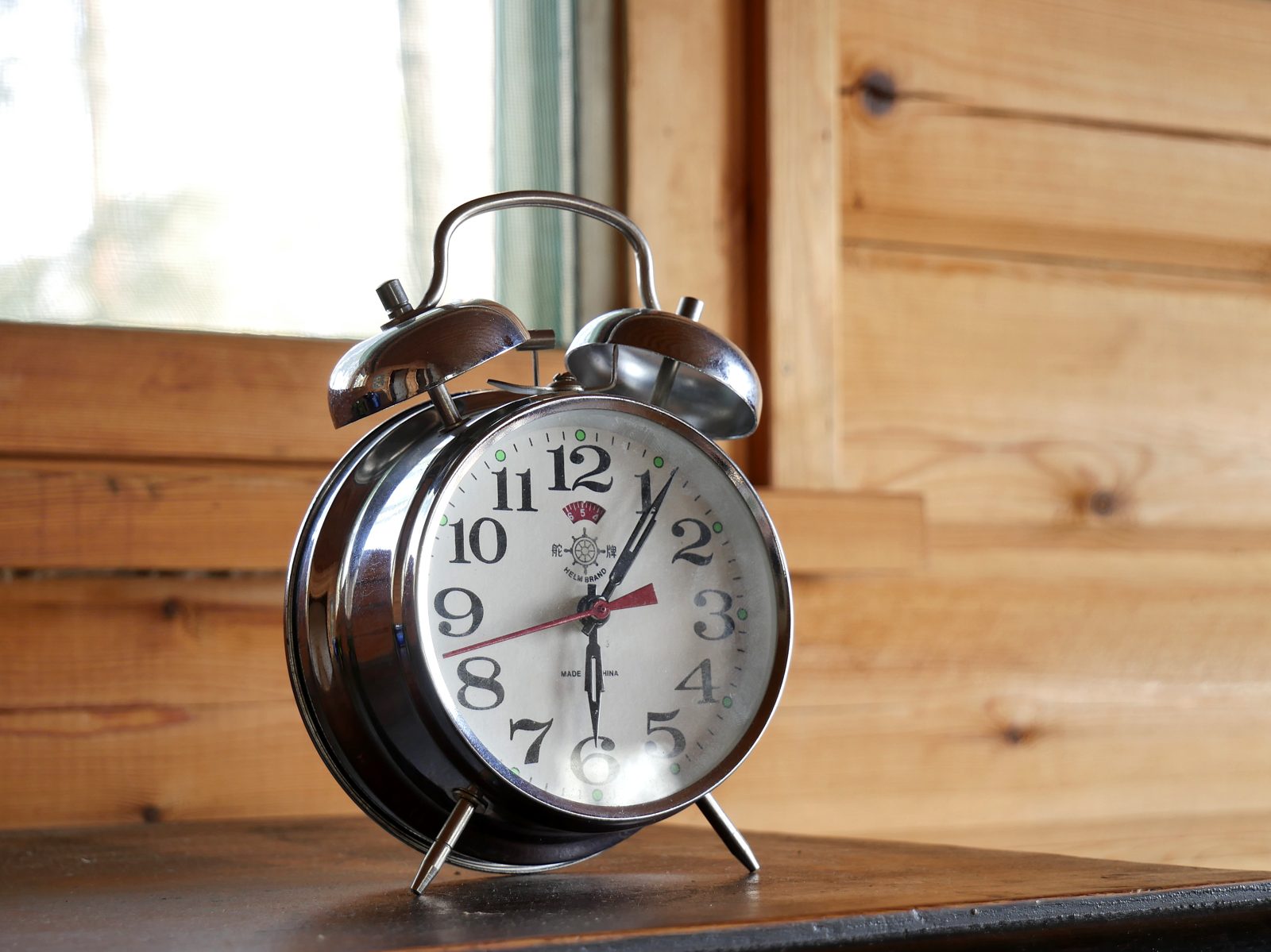
A chronotype is your body's preferred timing for sleep, waking, and peak alertness. Morning people, often called larks, wake early, feel sharpest in the first hours of the day, and fade in the evening. Night owls wake later, warm up slowly, and reach their best focus in the afternoon or evening.
Between those poles sits the largest group. The Springer study described in this article notes that the intermediate type accounts for around 60 percent of the population.
Most people are neither extreme larks nor extreme owls. They lean one way and can shift with habits, light exposure, and schedule.
Chronotype is partly biological. The researchers point to clock genes, cortisol, and melatonin levels as internal factors, plus light exposure, seasons, and social behavior as external ones. Morningness preference also increases with age in adults, and women show a stronger tendency toward morningness than men, according to the same study.
This article explains why morning people and night owls study differently, including the grade evidence, the synchrony effect, and the practical steps each type can take.
The grade gap is real but small
The clearest recent evidence comes from a study of 100 undergraduate students aged 18 to 30 at Jamia Hamdard in Delhi, published in the Bulletin of Faculty of Physical Therapy. The researchers used the Morningness-Eveningness Questionnaire, developed by Horne and Ostberg in 1976, and compared it with the students' average percentage across the previous three academic years.
Morning-type students averaged 75.53 percent, with a standard deviation of 7.28. Evening-type students averaged 66.42 percent, with a standard deviation of 10.08. Intermediate students sat between them at 73.72 percent. The correlation between morningness score and academic performance was positive but low, at rho = 0.204.
A study from Boise State University, published in Chronobiology International, found the same pattern with a larger sample. The researchers collected morningness-eveningness scores and course grades from 207 university students. Morning chronotypes attained better grades than evening chronotypes, although the association was weak, with an r-squared of 0.02. In plain terms, chronotype explained about 2 percent of the variation in grades.
That small number matters. Chronotype is a real factor, but it is far from the whole story.
Study habits, prior knowledge, sleep duration, and course difficulty all matter more. The grade gap is a signal, not a verdict.
Why evening types lose: schedules and sleep
The most important finding from the Boise State study is that the morning advantage survived even after class and exam times were taken into account. The authors concluded that evening chronotypes are generally more sleep deprived than morning chronotypes because of the early schedule of most schools, which can impair their performance both early and late in the day.
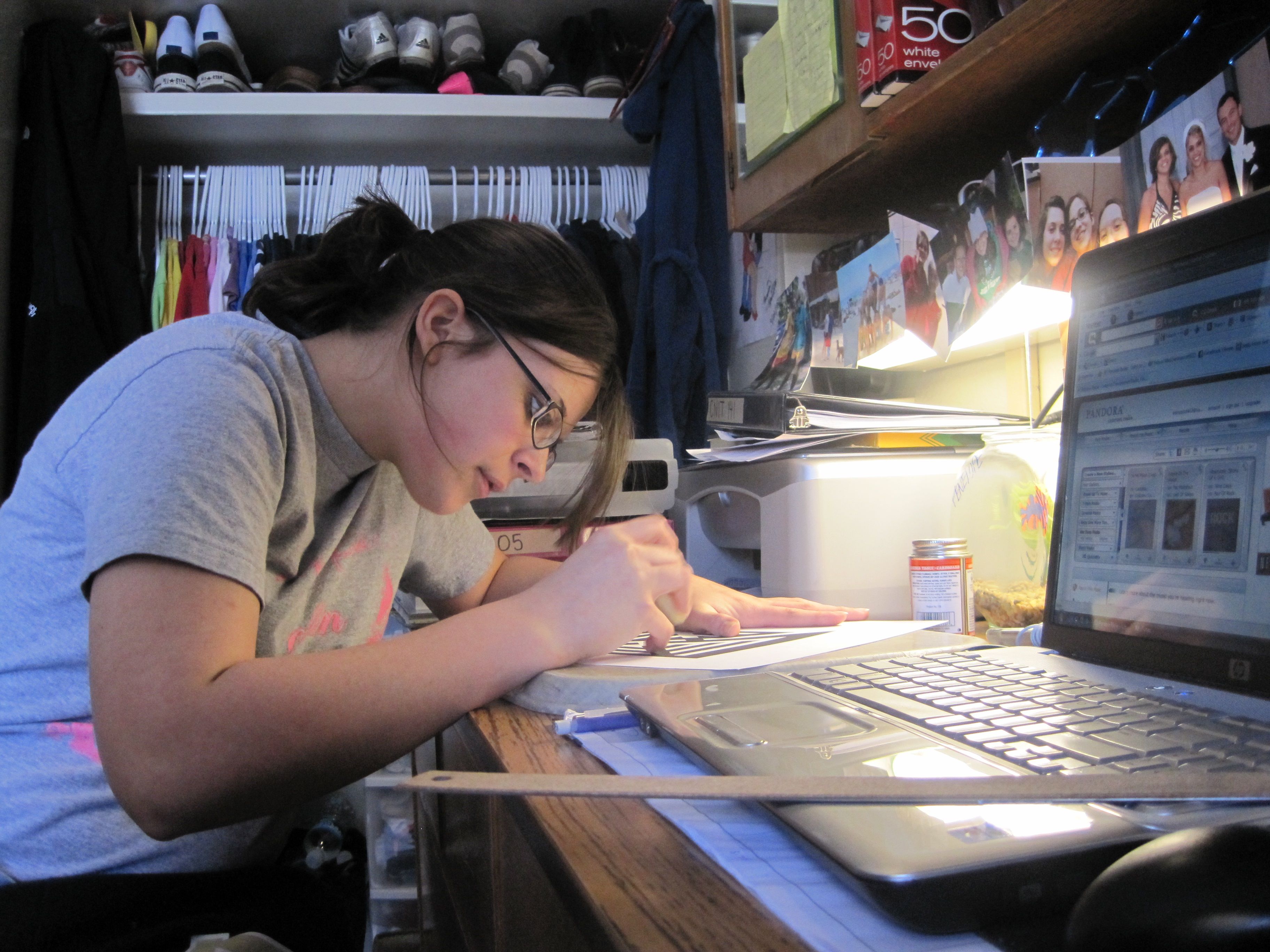
That explanation fits the daily reality of a night owl student. Evening types go to bed late, then rise early to match class schedules.
They start the day in sleep debt, and the debt accumulates across the week. Sleep-deprived brains struggle with attention, memory consolidation, and impulse control, all of which studying demands.
The Delhi study's discussion points to the same mechanisms. The authors list disrupted sleep patterns, excessive daytime sleepiness, and sleep irregularities as likely explanations for poorer performance among evening types. They also note a link between eveningness and smartphone addiction, which correlates with poorer academic performance.
A study of 1,133 Spanish adolescents aged 12 to 16, recorded in ERIC, adds a sharper detail. Adolescents shift toward eveningness during puberty just as school schedules get earlier.
Controlling for total sleep time, more evening-oriented younger adolescents aged 12 to 14 performed significantly worse in school achievement. The schedule mismatch, not laziness, did much of the damage.

The synchrony effect: timing matters
Performance depends not only on how much you sleep, but on when you work relative to your peak. People tend to perform better on demanding tasks when tested in sync with their chronotype. A morning person does sharper analytical work at 8 a.
m. than at 10 p.
m., and a night owl shows the reverse pattern.
This synchrony effect explains why the same student can feel brilliant at one hour and foggy at another. Alertness, working memory, and reaction time all follow a daily rhythm. Studying hard material at your trough is like lifting with tired muscles: effort goes up and output goes down.
The effect also explains why generic advice fails. Telling a night owl to "just study at 6 a.m.
" ignores that their brain is still in its low phase. They will spend more time, retain less, and conclude they are bad at studying. The real problem is the schedule, not the student.
Synchrony is not an excuse to study only at midnight. It is a planning tool. Put the hardest material, the new concepts, and the practice exams into your peak window.
Save review, organizing notes, and lighter reading for your off-peak hours. Background noise affects concentration too, so a quiet peak-hour session beats a noisy one at any time.
How morning people study best
Morning types have the advantage of alignment. Most classes, exams, and libraries run on their schedule. Their best move is to protect that advantage instead of wasting it.
Do the hardest work first. A morning person who spends the first two hours on review and easy tasks, then faces hard problems at noon, has spent peak alertness on low-value work. Flip the order: new material and problem sets in the morning, review and admin later.
Guard the evening wind-down. Morning types fade early, so late-night cramming costs them more than it costs owls.
A regular bedtime keeps the morning peak reliable. One late night can flatten the next day's advantage.
Use the quiet. Early mornings often bring fewer interruptions, and deadlines improve focus even when they are artificial. A morning person who sets a firm 90-minute cutoff for a study block gets the double benefit of peak alertness and time pressure.
How night owls study best
Night owls have a harder setup, but they are not doomed to poor grades. Their best move is to align as much as possible and defend sleep ruthlessly.
Schedule hard work for the afternoon and evening peak. If classes occupy the morning, use the afternoon for problem sets, writing, and new concepts.
Morning hours can hold review, flashcards, and organizing. The Feynman technique works well in a peak window, because explaining ideas aloud exposes gaps that a tired brain would paper over.
Protect total sleep time. The research is clear that sleep loss, not chronotype alone, drives much of the grade gap.
A night owl who sleeps seven to nine hours on a consistent late schedule outperforms a night owl who sleeps five hours on an early one. Consistency matters as much as duration.
Push for schedule choices where they exist. Afternoon sections, later exam slots, and recorded lectures help evening types study in sync. Where choices do not exist, front-load preparation so that an early exam tests recall rather than fresh learning.
Watch the late-night trap. Evening peaks feel productive, but studying past midnight still cuts sleep if class starts at 8 a.
m. The goal is a stable late schedule, not an ever-later one.
Can you change your chronotype?
Chronotype shifts a little, but not much. Light exposure, regular meal times, and consistent wake times can move someone modestly toward morningness.
Teenagers drift toward eveningness at puberty and drift back toward morningness with age. But a strong night owl will not become a strong lark through willpower alone.
Small shifts are still useful. A night owl who moves wake time 30 minutes earlier, gets bright light soon after waking, and keeps the same schedule on weekends may find mornings less painful. The gain is real but limited, and it should not come at the cost of sleep duration.
The stronger strategy is alignment. Choose later classes when possible, study hard material at your peak, and keep sleep consistent. Schools and employers set the schedule, but students control the study plan inside it.
FAQ
Are night owls less intelligent than morning people?
No. The Delhi study notes that evening types exhibit a higher level of intelligence in some descriptions, and the grade gap is small and largely explained by schedule mismatch and sleep loss. Chronotype is about timing, not ability.
What is the Morningness-Eveningness Questionnaire?
It is a 19-question self-assessment developed by Horne and Ostberg in 1976, widely regarded as the standard measure of circadian type. Scores range from 16 to 86, with low scores indicating eveningness and high scores indicating morningness.
Should students take melatonin to shift their schedule?
This article does not give medical advice. Anyone considering sleep aids should talk to a clinician, since timing, dose, and individual health all matter. Behavioral steps such as light exposure and consistent wake times are the usual first line.
Do exams favor morning people?
Morning exams favor morning people on average, but the Boise State study found the morning advantage persisted even after accounting for class and exam times. Sleep deprivation among evening types is the likely reason the gap does not vanish with later exams.
The bottom line
Morning people and night owls study differently because their peaks fall at different hours, and school schedules favor the morning peak. The grade gap is real but small, and much of it traces to sleep loss rather than ability. Match hard work to your peak, protect sleep, and let the schedule serve your biology instead of fighting it.
Tags: chronotype, study habits, sleep, circadian rhythm
Latest in Education
- Cognitive Load: How Cluttered Slides Hurt Student Learning
- The Feynman Technique: Why Explaining Exposes Knowledge Gaps
- How Does Background Noise Affect Concentration?
- Why Do You Blank on Names but Remember Faces?
Subscribe for one practical learning-science idea each week.
Related stories

Why Do I Blank Out During Tests Despite Studying: Test Anxiety and Retrieval Failure
Blanking out in exams is retrieval failure, not missing knowledge. Anxiety drains working memory; rereading builds false confidence. Here

How to Study for Exams Without Burning Out
Sleep 7-8 hours, study in 25-50 minute blocks, and exercise daily. The science-backed way to study for exams without burning out, and what

Why Do I Forget What I Just Read? Science Has an Answer
You forget what you just read because of the forgetting curve, mapped by Ebbinghaus in 1885. Science explains why memory fades fast and how