
Why Do Lectures Still Exist If Recordings Are Available?
Key takeaways
- A meta-analysis of 21,195 students found attendance predicts college grades better than SAT scores do.
- 88% of attendance studies found recordings had little or no negative effect on showing up.
- Recordings work best as a supplement to live lectures, not a replacement, per 2026 research.
A lecture is a scheduled, live session where an instructor teaches a group of students at the same time. Everyone hears the same explanation, sees the same examples, and experiences the same room. Recordings capture the audio, the slides, and the whiteboard, so the obvious question follows: why does the room still matter?
The short answer is that a lecture delivers more than information. It delivers a social setting, real-time back-and-forth, and a structure that nudges students to keep up with the material week by week.
This article explains why lectures survive the recording era, including social presence, real-time interaction, and what research says about attendance.
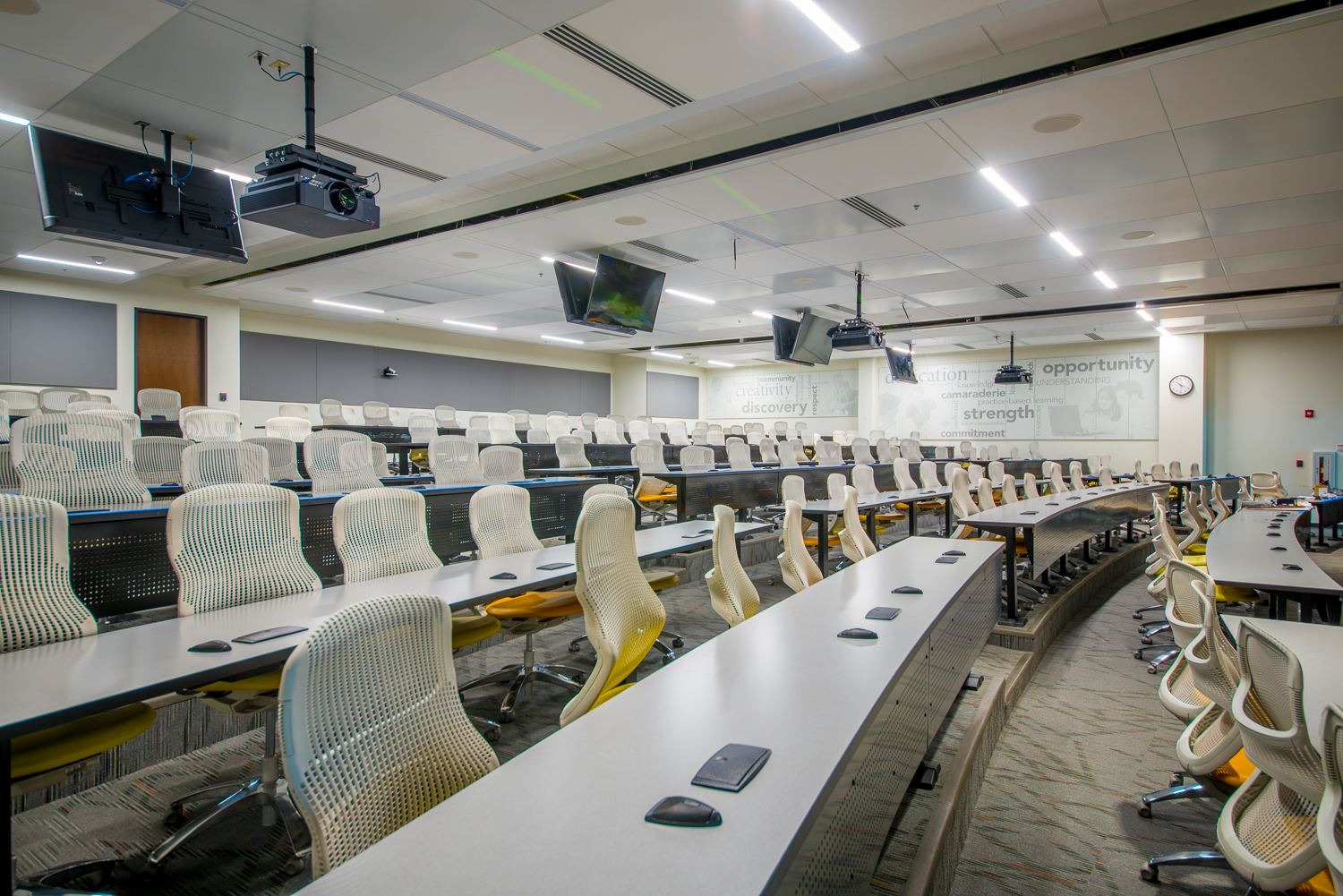
A modern tiered lecture hall fitted with recording equipment. Rooms like this record the content, but not the community. Photograph: Allengot
Image Credits: Wikimedia Commons / Allengot
Lectures are a social event, not just a broadcast
Watching a recording alone is a private activity. Sitting in a lecture is a social one, and that difference matters more than it looks. Education researchers have a name for what happens in the room: social presence.
The Community of Inquiry framework, developed by Garrison, Anderson, and Archer in 2000, describes a complete learning experience as the overlap of three elements: teaching presence, cognitive presence, and social presence. Social presence is, in Garrison's words, "the ability of participants to identify with the community (e.g., course of study), communicate purposefully in a trusting environment, and develop inter-personal relationships by way of projecting their individual personalities."
A recording keeps the teaching presence and most of the cognitive presence. It drops almost all of the social presence. You cannot see classmates react, you cannot catch the lecturer's eye, and you miss the small cues that tell you which points confused everyone.
That social layer has measurable value. Research summarized in the Community of Inquiry literature notes that social presence correlates with student satisfaction and higher scores on learning outcomes (Richardson and Swan, 2003). Students who feel like part of a class community are more likely to ask questions, join discussions, and stick with difficult material.
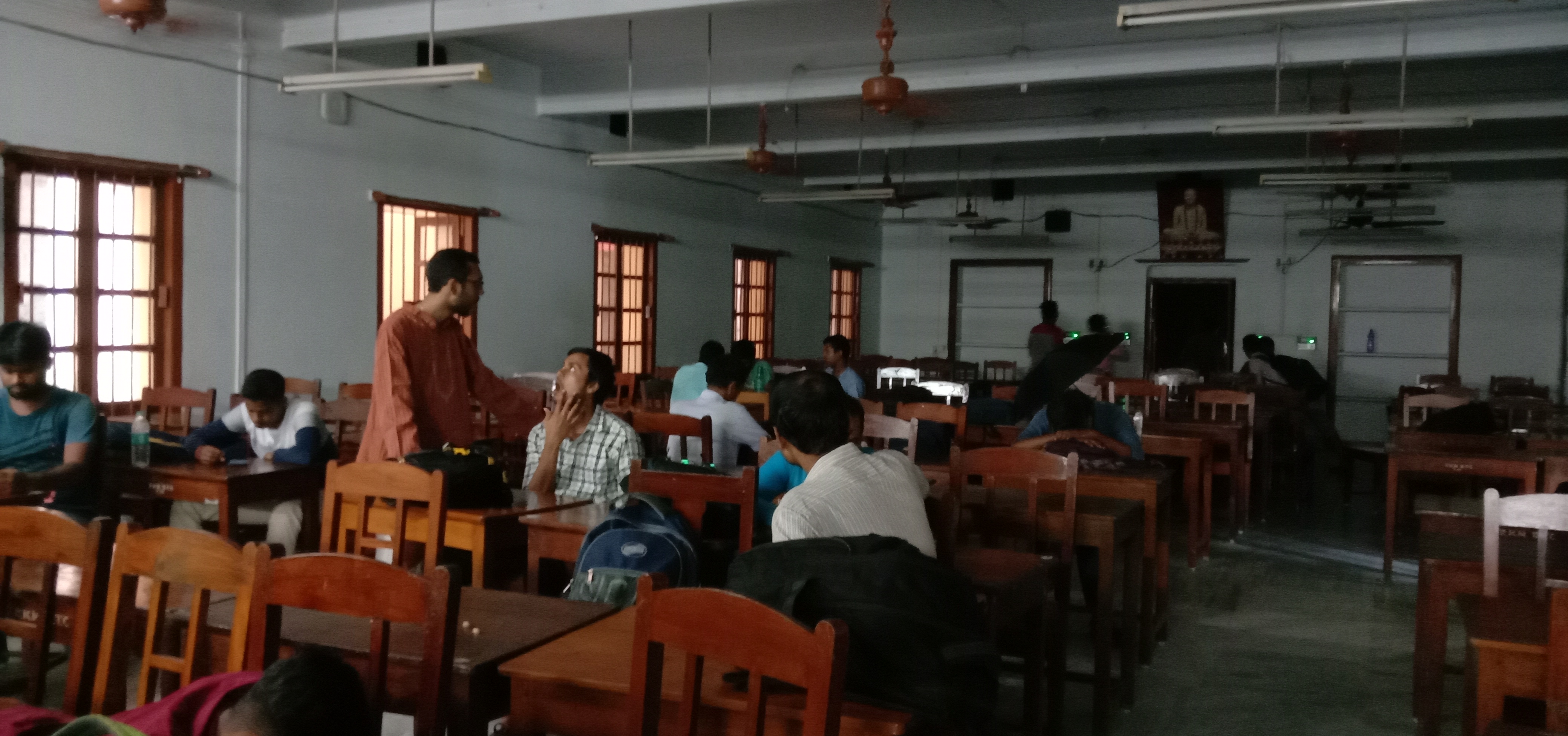
Students learning together in a shared classroom, the setting where social presence forms. Photograph: Billjones94
The accountability effect
There is also a simpler social force: accountability. When a lecture meets at 10 a.m. on Tuesdays, the schedule itself does work.
Showing up on time, sitting among peers, and following the lesson in real time creates a rhythm that self-paced watching rarely sustains. Anyone who has bookmarked a recording "for later" and never returned knows exactly how this ends.
Real-time interaction cannot be replayed
A recording answers the questions the lecturer anticipated. A live lecture answers the questions students actually have. That gap is one of the strongest arguments for keeping lectures alive.
In a live session, a confused look from the front rows can prompt the instructor to slow down or restate a point. A sharp question from one student often clears up the confusion of twenty others. None of this happens on a playback timeline.
Live lectures also let instructors adjust on the fly. They can extend a discussion that is working, cut an example that is landing flat, or connect today's material to something that happened that morning. Recordings are fixed at the moment they were made.
Peer learning is the quieter half of this. Students discuss problems before class, compare notes after it, and form study groups with the people sitting nearby.
These interactions rarely appear in any recording, yet they shape how well students learn. Showing up is how students find their collaborators.
What research says about attendance and recordings
The research on this question is richer than most students expect. Start with attendance itself.
A 2010 meta-analysis by Credé, Roch, and Kieszczynka, published in the Review of Educational Research, combined 69 studies and 21,195 students. It found that attendance correlated with class grades at r = .44 and with overall GPA at r = .41.
That makes attendance a better predictor of college grades than SAT scores, high school GPA, study habits, or study skills, according to the authors. The correlation also held up after controlling for factors like conscientiousness and motivation, which suggests showing up does something that personality alone cannot explain.
So what happens when recordings enter the picture? Panopto reviewed 75 lecture capture studies published between 2003 and 2019.
Of the 34 studies that measured attendance, 88% found that recordings had "little or no" negative impact on showing up. Only one study reported a substantial drop in attendance.
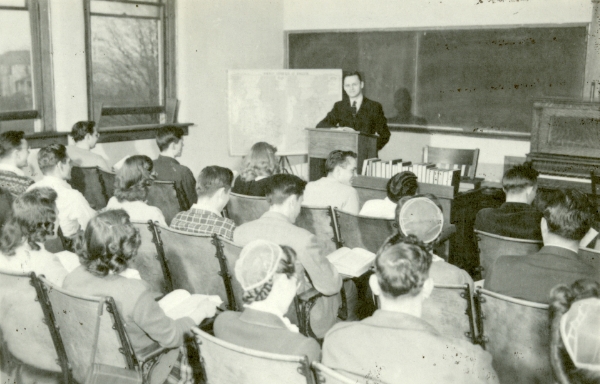
A Shakespeare class at Goshen College in March 1948. The communal format of the lecture is far older than the recording. Photograph: Mennonite Church USA Archives
Recordings: supplement, not substitute
The newest evidence adds nuance. A 2026 study by Kirk Hillsley, published in Research in Learning Technology, compared recorded and unrecorded lecture blocks within four in-person biology courses at Trent University, covering 277 students and 352 enrollments. Students who watched at least one recording scored 4.7% higher on exams than students who never watched.
But the same study found that in adjusted models, exam grades were 6.0% lower during blocks when recordings were available, and attendance did not significantly decline. Higher attendance consistently predicted better outcomes, and attending appeared to offset the negative association. The pattern suggests recordings help motivated students who also attend, rather than replacing attendance.
The honest reading of the evidence is that recordings are a useful supplement and a poor substitute. They help students review, catch up after illness, and revisit tricky sections. They do not reproduce the grades effect of showing up.
Frequently asked questions
Do recordings hurt lecture attendance?
Usually not. Across 34 studies measuring the effect, 88% found that making recordings available had little or no negative impact on attendance, according to Panopto's review of research from 2003 to 2019. Only one study found a substantial drop.
Do students who watch recordings get worse grades?
Not exactly. In a 2026 Trent University study, students who watched recordings scored 4.7% higher than non-watchers, likely because motivated students use every resource. The concern is subtler: relying on recordings instead of attending was associated with lower grades once attendance was factored in.
Is attending lectures really better than watching at 2x speed?
For most students, yes. The 2010 meta-analysis of 21,195 students found attendance predicted grades better than SAT scores, study habits, or study skills. Speed-watching covers the content but skips the social presence, real-time questions, and pacing that the room provides.
Do recorded lectures have any proven benefits?
They do. Students report using recordings to review difficult sections, catch up after missing a class, and prepare for exams. The evidence supports recordings as a study aid that sits alongside attendance, not as a replacement for it.
The bottom line
Lectures survive because they are a shared social event with real-time interaction, not just an information delivery system. The research is consistent: attendance predicts grades better than test scores, recordings rarely empty the room, and students who combine both do best. If you have access to recordings, use them for review after you attend, the way quizzing yourself beats re-reading a chapter.
Latest in Education & Study
- Why quizzing yourself beats re-reading the chapter
- Why toddlers call every animal a dog
- Why archers put long rods on their bows
- Zelda Ocarina of Time remake has Aonuma nervous
Subscribe to the Rive News newsletter for one research-backed study tip every morning.
Related stories

Why Do I Blank Out During Tests Despite Studying: Test Anxiety and Retrieval Failure
Blanking out in exams is retrieval failure, not missing knowledge. Anxiety drains working memory; rereading builds false confidence. Here

How to Study for Exams Without Burning Out
Sleep 7-8 hours, study in 25-50 minute blocks, and exercise daily. The science-backed way to study for exams without burning out, and what

Why Do I Forget What I Just Read? Science Has an Answer
You forget what you just read because of the forgetting curve, mapped by Ebbinghaus in 1885. Science explains why memory fades fast and how