
Why Do Archers Put Long Rods on Their Bows?
Key takeaways
- The long rod is called a stabilizer. It steadies the bow while aiming and absorbs the shock of the shot.
- A longer rod resists twisting better because its weight sits far from the bow, which slows unwanted movement.
- Target archers commonly use rods of 28 to 34 inches, while hunters use much shorter rods for maneuverability.
Watch an Olympic archer at full draw and you will notice the rod jutting out from the front of the bow, sometimes nearly a meter long. It looks like an antenna, but it does the opposite of getting in the way. That rod is one of the most carefully tuned parts of a target bow.
This article explains why archers put long rods on their bows, including what a stabilizer is, how the length changes the physics of the shot, the three jobs the rod performs, how long rods get, and what it means for everyday shooting.
What is a stabilizer?
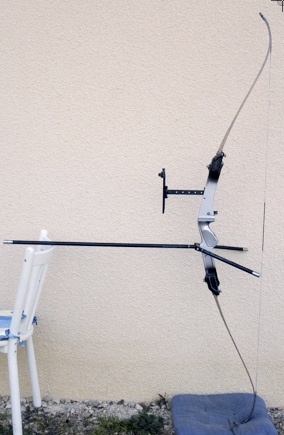
A stabilizer is a weighted rod that screws into a threaded accessory hole on the bow's riser, just below the grip. Nearly all compound and Olympic recurve bows come from the factory with this hole already in place, according to Lancaster Archery.
The rod itself is usually made of carbon fiber, aluminum, or fiberglass. Weights, sometimes called end weights, screw onto the far tip. The archer can add or remove these weights to change how the bow behaves.
Side rods, also called rear or back bars, mount behind the riser, often in a V shape through a V-bar. Their job is to balance weight placed at the front, such as a sight. Together the front rod and side rods form a complete stabilization system.
Nothing about the rod touches the arrow or the string. It works entirely through balance and weight, which is why it helps on every single shot, not just some of them.
How the long rod changes the physics
A bow at full draw is a spring loaded with a great deal of energy, and releasing the string sends that energy through the whole bow. Without something to manage it, the bow jumps, twists, and buzzes in the archer's hand.
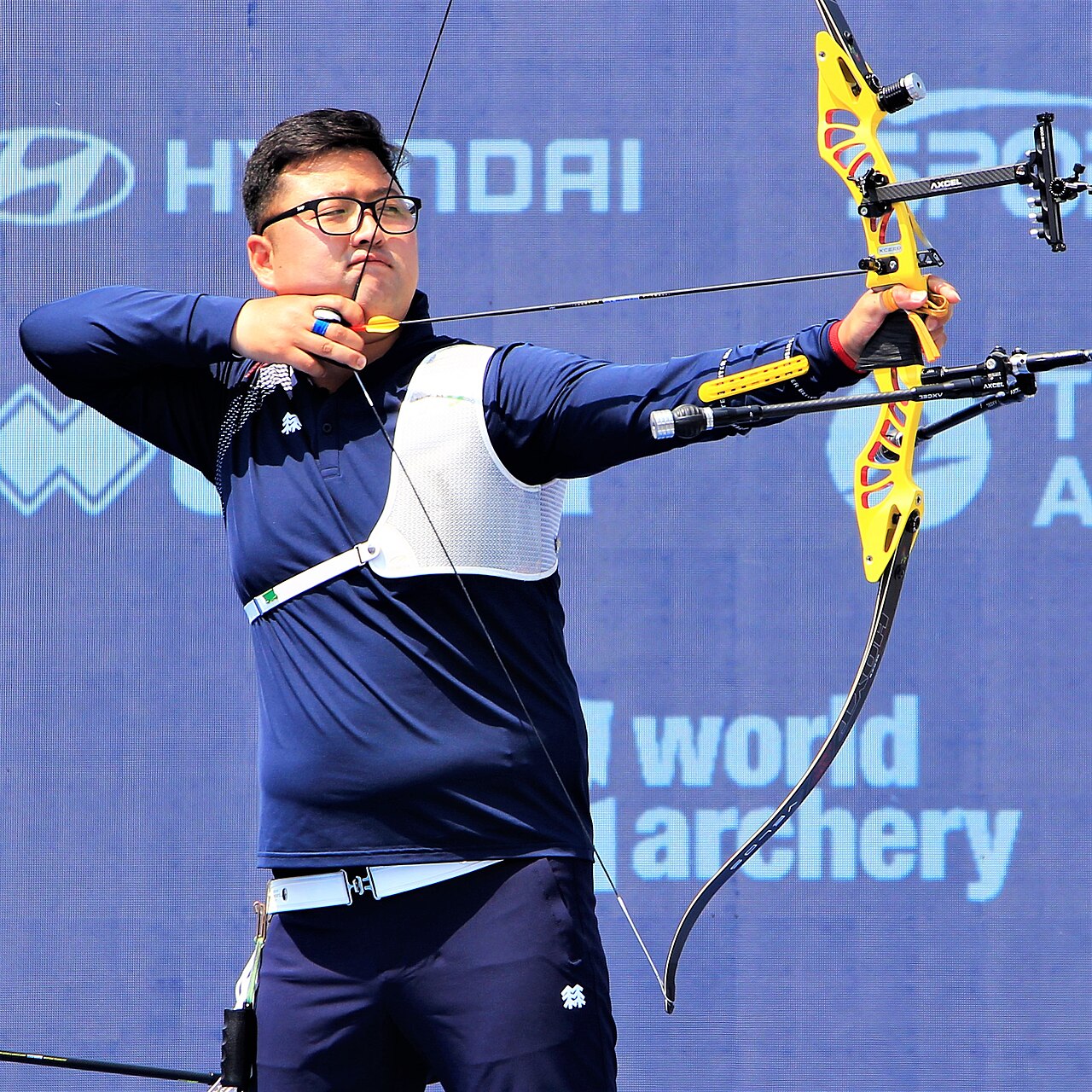
Length is the lever. The longer a stabilizer is, the more it resists bow torque and the more it steadies the bow during aiming, as Lancaster Archery explains. The best place for the weight is at the very end of the rod, far from the bow, because that gives the most stabilizing effect for each gram.
Bow International uses a simple image: the rod works like the long pole a tightrope walker holds, which slows and smooths unwanted movement. That longer sight picture gives the archer a calmer aim. Longer stabilizers at the front and rear produce a slow-moving sight picture, while shorter ones, where the weight sits closer together, produce a faster one.
It is the same battle as hands that shake when you are nervous: the rod cannot remove the tremor, but it slows it enough to aim through it.
Job one: a steadier hold while aiming
The most important job of the rod happens before the arrow ever leaves the string. The archer's muscles tremble, the heart beats, and the sight pin floats around the target. The rod cannot stop that movement, but it slows it down.
By shifting the bow's center of gravity forward and down, the rod makes the bow want to stand up straight on its own. Lancaster Archery notes that weight added below the grip encourages the bow to stand upright, which is critical for consistent accuracy.
Archers also use the rod as a feedback tool. A front rod works like a torque indicator: if the archer's grip is twisting, the tip of the rod visibly moves off center, so they can fix their form before the shot.
Job two: controlling the bow at the moment of release
When the string is released, the riser twists as all that stored energy hits it. Bow International lists directing the bow's momentum upon release as the rod's second purpose, eliminating torque and uncontrolled movement.
Think of twisting your waist with your arms at your sides, then doing the same while holding a broom out in front of you. The broom resists the twist. That is exactly what a long rod does for the bow, in Lancaster Archery's comparison.
The result is a bow that jumps straight forward after the shot instead of kicking sideways or upward. A clean, predictable jump means the arrow leaves the same way every time, and consistency is the entire game in archery.
Job three: soaking up vibration and noise
The third job matters less for accuracy but a lot for comfort. A stabilizer dampens the vibration in the bow when the arrow is released, Bow International reports, which protects the archer's joints over thousands of shots.
This is why modern rods often include rubber dampeners or gel-filled sections. Lancaster Archery points out that absorbing vibration also makes the bow quieter, which matters to hunters who need a silent shot and a possible second chance at game.
Longer rods are better at stabilizing the aim, while shorter, heavier rods are better at soaking up noise and vibration. Bow makers and archers trade these two off depending on the job, as Bow International's guide explains.
How long is long, and who decides
Target archers favor front rods between 28 and 34 inches long, with a good amount of weight at the end, according to Bow International. Side rods are shorter, and the two together give the slow, calm sight picture that target shooting demands.
Recurve setups typically run 26 to 32 inches for the main central rod, Hattila reports. A useful starting rule is that total stabilization length should be an inch or slightly more than the archer's draw length.
Competition rules set ceilings. The National Field Archery Association limits stabilizers to 12 inches in its bowhunter classes, Lancaster Archery notes. Hunters generally prefer rods of 6 to 10 inches anyway, because a long rod is clumsy in a tree stand or ground blind.
History warns against going too far. In the 1990s, front stabilizers over 45 inches long were popular, but their large surface area caught the wind and blew archers off aim, Bow International recalls. Modern designs are shorter and heavier at the tip instead.
What it means for you
If you are picking up archery, a stabilizer is one of the first accessories worth understanding. A beginner does not need a competition-length rod on day one. A modest rod teaches you how balance affects your aim without overwhelming you.
The tuning principle is simple to grasp: weight at the ends controls balance, and moving weight changes it. As Hattila explains, archers adjust stabilization by adding or removing weight at the ends of the rods. Even the angle of the side rods changes the balance.
One recent finding gives a sense of how precise this tuning gets. Hattila cites studies suggesting about 69 grams of stabilization weight per pound of draw weight works well for a complete recurve setup. You do not need the math to benefit, but it shows how seriously competitive archers dial in their rods.
For a non-archer, the rod is a good reminder that elite equipment is often simple physics applied with care. The rod adds nothing electronic, nothing computerized. It is weight on a stick, tuned to make a bow behave.
Frequently asked questions
Do beginners need a stabilizer?
Not immediately. A stabilizer helps most once your basic form is steady enough that equipment tuning, rather than form errors, is the limiting factor. Many beginners start with a short rod and grow into a longer one.
Why not make the rod even longer?
Beyond about 34 inches, the gains shrink and new problems appear. Wind catches the larger surface area, the rod becomes unwieldy in the field, and competition rules often cap length anyway.
Does a stabilizer make a bow more accurate by itself?
It makes the archer more consistent, which produces better accuracy. The rod steadies the aim, tames the kick at release, and reduces fatigue from vibration. The archer still has to execute the shot.
What is a V-bar?
A V-bar is a mounting bracket behind the riser that holds two side rods in a V shape. It lets the archer balance the forward weight of the long rod so the bow sits level in the hand.
The bottom line
Archers put long rods on their bows because a long rod with weight at the tip steadies the aim, resists the twist of the shot, and soaks up vibration. Length is the tool: the farther the weight sits from the bow, the calmer everything becomes.
If you ever watch an archer at full draw, look at that rod. It is doing three jobs at once, quietly, with nothing but weight and physics.
Latest in Sports
- Why tennis players grunt when they hit the ball
- England name six changes for USA clash as Robinson gets first start
- Santos vs Palmeiras without Neymar after suspension ruling
- Man City make nine changes for Brighton cup tie
Subscribe to the Rive News newsletter for one clear sports explainer in your inbox every morning.
Image Credits: Wikimedia Commons (Arc classique avec stabilisateur; Archery Kim Woo-jin)
Corrections: spot an error? Email the research desk and we will review and update.
Related stories

Why Is Altitude Sickness Worse for Some People?
Altitude sickness hits some people harder because of genetics, ascent speed, and prior history, not fitness level. Here is what raises risk
Why Do You Get Blisters When Hiking and How to Prevent Them
Friction plus moisture plus heat equals a blister. Learn why hiking breeds all three, and the boots, socks, and tape system that keeps
How to choose hiking boots for beginners: fit, features, and break-in
Beginners should buy for fit first: snug everywhere, tight nowhere, with a thumb's width at the toes. Here is how to size, test,