
Why some shops add a surcharge for cards
By Rive News / Research desk | Rive News / Published October 28, 2026 at 9:00 AM PKT
Key takeaways
- A card surcharge passes the shop's card processing cost to the customer, typically 1.5% to 3.5% of the sale.
- Surcharges apply to credit cards only; debit and prepaid cards are always off-limits.
- Visa caps surcharges at 3% and Mastercard at 4%, and a shop can never charge more than its actual processing cost.
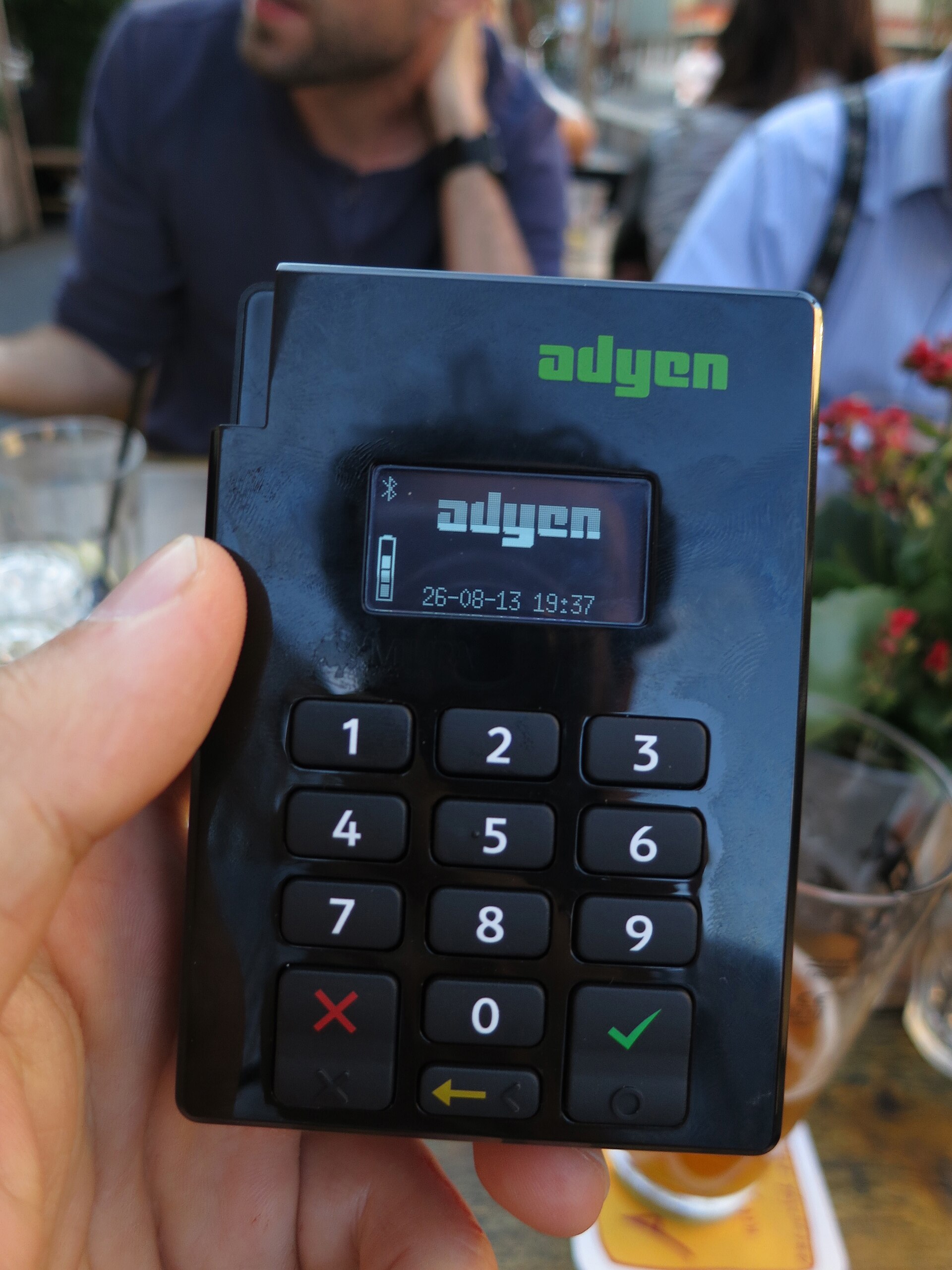
[A card payment terminal at a shop counter.] Photograph: card payment terminal
Image Credits: Wikimedia Commons
That extra line on your receipt, often 2% or 3% for paying by card, is not a tip and not a tax. It is the shop passing its own card processing bill to you, the customer who chose to pay by card.
This article explains why some shops add a surcharge for card payments, including what processing costs, the caps that limit surcharges, the debit-card ban, and the alternatives shops use instead.
Card payments are not free for shops
Every time you tap, swipe or insert a card, the shop pays a processing fee to its payment processor, the card network and the bank that issued your card. Collectively known as the merchant discount rate, these fees typically range from about 1.5% to 3.5% of the transaction, according to LegalClarity.
For a business processing $500,000 in credit card sales per year, that adds up to $7,500 to $17,500 in fees annually, according to eBizCharge's surcharge guide. For small businesses and thin-margin trades such as medical offices, utilities and business-to-business suppliers, absorbing that cost on every sale eats directly into the bottom line.
Surcharging shifts some or all of that cost to the cardholder. The shop keeps its shelf price the same, and only customers who pay by credit card cover the card cost. Customers who pay cash or debit do not.
The caps: 3% and 4%, and never above cost
Two caps limit what a shop can charge, and the lower one always wins. Visa caps surcharges at 3% of the transaction, while Mastercard allows up to 4%, according to LegalClarity's summary of network rules.
On top of that, a merchant can never surcharge more than its actual cost of acceptance. If a shop's processing fee on a standard Visa credit card is 2.3%, that is the most it can surcharge on that transaction, even though the Visa cap is 3%. The cap only matters when the shop's processing rate happens to exceed it, which is uncommon.
A shop also cannot profit from a surcharge. Global Payments puts it plainly: a company cannot profit from charging a surcharge, it can only recoup its costs from accepting cards. A 3% surcharge from a shop whose real cost is 2% breaks the network rules, even if it stays under the headline cap.
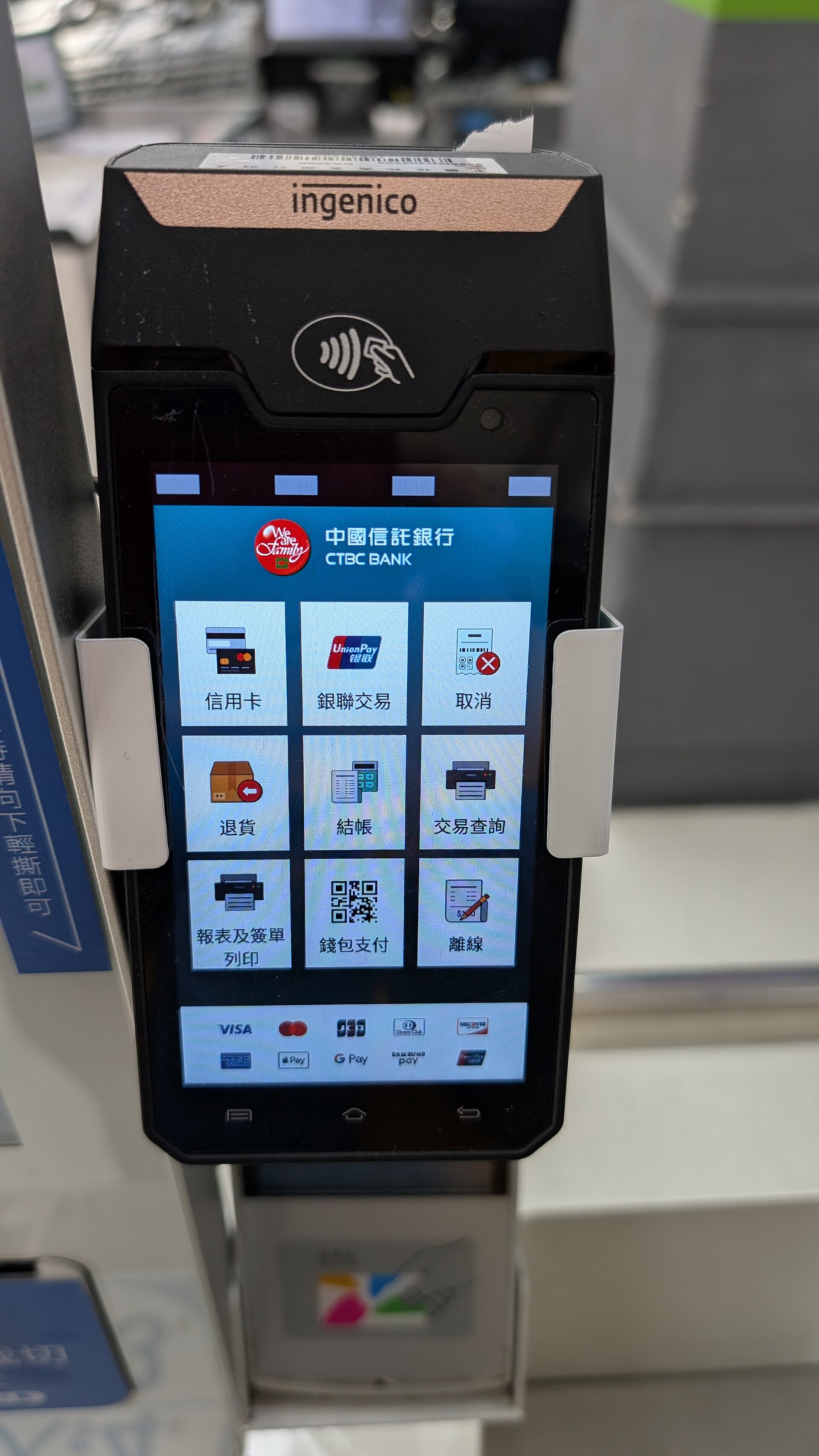
[A card payment terminal at a shop self-checkout.] Photograph: payment terminal
Image Credits: Wikimedia Commons
Debit cards are never surchargeable
This is the rule most often broken, or misunderstood, at the till. Surcharges apply to credit card purchases only. Merchants cannot surcharge debit card or prepaid card transactions, even if you select "credit" at the terminal instead of entering your PIN.
If a debit card receipt shows a surcharge, that fee should not be there. The distinction exists because debit transactions cost merchants less to process, and because regulators and networks have kept debit outside the surcharge system since surcharging became legal in the United States after a 2013 class action settlement with Visa and Mastercard.
The same settlement-era rules require disclosure. Shops that surcharge must tell customers before payment, typically with signs at the entrance and at the till, and the surcharge must appear as a separate line on the receipt. A fee discovered only after paying is a disclosure failure, not just an annoyance.
Why some states ban it anyway
Surcharging is legal in most US states, but the map is uneven. As of early 2025, FreedomPay's merchant guide listed Massachusetts and Connecticut as prohibiting surcharging, with additional restrictions or requirements in states including California, Colorado, Florida, Kansas, New York, Oklahoma and Texas.
Laws in this area change as courts rule on them, and several state bans have been challenged or overturned. The practical point for customers is that a surcharge lawful in one state may be unlawful in another, and a shop operating near a state border may apply different rules at different locations.
Shops also face network penalties for getting it wrong. Merchants who surcharge without proper disclosure risk fines, lawsuits and losing their ability to accept cards at all, according to LegalClarity.
Surcharges, convenience fees and cash discounts
Three pricing tools look alike but follow different rules. A surcharge is a percentage added because you paid by credit card. A convenience fee applies when you pay through a nonstandard channel, such as by phone or online rather than in person, and it applies regardless of payment method, usually as a flat amount.
Cash discounting is the mirror image of surcharging. Instead of adding a fee for cards, the shop sets a card price and offers a lower price for cash. Stripe's guide notes that businesses may use surcharges strategically to encourage lower-cost payment methods such as cash or debit, and cash discounting achieves the same nudge without a fee line on the receipt.
For customers, the distinction matters at the till. A convenience fee on a debit payment through a phone channel can be lawful where a surcharge on the same debit card in store would not be. The label on the receipt is the clue to which rule applies.
What to do when you see one
A surcharge is not automatically a reason to walk out, but it is a reason to check three things. First, is it on a credit card, not debit?
Second, is it within the network cap and plausibly within the shop's real cost? Third, was it disclosed before you paid?
If the answer to the first question is no, or the fee appeared with no warning, the surcharge is worth querying with the shop and, if unresolved, with the card network. Paying by debit or cash at surcharging shops is the simplest way to avoid the fee entirely, and it is exactly the behaviour the surcharge is designed to encourage.
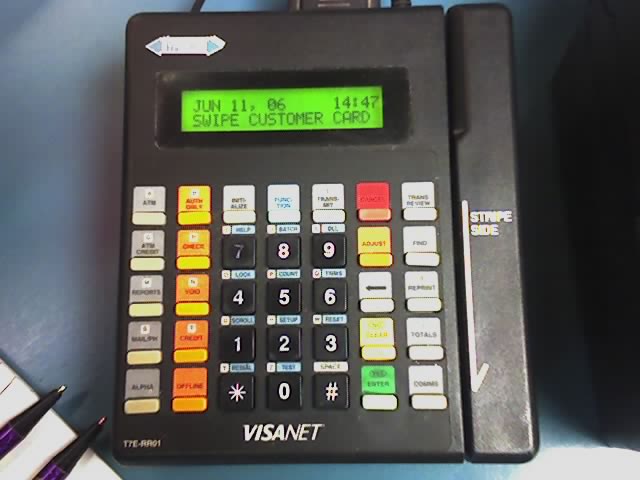
[A credit card payment terminal.] Photograph: card terminal
Image Credits: Wikimedia Commons
Can a shop surcharge my debit card?
No. Surcharges apply to credit cards only. A surcharge on a debit or prepaid card breaks card network rules, even if you pressed "credit" at the terminal.
How much can a shop legally add?
No more than its actual processing cost, and no more than the network cap: 3% for Visa and 4% for Mastercard. The lower of the two limits applies.
Why do some shops surcharge and others not?
Shops with thin margins or large ticket sizes feel processing fees most sharply. Larger retailers often absorb the cost into shelf prices instead, spreading it across cash and card customers alike.
Is a surcharge the same as a convenience fee?
No. A surcharge is a percentage tied to credit card payment. A convenience fee is usually a flat amount for paying through a nonstandard channel, and it can apply to any payment method.
The bottom line
Shops add card surcharges to recover a real cost, roughly 1.5% to 3.5% of each sale, rather than raising prices for everyone. The system has hard edges: credit cards only, never above actual cost, capped at 3% for Visa and 4% for Mastercard, and banned outright in some states.
Knowing those edges turns an irritating receipt line into a checkable claim. If the surcharge is on a credit card, disclosed in advance and within the cap, it is doing what the rules allow.
If it is on debit, hidden until after payment, or above cost, it is not. This is general educational information, not financial advice.
The Rive News research desk writes plain-language explainers from published sources, with no invented experts or first-hand claims.
Related
- Debit vs credit card: what changes for daily spending
- How a debit card payment travels from shop to bank
- What is a credit card grace period and how it saves you money
- Why credit card rewards cost you money if you carry a balance
Subscribe to the Rive News newsletter for one plain-language explainer each morning.
Rive News publishes explainers from verifiable public sources; corrections are noted on the article page.
Related stories

How your APR is divided by 365 to get daily interest
Lenders divide your APR by 365 for a daily rate, then apply it to your average daily balance. This guide walks through every step

What is the difference between APR and effective annual rate?
APR ignores compounding inside the year; the effective annual rate includes it. A 12.99% APR card really costs 13.80% a year. Worked

APY vs interest rate: what compounding does to your money
APY includes compounding; the interest rate does not. A 5% rate compounded monthly is really 5.12% APY. Here is how the math works and what