
Why Does Exercise Feel Harder in the Week Before Your Period?
Key takeaways
- In the luteal phase, progesterone raises resting core temperature by about 0.3 to 0.5 C, adding thermal strain to every workout.
- Studies show heart rate runs roughly 10 beats per minute higher and perceived exertion climbs for the same workload.
- Measured performance often holds steady, so adjusting expectations and hydration beats skipping training.
This article is for general information only and is not medical advice.
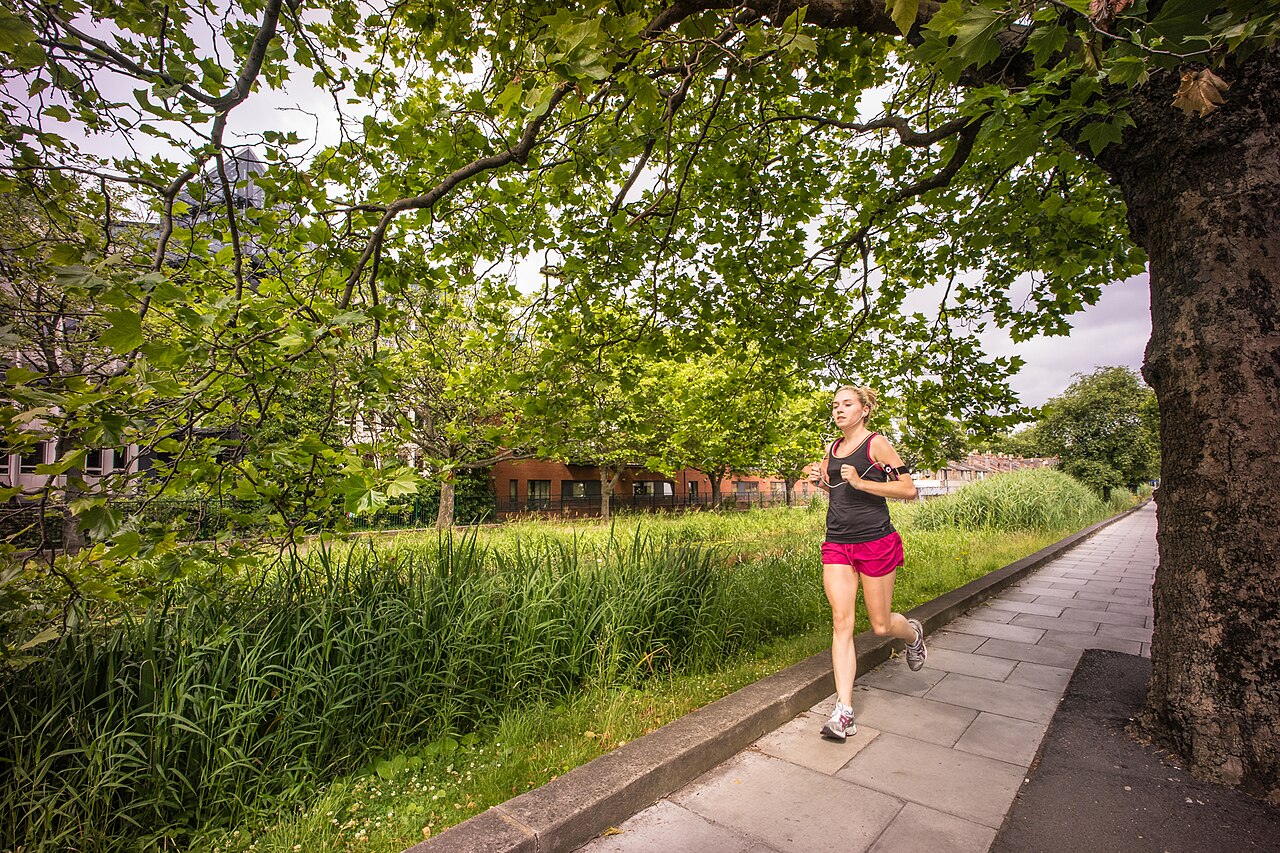
A woman running outdoors. Photograph: Wikimedia Commons
Image Credits: Wikimedia Commons
The luteal phase is the roughly two-week stretch between ovulation and menstruation, when progesterone dominates. Many women notice that the same run, ride, or gym session feels noticeably tougher in this window. The weights have not changed and your fitness has not vanished.
Your physiology has.
This article takes a closer look at the luteal phase and exercise, including what the hormones do to your body, why the same workout feels harder, whether performance actually drops, and how to train through it.
What the luteal phase does to your body
After ovulation, the corpus luteum secretes progesterone, and progesterone acts on the hypothalamus to raise the body's temperature set point. As a result, resting body temperature runs slightly higher, about 0.3 to 0.5 C, during the luteal phase compared with the follicular phase. This is the same shift behind the basal-body-temperature tracking used in fertility awareness.
That half-degree matters because exercise already generates large amounts of heat. Starting warmer means you reach uncomfortable core temperatures sooner, and your cardiovascular system works harder to dump heat through the skin. Estradiol and progesterone concentrations are both higher in the luteal phase, and the hormonal milieu also influences fluid balance: aldosterone, which helps retain sodium and water, peaks higher after exercise in the mid-luteal phase than in the early follicular phase.
None of this means something is wrong. It is the normal operating state of the second half of the cycle. But it shifts the cost of every workout upward, which is why some training days feel mysteriously stronger than others even when the program has not changed.
Why the same workout feels harder
The classic demonstration comes from Pivarnik and colleagues, published in the Journal of Applied Physiology in 1992. Nine eumenorrheic women performed 60 minutes of cycle exercise at 65 percent of peak oxygen uptake in room-temperature conditions of 22 C and 60 percent relative humidity, once in the mid-follicular phase and once in the mid-luteal phase.
The differences were measurable from the start. Pre-exercise rectal temperature was 0.3 C higher in the luteal trial, and the gap widened to 0.6 C by the end of exercise. Heart rates ran about 10 beats per minute higher throughout the luteal trial.
Ratings of perceived exertion were significantly greater by the 50-minute mark. The researchers concluded that thermoregulation, cardiovascular strain, and the perception of exercise were all adversely affected in the luteal phase.
A cycling study summarized by sports scientists at San Diego State University found the same pattern in the heat: ratings of perceived exertion for the overall effort and for the legs were higher across the whole ride in the luteal trial than in the follicular trial, alongside higher core temperature and body-weight loss. The stated implication was direct: physiological and psychological strain increase during the luteal phase during prolonged submaximal exercise in hot conditions.
Put simply, your body is doing more work to produce the same output. The heart beats faster to move heat, the brain registers higher effort, and the workout feels harder because, thermodynamically, it is.
A cyclist crossing the finish line. Photograph: Wikimedia Commons
Does performance actually drop?
Feeling worse and performing worse are not the same thing, and the research draws a careful line between them. A 2025 master's thesis by Kailei Eustis at Central Washington University tested ten eumenorrheic adults with two treadmill runs in simulated heat (wet bulb globe temperature 31.7 C): 45 minutes at a light self-selected pace followed by a 15-minute all-out performance test, once in the early follicular phase and once in the mid-luteal phase.
Core temperature, heart rate, and perceived discomfort were elevated in the mid-luteal trial, with discomfort growing more pronounced across time. But the distance covered in the performance test was essentially identical: 1.69 miles in the follicular trial versus 1.69 miles in the luteal trial. The conclusion was that phase effects on temperature and comfort did not translate into worse performance in the heat.
Hydration appears to be a key moderator. A Brazilian study published in the Brazilian Journal of Medical and Biological Research found that women in the luteal phase increased their sweating rate during submaximal exercise in warm, humid conditions, and with regular water intake there were no differences between phases in heart rate or perceived exertion. The authors suggested that fluid replacement helps equalize thermoregulation across the cycle.
The honest summary: the luteal phase reliably raises the cost of exercise, but well-hydrated, trained women often perform just as well. The suffering is real; the slowdown is not guaranteed.
How to train through the luteal phase
Drink on a plan, not by thirst. Because core temperature starts higher and sweat rates can rise, begin workouts hydrated and replace fluids during long sessions. This is the single best-supported lever for flattening the phase difference.
Expect higher numbers and do not chase them. If your heart rate runs 10 beats higher for the same pace, judging the workout by heart rate alone will tell you to slow down unnecessarily. Rate of perceived exertion is also inflated, so consider training by pace or power targets you know you can hold.
Schedule with the cycle, not against it. If you plan hard interval sessions, the follicular phase is the friendlier window for most women. Use the luteal week for steady aerobic work, technique, and strength maintenance rather than personal-best attempts.
Your breathing will already be working harder as ventilation rises with temperature, so give it less to do.
Cool aggressively in the heat. Cold fluids, shade, and airflow reduce the thermal penalty that drives much of the extra strain. Indoors, a fan pointed at the treadmill is cheap performance insurance.
Track your own pattern for two or three cycles. Research describes averages, but individuals vary widely: some women notice almost nothing, others feel every workout shift. A simple log of phase, workout, and how it felt beats any generic calendar prediction.
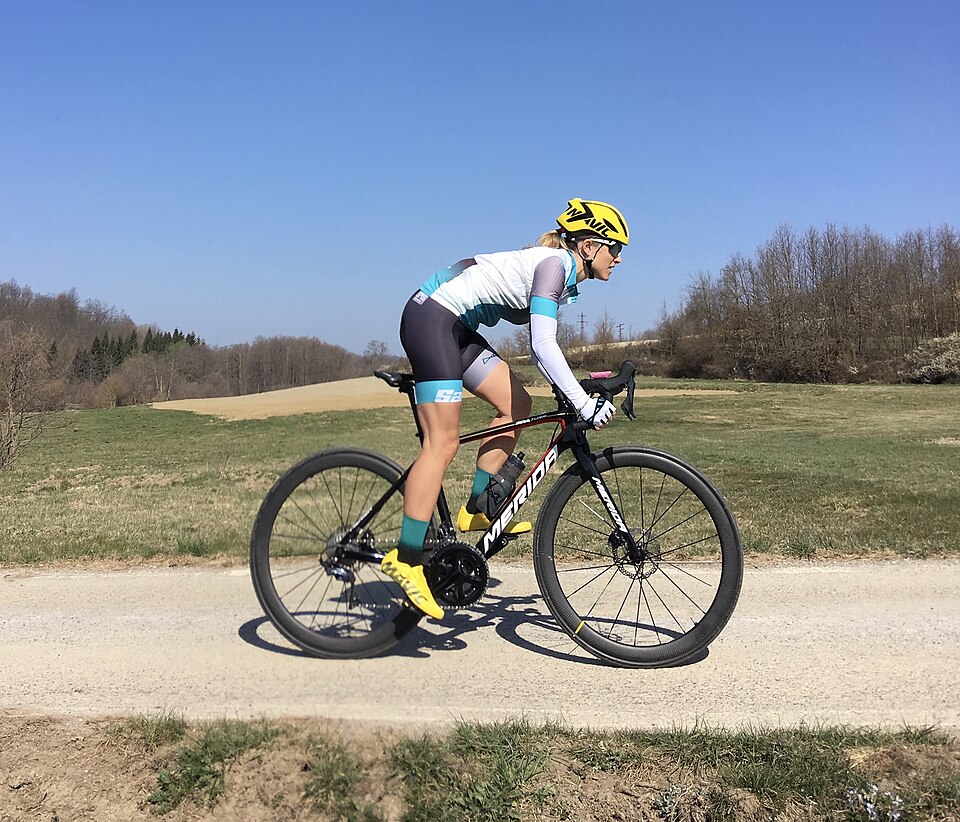
A female cyclist racing. Photograph: Wikimedia Commons
Frequently asked questions
Should I skip workouts in the week before my period?
Usually not. Research shows perceived effort rises but performance often holds, especially with good hydration. Adjust expectations rather than canceling, unless symptoms like severe cramps or heavy bleeding say otherwise.
Does the pill change any of this?
Hormonal contraceptives flatten the natural hormone fluctuations, which changes the temperature and perception patterns described here. The research above studied naturally cycling women, so it does not directly apply.
Why do I sweat more before my period?
The elevated basal temperature of the luteal phase raises the sweating response during exercise as your body defends against overheating. Studies show sweating sensitivity increases, which is the body compensating well.
Is it all in my head?
No. Higher core temperature, higher heart rate, and higher perceived exertion are measured physiological differences, not imagination. The fact that performance can hold steady does not make the extra strain imaginary.
The bottom line
Exercise feels harder in the week before your period because progesterone raises your core temperature by about 0.3 to 0.5 C, and that thermal head start drives heart rate and perceived exertion higher for identical work. Studies from Pivarnik's 1992 lab work to 2025 heat-chamber trials agree on the mechanism, while also showing that performance often survives intact. Hydrate deliberately, judge efforts by pace rather than pulse, and treat the luteal week as a time to train smart rather than a time to stop.
Latest in Fitness
- Why you breathe through your mouth when you run hard
- Why you feel stronger on some days than others
- Why your heart pounds after you stop sprinting
- Why weights feel heavier at the end of a set
Subscribe for one research-backed training tip in your inbox every morning.
Related stories
How long does it really take to build noticeable muscle?
Strength gains start in week one, but visible muscle takes 8-12 weeks for most beginners. What the Oklahoma CT-scan study measured,
Why you feel dizzy after a workout: the 5 common causes
Post-workout dizziness usually comes from a blood pressure dip, dehydration, or low blood sugar. The numbers behind each cause, and when
Why Do Knees Hurt When Squatting but Not Running?
Knees hurt when squatting but not running because deep bends multiply force on the kneecap. Learn the mechanics, common causes, fixes,