
Why your heart pounds after you stop sprinting
By Rive News / Research desk | Rive News / Published October 29, 2026 at 9:00 AM PKT
Key takeaways
- The heart keeps working after a sprint because recovery itself needs oxygen and blood flow.
- Excess post-exercise oxygen consumption, or EPOC, covers refuelling, cooling, and repair.
- A heart rate that falls 15 to 25 beats in the first minute is typical; chest pain or dizziness is not normal.
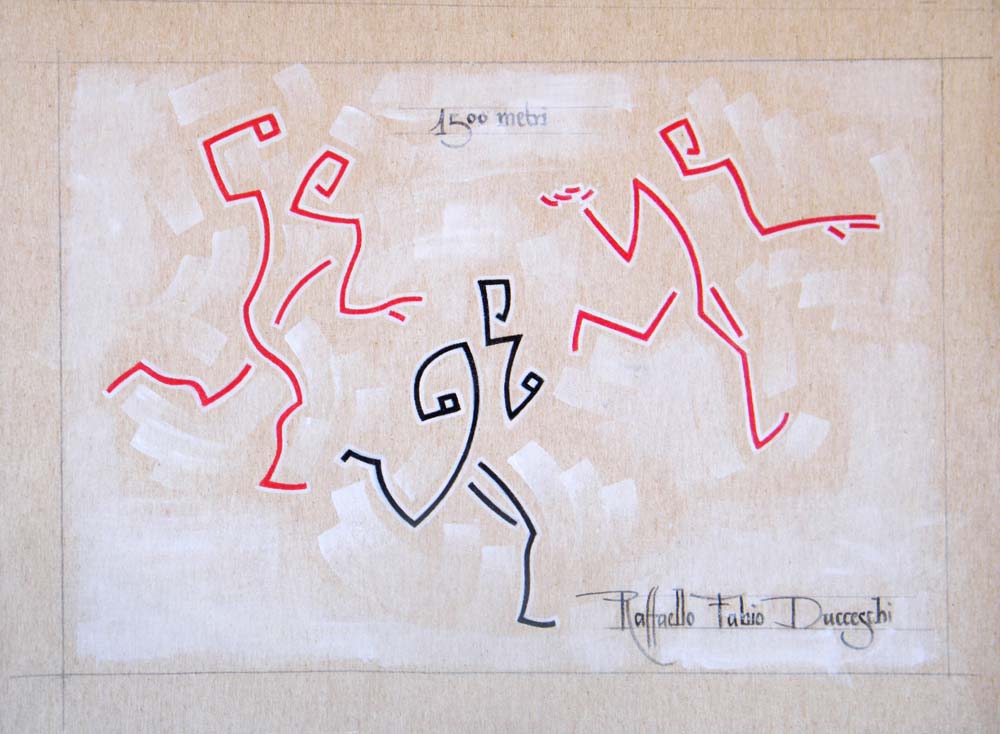
[A line drawing of runners contesting a 1500-metre race.] Illustration: Raffaello Fabio Ducceschi
Image Credits: Wikimedia Commons
Stopping does not switch the body off. After a sprint, the heart keeps pounding because the work of recovery has only just started, and that work needs oxygen delivered by blood.
This article explains what keeps the heart rate up after sprinting, including EPOC, the nervous system, heat, and fitness, and when a pounding heart needs medical attention.
Sprinting runs up an oxygen bill
A sprint burns fuel faster than breathing can supply oxygen for it. Muscles draw on stored ATP and phosphocreatine first, then on anaerobic pathways that produce energy without waiting for oxygen delivery.
That shortcut has a cost. The body ends the sprint with depleted instant fuel stores, metabolic waste to clear, and a raised temperature, all of which need oxygen to resolve.
Cleveland Clinic sports medicine physician Michael Dakkak, DO, compares the effect to a car engine that stays warm after it is switched off. As he puts it, when you finish a workout, your body continues to burn energy as part of recovery.
The name for that extra oxygen use is excess post-exercise oxygen consumption, or EPOC. It is the gap between resting oxygen use and the higher oxygen use that continues after exercise stops.
What EPOC actually pays for
EPOC is not one job. It is a bundle of recovery tasks running at the same time.
First, muscles rebuild ATP and phosphocreatine stores, the instant fuels spent in the first seconds of a sprint. Second, glycogen stores are partly rebuilt, sometimes from lactate produced during the effort.
Third, oxygen stores in blood and muscle are topped up. Haemoglobin and myoglobin, the oxygen-carrying proteins, need to return to their resting saturation.
Fourth, the body sheds heat. Sprinting raises core temperature, and cooling needs blood sent to the skin, which keeps cardiac output higher even while you stand still.
Fifth, repair begins. Amino acids move toward muscle, and the early stages of tissue repair draw energy. None of these jobs is large alone, but together they keep oxygen demand above rest for minutes, and after very hard sessions, longer.
Cleveland Clinic notes that estimates for how long EPOC lasts range from 15 minutes to 48 hours, depending on intensity and duration. For a single sprint, the noticeable pounding usually fades much sooner than the full metabolic tail.
This article is for general information only and is not medical advice; talk to a clinician about any symptoms.
The nervous system takes time to stand down
During a sprint, the sympathetic branch of the nervous system drives the heart faster and harder. Adrenaline and related signals keep that drive high, and they do not vanish the instant your feet stop.
Recovery needs the opposite branch, the parasympathetic system, to reassert itself. Vagal reactivation, the process that slows the heart, builds over the first minute and continues for several minutes after.
That handover explains the shape of the recovery curve. Heart rate usually drops fastest in the first minute, then more slowly, as sympathetic drive fades and parasympathetic control returns.
Fitness changes the speed of that handover. A study of trained and untrained adults, published via PubMed, found trained subjects had a shorter EPOC duration than untrained subjects at the same relative intensity: 40 minutes against 50 minutes at 70 percent of peak oxygen uptake.
Heart rate recovery is a measurable number
Heart rate recovery is simply peak heart rate minus heart rate one minute after stopping. It is easy to measure with a watch or a pulse check, and it says something about how quickly the nervous system resets.
In most cases, heart rate falls about 15 to 25 beats per minute after a person exercises to exhaustion and then stops, according to Michael S. Lauer, MD, of the Cleveland Clinic, quoted by Newswise.
A landmark study of 2,428 adults, published in the New England Journal of Medicine in 1999 and led by Cleveland Clinic researchers, defined abnormal recovery as a fall of 12 beats per minute or less in the first minute. In that study, 26 percent of patients had abnormal recovery, and their death rate over six years was 19 percent, against 5 percent for those with normal recovery.
Those numbers came from patients referred for clinical exercise testing, not from healthy sprinters, so they are not a personal verdict. They do show why clinicians take the one-minute number seriously as a marker of autonomic health.
For a healthy person, the practical read is simpler: a fast early drop is a good sign, and a heart rate that barely moves after a minute of rest is worth noting over repeated sessions.
Heat, dehydration, and standing still
Two extra factors can stretch the pounding out. Heat is one. A sprint in warm or humid conditions leaves core temperature higher, and the body keeps sending blood to the skin to cool down, which holds heart rate up.
Dehydration is the other. Sweat loss reduces blood volume, so the heart must beat faster to move the same amount of oxygen. A sprint on a hot day, with little fluid replaced, can therefore feel like it takes longer to settle.
Posture matters too. Stopping dead and standing still lets blood pool in the legs, while a slow walk keeps the muscle pump helping blood back to the heart. That is one reason a gentle cool-down, covered in how to cool down properly after a run, often feels better than a sudden stop.
Related recovery patterns are covered in why your heart rate stays high after you stop exercising and why does your heart rate stay elevated after exercise.
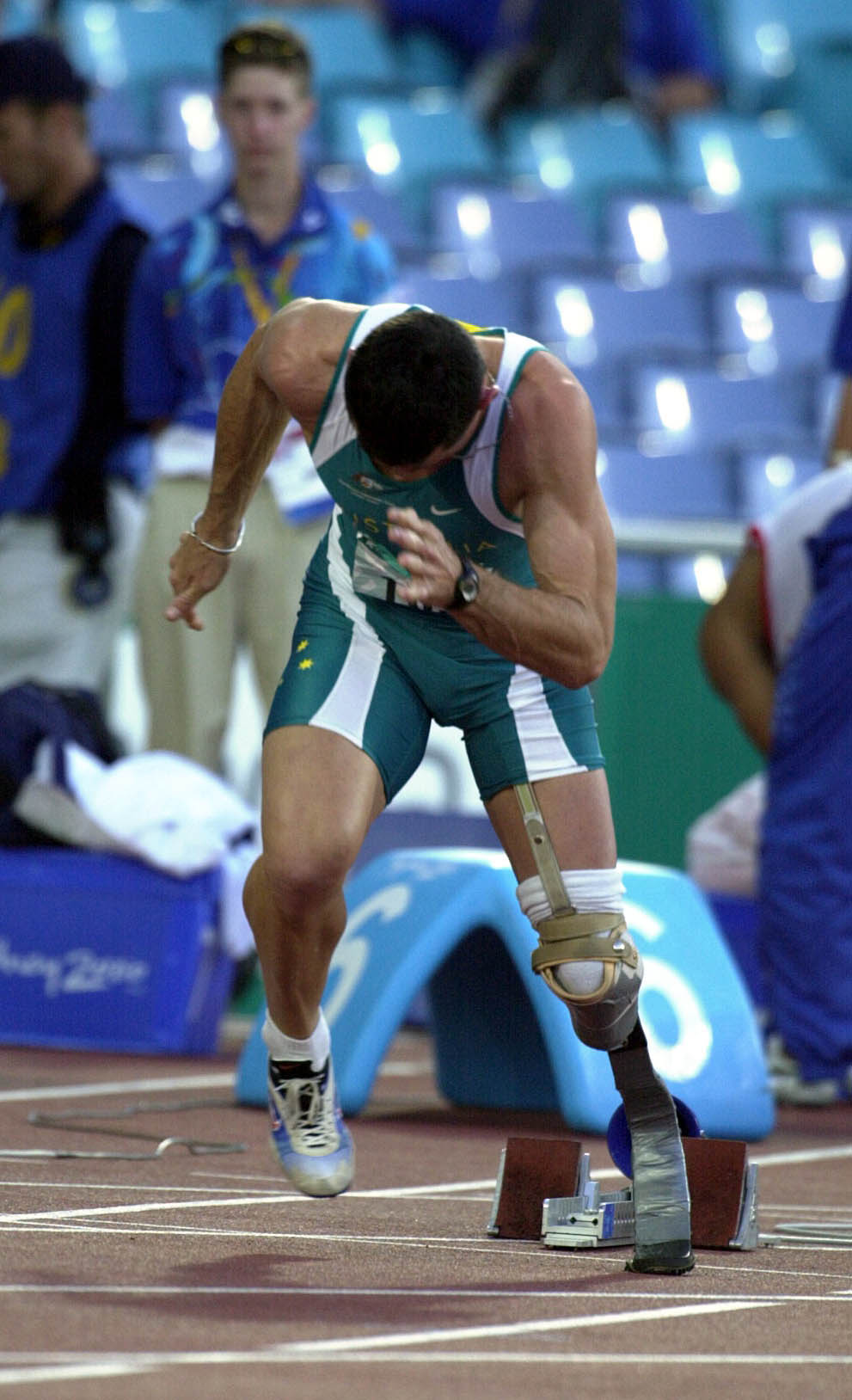
[A sprinter leaving the starting blocks in a 100-metre race at Sydney 2000.] Photograph: Wikimedia Commons contributor
Image Credits: Wikimedia Commons
When pounding is not just recovery
Normal post-sprint pounding eases steadily, breathing settles, and you feel progressively better over a few minutes. Warning signs break that pattern.
Chest pain, severe breathlessness that does not ease, dizziness, fainting, or a sense of skipped or irregular beats are not part of normal recovery. They need prompt medical attention, not another interval.
A heart rate that stays very high an hour after stopping, or that repeatedly fails to fall in the first minute across sessions, is also worth raising with a clinician, especially alongside other symptoms or known heart conditions.
This article does not diagnose heart problems. It separates the normal, minutes-long recovery curve from signs that should be checked promptly.
Frequently asked questions
How long should my heart pound after a sprint?
A few minutes is typical for the strong pounding, with a fast drop in the first minute and a slower settle afterwards. The full metabolic recovery tail can run longer, but it is usually not felt as pounding.
Why does my heart pound harder after sprinting than jogging?
Sprinting uses anaerobic energy pathways and builds a larger oxygen bill in less time. The recovery jobs, refuelling, waste clearance, and cooling, are therefore larger and more urgent.
Is a slow heart rate recovery dangerous?
A single slow reading is not a diagnosis. Repeated slow recovery, a fall of 12 beats or less in the first minute across sessions, is a marker clinicians associate with higher risk, and it is worth discussing with a clinician.
Does walking after a sprint help my heart settle?
Yes, usually. A slow walk keeps blood returning to the heart and lets the nervous system hand over gradually, which often feels smoother than stopping dead.
Why does heat make my heart pound longer?
Heat adds a cooling job to recovery. Blood sent to the skin to shed heat keeps cardiac output higher, so heart rate stays up until core temperature falls.
The bottom line
Your heart pounds after a sprint because recovery is active work: refilling instant fuel, clearing waste, topping up oxygen stores, and cooling down. EPOC is the name for that extra oxygen use, and the nervous system's slow handover sets its pace.
Expect a fast drop in the first minute, then a gradual settle. If pounding comes with chest pain, dizziness, or fainting, or if it repeatedly refuses to fall, treat that as a medical question, not a fitness puzzle.
Tags: heart rate, sprinting, recovery, EPOC
The Rive News research desk writes plain-English explainers from published studies and authoritative sources, with no invented experts or first-hand claims.
Related
- Why your heart rate stays high after you stop exercising
- Why does your heart rate stay elevated after exercise?
- How to cool down properly after a run
- Why do I get out of breath so fast when running?
Subscribe for one plain-English fitness explainer each week.
Rive News standards: every factual claim is traced to a named public source; corrections are noted, never made silently.
Related stories
How long does it really take to build noticeable muscle?
Strength gains start in week one, but visible muscle takes 8-12 weeks for most beginners. What the Oklahoma CT-scan study measured,
Why you feel dizzy after a workout: the 5 common causes
Post-workout dizziness usually comes from a blood pressure dip, dehydration, or low blood sugar. The numbers behind each cause, and when
Why Do Knees Hurt When Squatting but Not Running?
Knees hurt when squatting but not running because deep bends multiply force on the kneecap. Learn the mechanics, common causes, fixes,