
How to cool down properly after a run
By Rive News / Research desk | Rive News / Published October 26, 2026 at 9:00 AM PKT
Key takeaways
- A proper cool-down takes 5 to 15 minutes: slow to a walk or easy jog, then stretch the muscles you used.
- Stopping abruptly after a hard run can cause dizziness, because blood pools in the legs instead of returning to the heart.
- Hold each stretch gently for 15 to 30 seconds without bouncing, then rehydrate and eat within the first hour.
This article is for general information only and is not medical advice; talk to a clinician about any symptoms.
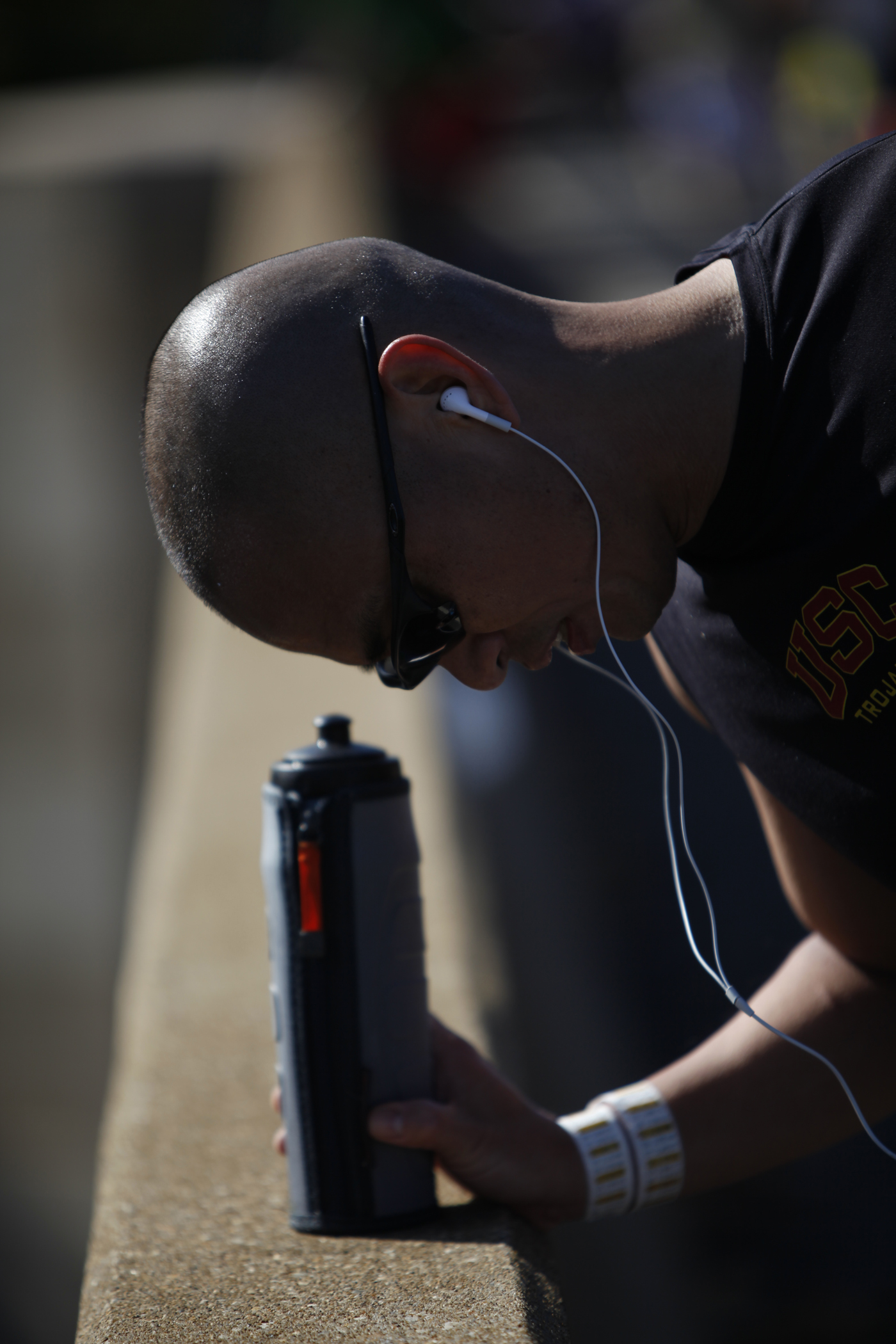
[A runner stopping to stretch during a marathon.] Photograph: Wikimedia Commons
Image Credits: Wikimedia Commons
A cool-down is the reverse of a warm-up: a gradual return from running effort to resting state, rather than a hard stop at the finish line. It takes 5 to 15 minutes, it follows a simple sequence, and it is the part of the run most often skipped, usually because the runner is tired, cold or in a hurry. Skipping it rarely causes disaster, but it wastes the best window for easing tight muscles and it can leave you dizzy.
This article explains how to cool down properly after a run, including the walk, stretch and water sequence, how long each part should take, and the mistakes that undo the benefit.
Why stopping dead is the one thing to avoid
During a run, your heart pumps hard, your blood vessels widen, and your leg muscles act as a second pump, squeezing blood back toward the heart with every stride. When you stop abruptly, that muscle pump stops too, but the vessels stay wide for a while. Blood can pool in the legs, blood pressure can dip, and the result is the light-headedness many runners know from stopping at a traffic light after a hard effort.
The University of Nebraska-Lincoln Extension guide states the mechanism plainly: stopping abruptly may cause dizziness, and cooling down helps the body transition back to normal. The fix is not complicated. Keep moving at a lower intensity so the muscle pump winds down gradually instead of switching off.
Step 1: slow to a walk or easy jog, 3 to 5 minutes
The first phase is simply running slower, then walking. Canadian Running Magazine's cooldown guide breaks it into 10 to 15 minutes of easy running followed by 3 to 5 minutes of brisk walking for a hard session, while shorter or easier runs need less. For most recreational runs, 3 to 5 minutes of walking is enough to bring breathing and heart rate down noticeably.
Use the talk test as your gauge. If you can speak in full sentences without gasping, you are at the right intensity. If you are still breathless, keep walking; the cool-down is not finished just because a few minutes have passed.
The University of Maryland Medical System guide advises slowing pace and intensity for 5 to 10 minutes, letting heart rate fall steadily rather than all at once.
One practical rule from the Australian Sports Commission and American College of Sports Medicine guidance, as summarised by Gaspari Nutrition, is to bring the heart rate below 120 beats per minute during the cool-down. You do not need a watch to use this: if your pulse still feels fast and pounding, keep walking.
Step 2: stretch gently, 5 to 10 minutes
Once you are walking comfortably, stretch the muscles the run used most. The priority list for runners is short: calves, hamstrings, quadriceps, hip flexors and glutes, plus the lower back and shoulders if they feel tight. The University of Maryland guide recommends static stretch-and-hold work, maintaining each stretch for 15 to 30 seconds and focusing on the major muscle groups just worked.
A simple sequence covers the essentials. Stand facing a wall for a calf stretch, one leg back with the heel flat. Pull one foot to your glutes for a quadriceps stretch, holding a wall or fence for balance.
Step one foot forward into a lunge for the hip flexors. Sit or stand for a hamstring stretch with the leg straight and the knee soft. Finish with a gentle seated twist for the lower back.
Three rules make the stretching useful rather than harmful. First, stretch to mild tension, not pain. Second, breathe normally and never hold your breath.
Third, never bounce. The Australian Sports Commission and ACSM guidance quoted by Gaspari Nutrition is explicit on this point: a cool-down should use gentle movements, should never be dynamic or bouncy, and should be timed with the breath.
There is a common question about whether stretching after a run prevents soreness. The honest answer is that stretching improves flexibility and feels good, but it does not reliably prevent delayed-onset muscle soreness, which is covered in the guide to why muscles get sore two days after exercise. Stretch because it restores range of motion and helps you notice tight spots, not because it guarantees a pain-free tomorrow.
Step 3: breathe, drink and refuel
Breathing deserves a minute of its own. After the walk, stand still for a few slow breaths, in through the nose and out through the mouth, letting the shoulders drop. This is not mysticism; it is a practical way to confirm your breathing has returned to normal before you sit in a car or head indoors.
Then drink. A run of 30 to 60 minutes in moderate conditions typically costs a few hundred millilitres of sweat, and longer or hotter runs cost much more. Water is enough for most short runs; for runs over an hour, or in heat, a drink with electrolytes replaces the salts lost in sweat.
Drink to thirst plus a little extra, and do not wait until you feel very thirsty, since thirst lags behind actual loss.
Refuelling matters most after long or hard runs. Canadian Running Magazine's guide recommends taking in carbohydrates and protein within 20 to 30 minutes of finishing, ideally at roughly a 3 to 1 or 4 to 1 carbohydrate-to-protein ratio, with chocolate milk given as the classic example. For an easy 20-minute jog, a normal next meal covers it.
For a long run, a prompt snack speeds glycogen replacement and gives muscles the protein they need to repair.
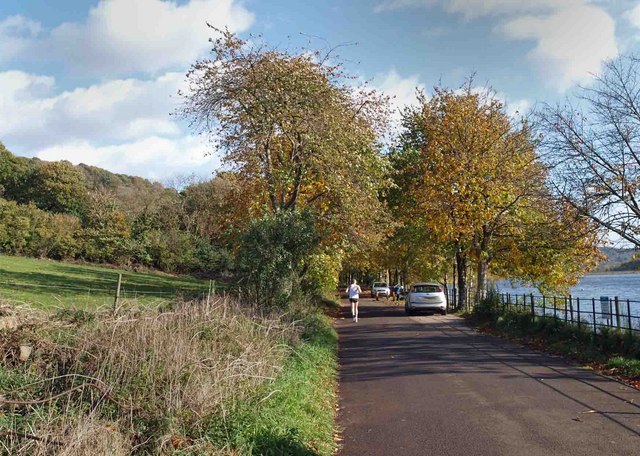
[A jogger running along a road.] Photograph: Wikimedia Commons
Image Credits: Wikimedia Commons
How long should the whole thing take
Total time scales with the run. For an easy run under 30 minutes, a 5-minute cool-down is reasonable: 2 to 3 minutes of walking, a few stretches, water. For a hard session or a long run, allow 10 to 15 minutes: an easy jog down, several minutes of walking, a full stretching sequence, then food and drink.
The pattern matters more than the stopwatch. Walk first, stretch second, drink and eat third.
Runners who train twice a day or race the next day sometimes add foam rolling or a very light second walk later in the day, but that is extra, not a replacement for the immediate cool-down. The immediate sequence is what prevents the dizzy stop and starts recovery while the muscles are still warm and pliable.
Mistakes that undo a good cool-down
The first mistake is skipping it entirely and sitting down, especially in a car, where the legs stay bent and still. If you must drive home, walk for a few minutes first, and do the stretches before you get in the car rather than after a long drive.
The second mistake is stretching cold or aggressively. Deep, painful stretches on tired muscles can cause small strains, and bouncing stretches trigger a reflex that tightens the muscle instead of lengthening it. Gentle and steady wins.
The third mistake is treating the cool-down as the workout. A cool-down is low intensity by definition. If your heart rate is still high and you are breathless, you are still exercising, not cooling down.
Slow down further until you can talk comfortably.
The fourth mistake is ignoring warning signs. Dizziness that does not pass after a few minutes of walking, chest pain, or pain that is sharp rather than muscular tightness are not normal cool-down experiences. Stop, sit down, and get medical advice rather than stretching through them.
Frequently asked questions
How long should I cool down after a run?
Five to 15 minutes, scaled to the run. Easy short runs need about 5 minutes; hard or long runs deserve 10 to 15 minutes of walking, stretching and rehydration.
Should I stretch before or after running?
After, for static stretching. Dynamic movements belong in the warm-up. Static holds of 15 to 30 seconds belong in the cool-down, when muscles are warm.
Why do I feel dizzy when I stop running?
Blood pools in the legs when the muscle pump stops suddenly while blood vessels are still dilated. Walking for a few minutes lets circulation wind down gradually instead of dropping.
Does cooling down prevent muscle soreness?
Not reliably. Stretching after a run improves flexibility and helps you spot tight areas, but delayed soreness is driven by muscle damage and repair, and a cool-down does not prevent it.
What should I eat after a run?
For long or hard runs, eat within the first hour, with a mix of carbohydrates and protein at roughly 3 to 1 or 4 to 1. For easy short runs, your next normal meal is enough.
The bottom line
Cooling down properly after a run is a short, fixed sequence: slow to a walk for 3 to 5 minutes until you can talk comfortably, stretch the calves, hamstrings, quads, hips and glutes gently for 15 to 30 seconds each without bouncing, then drink and, after longer runs, eat within the hour. The whole thing takes 5 to 15 minutes, and the single most important rule is not to stop dead. Do that, and you finish every run the way you started it: moving, breathing easily, and ready for the next one.
Tags: cool down, running, stretching, recovery
The Rive News research desk writes plain-English explainers from published sources, with every key claim traceable to its source.
Related
- Why does your heart rate stay elevated after exercise?
- Why do muscles get sore two days after exercise?
- How to warm up properly in 5 minutes before a gym session
- How to recover faster after a hard workout session
Subscribe for one practical fitness explainer each week.
Rive News standards: every factual claim is sourced; corrections are published when a source is shown to be wrong.
Related stories
How long does it really take to build noticeable muscle?
Strength gains start in week one, but visible muscle takes 8-12 weeks for most beginners. What the Oklahoma CT-scan study measured,
Why you feel dizzy after a workout: the 5 common causes
Post-workout dizziness usually comes from a blood pressure dip, dehydration, or low blood sugar. The numbers behind each cause, and when
Why Do Knees Hurt When Squatting but Not Running?
Knees hurt when squatting but not running because deep bends multiply force on the kneecap. Learn the mechanics, common causes, fixes,