
Why weights feel heavier at the end of a set
By Rive News / Research desk | Rive News / Published October 29, 2026 at 9:00 AM PKT
Key takeaways
- The bar does not change weight; your muscles' ability to produce force falls rep by rep.
- Inorganic phosphate build-up inside muscle fibres is a leading cause of peripheral fatigue.
- The brain also raises perceived effort as metabolites signal back, which is central fatigue.
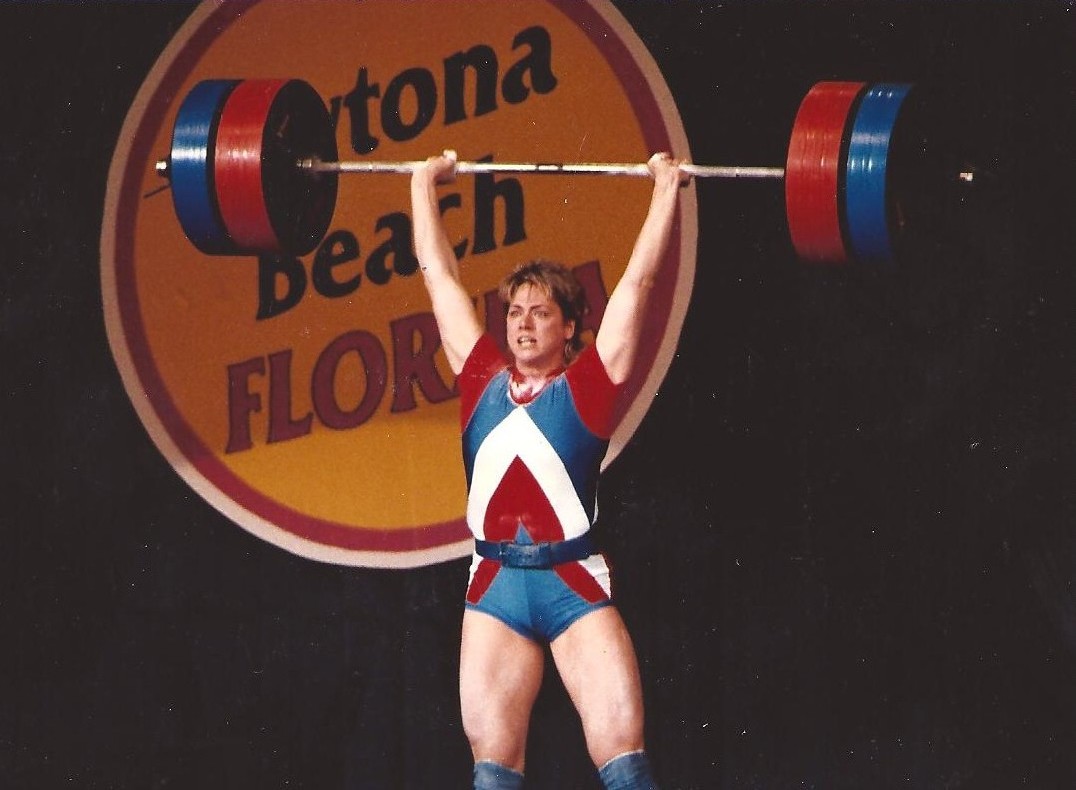
[A weightlifter holding a loaded barbell overhead during a 1987 championship in Daytona Beach.] Photograph: Wikimedia Commons contributor
Image Credits: Wikimedia Commons
The first rep feels manageable. The last rep feels like a different weight entirely. The plates have not moved, so something inside the system has.
This article explains why weights feel heavier at the end of a set, including fuel depletion, metabolite build-up, and the brain's rising sense of effort, and why rest between sets resets the feeling.
Force falls while the weight stays fixed
A set is a race between force production and fatigue. Each rep spends instant fuel, produces metabolic by-products, and draws on motor units, the nerve-and-muscle teams that generate force.
Early reps use fresh fuel and fresh motor units. Later reps must work with partly spent fuel, accumulated by-products, and motor units that are already tiring. The weight is constant, but the available force is not.
That mismatch is felt as heaviness. It is not imagination, and it is not weakness. It is the normal sign that the set is doing what sets are designed to do: push force production toward its limit for that load.
How many reps that takes depends on the load. A heavy set of 3 to 5 reps fatigues through different pathways than a light set of 20, but both end at the same feeling: the next rep is not available at good form.
Peripheral fatigue happens inside the muscle
Peripheral fatigue means force falls at the muscle itself, even when the nerve signal arriving there is still strong. The muscle fibre's own machinery becomes less able to contract forcefully.
The leading culprit, according to a review in the Journal of Physiology summarized by Genghis Fitness, is inorganic phosphate. Phosphate is released when ATP, the cell's energy currency, is broken down to power contraction.
As phosphate accumulates inside the fibre past a threshold, it interferes with cross-bridge cycling, the molecular ratcheting that shortens muscle fibres. Contractions weaken even though the nerve keeps firing.
Phosphocreatine depletion adds to the effect. Phosphocreatine is the rapid backup that rebuilds ATP in the first seconds of effort, and once it runs low, ATP rebuilding slows. Genghis Fitness notes that phosphocreatine resynthesis takes roughly 2 to 5 minutes of rest, which is why a few minutes between sets restores so much strength.
Hydrogen ions, which make the muscle environment more acidic during hard work, also contribute, particularly by affecting the nerves that report back to the brain.
This article is for general information only and is not medical advice; talk to a clinician about any symptoms.
Central fatigue happens in the nervous system
Central fatigue is different. It means the brain's drive to the muscle falls, so fewer motor units are recruited or they fire more slowly, even though the muscle itself could still produce more force.
Metabolite signals drive much of this. Sensory nerves in the muscle detect the build-up of phosphate, hydrogen ions, and other by-products, and report it to the brain. The brain answers by raising perceived effort and reducing voluntary drive, a protective response that guards against damage.
That is why the last reps feel disproportionately hard. The same central command now produces less force, and the brain registers the gap as heaviness. Research summaries describe this as supraspinal fatigue: fatigue generated above the spinal cord, in the brain's command centres.
Central fatigue also explains why motivation matters late in a set. A lifter who is mentally fresh can sometimes grind out one more rep, while the same lifter, tired or distracted, cannot. The muscle has not changed between those two moments; the drive has.
The lactate myth, corrected
For decades, lifters blamed lactic acid for the burn and the heaviness. That explanation is now considered wrong in its simple form.
Lactate itself is a fuel, not a poison. Muscles produce lactate during hard work, and other tissues, including the heart and neighbouring muscle fibres, can burn it for energy. Lactate clears from muscle within about an hour, yet soreness lasts days, which is one clue that lactate is not the soreness culprit either.
The burn sensation tracks more closely with hydrogen ions and other metabolites that rise alongside lactate. Upside Strength's summary of a 2022 study puts it plainly: fatigue is mainly driven by inorganic phosphate in the muscle and hydrogen ions affecting the nerves, not by lactate itself.
For more on that correction, see why lactic acid gets blamed for soreness when it clears in an hour.
Why lighter sets can feel just as heavy
Load changes the fatigue recipe. Heavy sets fatigue fast through phosphocreatine depletion and high-threshold motor unit fatigue. Light sets taken close to failure fatigue through metabolite accumulation over many reps.
That is why a set of 20 with a light weight can end feeling just as crushing as a set of 5 with a heavy one. The light set builds up more metabolites over its longer duration, and the brain's effort signal climbs with them.
Rest-pause sets, drop sets, and pre-exhaustion techniques push this further. By shortening rest or pre-tiring the muscle, they raise metabolite levels faster, so heaviness arrives earlier in the set.
Form breakdown is the visible end of the same process. As force falls and drive fades, the body compensates with other muscles and altered positions, and the rep looks different from the first one. Stopping the set there is usually wiser than chasing another rep at poor form.
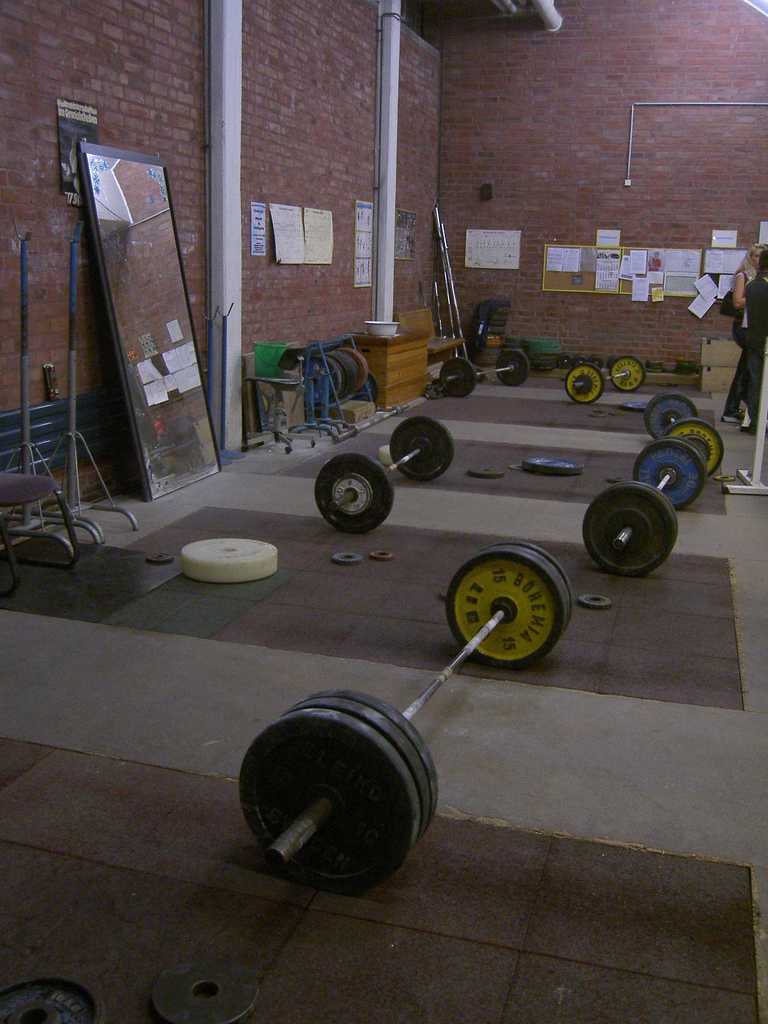
[Loaded barbells resting on the floor of a weightlifting room.] Photograph: Wikimedia Commons contributor
Image Credits: Wikimedia Commons
Rest resets the feeling, but not instantly
Between sets, the body clears metabolites, rebuilds phosphocreatine, and restores neural drive. That is why the first rep of the next set feels lighter than the last rep of the previous one, even though the weight is identical.
The reset is partial and time-dependent. Short rests of 30 to 60 seconds clear only part of the fatigue, so the next set starts heavier. Longer rests of 2 to 5 minutes clear more, which is why strength work typically uses longer rests than endurance-style circuits.
Guidance on how long to rest between sets when lifting weights covers the trade-off: longer rests preserve strength, shorter rests raise metabolic stress.
Over a whole workout, fatigue accumulates across sets as well as within them. Exercises performed late in a session feel heavier than the same exercises performed fresh, because central fatigue from earlier work has not fully cleared.
Related patterns include why your muscles shake when you lift heavy weights and why muscles feel weaker the day after a hard workout.
Frequently asked questions
Is it normal for the last reps to feel much heavier?
Yes. Force production falls as phosphate and hydrogen ions build up and neural drive fades, so the same weight genuinely demands more effort late in a set.
Does lactic acid make weights feel heavier?
Not directly. Lactate is a usable fuel, and the heaviness tracks more closely with inorganic phosphate inside muscle and hydrogen ions signalling the brain.
Why does a weight feel lighter after a rest?
Rest rebuilds phosphocreatine, clears metabolites, and restores neural drive. Phosphocreatine resynthesis takes roughly 2 to 5 minutes, which matches the strength return lifters feel.
Should I stop when a weight suddenly feels much heavier?
Usually yes, if form is breaking down. The heaviness signals that force production has fallen close to its limit for that set, and another rep at poor form adds risk without much benefit.
Do lighter weights avoid this effect?
No. Light sets taken near failure build up metabolites over many reps and produce the same end-of-set heaviness, through a slightly different mix of peripheral and central fatigue.
The bottom line
Weights feel heavier at the end of a set because force production falls while the load stays fixed. Phosphate build-up weakens contraction inside the muscle, and metabolite signals persuade the brain to reduce drive and raise perceived effort.
Rest between sets reverses most of that within minutes, which is why the next set starts lighter. Treat the heaviness as information about where the set ended, not as a verdict on your strength.
Tags: strength, fatigue, weightlifting, muscle
The Rive News research desk writes plain-English explainers from published studies and authoritative sources, with no invented experts or first-hand claims.
Related
- How long to rest between sets when lifting weights
- Why does lactic acid get blamed for soreness when it clears in an hour?
- Why your muscles shake when you lift heavy weights
- Why muscles feel weaker the day after a hard workout
Subscribe for one plain-English fitness explainer each week.
Rive News standards: every factual claim is traced to a named public source; corrections are noted, never made silently.
Related stories

How long does it really take to build noticeable muscle?
Strength gains start in week one, but visible muscle takes 8-12 weeks for most beginners. What the Oklahoma CT-scan study measured,

Why you feel dizzy after a workout: the 5 common causes
Post-workout dizziness usually comes from a blood pressure dip, dehydration, or low blood sugar. The numbers behind each cause, and when
Why Do Knees Hurt When Squatting but Not Running?
Knees hurt when squatting but not running because deep bends multiply force on the kneecap. Learn the mechanics, common causes, fixes,