
Why you feel stronger some days than others
By Rive News / Research desk | Rive News / Published October 29, 2026 at 9:00 AM PKT
Key takeaways
- Strength is not fixed: sleep, fuel, time of day, and leftover fatigue shift it from session to session.
- Afternoon strength often beats early morning strength, with one study finding higher afternoon handgrip and jump power.
- A single bad night rarely erases fitness, but a run of short nights and hard sessions can stack up.
[A lifter squatting under a loaded barbell while others watch in a gym.] Photograph: Wikimedia Commons contributor
Image Credits: Wikimedia Commons
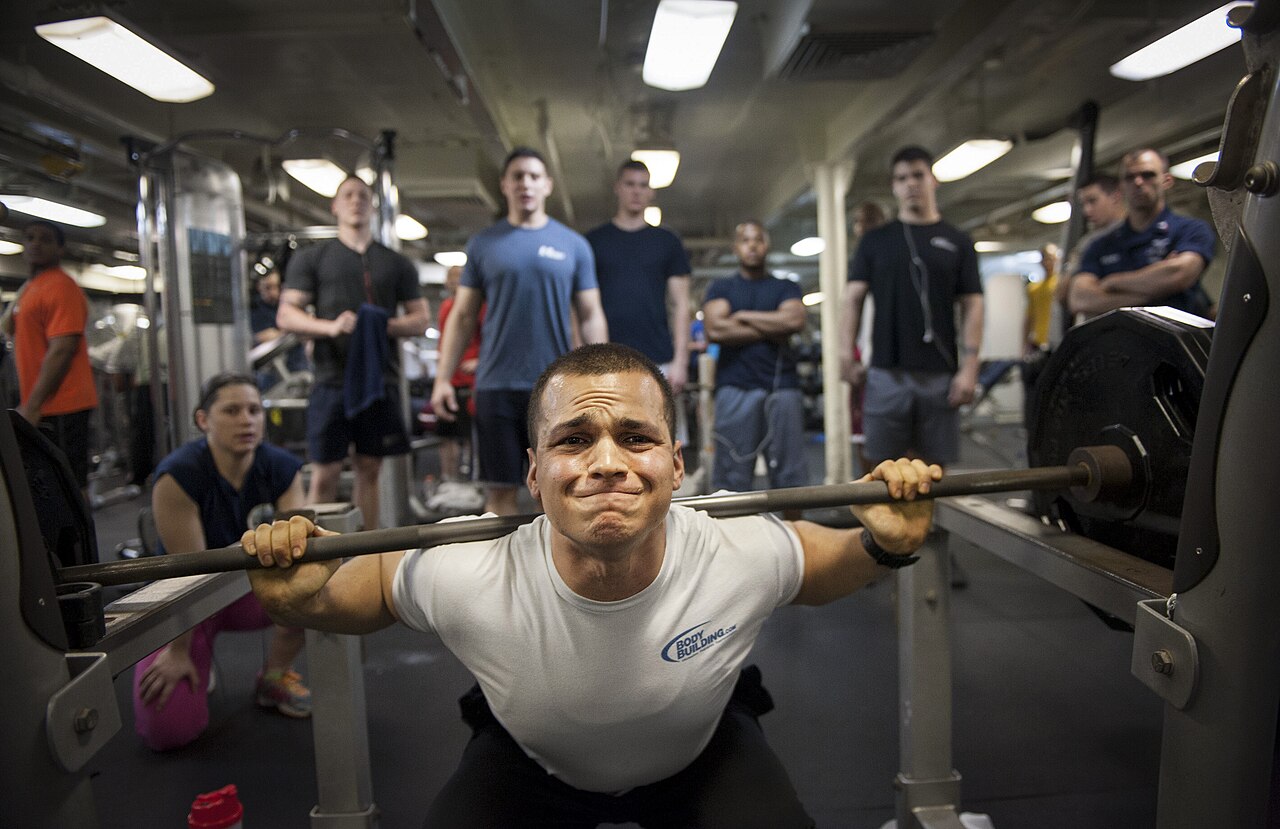
Strength that changes from day to day is not a character flaw. It is the normal output of a body whose fuel stores, nervous system, hormones, and temperature all move on their own schedules.
This article explains why some days feel strong and others feel heavy, including sleep, food, time of day, and recovery, and what a steadier week looks like.
Sleep sets the starting point
Sleep is the main recovery window after hard training. A study of trained men published in PMC found that sleep supports recovery of the nervous and metabolic cost of training, and that sleep problems can impair glycogen resynthesis and muscle damage repair.
That matters because glycogen is the stored carbohydrate in muscle that fuels hard efforts. When stores are low, high-quality reps run out sooner.
Short sleep also changes the hormonal background. Research summarized in fitness and sleep reviews reports that a week of restricted sleep, under 5 hours a night, can lower circulating testosterone by 10 to 15 percent.
Testosterone is only one piece of the picture. The wider point is simpler: a tired nervous system recruits muscle less cleanly, and effort feels higher for the same weight.
This article is for general information only and is not medical advice; talk to a clinician about any symptoms.
Your body clock moves the peak
Most people are stronger later in the day than first thing in the morning. Body temperature rises through the day, muscles warm up, and coordination tends to sharpen.
A within-subject study of 27 physically active women, reported in ScienceDirect, tested strength in the morning (07:30 to 09:00) and afternoon (16:30 to 18:30). Strength was significantly higher in the afternoon, including handgrip up by 0.7 kg and countermovement jump power up by 2.5 watts per kilogram.
A separate study of 19 adolescent soccer players, published in PMC, tested at 08:00, 11:00, 15:00, and 18:00. Performance improved at 11:00, 15:00, and 18:00 compared with 08:00, and the 18:00 session consistently produced the highest levels.
That does not mean morning training is wasted. People who always train in the morning tend to adapt to that slot over weeks, and consistency often beats chasing a perfect hour.
If your sessions jump between 6 a. m.
one day and 7 p. m. the next, some of the day-to-day swing may be the clock, not your fitness.
Fuel in the tank matters more than motivation
A hard session draws on glycogen, and glycogen refills from food over hours, not minutes. Two hard days in a row, or a hard day after a low-food day, can leave the tank part full.
Low carbohydrate intake has the same effect in a slower way. Without enough fuel, the body has less readily available energy for repeated high efforts, and the session feels heavier from the first set.
Hydration plays a smaller but real role. Even mild fluid loss can raise perceived effort and blunt performance, which is one reason a hot, under-drunk session feels harder than the same workout on a cool day.
None of this means every weak day is a food problem. It means food and drink belong on the checklist before you judge the workout.
Timing adds another layer. A hard morning session after a light previous day draws on stores that were never fully refilled, while the same session after a full day of eating starts from a higher baseline.
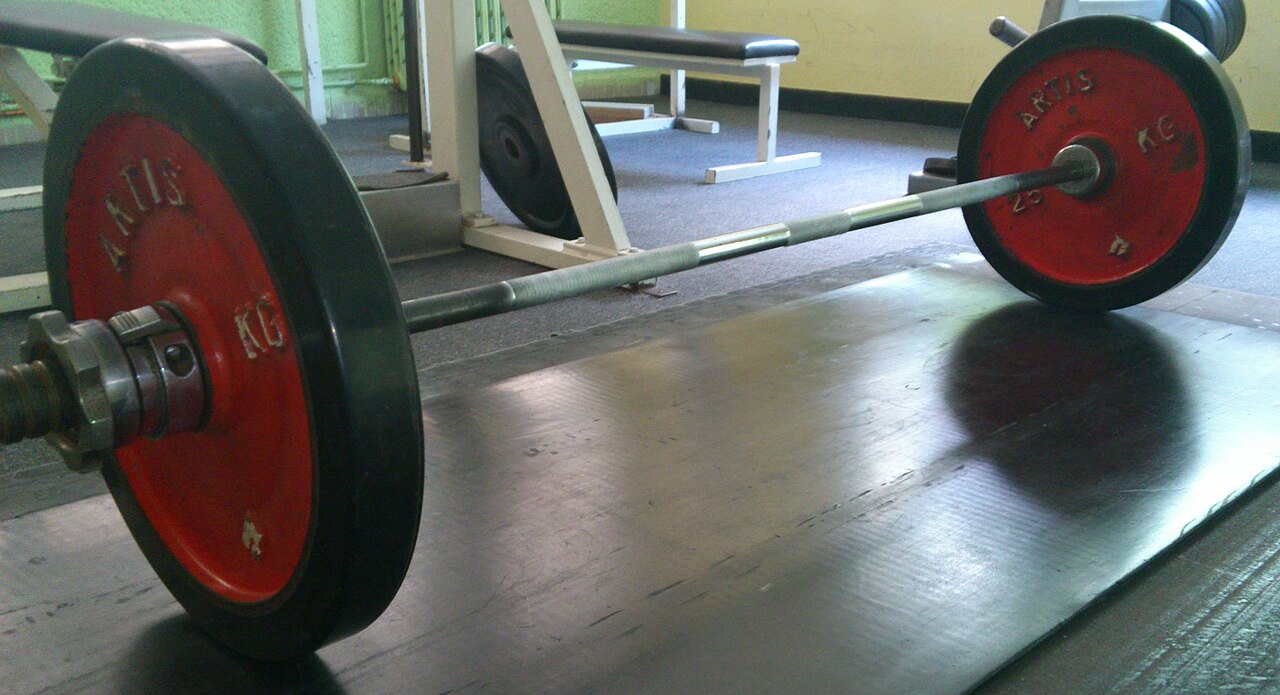
That is why two sessions with identical programs can feel so different. The program is the same, but the fuel state behind it is not, and the nervous system notices the difference before you do.
[A loaded barbell with red plates resting on a lifting platform in a gym.] Photograph: Wikimedia Commons contributor
Image Credits: Wikimedia Commons
Leftover fatigue is invisible until you lift
Muscle soreness is easy to spot. Nervous-system fatigue is not. After a very hard session, the brain's drive to muscle can stay reduced even when soreness has faded.
This shows up as weights feeling heavier, bar speed dropping, or coordination feeling slightly off. It is different from muscle soreness two days after a workout, which follows its own delayed pattern.
Training to failure is a common trigger. The PMC study of trained men noted that poor recovery processes affecting strength performance were reported after resistance training to failure.
Volume stacks too. Five hard sessions in a week leave less recovery between each one than three, even if no single session felt extreme at the time.
Stress, mood, and focus count as load
Strength is partly a skill. It needs attention, timing, and confidence under a heavy bar, and all three suffer on a distracted or stressful day.
A stressful week raises the total load on the same nervous system that drives lifting. The weight has not changed, but the system moving it is already busy.
Caffeine can mask some of this for a session, which is why a strong coffee day can feel so different from a no-coffee day. For more on that effect, see how caffeine improves workout performance.
Warm-ups matter here as well. A rushed warm-up leaves muscles cooler and coordination less sharp, and the first working sets pay for it. A proper routine is covered in how warming up actually prepares muscles.
Sleep quality counts alongside sleep length. Broken, restless sleep leaves the nervous system less restored than the same hours of deep, unbroken sleep, which is another reason two eight-hour nights can feel very different.
When a weak day is a signal, not noise
One off day is normal. A pattern is information. Three weak sessions in a row, falling bar speed at the same weights, or soreness that never clears suggests recovery is behind training.
A useful check is to compare like with like. Same time of day, same warm-up, same sleep and food pattern, then judge the weight. Random comparisons across very different days will always look noisy.
Deload weeks exist for this reason: a planned easier week lets fatigue drain so strength can show again. The process is described in what happens in your body during a deload week.
Persistent weakness, pain, dizziness, or other worrying symptoms deserve a clinician's attention rather than a harder program. This article explains normal variation only.
Frequently asked questions
Why am I weaker in the morning than the evening?
Body temperature, alertness, and neuromuscular readiness tend to be lower early in the day. Studies testing morning against afternoon or evening sessions repeatedly find higher strength and power later in the day.
Can one bad night of sleep ruin a workout?
One short night can dull focus and raise perceived effort, but it rarely erases weeks of training. The bigger cost comes from several short nights stacked on hard sessions.
Does eating before training make me stronger?
Eating enough over the previous day matters more than one pre-workout meal. Full glycogen stores and steady hydration give muscles the fuel for repeated hard efforts.
Should I skip training on a weak day?
Not usually. A lighter session, or the planned session at slightly lower loads, keeps the habit and lets recovery catch up. Skipping every weak day makes training depend on feeling perfect.
Why do I feel strong one week and flat the next?
Training load, sleep, stress, and food rarely stay identical week to week. When several of them dip at once, strength dips with them, and when they recover, strength usually returns.
The bottom line
Day-to-day strength swings come from sleep, fuel, body clock, leftover fatigue, and focus, not from a single cause. Tracking those five factors for a few weeks usually reveals the pattern behind the noise.
Keep training times steadier, protect sleep, eat enough to refill glycogen, and treat a run of flat sessions as a recovery signal. Strength that looks inconsistent day to day often looks steady month to month.
Tags: strength, recovery, sleep, training
The Rive News research desk writes plain-English explainers from published studies and authoritative sources, with no invented experts or first-hand claims.
Related
- Why muscles feel weaker the day after a hard workout
- How does sleep affect muscle recovery, scientifically explained?
- How to warm up properly in 5 minutes before a gym session
- What happens in your body during a deload week
Subscribe for one plain-English fitness explainer each week.
Rive News standards: every factual claim is traced to a named public source; corrections are noted, never made silently.
Related stories

How long does it really take to build noticeable muscle?
Strength gains start in week one, but visible muscle takes 8-12 weeks for most beginners. What the Oklahoma CT-scan study measured,

Why you feel dizzy after a workout: the 5 common causes
Post-workout dizziness usually comes from a blood pressure dip, dehydration, or low blood sugar. The numbers behind each cause, and when
Why Do Knees Hurt When Squatting but Not Running?
Knees hurt when squatting but not running because deep bends multiply force on the kneecap. Learn the mechanics, common causes, fixes,