
Why you get sore two days after a workout, not next day
By Rive News / Research desk | Rive News / Published October 27, 2026 at 9:00 AM PKT
Key takeaways
- Soreness that peaks two days after a workout is usually delayed onset muscle soreness, or DOMS.
- DOMS typically starts 12 to 24 hours after exercise and peaks around 48 hours, then fades over a few days.
- The delay happens because microscopic muscle damage triggers inflammation and repair, which take time to build.
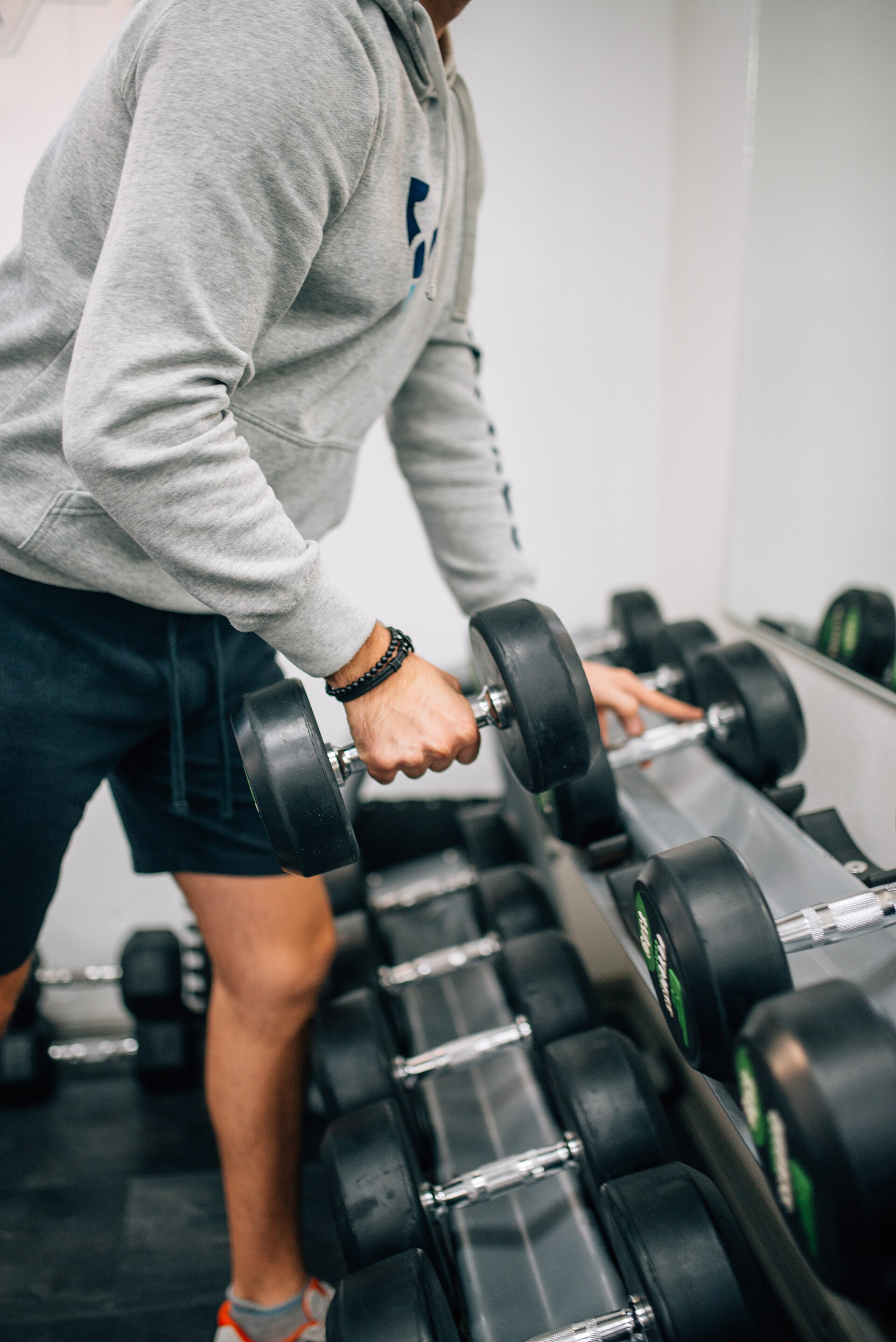
A man lifting a dumbbell in a gym, the kind of unaccustomed effort that often triggers DOMS. Photograph: the gym lifter
Image Credits: Wikimedia Commons
Delayed onset muscle soreness, known as DOMS, is the stiffness and ache that shows up a day or two after a session your muscles were not used to. It is different from the burn felt during the workout itself, which fades within hours.
This article explains what DOMS is, why the pain waits a day or two, why day two is often the worst, what actually causes it, and what helps recovery.
What DOMS is
DOMS is a benign, exercise-induced muscle ache that develops after unaccustomed, vigorous, or fatiguing activity. A clinical review of the condition describes it as soreness, tenderness, and stiffness that do not occur during or immediately after the activity.
The soreness usually involves the muscles that did the work, often the legs or arms. It is felt most when the muscle contracts or is stretched, which is why stairs and sitting down can feel surprisingly hard two days after leg day.
Typical DOMS is not an injury in the usual sense. It reflects a repair process in the muscle, and normal mobility usually returns within a few days, though severe cases can linger longer.
Why the pain waits a day or two
The delay is the defining feature of DOMS, and it comes down to timing. The damage happens during the workout, but the soreness comes from what follows, and that follow-up takes hours to build.
GPnotebook, a clinical reference, notes that soreness typically arises within the first day after exercise and peaks in intensity at around 48 hours. That timeline matches what most gym-goers report: mild stiffness the next morning, then a much sorer second morning.
The clinical review puts the peak at 36 to 48 hours after exercise. It also notes that normal mobility and pain-free movement usually return 24 to 48 hours after that peak in mild or moderate cases.
In other words, the soreness curve is slow on both sides. It climbs for about two days, then falls over the next one to two days, with most cases resolving within three to five days.
Why day two is often the worst
Inflammation is the main reason day two feels worse than day one. The initial event is mechanical disruption inside the muscle fibres, and that disruption starts an inflammatory response.
GPnotebook describes the likely sequence as mechanical disruption of sarcomeres, the contractile units inside muscle fibres, followed by swelling of damaged fibres and inflammation. That inflammation can excite the nerve receptors that signal pain.
Swelling and fluid build up gradually, not instantly. By the second morning, more fluid has gathered around the damaged fibres, and the muscle feels tighter, stiffer, and more tender to touch.
This also explains why the soreness often feels worst first thing in the morning. After hours of stillness overnight, the stiff muscle has to move again, and those first steps or squats expose the full tenderness.
What actually causes it
Eccentric contractions are the main trigger. These are contractions where the muscle lengthens under tension, such as lowering a weight slowly, running downhill, or braking at every footstrike of a long run.
The clinical review identifies the eccentric, or lengthening, phase of contraction as the primary mechanism of injury in DOMS. Running or hiking downhill is a classic example, since the quadriceps spend much of the descent braking the body.
Unaccustomed effort matters as much as intensity. A new movement, a heavier load than usual, or a return after a long break can all trigger DOMS, even in people who train regularly in other ways.
One popular explanation does not fit the timeline. Lactate clears within an hour of a workout, according to 80/20 Endurance, so it cannot explain soreness that peaks two days later. The burn during a hard set and DOMS are separate processes.
What helps and what does not
Time and gentle movement are the most reliable tools. Light activity such as walking can ease stiffness, while hard training on the same sore muscles usually makes the next day worse.
Gradual progression prevents much of the problem in the first place. GPnotebook notes that soreness can be reduced by gradually increasing the intensity of a new programme, taking advantage of the repeated-bout effect.
The repeated-bout effect is the body's adaptation after one bout of DOMS. Muscles that have been through it once get much less sore from the same session next time, and that protection lasts for weeks, according to 80/20 Endurance.
Some recovery tools show promise for taking the edge off. The clinical review lists compression garments, massage, and cold-water immersion as measures with evidence of reducing severity and duration, while noting that evidence for many conventional treatments is lacking.
Stretching, by contrast, does little for DOMS itself. 80/20 Endurance states plainly that stretching does nothing for it, though it can still help general flexibility and comfort.
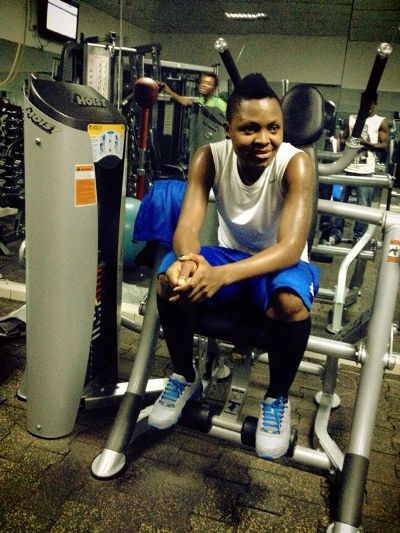
A person resting after a gym session while recovery takes its course. Photograph: the resting gym-goer
Image Credits: Wikimedia Commons
When to get it checked
Most DOMS fades on its own, but some warning signs deserve attention. Soreness lasting beyond a week, sharp or one-sided pain, major swelling, bruising, or dark urine are all reasons to seek medical advice promptly.
Severe muscle injury can occasionally affect the kidneys, according to the clinical review, which is one reason very severe or unusual symptoms should not be ignored. Sudden weakness or an inability to move a limb also warrants prompt assessment.
For ordinary DOMS, a practical rule works well. Train easy through mild soreness if movement helps, but avoid hard sessions on the same muscles until the soreness has clearly eased.
The bottom line
You feel sorest two days after a workout because DOMS is a delayed repair process, not instant damage. Soreness starts 12 to 24 hours after unaccustomed exercise, peaks around 48 hours as inflammation builds, and then fades over the following days.
That timeline is normal, and it is also useful. It tells you the muscle is adapting, and the same session will usually hurt far less next time.
This article is for general information only and is not medical advice; talk to a clinician about any symptoms.
Tags: muscle soreness, DOMS, recovery
Rive News's research desk covers fitness and recovery, drawing on clinical references, sports science explainers, and public health guidance.
Related
- Why Do Muscles Get Sore Two Days After Exercise?
- Why Does Lactic Acid Get Blamed for Soreness When It Clears in an Hour?
- Muscle Soreness vs Injury: How to Tell DOMS From Real Damage
- How to Recover Faster After a Hard Workout Session
Subscribe for one plain-English explainer each morning.
Rive News aims for accurate, sourced explainers; corrections are published when an error is confirmed.
Related stories
How long does it really take to build noticeable muscle?
Strength gains start in week one, but visible muscle takes 8-12 weeks for most beginners. What the Oklahoma CT-scan study measured,
Why you feel dizzy after a workout: the 5 common causes
Post-workout dizziness usually comes from a blood pressure dip, dehydration, or low blood sugar. The numbers behind each cause, and when
Why Do Knees Hurt When Squatting but Not Running?
Knees hurt when squatting but not running because deep bends multiply force on the kneecap. Learn the mechanics, common causes, fixes,