
Why Do You Feel the Burn in Your Lungs Before Your Legs Give Out?
Key takeaways
- The ventilatory threshold is the intensity where breathing starts rising faster than oxygen use, usually around 50 to 75 percent of VO2 max.
- Your lungs burn first because extra carbon dioxide from buffering lactic acid forces your breathing rate up sharply.
- Training raises the threshold, so fitter runners hit the burn at a faster pace than beginners.
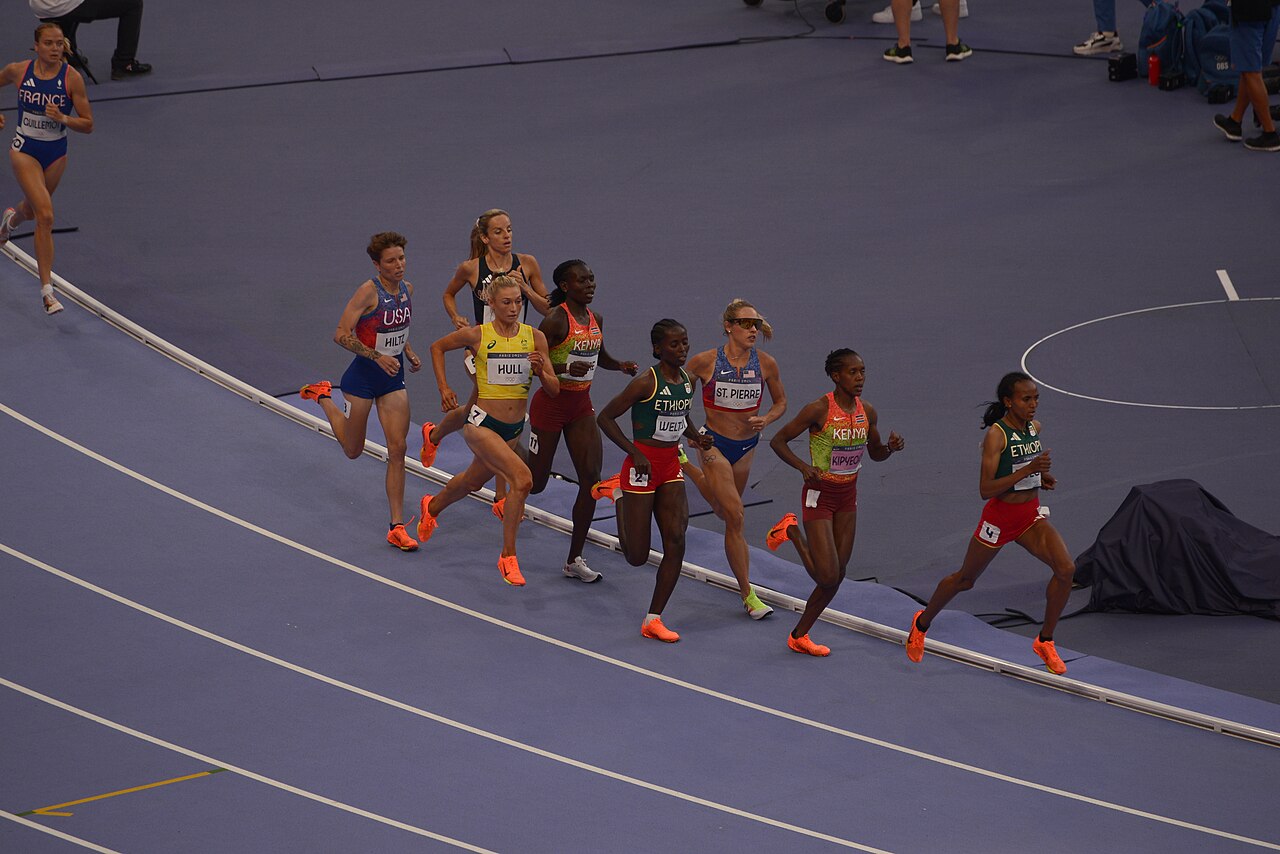
Runners competing in the women's 1500m final at Paris 2024. Photograph: Wikimedia Commons
Image Credits: Wikimedia Commons
The ventilatory threshold is the point during exercise when the volume of air you breathe out starts increasing at an exponentially greater rate than the oxygen you consume. Below it, your breathing rises in a steady line with your effort. Above it, your breathing shoots upward, and that sudden gasping is the burn you feel in your chest.
This article takes a closer look at the ventilatory threshold, including what it is, why your lungs feel the strain before your legs do, what moves the threshold up or down, and how to train around it.
What the ventilatory threshold is
In exercise physiology, the ventilatory threshold (often written VT1) marks the moment when your body can no longer supply working muscles with enough oxygen through aerobic metabolism alone. The muscles lean harder on anaerobic glycolysis, lactate begins to accumulate in the blood, and your breathing has to accelerate to clear the extra carbon dioxide this produces.
For most people, this threshold sits at exercise intensities between 50 and 75 percent of VO2 max, the maximum rate at which your body can consume oxygen. VO2 max itself is one of the best measures of cardiovascular fitness, averaging around 35 to 40 milliliters per kilogram per minute in a healthy male and 27 to 31 in a healthy female.
Crossing the threshold does not mean instant exhaustion. It means the work rate is no longer sustainable for long. Below the threshold you can keep going for a prolonged period.
Above it, fatigue accumulates quickly because your body is borrowing energy from short-duration systems like glycolysis. That is why weights feel heavier at the end of a set and why a steady jog can suddenly turn ragged.
Why your lungs feel it first
Your legs have local warning systems, but your lungs are the bottleneck for gas exchange, so they signal first. Here is the chain of events.
As intensity rises, your muscles demand more ATP than aerobic metabolism can supply. Anaerobic glycolysis fills the gap, producing lactate as a byproduct. Rising blood acidity gets buffered by bicarbonate, and that buffering reaction releases extra carbon dioxide.
Carbon dioxide is the main driver of your urge to breathe. The excess CO2 tells your respiratory center to ramp up ventilation sharply, which is why your breathing curve bends upward at the threshold. Your lungs are not failing.
They are doing exactly what they are supposed to do: blowing off CO2 as fast as they can.
This also explains why breathing through your mouth feels necessary when you run hard. Nasal breathing simply cannot move enough air once ventilation spikes past the threshold. The switch to mouth breathing is your body opening a bigger pipe to match the demand.
Your legs, meanwhile, are still working. Muscle fatigue builds more gradually through metabolite accumulation and fuel depletion. The lungs hit their steep curve first because gas exchange responds within seconds, while muscular failure takes minutes to develop.
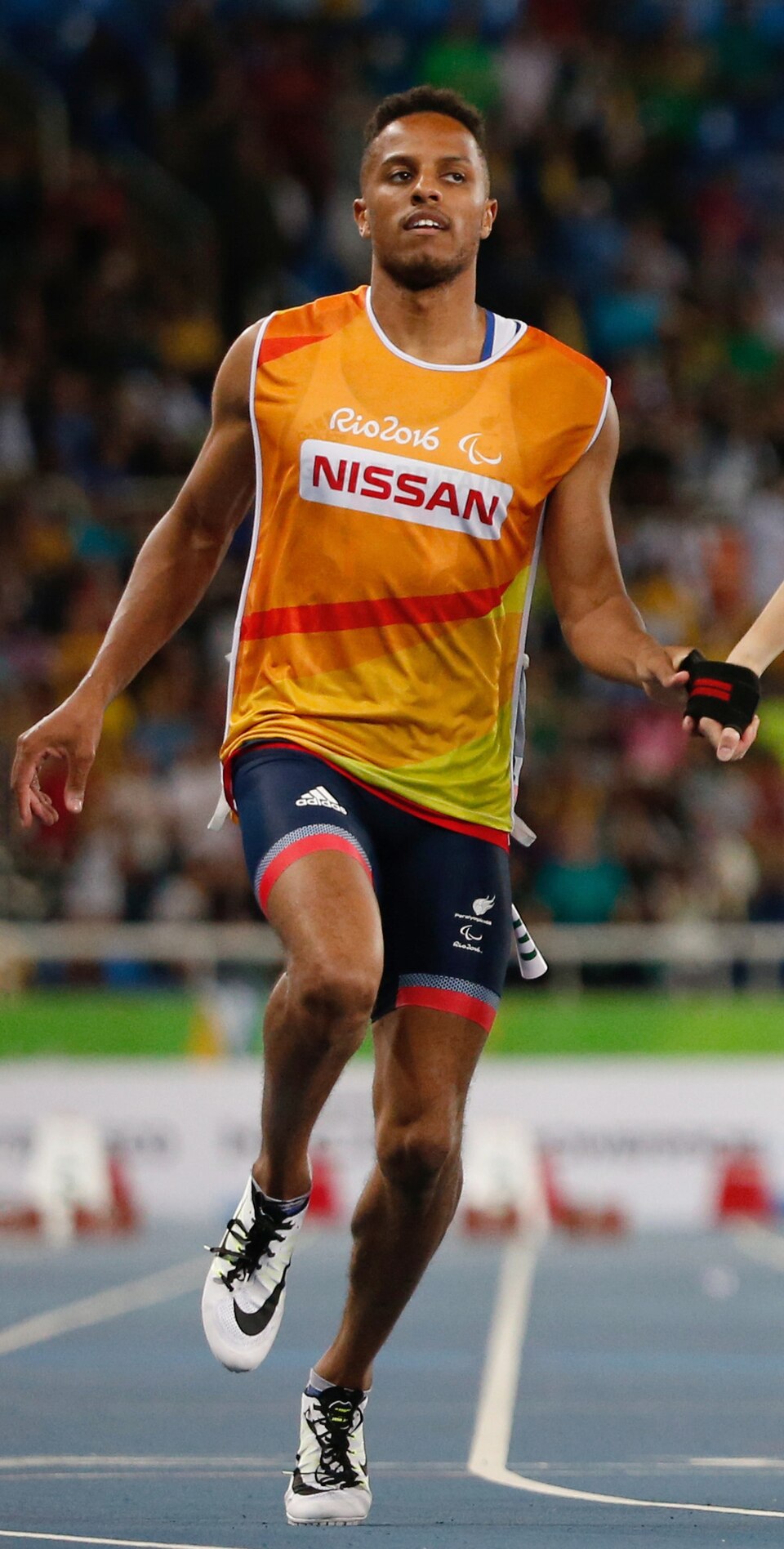
A sprinter competing at the Rio 2016 Olympics. Photograph: Wikimedia Commons
What raises or lowers the threshold
The threshold is expressed as a percentage of VO2 max, and that percentage is trainable. For untrained individuals it sits near 50 percent of VO2 max. For trained endurance athletes it can reach 80 to 90 percent.
Two runners with the same VO2 max can feel the burn at very different paces depending on where their thresholds sit.
Endurance training pushes the threshold upward. Regular aerobic work improves the muscles' ability to use oxygen, clear lactate, and sustain higher outputs before anaerobic metabolism takes over. This is why experienced runners describe feeling comfortable at paces that once left them gasping.
Several factors pull it down temporarily. Heat, altitude, dehydration, illness, and poor sleep all raise the breathing cost of a given pace. Some days your body simply feels stronger than others, and threshold position is part of that daily variation.
A pace that felt easy last week can feel like threshold work today if you are under-recovered.
Age and genetics set the starting point, but training history dominates. The threshold responds to months of consistent aerobic volume more than to any single workout.
How to train around the burn
You cannot avoid the threshold, but you can move it. The classic approach is polarized training: most volume at easy intensities well below the threshold, plus a smaller dose of work right around it.
Tempo runs and threshold intervals target the zone directly. These are sustained efforts at a "comfortably hard" pace, typically 20 to 40 minutes, where breathing is elevated but controlled. Over weeks, the pace you can hold at that effort creeps upward.
Easy days protect the adaptation. Hard efforts only raise the threshold if the body recovers between them. Stacking intense sessions without recovery keeps you training above the threshold while exhausted, which teaches you to suffer without building the aerobic base that moves the line.
Pacing races and hard efforts by feel takes practice. The burn arriving earlier than expected is information, not failure. Slow down slightly, let ventilation settle back under the threshold, and you can often continue far longer than if you fight through it.

A distance runner competing indoors. Photograph: Wikimedia Commons
Frequently asked questions
Is the burn in my lungs dangerous?
For healthy people, no. It is a normal physiological response to crossing the ventilatory threshold. If you feel chest pain, dizziness, or wheezing rather than just heavy breathing, stop and get checked by a clinician.
Are the ventilatory threshold and lactate threshold the same thing?
They occur at nearly the same intensity under most conditions. The lactate threshold is where lactate production outpaces clearance; the ventilatory threshold is where breathing spikes to clear the resulting CO2. Coaches often use them interchangeably.
Why does my heart keep pounding after I stop sprinting?
Your body is repaying an oxygen debt and clearing metabolites, which keeps the heart rate elevated for minutes after hard work. It is the same recovery process that follows threshold crossings, described in more detail in our piece on why your heart pounds after you stop sprinting.
Can beginners measure their threshold without a lab?
Lab testing with gas analysis is the gold standard, but the "comfortably hard" effort where speaking becomes difficult is a reasonable field proxy. Wearable estimates exist but are less accurate than a proper ramp test.
The bottom line
Your lungs burn before your legs give out because the ventilatory threshold, usually 50 to 75 percent of VO2 max, forces breathing to spike to clear excess carbon dioxide from buffering lactate. It is a sign your aerobic system has hit its current limit, not a sign of damage. Train consistently below and around it, and the burn arrives later, at a faster pace, season after season.
Latest in Fitness
- Why you breathe through your mouth when you run hard
- Why you feel stronger on some days than others
- Why your heart pounds after you stop sprinting
- Why weights feel heavier at the end of a set
Subscribe for one research-backed training tip in your inbox every morning.
Related stories
How long does it really take to build noticeable muscle?
Strength gains start in week one, but visible muscle takes 8-12 weeks for most beginners. What the Oklahoma CT-scan study measured,
Why you feel dizzy after a workout: the 5 common causes
Post-workout dizziness usually comes from a blood pressure dip, dehydration, or low blood sugar. The numbers behind each cause, and when
Why Do Knees Hurt When Squatting but Not Running?
Knees hurt when squatting but not running because deep bends multiply force on the kneecap. Learn the mechanics, common causes, fixes,