
Why you get stitch pain in your shoulder when running
By Rive News / Research desk | Rive News / Published October 27, 2026 at 9:00 AM PKT
This article is for general information only and is not medical advice; talk to a clinician about any symptoms.
Key takeaways
- A side stitch is exercise-related transient abdominal pain, often felt under the ribs.
- Shoulder-tip pain during a stitch is usually referred pain, not a shoulder injury.
- The leading explanation is irritation of the abdominal lining under the diaphragm, and eating or drinking a lot shortly before a run makes a stitch more likely.
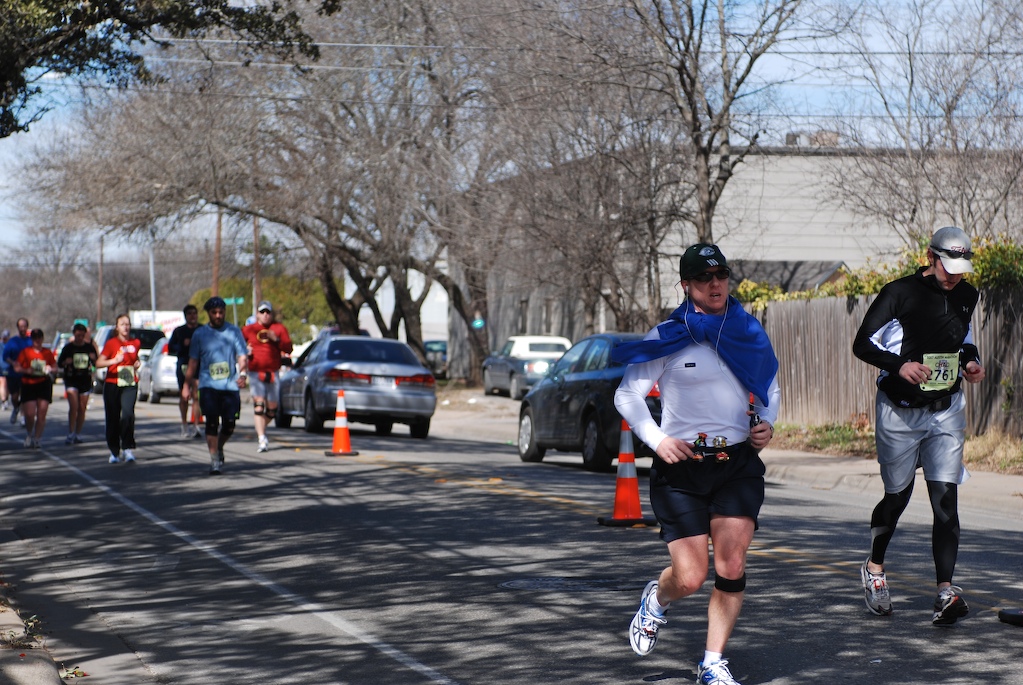
Runners during the 2007 Austin Marathon, moving through a park course. Photograph: Enoch Lai
Image Credits: Wikimedia Commons
A stitch that reaches the shoulder can feel alarming. The shoulder itself may be fine, with no strain, no impact, and no obvious injury, yet a sharp pain sits at the tip of the shoulder while you run. The usual explanation is not a shoulder problem at all.
It is referred pain: irritation in one place, felt in another, because both places share a nerve pathway.
This article explains what a side stitch is, why it can reach the shoulder, what makes it more likely, and how to ease it during a run.
What a side stitch actually is
A side stitch, known in research as exercise-related transient abdominal pain, or ETAP, is a sharp, cramping, or aching pain felt on one or both sides of the body where the rib cage ends. WebMD notes that the pain is often so strong that a runner needs to slow down or stop, and that it can linger for a minute or two after stopping, or leave soreness for a few days after a very intense episode.
The precise cause is still debated, but one explanation now leads the field. The peritoneum is a thin membrane that covers the inner wall of the abdomen, made of two layers with fluid between them that prevents rubbing. During running, the quantity and viscosity of that fluid changes, and the layers can rub.
MedicalXpress, reporting on this research, describes that friction as the root of stitch pain.
That account fits several observations. Stitches are common in running, swimming, and horse riding, where the torso bounces or twists, but rarer in cycling, where the torso moves less. Repetitive torso movement, especially rotation and up-and-down motion, increases friction between the peritoneal layers.
When the torso is stretched out, the effect is stronger.
Older explanations still appear in many guides. One is that ligaments connecting internal organs to the diaphragm are overstretched by the bouncing of running. Another is that the diaphragm itself runs short of blood when blood is diverted to working muscles.
A 2015 review by Morton and Callister in Sports Medicine, summarised by Marathon Handbook, argues that the peritoneum explanation fits the evidence better, partly because stitches can occur in activities with low breathing demand, such as horse riding, where diaphragm oxygen shortage is unlikely.
Why the pain reaches the shoulder
The shoulder-tip part of a stitch comes from the phrenic nerve. This nerve passes through the shoulder region and also serves the diaphragm. When the peritoneum under the diaphragm is irritated, the signal can travel along the phrenic nerve and be felt at the shoulder tip, even though the source is under the ribs.
MedicalXpress states this directly: stitches are sometimes associated with a sharp pain in the shoulder when the irritation affects the area of the peritoneum below the diaphragm, and this is thought to be due to rubbing of the peritoneum, which irritates the phrenic nerve, which passes through the shoulder. The pain is therefore "referred", meaning a sensation on a nerve path that starts somewhere other than where it is felt.
The pattern helps tell a stitch from a shoulder injury. A stitch usually arrives with side or upper abdominal pain during exercise, builds during the run, and eases when you slow down or stop. A shoulder injury usually follows a fall, a sudden movement, or heavy lifting, and it hurts when you move the shoulder itself, not only while running.
If shoulder pain appears at rest, lasts long after exercise, or comes with weakness, numbness, or chest pain, that is a different situation and needs prompt medical attention.
The right side is more commonly affected, which fits the anatomy: the liver sits on the right under the diaphragm, and the diaphragm and liver share innervation through the phrenic nerve, which arises from cervical levels C3 to C5. That detail, noted in the Morton and Callister summary, explains why right-sided stitches with shoulder-tip referral are the classic pattern.
What makes a stitch more likely
Timing of food and drink is the most practical risk factor. Eating a large meal, or drinking a large volume of fluid, shortly before a run increases the chance of a stitch. Sugary or very concentrated drinks are often singled out in research summaries, because they draw fluid into the gut and increase jostling of the abdominal contents.
Running too hard, too soon, also matters. A fast start, a skipped warm-up, and shallow, rapid breathing all increase torso bouncing and breathing strain. Beginners and younger runners report stitches more often, which may reflect less trained core stability and less efficient breathing as well as a proportionally larger peritoneal surface in children, as MedicalXpress notes.
Posture plays a part too. Weak core control lets the torso twist more with each stride, which increases peritoneal friction. That is one reason coaches link stitch prevention to steady pacing, upright posture, and a proper warm-up, rather than to any single stretch or supplement.
Electrolyte imbalance is sometimes mentioned, with sodium, potassium, and calcium named by WebMD as a possible contributor. The evidence here is weaker than for food timing and torso movement, and a stitch in an otherwise healthy runner should not be read as proof of a deficiency.
What to do when it strikes
Slow down first. A stitch is a signal to reduce intensity, not to push through at full pace. Many runners find that slowing to a walk, then resuming at an easier pace, lets the pain fade within a minute or two.
Deep, controlled breathing helps many runners. Breathe out slowly, and try to time the exhale with the foot strike on the opposite side to the stitch, which reduces the load on the affected side. Pressing gently on the painful area, or massaging it, is another common tactic listed by WebMD, along with bending forward slightly to stretch the diaphragm area.
Avoid eating or drinking a large amount while the stitch is active. Small sips are fine, but a large gulp can make the abdominal contents heavier and the friction worse. If the pain does not ease after stopping, or if it returns at rest, stop the session and seek advice rather than trying to run through it.
Prevention is mostly about the hours before the run. Leave a gap after a large meal, avoid a big sugary drink just before starting, warm up gradually, and build pace slowly. Runners who get stitches often find that a longer, easier warm-up and a steadier early pace reduce the frequency, even without any other change.

Runners lined up at the start of the first York Marathon, before the pace builds. Photograph: DS Pugh
Image Credits: Wikimedia Commons
Frequently asked questions
Is shoulder pain during a run always a stitch?
No. Shoulder-tip pain that arrives with side pain during a run and eases when you stop fits a stitch. Pain from a fall, pain that lasts at rest, or pain with chest symptoms needs medical attention.
Should I stop completely when a stitch starts?
Slowing down is usually enough. If the pain is sharp, worsening, or does not ease after you stop, end the run and get advice.
Can I prevent stitches by drinking less water?
No. Both too much fluid just before a run and dehydration are linked to stitches in different guides. The practical point is timing: avoid a large volume right before running, and hydrate steadily through the day.
The bottom line
Shoulder pain during a run is often not a shoulder problem. Irritation of the abdominal lining under the diaphragm can send pain along the phrenic nerve to the shoulder tip, which is why the two pains arrive together. Slow down, breathe deeply, and ease the pace when it strikes.
For prevention, watch food and drink timing, warm up gradually, and keep your early pace steady. Pain that lasts at rest, or comes with other worrying symptoms, is a reason to talk to a clinician rather than to keep running.
Tags: running, side stitch, shoulder pain, exercise science
Rive News is a research desk that writes plain-English explainers from public sources, with no fake authors or invented medical cases.
Related
- Why you get a stitch in your side while running
- How to breathe properly while running without getting winded
- How to cool down properly after a run
- Why muscles hurt most two days after a workout
Subscribe for one practical fitness explainer each week.
Standards: facts are attributed to named public sources; this article is general information, not medical advice.
Related stories

How long does it really take to build noticeable muscle?
Strength gains start in week one, but visible muscle takes 8-12 weeks for most beginners. What the Oklahoma CT-scan study measured,
Why you feel dizzy after a workout: the 5 common causes
Post-workout dizziness usually comes from a blood pressure dip, dehydration, or low blood sugar. The numbers behind each cause, and when
Why Do Knees Hurt When Squatting but Not Running?
Knees hurt when squatting but not running because deep bends multiply force on the kneecap. Learn the mechanics, common causes, fixes,