
Why grip fails before your back on deadlifts
Key takeaways
- Your grip fails first because the small forearm muscles holding the bar fatigue faster than the large back and leg muscles pulling the weight.
- The overhand grip lets the bar roll toward the fingertips as fingers tire; hook and mixed grips mechanically trap the bar instead.
- Short, heavy timed holds of about ten seconds build deadlift grip fastest, and separating grip work from deadlift day by three days keeps both fresh.
Grip failure on a deadlift means your hands give out before the muscles doing the lifting do. The bar slips, your fingers open, and the set ends while your back and legs still had more reps in them. It is one of the most common frustrations in the gym, and it is rarely a sign that your back is weak.
This article explains why your grip gives out before your back does, how each deadlift grip holds up under heavy weight, how to train your grip so it stops failing first, and the quick checks to run before your next session.
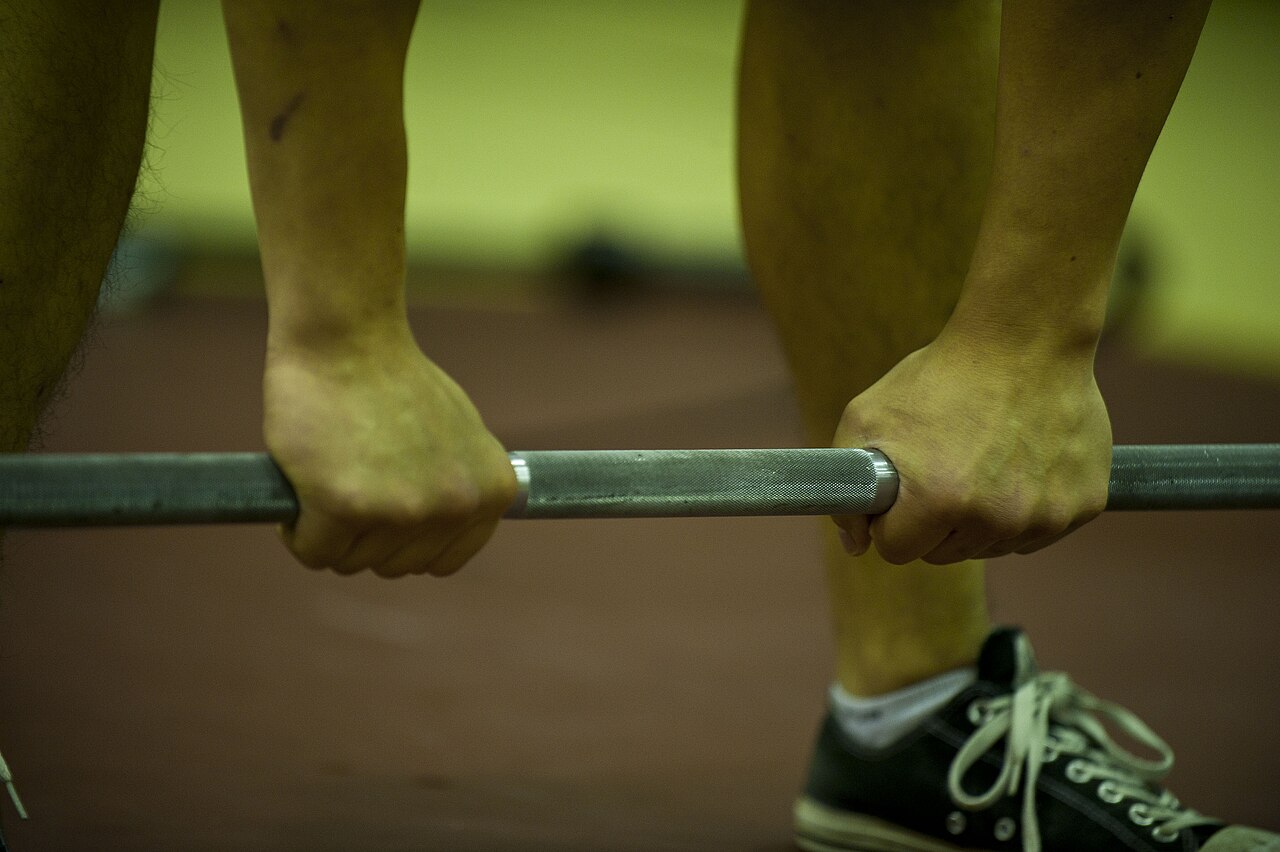
A lifter's hands locked around a knurled barbell. This is the exact point where most deadlift sets are lost.
Image Credits: Wikimedia Commons / U.S. Air Force photo by Senior Airman Clayton Lenhardt
Why your grip gives out before your back does
Your hands are doing a very different job from your back during a deadlift. Your back, glutes, and hamstrings extend the hips and hold your torso rigid, while your hands have exactly one task: keep the bar from rolling out of your fingers.
The muscles closing your fingers, the flexor digitorum superficialis and flexor digitorum profundus, live in your forearms and are small compared with your lats, traps, and hamstrings. The cross-sectional area of the forearm flexors is far smaller than that of the latissimus dorsi, trapezius, or hamstrings, and simple anatomy means the small muscles of the hand and forearm fatigue before the large muscles of the back and legs under heavy loading, according to Genghis Fitness's lifting grip guide.
That size gap is why a deadlift set can end at six reps when your glutes and hamstrings could have handled ten. The set stops because your fingers quit, not because your back did. As that guide puts it, a set cut short by grip is one where grip limited the outcome rather than the muscles the exercise was built to train.
Fatigue also changes how the bar sits. BarBend explains that the overhand grip usually fails because the barbell rolls within the palms as the fingers tire. The weakest part of the hand, usually the pinky and ring finger, comes loose first, and once that edge opens, the rest follows.
Sweat makes the same problem arrive earlier. Sweaty palms cut friction between skin and knurling, and no amount of squeezing offsets a bar that has nothing to bite into. Chalk exists for exactly this reason.
Programming matters too. If heavy rows, pulldowns, or shrugs come before your deadlifts, your forearm flexors arrive pre-exhausted.
On top of that, grip strength develops more slowly than back and leg strength, so the gap can persist for months if you never train it directly. Lifters working on realistic muscle-building timelines run into the same slow-adaptation issue with forearms.
How each deadlift grip holds up under load
Every deadlift grip is a trade-off between security and how much grip it builds. Knowing which trade you are making is the first fix.
Double overhand
Both palms face you. It is the most natural grip and the best for building raw holding strength, but it is also the first to fail under heavy loads because nothing stops the bar from rolling. BarBend notes that it places maximum demand on the finger flexors with no mechanical advantage.
Use it for warm-ups and lighter sets to keep building grip, and expect it to cap out first. That cap is normal, not a sign something is broken.
A deadlift is a full-body pull the same way a squat is a full-body push, and sloppy mechanics leak force in both. If you are unsure about the other half of your leg day, review proper squat form.
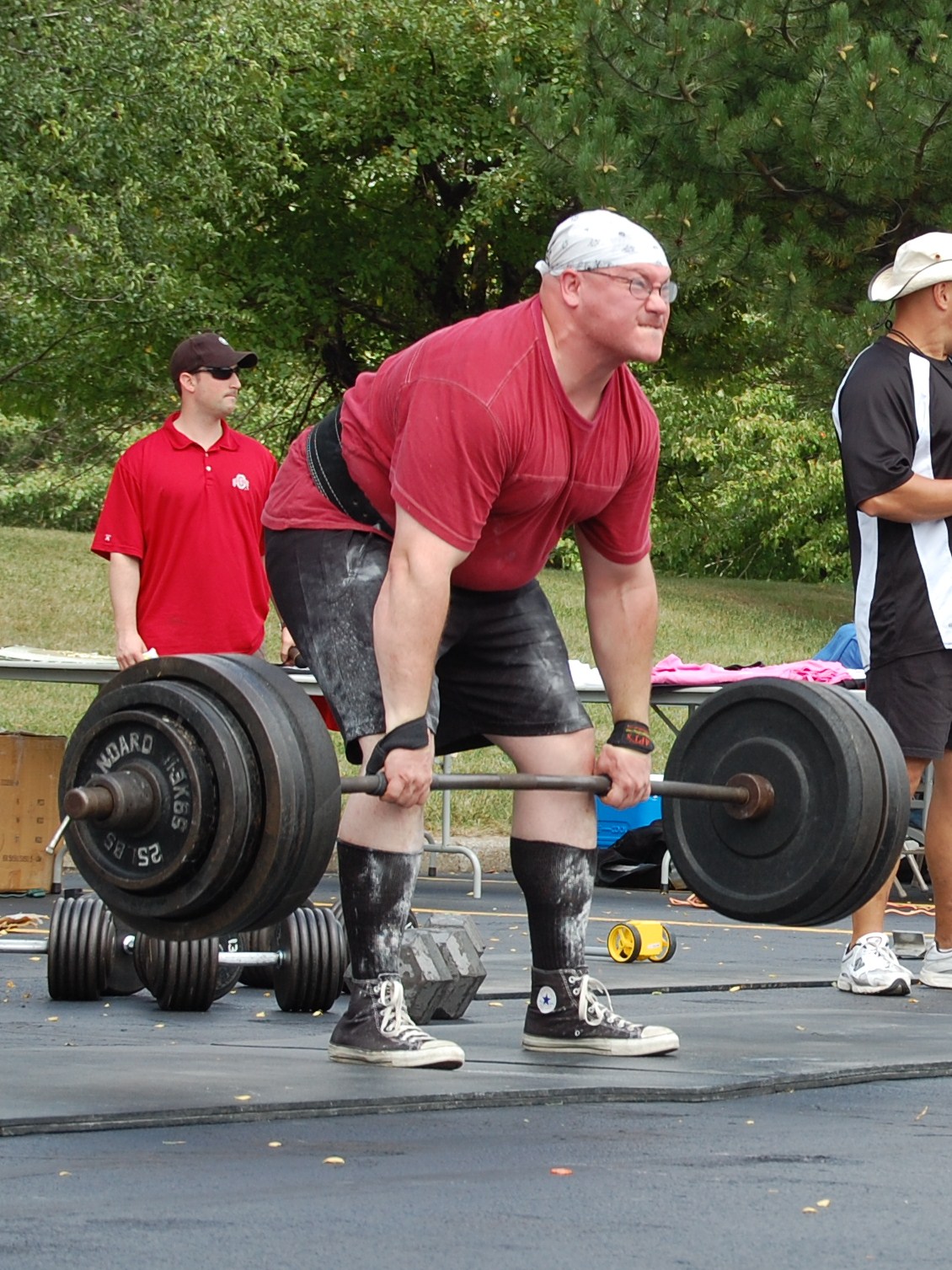
A loaded barbell on the platform. Grip security is decided before the first rep.
Image Credits: Wikimedia Commons / stu_spivack
Mixed grip
One palm faces you, the other faces away. The opposing hand orientation traps the barbell so it cannot roll out of the palm, which is why it is the standard grip for heavy deadlifts. The cost is asymmetry: the muscles of the arm, shoulder, and lats load unevenly, and the supinated arm's bicep tendon takes extra stress.
Jim Smith of Diesel Crew, writing in T-Nation's guide to building a death grip, refuses to recommend the mixed grip to non-competitors for exactly this reason, calling the bicep risk on the supinated arm too high.
Hook grip
A modification of the overhand grip: the thumb goes under the fingers, pinning it against the bar. BarBend explains that placing the thumb under the fingers keeps the hand fixed around the barbell even as the fingers tire. It is symmetric, competition-legal, and very secure, but the learning period is uncomfortable and it punishes short thumbs.
Lifting straps
Lifting straps wrap the bar to your wrists and take the holding demand off your fingers, so your back can do the work it is capable of. The T-Nation deadlift grip guide recommends using straps once the weight is too heavy to hold, while still pulling double overhand on everything lighter. Use straps as a tool for the target muscles, not as a permanent replacement for grip training.
How to train grip so it stops failing first
Your grip responds to training like any other muscle, but it responds best to the kind of strength the deadlift actually demands. Support grip, how long you can hold something heavy, matters far more than crushing grip for holding a bar.
The Mountain Tactical Institute ran a three-week mini study on exactly this. Four trained athletes performed nine sessions of ten rounds of ten-second maximal squeeze holds, using a 135-pound deadlift hold, a pull-up bar dead hang, or a dynamometer. Average maximum grip scores rose by about fifteen pounds, roughly eleven percent, and every athlete improved in both hands, with the deadlift holds and dead hangs producing the largest gains.
T-Nation's deadlift grip guide lands in the same place: short, ten-second timed holds produced the best grip-strength gains for the deadlift, while longer holds and higher reps fit strongman-style endurance better. Keep grip sessions and deadlift sessions separated by about three days so the hands are fresh for both.
A practical menu is simple. Add heavy double-overhand holds at the top of your last deadlift set, work in farmer's walks, and hang from a pull-up bar, progressing the weight or time weekly.
Train one or two grip movements after your regular sessions, and keep them short and heavy. Recovery and protein after training matter here the same as for any muscle you expect to grow.
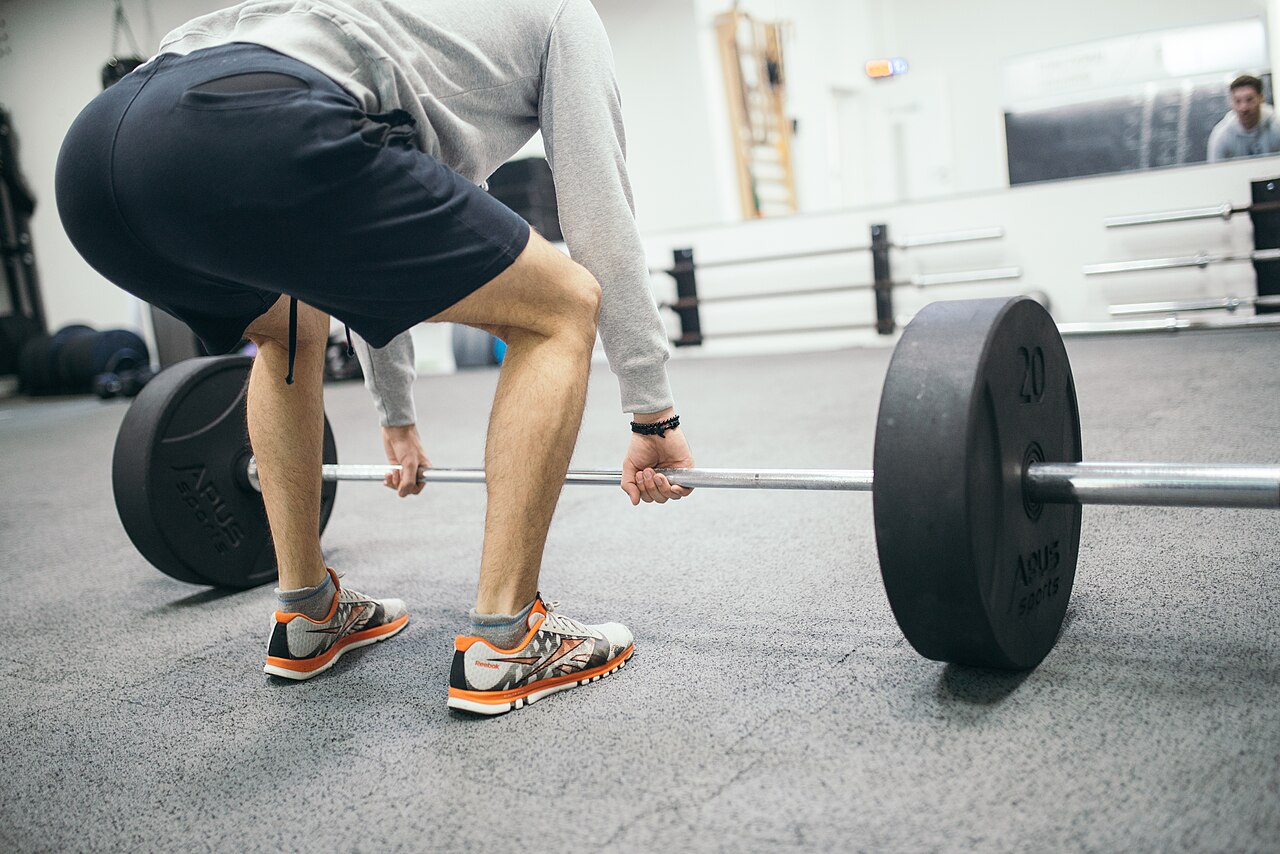
A full deadlift rep in the gym. When grip stops being the limiter, the target muscles finally get a full set.
Image Credits: Wikimedia Commons / Nenad Stojkovic
Quick checks before your next deadlift session
Small setup errors make a weak grip weaker. Run through these before you assume you need a new program.
- Chalk up before heavy sets. If your gym bans loose chalk, liquid chalk works.
- Seat the bar at the crease where your fingers meet your palm, not in your fingertips and not buried deep in the palm.
- Deadlift before high-rep pulling work, not after, so your forearms are fresh.
- Check the bar's knurling. A worn-smooth bar slips for everyone.
- If your forearms ache for days or you feel sharp pain near the elbow or biceps, learn to tell muscle soreness from injury before pushing on.
Frequently asked questions
Why do my hands open up on the last reps when my back still feels fresh?
Your finger flexors fatigue across reps while your big pulling muscles stay strong, so the bar starts rolling toward your fingertips late in the set. This is a support-grip endurance problem, not a back-strength problem. Short timed holds train exactly this quality.
Should I just use straps on deadlifts?
Yes for your heaviest working sets, if training the back is the goal. Keep pulling double overhand on warm-ups and lighter sets, train grip separately, and keep about three days between deadlift day and dedicated grip work.
Is the hook grip or mixed grip better for a failing grip?
The hook grip is symmetric and legal in competition, but the learning curve is painful. The mixed grip is immediately secure, yet it loads the body asymmetrically and stresses the supinated arm's bicep tendon. Most non-competitors are better served by the hook grip or straps.
How long does it take to build a grip that keeps up?
Longer than it takes to build back strength, which is why the gap appears in the first place. In one three-week study, athletes gained roughly eleven percent on max grip scores with nine short sessions. Expect months of steady progress, not weeks.
Does chalk actually help?
Yes. Sweat removes the friction your skin needs to hold knurled steel, and chalk restores it by drying the palms. It does not build strength, but it stops moisture from making a manageable grip fail early.
The bottom line
Your grip fails before your back because small forearm muscles fatigue faster than the large muscles moving the weight, and the overhand grip lets the bar roll as they tire. Switch to a hook or mixed grip for heavy sets, chalk up, and train short heavy holds a few times a week. Give it a few months and the bar will stay in your hands for the full set.
Latest in Fitness
- How to build noticeable muscle on a realistic timeline
- Proper squat form, step by step
- Muscle soreness vs injury: how to tell
- Is protein important after a workout?
Get one practical training tip in your inbox each week: subscribe to the Rive News newsletter.
Related stories
How long does it really take to build noticeable muscle?
Strength gains start in week one, but visible muscle takes 8-12 weeks for most beginners. What the Oklahoma CT-scan study measured,
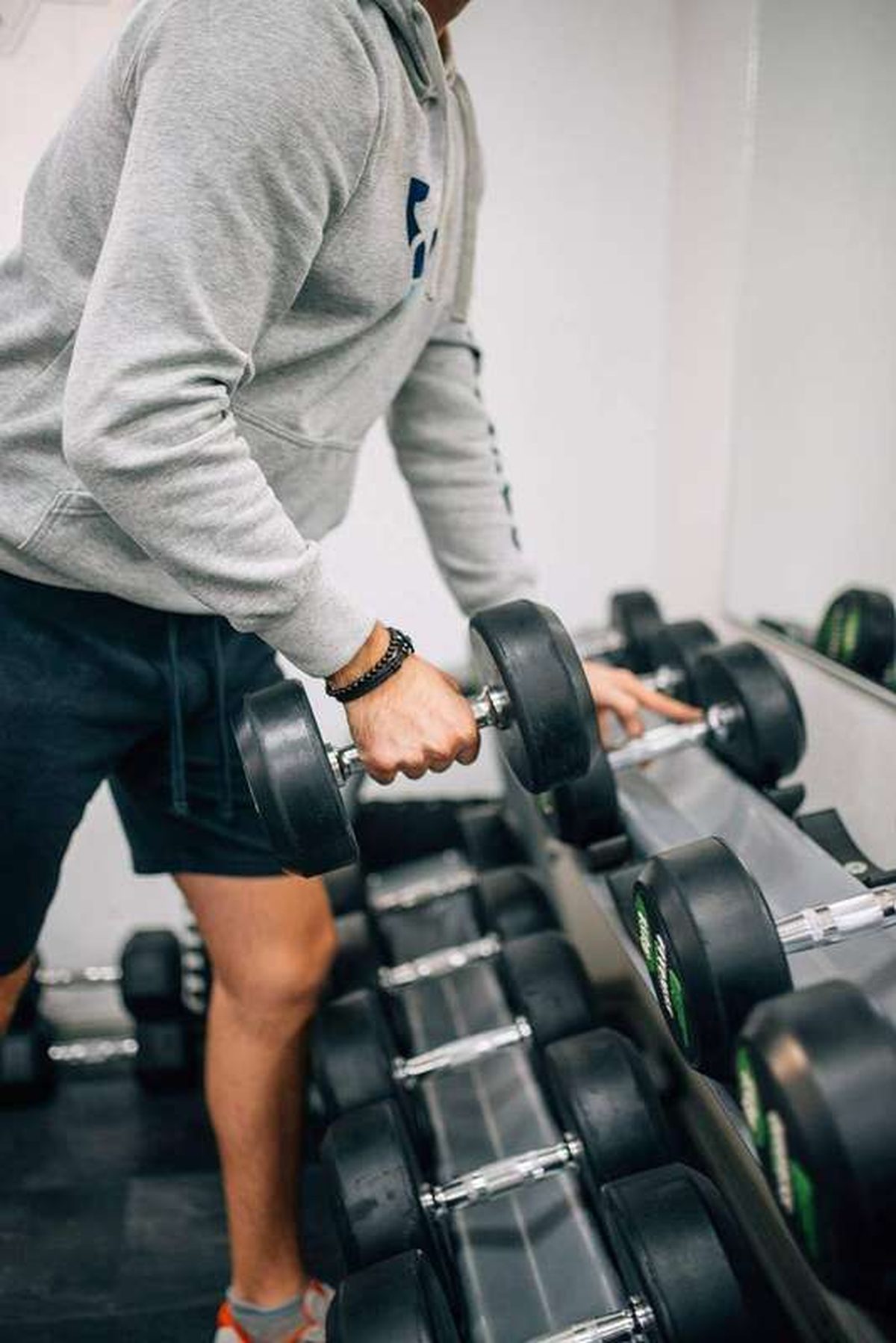
Why you feel dizzy after a workout: the 5 common causes
Post-workout dizziness usually comes from a blood pressure dip, dehydration, or low blood sugar. The numbers behind each cause, and when
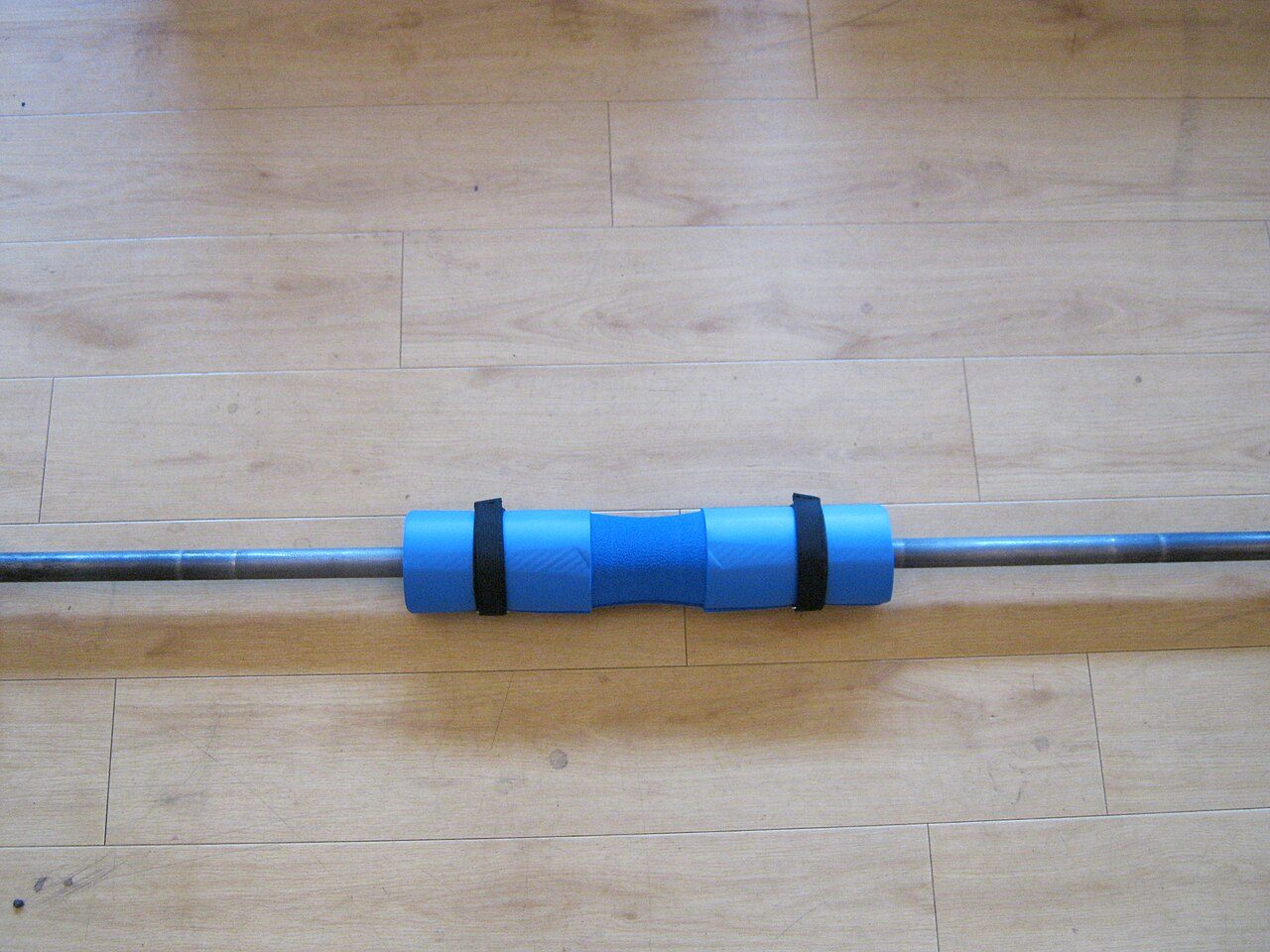
Why Do Knees Hurt When Squatting but Not Running?
Knees hurt when squatting but not running because deep bends multiply force on the kneecap. Learn the mechanics, common causes, fixes,