
Why Does Your Heart Rate Stay Lower Than a Beginner's?
Key takeaways
- A trained heart pumps more blood per beat (higher stroke volume), so it needs fewer beats per minute.
- At the same workload, a fit person's heart rate stays lower because cardiac output is met more efficiently.
- Resting rates below 60 bpm, often in the 40s, are a normal adaptation, not a warning sign.
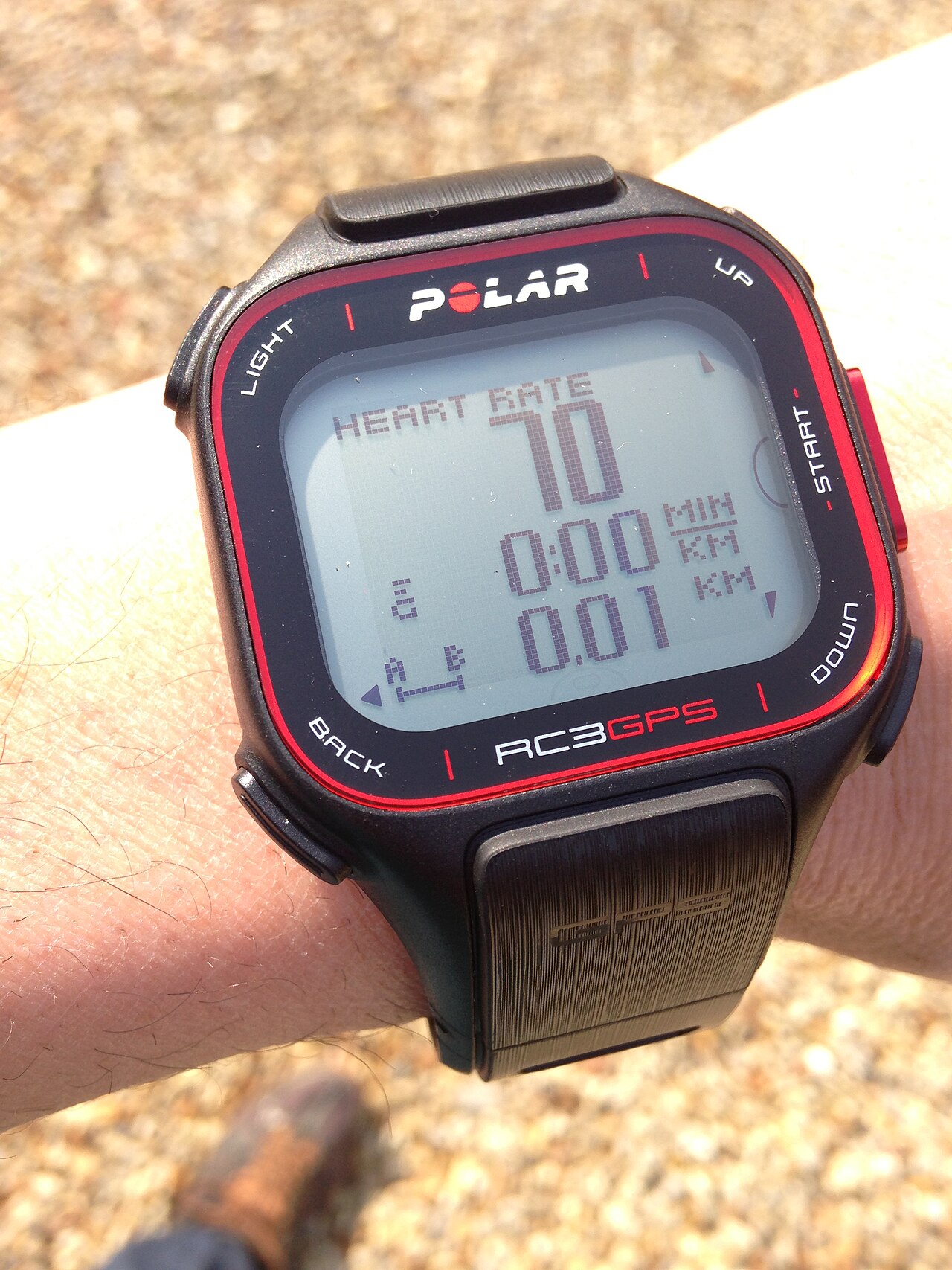
A Polar RC3 GPS heart rate monitor watch showing a resting-range reading. Image: Wikimedia Commons.
Image Credits: Wikimedia Commons
Two people do the same workout side by side. The beginner's heart is racing at 160 beats per minute while the experienced exerciser cruises at 130.
Both are healthy, both are working, and the difference is not effort or willpower. It is plumbing.
The trained heart is a stronger pump. Each beat moves more blood, so fewer beats are needed to deliver the same supply of oxygen. Sports scientists call the blood moved per beat stroke volume, and it is the central reason fitness shows up as lower heart rates.
This article takes a closer look at why your heart rate stays lower than a beginner's during the same workout, including the stroke volume mechanism, the athlete's heart adaptations behind it, and what the numbers actually look like.
The core equation: output equals rate times volume
The relationship is simple arithmetic. Cardiac output, the total blood the heart moves per minute, equals heart rate multiplied by stroke volume. Double the volume per beat and you can halve the rate while moving the same blood.
HSC Science's training-adaptations material frames it with a clean thought experiment: one person rests at 72 beats per minute, a trained cyclist at 44. Both deliver enough oxygen to their tissues. If the cyclist's heart beats 28 fewer times a minute, something else must have changed, and that something is stroke volume.
The crucial detail is that resting cardiac output is about the same in trained and untrained people. The trained heart simply covers the same delivery with fewer, larger beats. That is why a lower resting heart rate is a hallmark of aerobic fitness rather than a sign of trouble.
How training rebuilds the pump
Endurance training physically remodels the heart, a set of changes clinicians call athlete's heart. According to Aorta Health's clinical guide, the left ventricle, the heart's main pumping chamber, grows larger so it can hold and eject more blood per beat. The heart can pump five to seven times its resting blood volume during maximal exercise in well-trained athletes.
The electrical system adapts too. Heightened vagal tone, the parasympathetic brake on the heart, drives the resting rate down.
Aorta Health notes that sinus bradycardia below 60 beats per minute, often into the 40s, is the most common electrical adaptation in trained athletes. It reflects efficiency, and in a trained person it is considered a benign adaptation rather than disease.
A Testbook exercise-physiology explainer adds that the enlarged left-ventricular cavity, sometimes called eccentric hypertrophy, is especially characteristic of aerobic athletes. The bigger chamber means more blood per contraction, which reduces the heart rate needed to maintain output and conserves energy during prolonged exercise.
Stroke volume rises at every effort level, from rest to maximum, as a training-adaptations summary on the PD Website notes. The effect is most visible during submaximal and maximal exercise, when the trained ventricle fills more completely between beats. A trained athlete working at the same heart rate as an untrained person can produce dramatically higher cardiac output, over double for elite endurance athletes at maximal effort.
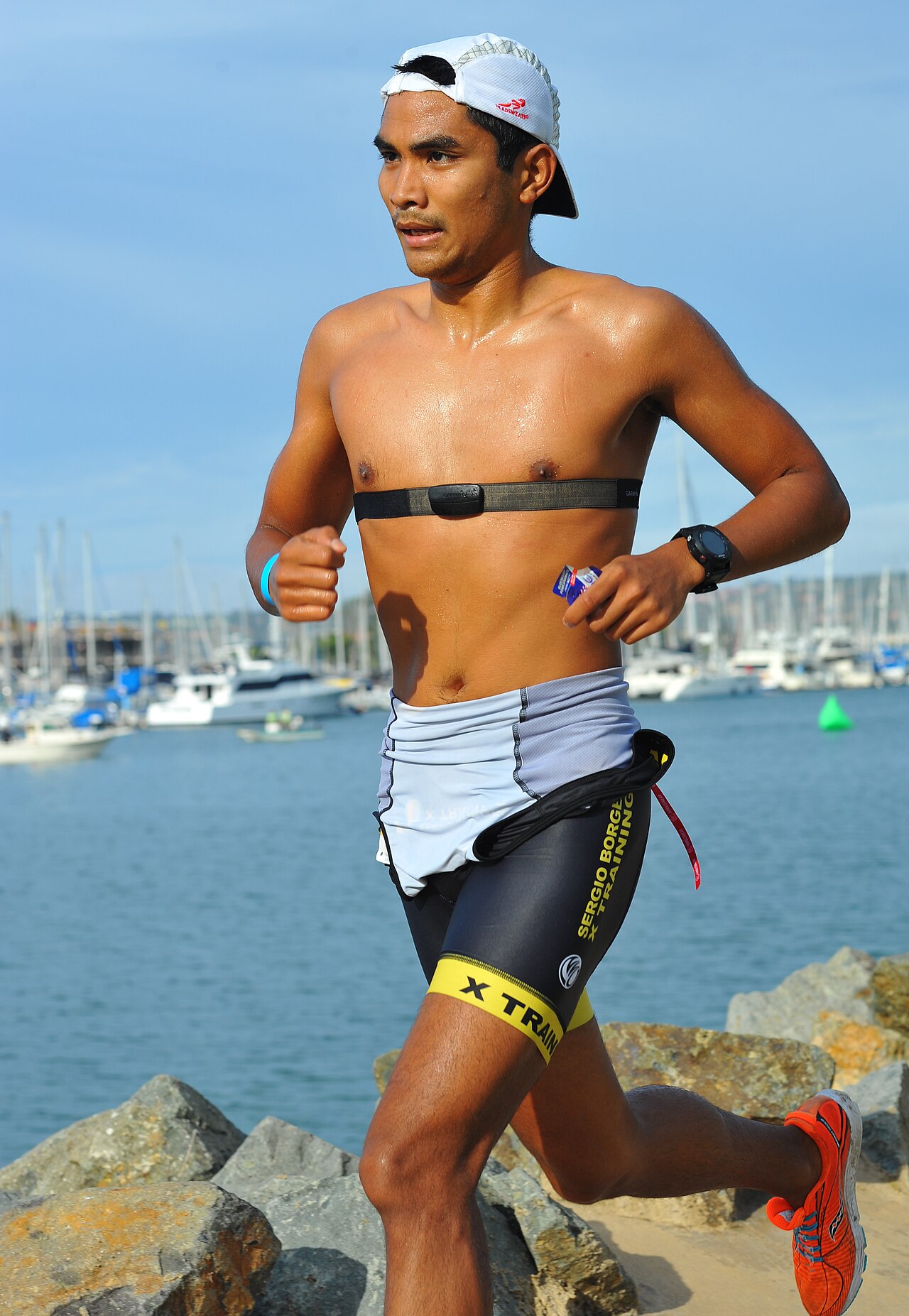
A runner wearing a heart rate monitor chest strap: the trained heart needs fewer beats per minute at the same effort. Image: Wikimedia Commons.
What the numbers look like in practice
At rest, the gap is the famous one: 44 to 60 beats per minute for the trained versus 60 to 80-plus for the untrained. During easy exercise, the trained person holds a pace that would push a beginner into the red zone while staying in a comfortable zone themselves.
At maximal effort, training does not raise the ceiling. Maximal heart rate depends mainly on age, often estimated as roughly 200 minus age, and it does not change much with training, per standard exercise-physiology notes. What changes is the stroke volume behind each beat: cardiac output at maximal exercise can reach about 20 liters per minute in untrained people and up to 40 liters per minute in trained athletes.
That is also why fitness is visible long before the finish line. When weights feel heavier at the end of a set or a sprint leaves your heart pounding, a trained cardiovascular system clears the debt faster because each recovery beat delivers more.
Training also rebalances the nervous system. Chronic aerobic training increases vagal input and reduces sympathetic drive, which is a second reason submaximal heart rate drops even before structural changes fully mature. Fitness trackers that log resting heart rate trends are really logging this quiet rewiring.
When a low heart rate deserves a second look
Context decides whether a slow pulse is adaptation or a problem. In a regular exerciser with good energy, normal blood pressure, and no dizziness or fainting, a resting rate in the 40s or 50s is textbook athlete's heart. Aorta Health's guide emphasizes that the heart's relaxation between beats stays normal in athletes, which is the key feature distinguishing adaptation from disease.
The picture changes without the training history. A sudden drop in resting heart rate in a sedentary person, or a low rate paired with fatigue, dizziness, chest pain, or fainting, warrants medical attention. Medications such as beta blockers also lower heart rate deliberately, and that is a different mechanism entirely.
If you are unsure which category you are in, a doctor can sort it out quickly, often with a resting ECG and a conversation about your training load. The adaptations of athlete's heart reverse with detraining, which is another sign they are functional, not pathological.
This article is an explainer, not medical advice; talk to a doctor about heart-rate changes accompanied by symptoms.
Does a lower resting heart rate mean you are fitter?
Generally, yes, as a trend within one person. A resting rate that drifts down over months of aerobic training reflects rising stroke volume and vagal tone. But genetics set the baseline, so comparing your number to someone else's is less informative than watching your own.
Why does my heart rate still spike on hard efforts if I am fit?
Because maximal heart rate barely changes with training. Fitness lowers the rate at submaximal workloads, but near your ceiling the heart still has to beat close to its age-set maximum. The difference is what you can sustain at any given rate.
Can strength training lower heart rate too?
Aerobic training drives the biggest stroke-volume gains, but consistent strength training improves resting heart rate modestly as well. The classic athlete's-heart picture belongs to endurance athletes, though strength athletes show their own version of cardiac remodeling.
How quickly does resting heart rate drop when you start training?
Measurable drops often appear within 4 to 8 weeks of consistent aerobic training, mostly from improved vagal tone at first. Structural changes in the ventricle take months. Beginners should expect gradual change, not an overnight drop into the 40s.
The bottom line
Your heart rate stays lower than a beginner's during the same workout because training made each beat bigger, not because you are trying less. A larger stroke volume lets the heart meet the same cardiac output with fewer beats, backed by a remodeled ventricle and stronger vagal tone. The 44-beats-per-minute resting pulse of a trained cyclist is the same math as the 130-versus-160 gap on a shared workout: fewer, larger beats doing the same work.
Latest in Fitness
- Why does your heart pound after you stop sprinting?
- Why do weights feel heavier at the end of a set?
- Why do you feel stronger on some days than others?
- Why do you breathe through your mouth when you run hard?
New to the lab? Get one plain-English explainer like this in your inbox every morning.
Related stories
How long does it really take to build noticeable muscle?
Strength gains start in week one, but visible muscle takes 8-12 weeks for most beginners. What the Oklahoma CT-scan study measured,
Why you feel dizzy after a workout: the 5 common causes
Post-workout dizziness usually comes from a blood pressure dip, dehydration, or low blood sugar. The numbers behind each cause, and when
Why Do Knees Hurt When Squatting but Not Running?
Knees hurt when squatting but not running because deep bends multiply force on the kneecap. Learn the mechanics, common causes, fixes,