
How does your body switch from walking to running
By Rive News / Research desk | Rive News / Published October 31, 2026 at 9:00 AM PKT
Key takeaways
- Your body flips from walking to running near 2.1 meters per second, a point called the preferred transition speed.
- The trigger is mechanical, not conscious: spiking ankle-muscle effort and joint loads force the switch.
- Your nervous system starts rewiring the pattern several steps before the change happens.
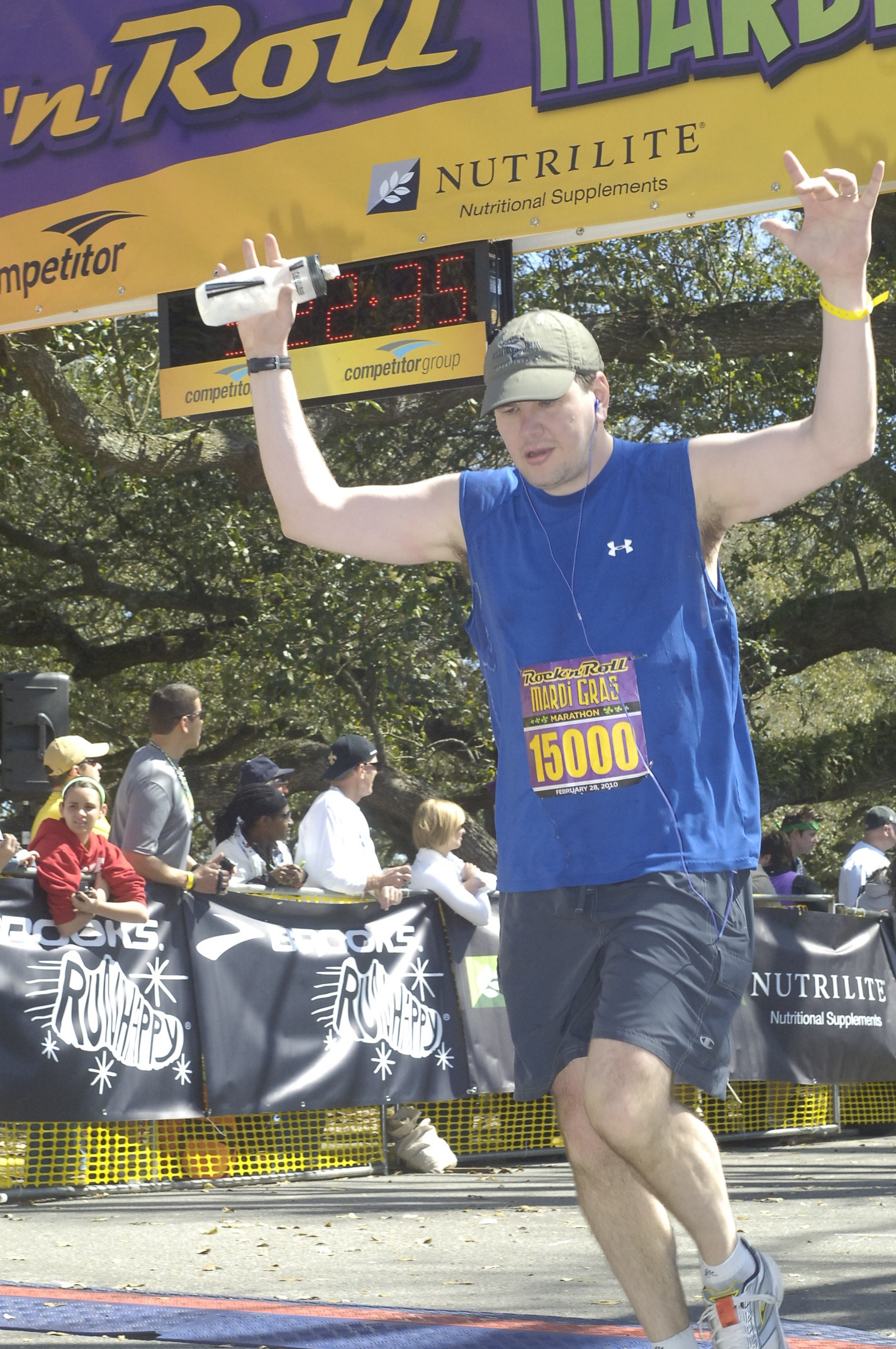
[Runners crossing the finish line at the 2010 NOLA Marathon.] Photograph: Mike Spille
Image Credits: Wikimedia Commons
Wikimedia Commons
Walking and running are two different machines sharing one body. In walking, one foot is always on the ground and your center of mass vaults over a straight leg like an inverted pendulum.
In running, there is a flight phase with both feet off the ground, and your legs behave like springs. Your body switches between these machines automatically, without a single conscious decision.
This article explains how your body switches from walking to running without thinking, including the speed where the flip happens, the mechanical trigger behind it, how your brain prepares the change in advance, and what happens on the way back down.
The speed where walking breaks down
Researchers call the flip point the preferred transition speed, or PTS. On a level treadmill it sits near 2.1 meters per second, roughly 7.5 kilometers per hour.
Walk faster than that and your body starts running on its own. Slow below it and you drop back to a walk.
The number is remarkably consistent but not fixed. A 2014 study by Nicolas Bessot and colleagues in Chronobiology International measured twelve active men, average age about 27, at 8 AM and 6 PM.
Their PTS averaged 2.10 meters per second in the morning and 2.14 in the evening, with shorter strides in the morning. Time of day nudges it slightly, but the flip always lands in the same neighborhood.
Push the speed on a treadmill and you can feel the boundary yourself. Fast walking gets bouncy and awkward.
Your hips sway, your arms pump hard, and at some point running simply feels easier. That feeling is the trigger firing.
What actually triggers the switch
The early guess was energy. Maybe the body switches gaits to burn fewer calories. Several studies tested this and it failed.
Work by Hreljac in 1995 and Raynor and colleagues in 2002 showed that metabolic energy consumption does not explain the preferred transition speed. You switch even when the other gait would cost about the same energy.
The real trigger appears to be mechanical load. A 2024 study from the Biomechanics Research Laboratory at San José State University, published in the journal Biomechanics, tested ten healthy subjects on walk-to-run and run-to-walk transitions between 1.8 and 2.4 meters per second.
The researchers found that joint stiffness and the redistribution of mechanical work among the ankle, knee, and hip tracked the transition. At the transition step itself, energy generation shifted from the proximal joints near the hip to the distal joints near the ankle.
One leading candidate for the specific trigger is the ankle. Hreljac's 1995 work proposed that reaching a critical velocity of ankle flexion flips the switch.
A related line of research points to the tibialis anterior, the shin muscle. Multiple studies using electromyography found an abrupt spike in this muscle's activity just before the walk-to-run change, as summarized in a 2017 PLoS ONE paper that tested fifteen young men walking and running at their individual transition speeds.
Ankle plantar flexor force production, the push-off power of the calf muscles, is another documented determinant of the preferred transition speed, shown by Neptune and Sasaki. Together these findings suggest the body monitors effort and joint load, and when walking demands too much of the ankles and shins, it swaps in the spring-like running pattern that spreads the work differently.
That effort-sensing idea also explains everyday sensations. The burn you feel in your lungs before your legs give out and weights feeling heavier at the end of a set are the same kind of feedback loop: the body reads rising effort and changes strategy.
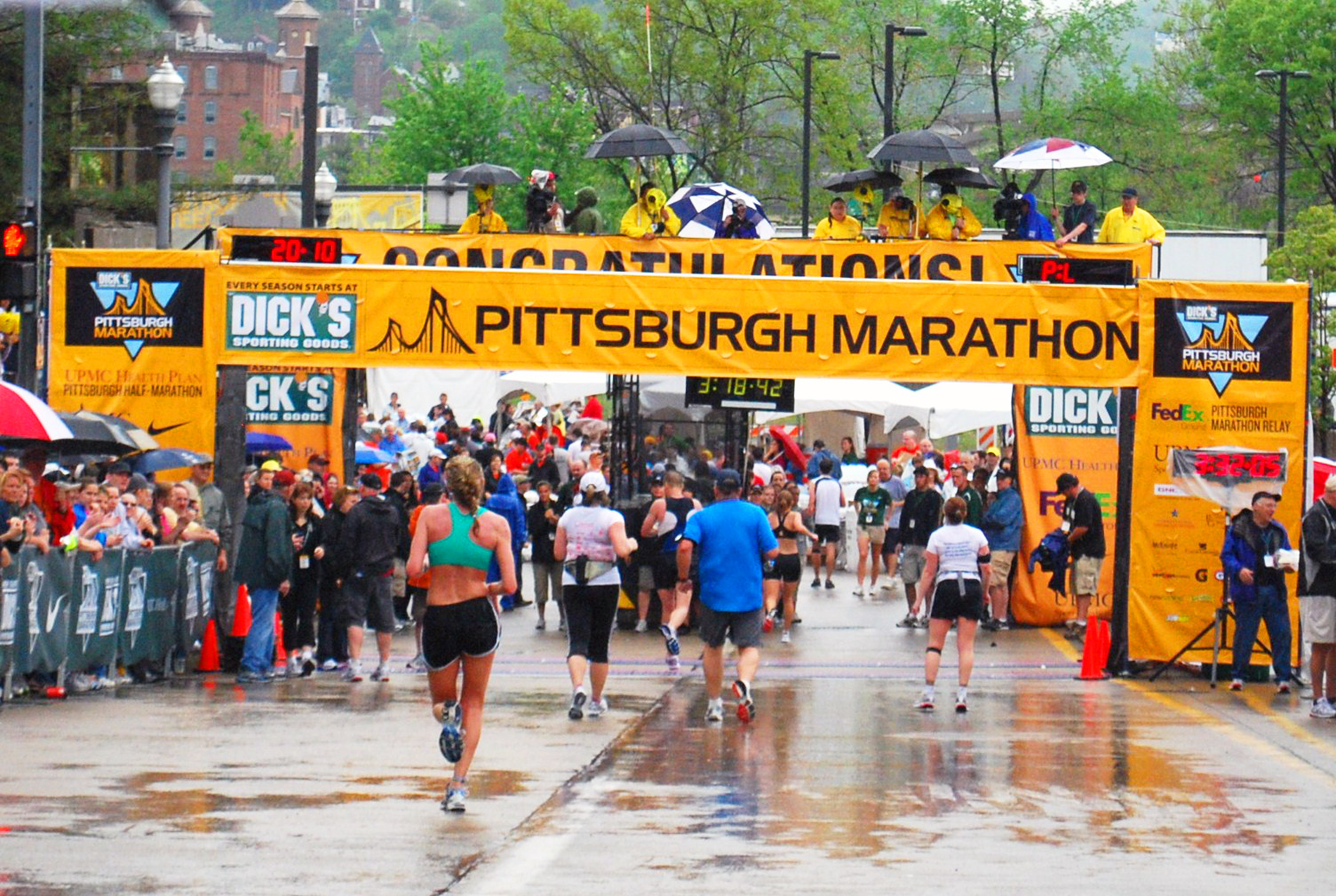
[Runners at the finish line of the 2010 Pittsburgh Marathon.] Photograph: John Marino
Image Credits: Wikimedia Commons
Your brain starts the switch early
Here is the strangest part. The transition is not a reflex that fires in one step.
A 2012 study published in the Journal of Sport and Health Science recorded muscle activity in the glutes, quads, hamstrings, shins, and calves during transitions with continuously changing treadmill speed. The researchers found transition-specific nonlinear behavior in the last five steps before the switch.
Peak activity in the gluteus maximus, rectus femoris, gastrocnemius, and soleus rose quadratically as walkers approached the transition. These changes appeared only in transition conditions, not when subjects walked or ran at constant speeds in the same range. The authors concluded that neuromuscular modifications occur steps before gait transition and that it is not a spontaneous event in response to a single trigger.
The San José State team reached a similar conclusion with joint kinetics. Their data showed the transition was modulated before and after the actual switch, not contained within a single step.
The ankle's kinematic and kinetic patterns at the transition step already resembled the target gait. Your nervous system is effectively test-driving the new pattern while the old one is still running.
The way back down is slower
Run-to-walk transitions take longer to settle than walk-to-run ones. The 2024 San José State study found the downward switch required a longer adaptation time, with energy generation transferring in the opposite direction, from distal joints back to proximal ones.
The proposed trigger differs too. Researchers suggest the run-to-walk flip is driven by a sense of effort from the soleus, gastrocnemius, and quadriceps, which must generate higher forces during slow running than during walking at the same speed.
Slow running is mechanically expensive for the calves. When that cost climbs high enough, the body drops back to a walk.
This asymmetry matches experience. Breaking into a run feels sudden and natural. Forcing yourself back to a walk at a pace where you could still jog feels strangely uncomfortable, like the body resists the downgrade until the effort argument becomes overwhelming.
Prosthetics research confirms how load-driven the system is. A 2016 study in the Journal of Biomechanics found that people with unilateral below-knee amputations transitioned at 1.73 meters per second, significantly slower than the 2.09 meters per second of matched able-bodied controls. Change the mechanics of the leg and the switch point moves with it.
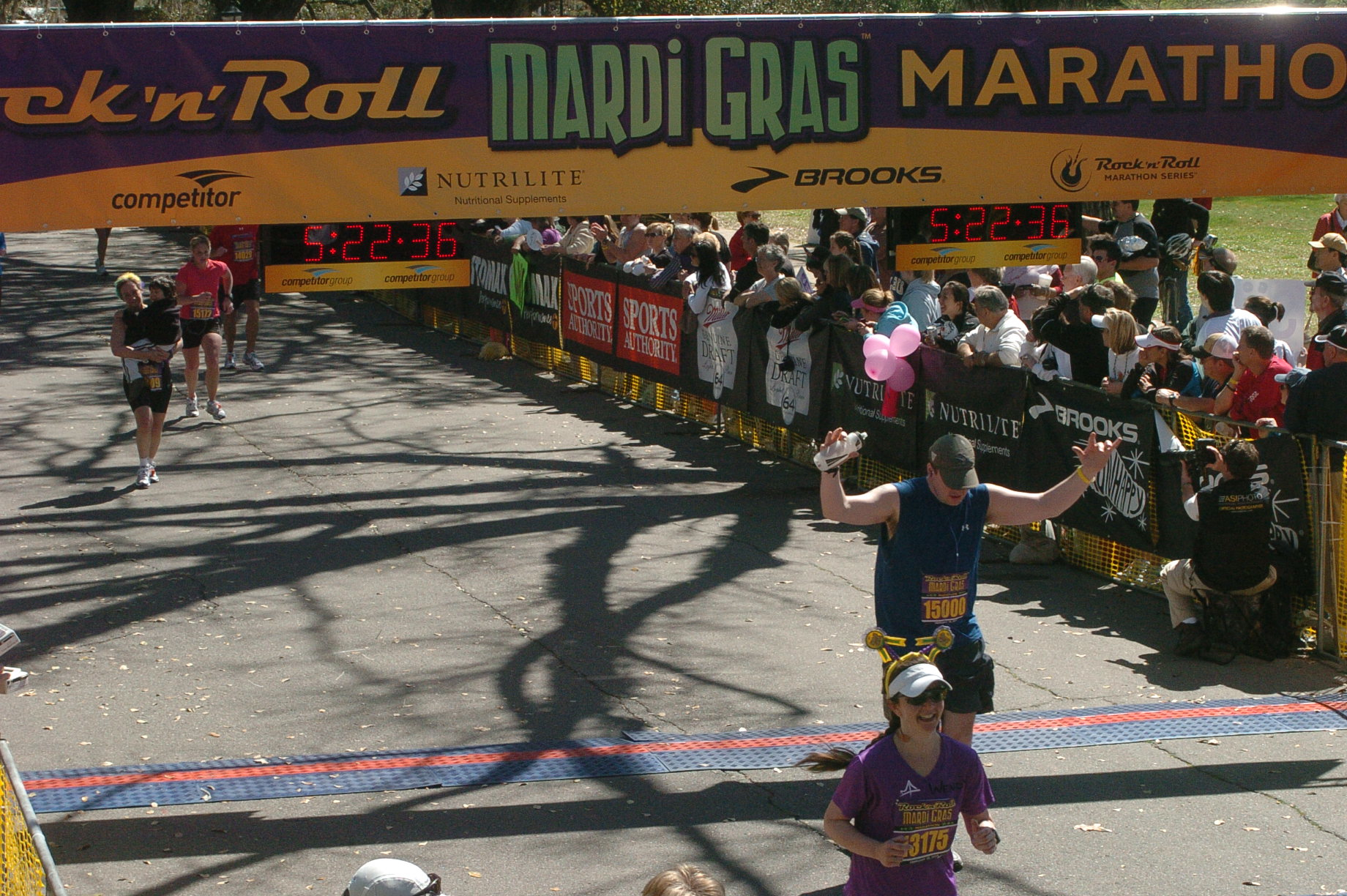
[Runners crossing the finish line of the Mardi Gras Marathon.] Photograph: Mike Spille
Image Credits: Wikimedia Commons
Why you never think about it
All of this runs below consciousness because the spinal cord and lower brain handle locomotion. Central pattern generators, networks of neurons in the spinal cord, produce the rhythmic muscle sequences for walking and running.
Higher brain areas set the speed and direction. The transition logic lives in the feedback between muscles, joints, and these networks, not in deliberate thought.
That is why the switch survives distraction, fatigue, and even a stitch in your side that makes you want to stop entirely. It is also why beginners and trained runners share nearly the same flip speed, even though a beginner's heart rate responds differently to the same workout. The machinery is ancient and automatic.
At what speed do humans switch from walking to running?
Around 2.1 meters per second, or about 7.5 kilometers per hour, on level ground. Researchers call this the preferred transition speed, and it shifts slightly with time of day, slope, and individual mechanics.
Is the switch about saving energy?
Probably not. Studies by Hreljac (1995) and Raynor and colleagues (2002) found metabolic cost does not explain the transition speed. Mechanical load on muscles and joints is the stronger explanation.
Which muscles trigger the change?
The tibialis anterior in the shin shows an abrupt activity spike before the switch, and ankle plantar flexor force production is a documented determinant. The calves, quads, and glutes all rewire their timing several steps in advance.
Why does slow running feel so awkward?
Below the transition speed, the calf and shin muscles must generate higher forces to sustain the running pattern than walking would require at the same speed. Your body reads that effort and eventually forces the downgrade.
Can you train yourself to switch later?
Slightly. Stronger ankles and calves change the load equation, and the prosthetics research shows altered leg mechanics move the switch point.
But the window is narrow. The trigger is built into the hardware.
The bottom line
Your body switches from walking to running without thinking because the switch is a mechanical safety valve, not a decision. Near 2.1 meters per second, the effort and joint loads of fast walking climb past what the ankles and shins can comfortably handle. Muscle activity rewires over several steps, energy generation shifts from hip to ankle, and the spring-like running pattern takes over.
You never choose it. Your legs file the paperwork and inform you after.
Tags: gait transition, walking vs running, biomechanics, preferred transition speed, locomotion
Rive News's research desk covers how the human body actually works.
Related
- Why a beginner's heart rate stays lower at the same workout
- The burn in your lungs before your legs give out
- Why you get a stitch in your side when you run
- Why weights feel heavier at the end of a set
Subscribe to the Rive News newsletter for one clear explainer every morning.
Rive News publishes research-backed explainers. Corrections: reply to any article and we will review it.
Related stories

How long does it really take to build noticeable muscle?
Strength gains start in week one, but visible muscle takes 8-12 weeks for most beginners. What the Oklahoma CT-scan study measured,

Why you feel dizzy after a workout: the 5 common causes
Post-workout dizziness usually comes from a blood pressure dip, dehydration, or low blood sugar. The numbers behind each cause, and when
Why Do Knees Hurt When Squatting but Not Running?
Knees hurt when squatting but not running because deep bends multiply force on the kneecap. Learn the mechanics, common causes, fixes,