
How to Improve Flexibility Without Daily Stretching Routines
Key takeaways
- Full-range strength training improves flexibility about as well as static stretching, and adds strength at the same time.
- Mobility means owning a range with control, not just reaching it passively.
- Daily joint rotations and steady conditioning support every flexibility gain you make.

Stretching is the default advice for anyone who feels stiff. Sit in a stretch, hold it, repeat daily. It helps some people.
It bores many others, and the gains often fade once the routine stops.
There is another route. Strength training through a full range of motion, daily joint rotations, and steady conditioning can improve flexibility without a daily stretching routine. This article explains how to improve flexibility without daily stretching routines, including what flexibility actually means, why loaded training works, and how to put the pieces together.
This article is for general information, not medical advice. If you have an injury, a joint condition, or pain that does not settle, talk to a clinician or physiotherapist before starting a new training programme.
Flexibility is not the same as mobility
The two words get mixed up, and the difference matters. Flexibility is how far a joint can be moved passively, by someone else or by gravity. Mobility is how far you can move it under your own control, with strength.
You can be flexible and not mobile. A person who can be pushed into a deep squat but cannot stand up out of it owns none of that range. Mobility is the range you actually use.
It is the one that carries groceries, climbs stairs, and gets you off the floor.
Coach Ian Markow of Markow Training Systems puts the question plainly: the real goal is not how to stretch more, but how to own more range. That shift changes the whole plan. Instead of chasing passive length, you train strength and control at the edges of the range you already have.
Flexibility also fades with disuse. Pliability notes that flexibility naturally declines as we age, and that a sedentary lifestyle speeds the process. Desk work tightens the hips and lower back in particular.
The fix is regular movement through full ranges, not necessarily a stretching session.
Why strength training builds flexibility
Lifting through a full range of motion stretches muscle under load. A deep squat lengthens the hips, knees, and ankles while they work. A Romanian deadlift lengthens the hamstrings while they hold weight.
The tissue gets a stretching stimulus and a strengthening stimulus in the same rep.
Research backs the idea. A study cited in a Pliability summary measured flexibility at the knee, hip, and shoulder. After five weeks, static stretching fared no better than resistance training for improving flexibility.
Some participants in the strength group gained more flexibility than the stretching group.
James Whitehead, executive vice president of the American College of Sports Medicine and one of the study's authors, said the old notion that lifters must stretch the muscles they train is a hangover from the myth that muscles lose flexibility as they get bigger.
The effect also scales with load. In one six-month study, men trained with weights at 40, 60, or 80 per cent of their one-rep maximum. Flexibility improved in a weight-dependent way.
The heaviest group gained the most flexibility. Light weights helped too, but less than medium and heavy loads.
Markow adds a mechanism that stretching does not offer. Eccentric and end-range loading improved hamstring range of motion by roughly 13 degrees in one comparison, about as much as static stretching. But loading the lengthened position also increased fascicle length, the actual length of the muscle fibres.
Classic stretching did not change fascicle length. Loading the lengthened position did.
The four tools that replace daily stretching
Markow's system uses four tools. None of them requires holding a static stretch. Together they cover strength, control, maintenance, and tissue health.
1. Deep end-range loading
Deep end-range work trains range by loading the bottom position dynamically instead of holding it still. You drop into the deepest part of a position and move there under control. Small, active bounces at the exact spot most people avoid.
The deep split squat is Markow's most-used example. You settle into a deep split squat and pulse in and out of the bottom range. The tissue lengthens under tension and load, not in a passive hold.
That is the difference that makes the gains stick.
2. The 1.5 rep
The 1.5 rep is a loading trick that buys more time in the end range. You do a full rep, then a half rep out of the deepest part, then a full rep. The bottom position, the one that builds mobility, gets double the exposure.
Use it where the end range is the point. A goblet split squat works. A tall kneeling hinge works.
Any pattern where the bottom is where you feel tightest is a candidate. The method builds what the literature calls stretch-mediated hypertrophy: size and strength through the range you are trying to open. Time under load in the stretched position is the driver.
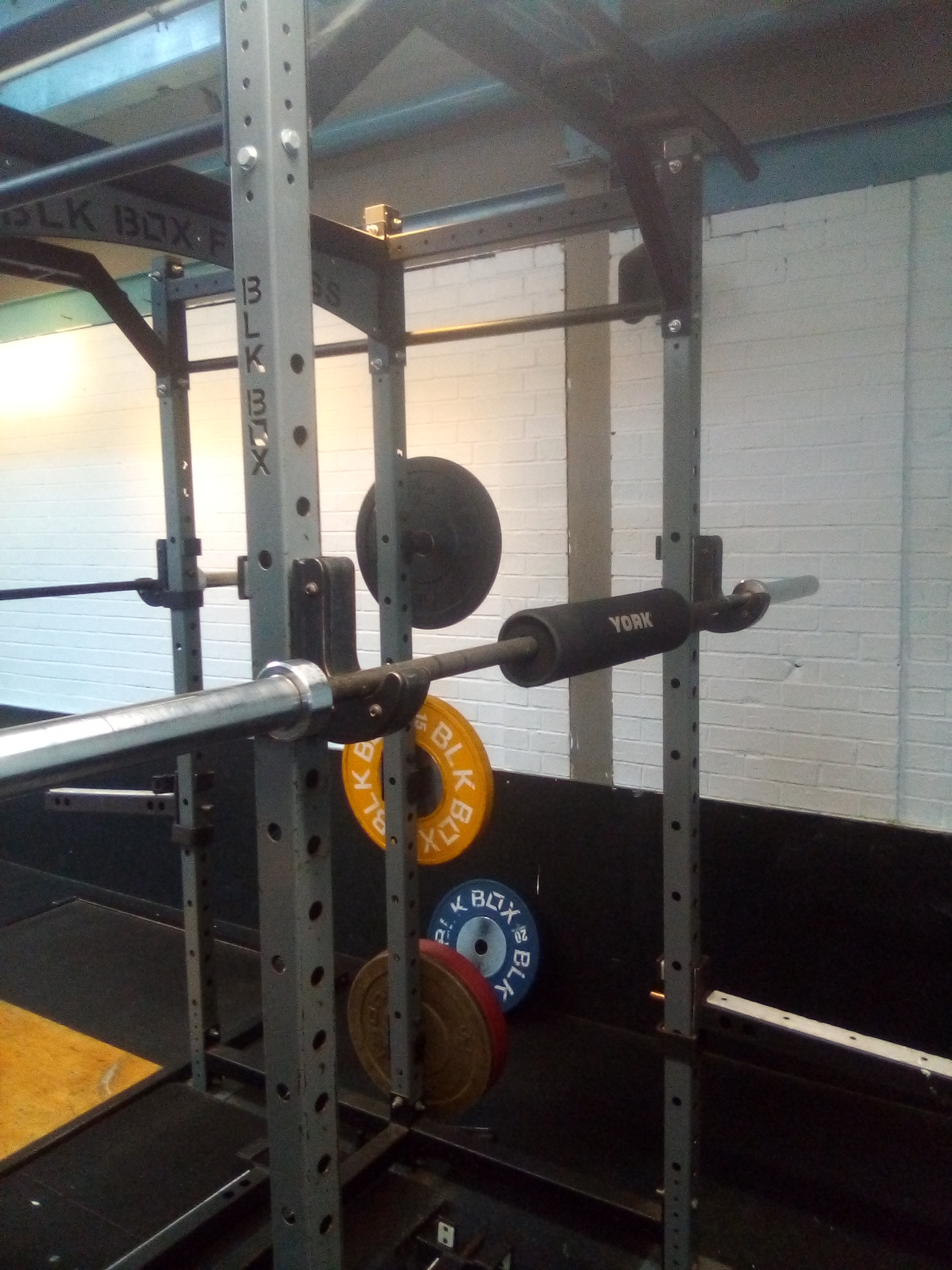
3. Controlled joint rotations
Controlled Articular Rotations, or CARs, are daily joint maintenance. You take one joint through its largest possible circle under your own control, actively, one joint at a time. No load is needed.
The point is not to get tired. The point is to visit the full range of every joint so your body keeps it.
Range is use it or lose it. A joint you never take to its end range slowly stops offering it. CARs are the insurance.
Markow suggests about 10 minutes a day to keep the range you have and slowly expand the range you are building elsewhere. Learn the spine, hip, and shoulder rotations first, then add the rest through the week.
CARs are not stretching. Nothing is held. Each joint moves through its circle under active control, which trains the nervous system to keep that range available.
4. Conditioning
Better conditioning makes you more mobile, and almost nobody connects the two. It is not about the position. It is about the tissue.
Mobility work only matters if the tissue it acts on is healthy, and conditioning is what keeps it healthy.
Aerobic work drives blood flow, moves the lymphatic system, and improves metabolic health. Aerobic training lowers arterial and connective tissue stiffness, improves the way vessels dilate to deliver blood, and reduces the low-grade inflammation that a sedentary life builds up. Better-fed, less inflamed, less stiff tissue moves better by default.
You can do every drill above and still feel stuck if you are deconditioned. Conditioning is the quiet base that makes the rest of the work show up.
A sample week without a stretching routine
You do not need all four tools every day. Markow's structure starts with CARs daily as the floor. Deep end-range work and 1.5 reps go into the lifts you already do, in the positions where you are tightest.
Conditioning stays honest across the week.
A simple week looks like this. On two or three lifting days, train full-range compound lifts: squats, deadlifts, lunges, and rows. Add 1.5 reps on one or two movements per session where the bottom position is the limiter.
Add a few sets of deep split squat pulses for the hips.
Moves that carry the most flexibility value
Compound lifts that challenge range pay double. Deep squats train hip, knee, and ankle mobility. Cossack squats train lateral hip flexibility and adductor mobility.
Romanian deadlifts train hamstring flexibility and posterior chain strength.
Kettlebell windmills open the thoracic spine and shoulders. Turkish get-ups train shoulder stability and full-body coordination. Overhead squats combine thoracic, shoulder, and hip mobility.
Step-through lunges train dynamic hip and knee mobility.
Single-leg work deserves a place too. Single-leg Romanian deadlifts build balance, stability, and hamstring flexibility at once. Split squats expose the side-to-side gaps that bilateral lifts hide.
What about foam rolling and dynamic warm-ups?
Foam rolling and dynamic movement still have a place. Pliability lists foam rolling as a simple start: roll on a thigh three to four times, then rock the leg. Rolling improves circulation and loosens tight tissue before activity.
Dynamic warm-ups move joints through their range without holding. Leg swings, hip openers, and butt kicks raise temperature and wake up the pattern you are about to train.
When stretching still earns its place
Stretching is not the enemy. It stays useful for recovery or for a specific position that needs passive length. A martial artist working toward a full split, or a dancer chasing a particular shape, may need passive stretching for that goal.
What the evidence challenges is the idea that everyone needs a daily stretching routine to stay flexible. For general mobility, full-range loading improves range about as much as stretching in most cases, and it adds strength and control the stretch does not.
If you enjoy stretching, keep it. If you skip it because it bores you, you are not doomed to stiffness. The loaded route gets you there by a different road, and the range it builds comes with the strength to use it.
Frequently asked questions
Can you get more flexible without stretching?
Yes. Mobility is strength and control through a range, not passive length. You build it by loading and controlling your end ranges, maintaining your joints daily, and conditioning the tissue.
Static stretching is optional for general flexibility.
Do I still need to stretch if I strength train through a full range?
Usually not for mobility. Full-range loading improves range of motion about as much as stretching in most cases, and it adds strength and control. Stretching stays useful for recovery or a specific position that needs passive length.
How long does it take to see results?
Expect weeks, not days. Studies show measurable gains in about five weeks of full-range training. Small weekly progress in depth, load, or control adds up.
Consistency beats intensity.
What if one side is much tighter than the other?
Single-leg and single-arm work exposes the gap. Spend extra sets on the tight side and check whether the gap closes over a few weeks. A gap that comes with pain deserves a clinician's look.
The bottom line
Flexibility without daily stretching comes down to loaded range, joint maintenance, and healthy tissue. Train strength through a full range, use 1.5 reps and deep end-range work where you are tightest, rotate every joint daily, and keep your conditioning honest. The range you build this way comes with strength attached, which is the part that actually shows up in daily life.
You do not need a stretching routine to move well. You need a reason to use your full range, often, under control.
Tags: flexibility, mobility, strength training, fitness
Latest in Fitness
- Why warming up before exercise matters
- How many rest days do beginners need each week?
- What is the difference between a plank and a crunch for core strength?
- What should you eat before and after a workout?
Subscribe to the Rive News newsletter for one practical fitness guide each week.
Related stories

How long does it really take to build noticeable muscle?
Strength gains start in week one, but visible muscle takes 8-12 weeks for most beginners. What the Oklahoma CT-scan study measured,

Why you feel dizzy after a workout: the 5 common causes
Post-workout dizziness usually comes from a blood pressure dip, dehydration, or low blood sugar. The numbers behind each cause, and when

Why Do Knees Hurt When Squatting but Not Running?
Knees hurt when squatting but not running because deep bends multiply force on the kneecap. Learn the mechanics, common causes, fixes,